
PA single uninsured assault claim can easily reach $250,000 to $500,000 when you factor in medical expenses, legal defense, lost wages, and pain-and-suffering damages. Jury awards in nightclub assault cases have exceeded seven figures with increasing frequency. Without A&B coverage, those costs come directly out of your business assets, and for most bar owners, that means closing the doors permanently.
The Role of the Customer's Personal Auto Policy
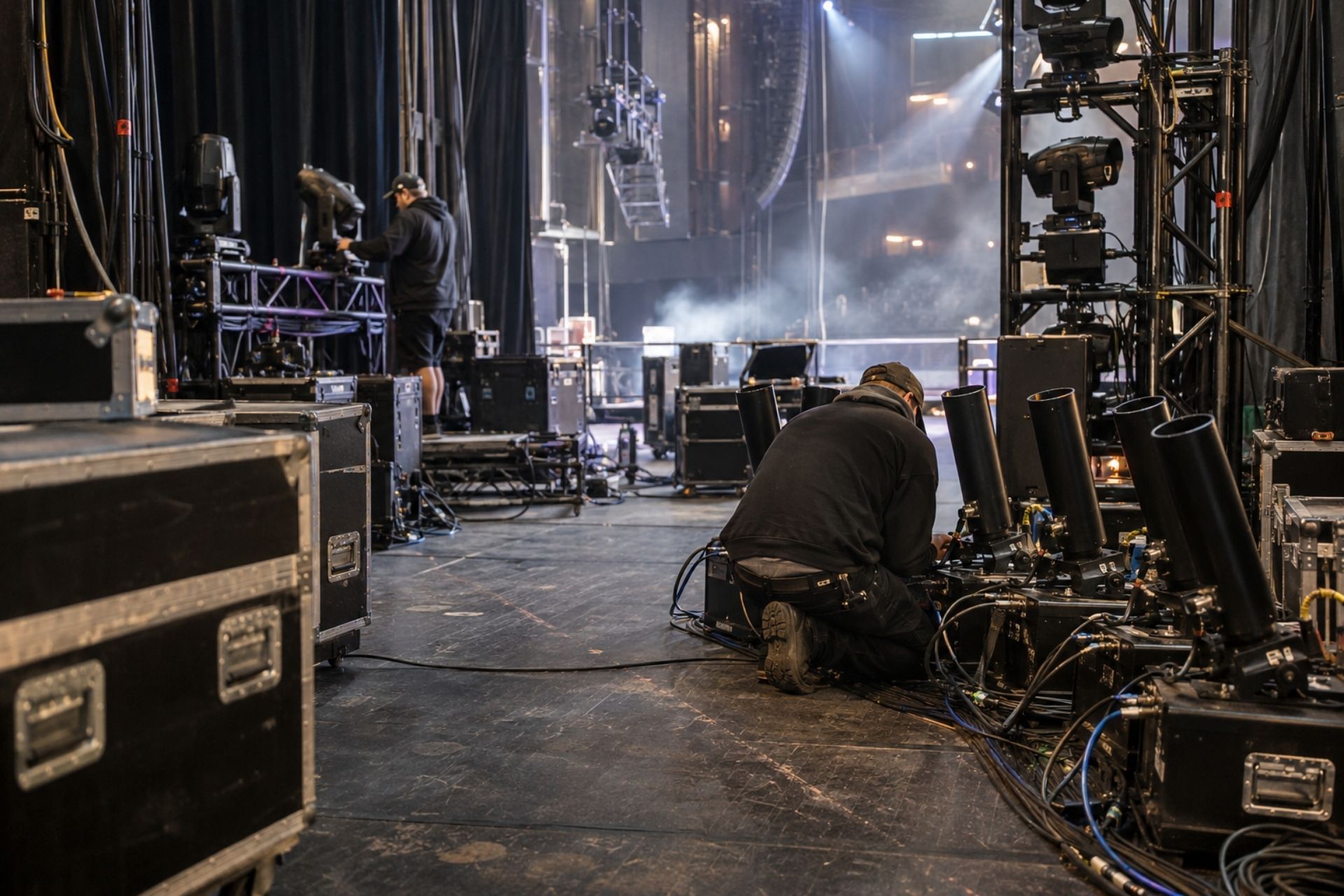
A single night of rented sound equipment for a live venue can represent a significant investment in consoles, line arrays, wireless microphone systems, and subwoofers. If a rainstorm floods the loading dock or a forklift clips a speaker stack during load-in, you could be staring at a bill that makes the entire gig's revenue look like pocket change. The frustrating part? Most standard business insurance policies won't cover that loss the way you'd expect.
This is the exact gap that inland marine insurance was designed to fill, and it's become especially critical for operators who rent sound gear for live venues and events. Whether you're a production company pulling equipment from a rental house for a weekend festival or a nightclub owner borrowing a premium PA system for a special event, understanding how this coverage works can save you from a financial disaster. Municipalities have been increasing scrutiny on outdoor event safety, with a projected 15% rise in municipal insurance requirements for temporary permits in 2026. That pressure trickles down to every vendor and operator in the chain. If you're handling rented audio equipment at any scale, the insurance question isn't optional anymore: it's a prerequisite for doing business.
Why Standard Business Insurance Isn't Enough for Sound Gear
Most venue operators and production companies carry some form of commercial insurance. The problem is that these policies were designed for fundamentally different risks than mobile, high-value audio equipment moving between locations.
The Limitations of Commercial General Liability
Commercial general liability (CGL) covers third-party bodily injury and property damage claims. If a speaker falls off a rigging point and injures an audience member, your CGL policy responds. But here's what it doesn't do: it won't pay to replace that speaker. CGL protects you against liability to others, not damage to equipment in your possession. A lot of operators learn this distinction the hard way, assuming their "general" policy is actually general enough to cover everything.
The gap gets wider with rented gear. Your CGL policy has no obligation to cover property that belongs to someone else, especially when that property was voluntarily placed in your care through a rental agreement. The rental house's own insurance may have subrogation rights, meaning their insurer could come after you for the loss.
How Property Insurance Fails When Equipment Leaves Your Studio
Commercial property insurance covers assets at a scheduled location: your warehouse, your studio, your permanent venue. The moment that rented mixing console leaves the rental house and rides in your truck to a festival site 200 miles away, your property policy typically stops responding. Most commercial property forms contain exclusions for property in transit and property at temporary locations.
Even if you own some of your gear and have it scheduled on a property policy, rented equipment is a different animal. It's not your property, so it doesn't appear on your asset schedule. And the "care, custody, and control" exclusion found in most CGL and property policies specifically carves out damage to property you're responsible for but don't own. This is exactly the scenario where
inland marine coverage becomes essential.
Understanding Inland Marine Insurance for Rented Audio Equipment
Inland marine insurance originated in the shipping industry but evolved to cover property in transit or stored at locations other than a fixed premises. For live event and venue operators, it's the most direct way to protect rented sound gear, whether it's sitting in your trailer, being set up on a festival stage, or traveling between gigs.
Bailee's Coverage: Protecting Gear in Your Care, Custody, and Control
Bailee's customer coverage is the specific inland marine form designed for businesses that temporarily hold someone else's property. When you rent a $30,000 digital mixing console from a rental house, you become the bailee: the party entrusted with someone else's goods. This coverage responds when that equipment is damaged, stolen, or destroyed while under your control.
The policy typically covers the full replacement or repair cost of the equipment, regardless of where the damage occurs. This is a critical distinction from property insurance, which is tied to a specific address. Firms like GrayStone Insurance Group, whose brokers average 20 years of experience in specialty markets, can structure bailee's coverage that matches the specific rental values you're working with, rather than forcing you into a one-size-fits-all policy.
Protection Against Transit Risks and Off-Site Damage
Transit is where most losses actually happen. Equipment gets damaged during loading, exposed to weather in open trailers, or stolen from vehicles parked overnight. Inland marine policies cover these transit risks by default, which is the entire point of the coverage form.
Off-site damage at temporary venues is equally covered. If a power surge at a fairground fries a rented amplifier rack, or wind topples a speaker stack during an outdoor setup, the inland marine policy responds. This matters more than ever now that event organizers are requiring digital proof of coverage before permits are issued, and many venues use software that
automates the rejection of vendors who lack valid Certificates of Insurance. Without an inland marine COI, you may not even get through the door.
Comparing Coverage Options: Basic vs. Comprehensive Plans
Not all inland marine policies are created equal. The difference between a basic and comprehensive plan can mean the difference between a smooth claim and an ugly surprise.
Comparison Table: Standard Property vs. Inland Marine
| Feature | Standard Property Policy | Inland Marine (Basic) | Inland Marine (Comprehensive) |
|---|---|---|---|
| Covers rented equipment | No | Yes, scheduled items | Yes, blanket or scheduled |
| Transit coverage | No | Limited (named perils) | Yes, all-risk |
| Off-premises coverage | No | Yes, with restrictions | Yes, worldwide |
| Theft from vehicle | No | Sometimes excluded | Typically covered |
| Electrical surge/power failure | Varies | Often excluded | Usually covered |
| Replacement cost valuation | Depreciated value | Actual cash value | Replacement cost available |
| Typical annual premium range | N/A | Varies by carrier | Varies by carrier |
The comprehensive plan costs more, but for operators handling $100,000 or more in rented gear across multiple events per year, the all-risk form with replacement cost valuation is almost always worth the premium difference. A single denied claim on a basic policy can cost more than years of the comprehensive upgrade.
Key Factors That Determine Your Premium Costs
Premiums for inland marine coverage on rented sound equipment aren't pulled from thin air. Underwriters look at several specific variables, and understanding them gives you real negotiating power.
Replacement Cost vs. Actual Cash Value
This is the single biggest factor in both your premium and your claim payout. Replacement cost coverage pays what it actually costs to replace the damaged gear with equivalent new equipment. Actual cash value (ACV) deducts depreciation, which can be brutal on audio equipment that loses value quickly on paper but costs just as much to replace in the real world.
A three-year-old digital console might have an ACV of $8,000 but cost $22,000 to replace. If you're liable to the rental house for replacement value (which most rental agreements require), an ACV policy leaves you holding a $14,000 gap. Always match your coverage valuation to your contractual obligation.
Deductible Levels and Their Impact on Monthly Rates
Higher deductibles lower your premium, but the math only works if you can absorb the deductible amount after a loss. For rented sound gear, deductibles typically vary. According to InsurTool, increasing a deductible to $2,500 can lead to a 15–20% reduction in annual premiums compared to a standard $500 deductible, but if you're filing a claim on a $4,000 wireless microphone system, you're only recovering $1,500.
GrayStone Insurance Group uses AI-powered risk modeling to help clients find the deductible sweet spot, balancing premium savings against realistic loss scenarios. For operators running 20 or more events per year, a lower deductible often pencils out better because the frequency of small losses adds up.
Common Questions About Sound Gear Insurance
FAQ: Do I need insurance if the rental house already has a policy? Yes. The rental house's policy covers their interest in the equipment, but their insurer will almost certainly subrogate against you: meaning they'll come after you or your insurer for reimbursement. Your rental agreement likely includes an indemnification clause making you responsible for damage while the gear is in your possession.
FAQ: Does this cover equipment stolen from my locked van? It depends on the policy form. Basic inland marine policies sometimes exclude theft from unattended vehicles. Comprehensive all-risk forms typically cover this scenario, provided the vehicle was locked and there's evidence of forced entry. Always confirm this specific coverage point before signing.
FAQ: Can I buy a policy for just a single weekend rental? Some insurers offer short-term or event-specific inland marine policies. These tend to cost more per day than an annual policy, but they make sense if you only rent equipment once or twice a year. For frequent renters, an annual policy with a blanket limit is far more cost-effective.
FAQ: What happens if I break the gear during a live performance? Accidental damage during normal use is typically covered under inland marine policies. This includes drops, spills, power surges, and similar mishaps. Intentional damage or gross negligence would be excluded, but honest accidents during setup, performance, and teardown are standard covered perils.
FAQ: How fast do I get paid if I file a claim? Claim timelines vary by insurer, but most inland marine claims on scheduled equipment resolve within 15 to 30 days once documentation is complete. Under the Unfair Claims Settlement Practices Act, insurers must generally accept or deny a claim within 21 days of proof of loss and issue payment within 30 days of acceptance, according to InsurTool. Having your rental agreement, equipment serial numbers, photos of the damage, and a police report (for theft) ready speeds things up considerably. GrayStone's 94% client retention rate is partly built on helping clients prepare documentation that accelerates the claims process.
Before You Buy a Policy
Rented sound gear for live venues represents a real financial exposure that standard business insurance simply wasn't designed to address. Inland marine coverage fills that gap precisely, protecting equipment in transit, at temporary locations, and in your care regardless of where the gig takes you.
Here's what to do before your next rental pickup. First, read your rental agreement carefully: look for indemnification language and required insurance minimums. Second, get quotes for both basic and comprehensive inland marine forms so you can see the actual cost difference. Third, make sure your valuation method (replacement cost vs. ACV) matches what the rental house will charge you if something goes wrong.
The One Big Beautiful Bill Act, signed in 2025, made
full expensing of equipment investments permanent, which is great news if you're buying gear outright. But for rented equipment, the insurance question remains squarely on your shoulders. Don't wait until a rain-soaked load-in or a theft at 3 a.m. forces the conversation. Get the right inland marine policy in place now, and make it one less thing standing between you and a successful show.
Search
INDEX
ABOUT THE AUTHOR:
CHAD KRAMER
I started GrayStone Insurance Group in 2018 with a simple conviction: the businesses everyone else turns away deserve a broker who won't. What began as a one-person operation has grown into a specialty commercial brokerage with offices across the country — but the mission hasn't changed. We find solutions for high-risk and hard-to-place businesses when other agencies run the other way.
I built this agency on integrity, hard work, and the tenacity to do the hard things well. Through our access to Excess & Surplus and specialty markets, my team and I place coverage standard carriers can't — and I treat every client's business like my own.
If you've been declined, non-renewed, or told your business is too complicated to insure, let's talk.