
business insurance

Manufacturing Insurance

What it doesn’t cover

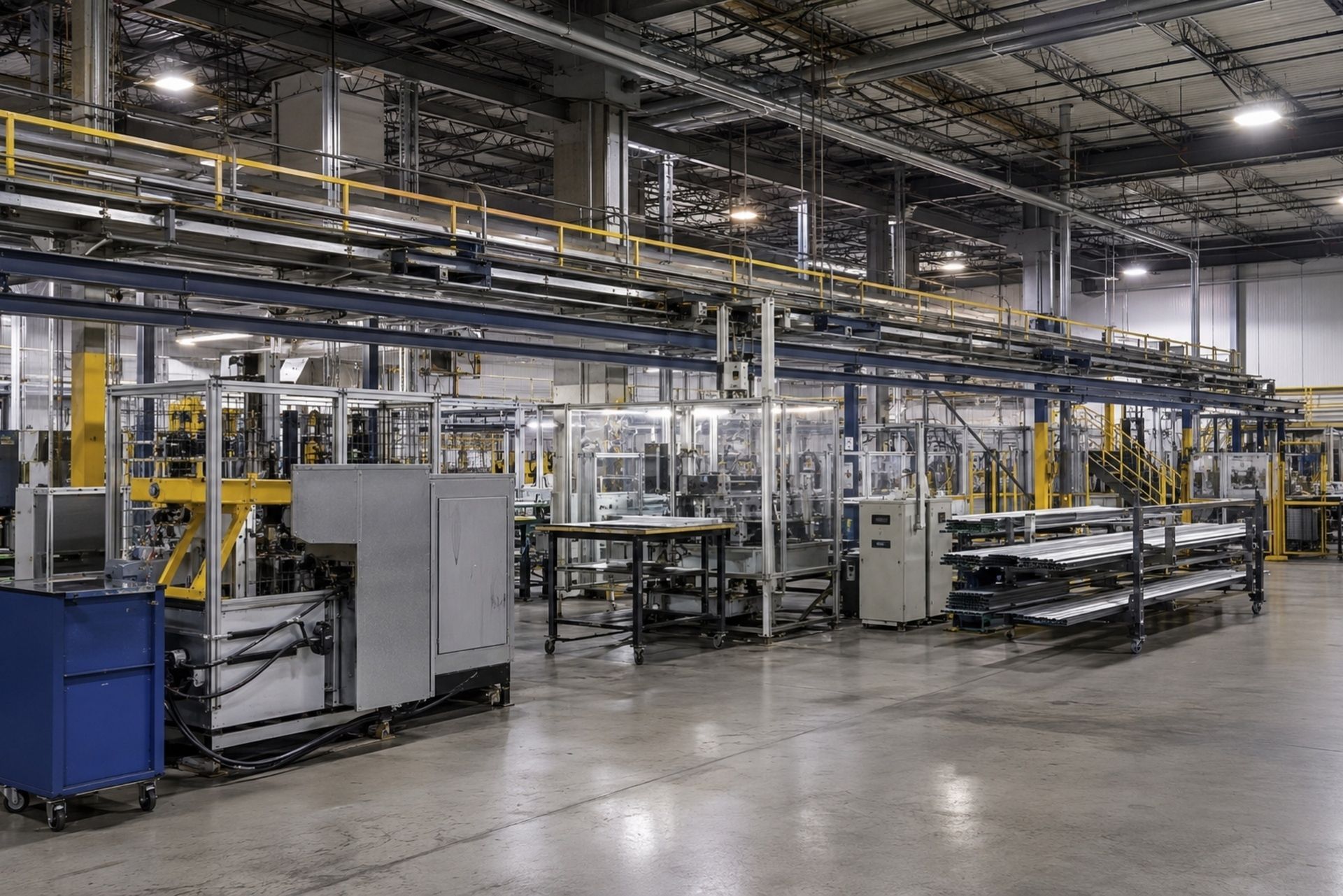
A single product recall can cost a mid-size manufacturer millions. A machine malfunction can shut down a production line for weeks. And if your operation involves chemicals, heavy equipment, or a claims history that makes underwriters nervous, finding adequate insurance coverage becomes its own full-time job.


Manufacturing insurance isn't a single policy: it's a layered strategy built around the specific risks your operation faces. The problem is that most manufacturers don't realize how exposed they are until a claim hits. Coverage gaps hide in the fine print, and standard commercial policies routinely exclude the exact scenarios that keep plant managers up at night. For operators already flagged as hard-to-place risks, the challenge compounds: fewer carriers are willing to quote, premiums spike, and the policies you can find may leave critical exposures uncovered.


This piece breaks down the essential coverages manufacturers need, the most common claims that drain budgets, and what operators with complex risk profiles should actually do about it. Whether you run a food processing facility, a metal fabrication shop, or a plastics extrusion plant, the stakes are the same: one uninsured event can end a business that took decades to build.

Essential Insurance Coverages for Modern Manufacturers

Manufacturing operations carry a unique mix of risks that off-the-shelf commercial policies rarely address. A machine shop faces different exposures than a food packaging plant, but both need coverage frameworks built around their specific operations, materials, and workforce. The right insurance program starts with understanding the core building blocks.

Core Liability Protections

General liability and product liability form the foundation. General liability covers third-party bodily injury and property damage on your premises: think a vendor who slips on an oily floor or a delivery driver injured by a forklift. Product liability kicks in after your goods leave the facility, covering claims that your product caused injury or damage to the end user.


Most manufacturers also need umbrella or excess liability policies to extend limits beyond what primary policies provide. A $1 million general liability limit sounds reasonable until a serious injury claim lands on your desk with a $3 million demand. Commercial auto liability is another piece: if your operation uses trucks for deliveries or material transport, those vehicles need dedicated coverage separate from your general commercial policy.

Property and Equipment Breakdown

Your building, inventory, raw materials, and finished goods all need property coverage. But here's where manufacturers often get caught: standard property policies may not cover equipment breakdown. A CNC machine that fails due to an electrical surge, a boiler that cracks from internal pressure, or a conveyor system that overheats and melts product: these are equipment breakdown claims, and they require a separate endorsement or standalone policy.


The distinction matters because equipment failures account for a significant share of manufacturing downtime. Replacement costs for specialized machinery can run six or seven figures, and lead times for custom equipment can stretch months. Make sure your policy covers not just the repair or replacement cost but also the spoiled materials and expediting expenses that come with it.

Business Interruption and Supply Chain Coverage

Business interruption insurance replaces lost income when a covered event forces your operation to shut down. Fire, flood, or major equipment failure can halt production for weeks. Without this coverage, you're still paying rent, salaries, and loan payments with zero revenue coming in.


Contingent business interruption takes this a step further by covering losses when a key supplier or customer experiences a disruption. The 2026 commercial insurance market outlook highlights supply chain volatility as a growing concern for manufacturers. If your sole source for a critical component shuts down due to a fire at their facility, contingent BI coverage can keep your business afloat while you scramble for alternatives.

Chad Kramer
CEO · Licensed Author

GrayStone Insurance Group is fully licensed and permitted to provide specialty commercial insurance solutions for high-risk and hard-to-place businesses across 17 states.

We proudly serve high-risk and hard-to-place businesses from coast to coast. As an independent specialty brokerage, our team works with leading Excess & Surplus and specialty carriers to make sure restaurants, bars, contractors, trucking companies, manufacturers, and other hard-to-place operations receive coverage that fits their real risks in California, Colorado, Florida, Georgia, Illinois, Iowa, Maryland, Michigan, Missouri, Nevada, New York, North Carolina, South Carolina, Tennessee, Texas, Utah, and Washington.

General Liability responds to the core exposures most operations in this category face. A typical policy answers third-party claims and the defense costs that come with them, so a single incident doesn't put the business at risk.

What it doesn’t cover

Every policy has boundaries. Knowing them up front is how you avoid an uncovered claim. Common exclusions include:
If your operation carries the exposures this policy answers, you need it — and many contracts, landlords and lenders require proof of it before you can work. GrayStone places General Liability for businesses across hospitality, construction, transportation, real estate and dozens of other classes, including hard-to-place and high-revenue accounts.

Which businesses need it

Every policy has boundaries. Knowing them up front is how you avoid an uncovered claim. Common exclusions include:

Every policy has boundaries. Knowing them up front is how you avoid an uncovered claim. Common exclusions include:

Comparing General Liability vs. Product Liability

These two coverages get confused constantly, and the confusion can be expensive. General liability protects your business from claims arising from your operations and premises. Product liability protects you from claims arising from the products you manufacture after they've been sold or distributed.


A welding shop where a visitor gets burned by a spark? General liability. That same shop's welded component fails in the field and injures someone? Product liability. The trigger is different, the claims process is different, and the underwriting considerations are different. Many manufacturers need both, and the limits should reflect the actual risk exposure, not just the minimum required by a contract.

Comparison Table: Liability Differences at a Glance

Feature General Liability Product Liability
What it covers Bodily injury/property damage on premises or from operations Injury/damage caused by your product after sale
When it triggers During business operations After product leaves your control
Common claims Slip-and-fall, property damage from operations Defective products, failure to warn, design flaws
Who files claims Visitors, vendors, passersby End users, distributors, retailers
Typical limits $1M per occurrence / $2M aggregate Varies widely by product risk: $1M to $10M+
Key underwriting factor Premises condition, operations type Product type, recall history, testing protocols

General Liability responds to the core exposures most operations in this category face. A typical policy answers third-party claims and the defense costs that come with them, so a single incident doesn't put the business at risk.

Common Claims that Impact the Manufacturing Industry

Understanding where claims come from helps you build smarter coverage. Two categories dominate manufacturing losses: product-related claims and workplace injuries.

Product Defects and Recalls

Product defect claims fall into three buckets: design defects, manufacturing defects, and failure-to-warn claims. A design defect means the product was inherently unsafe even when made correctly. A manufacturing defect means something went wrong during production. Failure-to-warn claims allege that inadequate labeling or instructions led to injury.


Recalls are especially brutal for manufacturers. Beyond the direct cost of retrieving and replacing products, you face reputational damage, regulatory scrutiny, and potential class action lawsuits. Product recall insurance is a separate coverage that many manufacturers skip because the premium feels steep: until a recall happens and the costs dwarf what the premium would have been. Manufacturing risk experts consistently rank product liability as one of the top exposures in the sector.

Workplace Injuries and Safety Incidents

The Bureau of Labor Statistics reported 2.5 million workplace injuries and illnesses in private industry in 2024, a 3.1% decline from the prior year. That's progress, but manufacturing still ranks among the most hazardous industries. Amputations, crush injuries, chemical burns, and repetitive strain injuries are all common.


Workers' compensation is mandatory in nearly every state, but the costs vary wildly based on your experience modification rate (EMR). A high EMR means you've had more claims than average, which drives up premiums. U.S. companies collectively spend over $50 billion annually on the top ten causes of serious workplace injuries, and manufacturing operations absorb a disproportionate share. OSHA's 2026 enforcement priorities continue to target manufacturing environments, with increased inspections focused on machine guarding, lockout/tagout compliance, and chemical exposure limits.

General Liability responds to the core exposures most operations in this category face. A typical policy answers third-party claims and the defense costs that come with them, so a single incident doesn't put the business at risk.

What it doesn’t cover

Every policy has boundaries. Knowing them up front is how you avoid an uncovered claim. Common exclusions include:

If your operation carries the exposures this policy answers, you need it — and many contracts, landlords and lenders require proof of it before you can work. GrayStone places General Liability for businesses across hospitality, construction, transportation, real estate and dozens of other classes, including hard-to-place and high-revenue accounts.

Which businesses need it

Every policy has boundaries. Knowing them up front is how you avoid an uncovered claim. Common exclusions include:

Every policy has boundaries. Knowing them up front is how you avoid an uncovered claim. Common exclusions include:
Challenges for Hard-to-Place Manufacturing Risks

Not every manufacturer can walk into a standard insurance market and get a competitive quote. Some operations carry risk profiles that make traditional carriers uncomfortable, and that's where things get complicated.

Why Certain Operations are Deemed High-Risk

Carriers evaluate manufacturers based on several factors: the materials you work with, your claims history, your safety record, the products you make, and the industries you serve. Operations involving flammable chemicals, explosive dust (wood, grain, metal), heavy presses, or products that go into safety-critical applications like automotive or aerospace often get flagged.


A history of frequent workers' comp claims, even minor ones, can push your EMR above 1.0 and trigger non-renewals. Prior product liability suits, even those you won, create underwriting hesitation. Newer operations without a track record face their own challenge: carriers can't assess what they can't see, so startups in high-hazard manufacturing often get declined outright.


GrayStone Insurance Group works with manufacturers in exactly this position. With brokers averaging 20 years of experience and access to specialty markets, they've built a track record of finding coverage for operations that other agencies turn away.

Navigating the Surplus Lines Market

When the standard (admitted) market says no, the surplus lines market becomes your path forward. The E&S market has grown 223% over the last decade and now functions as the primary marketplace for complex and emerging risks. Surplus lines carriers have more flexibility in pricing and policy terms because they aren't bound by the same rate regulations as admitted carriers.


The tradeoff? Surplus lines policies aren't backed by state guaranty funds, so if the carrier goes insolvent, you have less protection. Premiums tend to run higher, and policy forms may include exclusions or sublimits that standard policies don't. Working with a broker who understands surplus lines placement: someone who can read the policy forms and negotiate terms: is essential. GrayStone's data-driven underwriting approach, using AI-powered risk modeling for precision pricing, helps hard-to-place manufacturers secure coverage without overpaying for it.

General Liability responds to the core exposures most operations in this category face. A typical policy answers third-party claims and the defense costs that come with them, so a single incident doesn't put the business at risk.

Frequently Asked Questions About Manufacturing Insurance

Common Questions from Business Owners

Do I need product liability insurance if I only make components, not finished products? Yes. If your component fails and contributes to an injury or property damage, you can be named in the lawsuit alongside the finished product manufacturer. Component makers face the same product liability exposure as final assemblers.


What's the difference between an admitted and surplus lines carrier? Admitted carriers are licensed and regulated by your state's insurance department, with policies backed by state guaranty funds. Surplus lines carriers operate with more flexibility on pricing and terms but without that guaranty fund safety net.


How can I lower my workers' comp premiums? Focus on reducing your EMR by implementing strong safety programs, returning injured workers to modified duty quickly, and contesting questionable claims. A lower EMR directly reduces your premium.


Does my general liability policy cover product recalls? No. Product recall coverage requires a separate policy. General liability covers third-party injury claims but not the logistics, notification, and replacement costs of a recall.


What happens if my current carrier non-renews my policy? You'll need to find a new carrier, potentially in the surplus lines market. Start the process at least 90 days before your renewal date. A specialty broker with access to multiple markets can prevent a lapse in coverage.


Are there occupational health and safety changes in 2026 I should know about? OSHA is expanding enforcement around heat illness prevention, chemical exposure standards, and electronic recordkeeping requirements. These changes directly affect manufacturing operations and can influence your insurance costs.

General Liability responds to the core exposures most operations in this category face. A typical policy answers third-party claims and the defense costs that come with them, so a single incident doesn't put the business at risk.

What it doesn’t cover

Every policy has boundaries. Knowing them up front is how you avoid an uncovered claim. Common exclusions include:
If your operation carries the exposures this policy answers, you need it — and many contracts, landlords and lenders require proof of it before you can work. GrayStone places General Liability for businesses across hospitality, construction, transportation, real estate and dozens of other classes, including hard-to-place and high-revenue accounts.

Which businesses need it

Every policy has boundaries. Knowing them up front is how you avoid an uncovered claim. Common exclusions include:
Every policy has boundaries. Knowing them up front is how you avoid an uncovered claim. Common exclusions include:
What This Means for Your Business

Manufacturing insurance isn't something you set and forget. Your operations evolve, regulations shift, and the insurance market itself changes year to year. The manufacturers who avoid catastrophic uninsured losses are the ones who review their coverage annually, maintain strong safety programs, and work with brokers who actually understand manufacturing risks.


If your operation has been declined, non-renewed, or quoted premiums that seem unreasonable, that's a signal to work with a specialist, not to go without coverage. GrayStone Insurance Group maintains a 94% client retention rate because they treat hard-to-place risks as a specialty rather than a problem. The right broker doesn't just find you a policy: they build a coverage strategy that matches your actual exposure.


Get your policies reviewed before your next renewal. Identify the gaps now, while you still have time to fix them.

ABOUT THE AUTHOR:

CHAD KRAMER

I started GrayStone Insurance Group in 2018 with a simple conviction: the businesses everyone else turns away deserve a broker who won't. What began as a one-person operation has grown into a specialty commercial brokerage with offices across the country — but the mission hasn't changed. We find solutions for high-risk and hard-to-place businesses when other agencies run the other way.


I built this agency on integrity, hard work, and the tenacity to do the hard things well. Through our access to Excess & Surplus and specialty markets, my team and I place coverage standard carriers can't — and I treat every client's business like my own.

If you've been declined, non-renewed, or told your business is too complicated to insure, let's talk.

Coverages & policies

Plain-language coverage, expertly placed.

We lead with commercial lines and round out personal coverage where you need it. Every policy comes with an explanation — not jargon.

Contractors

Third-party bodily injury & property damage — the foundation for any operation.

Liquor Liability

Critical for bars, restaurants and venues serving alcohol — including A&B.

Commercial Property

Buildings, contents and equipment — including distressed and vacant risk.

Workers' Compensation

Statutory coverage for your crew — including high-mod and high-hazard classes.

Commercial Umbrella

Extra liability limits over your primary policies — essential for high-exposure risk.

Products Liability

Manufacturers, CBD and consumer-product exposure — including imports.

What clients say

Brokers who actually place it.

FAQ

Answers for the risks others won't cover

Getting declined, non-renewed, or told your business is "too high-risk" is frustrating — but it doesn't mean you're out of options. Here are answers to the questions we hear most from business owners who need coverage the standard market won't provide.

  • What kind of insurance does GrayStone specialize in?

    We're a specialty commercial brokerage built for high-risk and hard-to-place businesses — the risks standard carriers often turn away. Through our access to Excess & Surplus (E&S) and specialty markets, we place coverage that everyday agencies can't. Hospitality and construction are among our deepest areas of expertise.

  • My business was declined or non-renewed elsewhere. Can you still help?

    That's exactly what we do. A decline, a non-renewal, or a tough claims history doesn't mean you're out of options — it means your risk needs a broker with the right market access. Tell us your situation and we'll get to work finding a fit.

  • What is Excess & Surplus (E&S) insurance?

    E&S is specialty coverage for risks that standard "admitted" carriers won't write — often because a business is higher-risk, unusual, or has a complex history. As an independent broker, we tap into these specialty markets to place coverage where a typical agency hits a dead end.

  • What industries do you work with?

    We cover a wide range of commercial industries — from restaurants, bars, and hospitality to contractors, trucking, manufacturing, cannabis, and more. If your industry is considered high-risk or hard-to-place, there's a good chance we've handled it.


    Explore our industries →

  • Will you work with businesses that have prior claims or losses?

    Yes. Prior claims and losses are part of many of the risks we place every day. Every business is evaluated on its own merits — and a rocky history is often exactly why a specialty broker can help where others won't.

  • Are you an independent broker?

    Yes. We're not tied to a single carrier, so we shop your risk across multiple specialty and E&S markets to find coverage that actually fits — instead of forcing you into a one-size-fits-all policy.

Insights & resources

Know your risk before you buy.

Switching Agents Mid-Term and the Broker of Record Letter
19 July 2026
Switch insurance agents mid-term with a Broker of Record letter. Learn the BOR process, timelines, benefits, and how to change brokers without losing coverage.
What to Do After a Large Commercial Claim
19 July 2026
Learn what to do after a large commercial insurance claim, from documenting damage and filing claims to maximizing recovery and rebuilding your business.
Umbrella Limits: How Much Excess Liability Is Enough
19 July 2026
Learn how much umbrella insurance you need to protect your assets. Compare coverage limits, costs, and excess liability options for businesses.

Coverage that fits

Let's place the risk others won't.