
General Liability responds to the core exposures most operations in this category face. A typical policy answers third-party claims and the defense costs that come with them, so a single incident doesn't put the business at risk.
Finding insurance for a limited-service restaurant sounds like it should be straightforward. You're not running a nightclub or a demolition company. You sell burgers, tacos, or chicken sandwiches through a counter or drive-thru window. But here's the reality: limited-service restaurant insurance is one of the most frustrating coverages to place in the commercial market right now. Carriers see razor-thin margins, high employee turnover, grease fires, delivery drivers, and slip-and-fall claims, and many simply walk away. If you've been declined or quoted something absurd, you're not alone. The hospitality insurance market has tightened significantly through 2025 and into 2026, and quick-service concepts are bearing the brunt of that shift. This piece breaks down exactly why coverage is so difficult to secure, what gaps most operators don't realize they have, and how GrayStone Insurance Group approaches these hard-to-place risks differently.
The Risk Landscape for Limited-Service Restaurants
The limited-service restaurant category is enormous. It accounts for roughly half of all restaurant industry revenue in the United States, and the segment continues to grow as consumer habits favor speed and convenience. But that growth has brought increased scrutiny from insurance carriers who have watched claim frequency climb year over year.
What makes this segment particularly tricky from an underwriting perspective is the combination of volume, speed, and labor intensity. A single fast-casual location might serve 300 to 500 customers daily, each one representing a potential liability exposure. Multiply that across a franchise portfolio of 10 or 20 locations, and the math starts to concern even experienced underwriters.
Defining the Limited-Service Sector
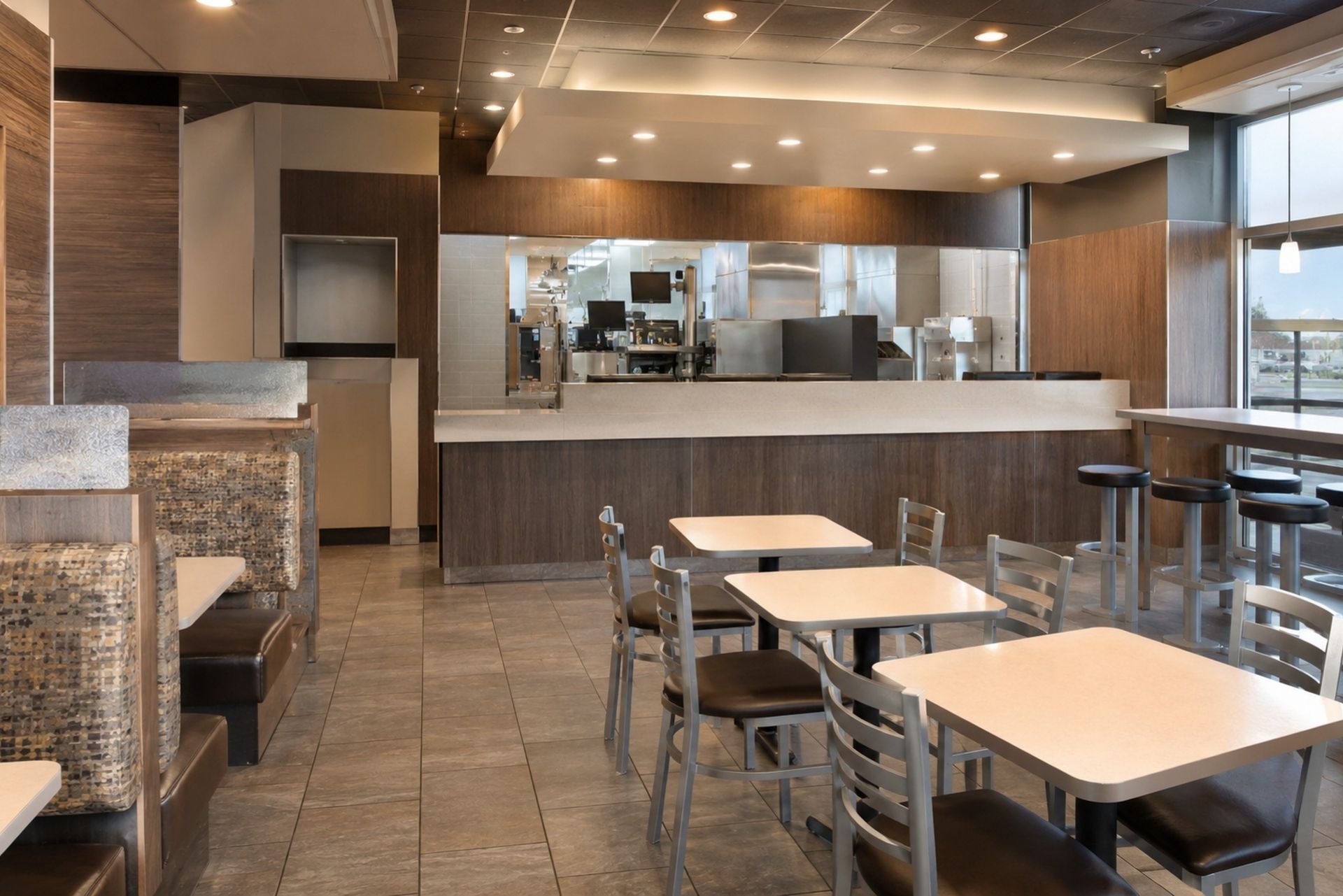
The term "limited-service" covers any restaurant where customers order at a counter, kiosk, or drive-thru rather than being served by waitstaff at a table. This includes fast food chains, fast-casual brands, coffee shops, pizza delivery operations, and food trucks. The National Restaurant Association projects that persistent cost increases will continue shaping the industry in 2026, which puts additional pressure on operators already struggling to manage overhead.
These businesses share a few common traits: high transaction volume, significant reliance on part-time or entry-level labor, heavy use of cooking equipment (fryers, grills, ovens), and increasingly, a delivery or off-premises component. Each of these traits carries its own insurance implications, and together they create a risk profile that many standard carriers simply don't want to touch.
Why Standard Carriers Avoid Quick-Service Models
Standard commercial carriers prefer predictable, low-frequency risks. A professional services firm with five employees in an office building is their ideal client. A 15-unit pizza franchise with delivery drivers, late-night hours, and constant employee churn is the opposite of that.
The loss ratios in restaurant insurance have been climbing. Carriers that wrote this business aggressively five or six years ago have since pulled back after watching claims eat into their profitability. Kitchen fires alone account for a disproportionate share of commercial property losses, and grease fires in quick-service kitchens are particularly destructive and fast-moving.
There's also the regulatory complexity. Health department violations, OSHA citations, wage-and-hour lawsuits, and employment practices claims all add layers of exposure that standard carriers would rather avoid. The result is a shrinking pool of willing markets and rising premiums for the operators left searching.
INDEX
GrayStone Insurance Group is fully licensed and permitted to provide specialty commercial insurance solutions for high-risk and hard-to-place businesses across 17 states.
We proudly serve high-risk and hard-to-place businesses from coast to coast. As an independent specialty brokerage, our team works with leading Excess & Surplus and specialty carriers to make sure restaurants, bars, contractors, trucking companies, manufacturers, and other hard-to-place operations receive coverage that fits their real risks in California, Colorado, Florida, Georgia, Illinois, Iowa, Maryland, Michigan, Missouri, Nevada, New York, North Carolina, South Carolina, Tennessee, Texas, Utah, and Washington.
Every policy has boundaries. Knowing them up front is how you avoid an uncovered claim. Common exclusions include:
Every policy has boundaries. Knowing them up front is how you avoid an uncovered claim. Common exclusions include:
Every policy has boundaries. Knowing them up front is how you avoid an uncovered claim. Common exclusions include:
General Liability responds to the core exposures most operations in this category face. A typical policy answers third-party claims and the defense costs that come with them, so a single incident doesn't put the business at risk.
If your firm provides any design, engineering, or consulting services alongside construction, you need both. A GL policy won't cover a claim alleging your design specifications caused a building envelope failure. That's a professional liability exposure, and it's one of the fastest-growing claim categories in construction.
Common Obstacles in Securing Coverage
Even operators who find a willing carrier often run into specific coverage gaps or exclusions that leave them exposed. Understanding these obstacles is the first step toward solving them.
High Foot Traffic and General Liability Concerns
A busy limited-service restaurant might see 400 or more customers walk through the door on a single day. Every one of those visits is a chance for a slip on a wet floor, a burn from hot coffee, or an allergic reaction to an undisclosed ingredient. General liability claims in food service are among the top risks restaurants can't afford to overlook, and insurers price accordingly.
The challenge isn't just frequency. It's severity. A single foodborne illness outbreak can generate dozens of claims simultaneously, and the legal costs alone can be devastating even before any settlement. Carriers that have been burned by these scenarios often impose strict exclusions or sub-limits on food contamination coverage, leaving operators thinking they're covered when they're really not.
Employee Turnover and Workers' Compensation Challenges
Labor costs in the limited-service restaurant sector average 31.7% of sales, and that figure drives a massive workers' compensation exposure. High turnover means a constant stream of new, undertrained employees operating dangerous equipment. Burns, cuts, and repetitive stress injuries are everyday occurrences.
The turnover itself creates an insurance problem. New hires are statistically far more likely to file a workers' comp claim than experienced employees. When your average tenure is measured in months rather than years, your mod rate suffers. Some operators see experience modification factors well above 1.0, which makes already expensive coverage even pricier. Carriers look at that churn and see uncontrollable risk.
The Impact of Delivery and Off-Premises Liability
The explosion of third-party delivery and in-house delivery programs has created a coverage headache that many restaurant owners don't fully appreciate. If your employee is driving a company vehicle or even their own car to deliver food, you have a commercial auto and hired/non-owned auto exposure that needs to be addressed.
Third-party platforms like DoorDash and Uber Eats don't necessarily shield you from liability either. If a customer gets sick from food that left your kitchen, the claim traces back to you regardless of who carried it to their door. And if you're operating your own delivery fleet, the commercial auto insurance market is brutally hard right now, with rate increases continuing to outpace other commercial lines in 2026.
| Feature | General Liability (GL) | Professional Liability (PL) |
|---|---|---|
| What it covers | Bodily injury, property damage from your operations | Errors, omissions, or negligent professional advice |
| Example claim | A customer trips over your tools at a job site | You spec the wrong breaker panel, causing an overload |
| Trigger | Physical harm or damage | Financial loss from professional mistakes |
| Completed operations | Yes, typically included | Depends on policy form |
| Defense costs | Usually outside the limit | Often inside the limit (erodes coverage) |
| Typical cost | $800-$2,500/year for solo operators | $500-$1,500/year depending on revenue |
One mistake I see constantly: deck builders carrying only general liability and assuming it covers design-related claims. It doesn't. If a homeowner claims you recommended the wrong decking material or designed a structure that couldn't handle snow load, that's a professional liability claim, and your CGL policy will deny it. Both coverages are essential, and they serve completely different purposes.
Comparing Basic vs. Comprehensive Protection
Not all restaurant insurance policies are created equal. The difference between a bare-minimum policy and a properly structured program can mean the difference between surviving a major claim and closing your doors.
Coverage Comparison Table
| Coverage Area | Basic Policy | Comprehensive Program |
|---|---|---|
| General Liability | $1M per occurrence, limited food contamination | $1M/$2M with full food contamination and product liability |
| Property | Building and contents only | Equipment breakdown, spoilage, business income included |
| Workers' Compensation | State minimum, no loss control | Full coverage with return-to-work programs and mod management |
| Commercial Auto | Often excluded or minimal | Hired/non-owned auto, delivery fleet coverage |
| Liquor Liability | Excluded | Included where applicable (beer/wine service) |
| Employment Practices | Excluded | Third-party and first-party EPLI included |
| Cyber Liability | Excluded | POS breach, customer data protection |
The basic column represents what many operators end up with after being declined by their first few carriers and settling for whatever they can get. The comprehensive column is what a properly placed program should look like. The gap between them is where businesses get hurt.
Standard carriers follow rigid underwriting boxes. If you don't fit, you're out. That's where working with a specialized brokerage changes the equation. GrayStone Insurance Group focuses specifically on hard-to-place commercial risks, and electrical contractors are one of the classes where that expertise matters most.
With brokers averaging 20 years of experience and a 94% client retention rate, GrayStone doesn't just submit your application to the first carrier that comes up. They build a risk narrative around your business, highlighting safety programs, training certifications, and loss control measures that standard carriers often ignore during their automated underwriting process.
Every policy has boundaries. Knowing them up front is how you avoid an uncovered claim. Common exclusions include:
Every policy has boundaries. Knowing them up front is how you avoid an uncovered claim. Common exclusions include:
Every policy has boundaries. Knowing them up front is how you avoid an uncovered claim. Common exclusions include:
General Liability responds to the core exposures most operations in this category face. A typical policy answers third-party claims and the defense costs that come with them, so a single incident doesn't put the business at risk.
The GrayStone Approach to Difficult Placements
GrayStone Insurance Group has built its reputation on writing the risks that other agencies can't or won't touch. Restaurant insurance, particularly for limited-service and quick-service concepts, is one of those areas where specialized expertise makes a real difference.
Leveraging Specialized Underwriting Knowledge
One word in that heading deserves a note: "leveraging" is overused in business writing, but in insurance it has a literal meaning. GrayStone's brokers, who average 20 years of industry experience, use relationships with surplus lines carriers and specialty markets that most retail agents simply don't have access to. They know which underwriters will look at a 12-unit taco franchise and which ones won't waste your time.
The agency also uses AI-powered risk modeling to present your account to carriers in the most favorable light possible. That means pulling together loss runs, safety protocols, equipment maintenance records, and operational data into a submission package that tells a complete story. A well-prepared submission can be the difference between a declination and a competitive quote. GrayStone's 94% client retention rate speaks to how well this approach works once clients experience it.
Custom Risk Mitigation for Fast-Casual Brands
Cookie-cutter policies don't work for limited-service restaurants because no two operations are identical. A drive-thru-only chicken concept has different exposures than a fast-casual bowl restaurant with a full dining room and a catering program.
GrayStone builds programs around your specific operation. That might mean structuring a large deductible workers' comp program for a multi-unit franchise to bring premiums down while implementing loss control measures that reduce claim frequency over time. Or it might mean finding a carrier willing to write your delivery fleet alongside your GL and property on a single program, which simplifies administration and often reduces total cost. The hospitality insurance market
continues to present challenges for real estate and hospitality businesses, but the right broker can still find competitive options.
Yes. The E&S market exists specifically for situations like this. You'll likely pay more, and your policy may include higher deductibles or specific exclusions related to past claim types. Demonstrating corrective action since those claims occurred helps significantly at renewal.
FProtecting Your Business for the Long Term
FAQ: How long does it take to get a hard-to-place policy?
Anywhere from a few days to several weeks. Simple E&S placements for well-documented risks can move quickly. Complex accounts requiring multiple carrier submissions, manuscript endorsements, or layered programs take longer. Starting the process 60-90 days before your renewal date is a smart move.
Your general liability policy does not cover your own property. You need an inland marine policy, sometimes called a tools and equipment floater, to cover theft of your tools from a vehicle, job site, or storage location. These policies typically cost $300 to $1,500 per year and are worth every penny.
FAQ: Does my policy cover my tools if they are stolen from my truck?
Do I need separate insurance for delivery drivers?
If your employees deliver food using their own vehicles, you need hired and non-owned auto coverage. Their personal auto policies won't cover accidents that happen during work. If you use third-party delivery services, review your contract carefully: you may still carry some liability exposure depending on how the arrangement is structured.
Frequently Asked Questions About Restaurant Insurance
Why do so many carriers decline limited-service restaurants? High claim frequency, kitchen fire risk, employee turnover, and delivery exposures combine to create a risk profile that falls outside most standard carriers' appetites. Surplus lines and specialty markets are often the best fit.
Does my franchise agreement dictate what insurance I need? Almost always, yes. Most franchisors require specific coverage types and minimum limits. Failing to meet those requirements can put your franchise agreement at risk, so review those obligations before shopping for a policy.
Do I need separate coverage for third-party delivery? You should confirm that your general liability policy covers food that leaves your premises. Many policies have exclusions for off-premises incidents. Hired and non-owned auto coverage is also critical if delivery drivers use personal vehicles.
How can I lower my workers' comp costs? Implement formal safety training, maintain equipment regularly, and establish a return-to-work program for injured employees. Over time, these steps reduce your experience modification factor, which directly lowers premiums.
What's the biggest coverage gap you see in restaurant policies? Employment practices liability. Wage-and-hour claims and discrimination lawsuits are increasingly common in food service, and most basic policies exclude EPLI entirely. It's a gap that can cost six figures to fill after the fact.
Is cyber liability really necessary for a restaurant?
If you process credit cards, yes. POS system breaches happen regularly in food service, and the costs of notification, forensic investigation, and potential fines add up fast.
Standard carriers follow rigid underwriting boxes. If you don't fit, you're out. That's where working with a specialized brokerage changes the equation. GrayStone Insurance Group focuses specifically on hard-to-place commercial risks, and electrical contractors are one of the classes where that expertise matters most.
With brokers averaging 20 years of experience and a 94% client retention rate, GrayStone doesn't just submit your application to the first carrier that comes up. They build a risk narrative around your business, highlighting safety programs, training certifications, and loss control measures that standard carriers often ignore during their automated underwriting process.
Every policy has boundaries. Knowing them up front is how you avoid an uncovered claim. Common exclusions include:
Every policy has boundaries. Knowing them up front is how you avoid an uncovered claim. Common exclusions include:
Every policy has boundaries. Knowing them up front is how you avoid an uncovered claim. Common exclusions include:
General Liability responds to the core exposures most operations in this category face. A typical policy answers third-party claims and the defense costs that come with them, so a single incident doesn't put the business at risk.
Making the Right Choice for Your Franchise
Placing insurance for limited-service restaurants is genuinely difficult right now, and pretending otherwise doesn't help anyone. The market has contracted, rates have climbed, and carriers are pickier than they've been in years. But difficult doesn't mean impossible.
The operators who fare best are the ones who work with brokers who specialize in hard-to-place hospitality risks, present clean and well-documented submissions, and invest in loss control before claims force their hand. If you're running a quick-service or fast-casual concept and struggling to find adequate coverage at a reasonable price, it's worth having a conversation with a team that does this every day.
Reach out to GrayStone Insurance Group to discuss your specific situation. Their team can evaluate your current program, identify gaps, and access markets that most agencies can't. That's not a sales pitch: it's the practical reality of how hard-to-place restaurant insurance gets placed.
ABOUT THE AUTHOR:
CHAD KRAMER
I started GrayStone Insurance Group in 2018 with a simple conviction: the businesses everyone else turns away deserve a broker who won't. What began as a one-person operation has grown into a specialty commercial brokerage with offices across the country — but the mission hasn't changed. We find solutions for high-risk and hard-to-place businesses when other agencies run the other way.
I built this agency on integrity, hard work, and the tenacity to do the hard things well. Through our access to Excess & Surplus and specialty markets, my team and I place coverage standard carriers can't — and I treat every client's business like my own.
If you've been declined, non-renewed, or told your business is too complicated to insure, let's talk.
Coverages & policies
Plain-language coverage, expertly placed.
We lead with commercial lines and round out personal coverage where you need it. Every policy comes with an explanation — not jargon.

Contractors
Third-party bodily injury & property damage — the foundation for any operation.

Liquor Liability
Critical for bars, restaurants and venues serving alcohol — including A&B.

Commercial Property
Buildings, contents and equipment — including distressed and vacant risk.

Workers' Compensation
Statutory coverage for your crew — including high-mod and high-hazard classes.

Commercial Umbrella
Extra liability limits over your primary policies — essential for high-exposure risk.
Products Liability
Manufacturers, CBD and consumer-product exposure — including imports.
What clients say
Brokers who actually place it.
FAQ
Answers for the risks others won't cover
Getting declined, non-renewed, or told your business is "too high-risk" is frustrating — but it doesn't mean you're out of options. Here are answers to the questions we hear most from business owners who need coverage the standard market won't provide.
What kind of insurance does GrayStone specialize in?
We're a specialty commercial brokerage built for high-risk and hard-to-place businesses — the risks standard carriers often turn away. Through our access to Excess & Surplus (E&S) and specialty markets, we place coverage that everyday agencies can't. Hospitality and construction are among our deepest areas of expertise.
My business was declined or non-renewed elsewhere. Can you still help?
That's exactly what we do. A decline, a non-renewal, or a tough claims history doesn't mean you're out of options — it means your risk needs a broker with the right market access. Tell us your situation and we'll get to work finding a fit.
What is Excess & Surplus (E&S) insurance?
E&S is specialty coverage for risks that standard "admitted" carriers won't write — often because a business is higher-risk, unusual, or has a complex history. As an independent broker, we tap into these specialty markets to place coverage where a typical agency hits a dead end.
What industries do you work with?
We cover a wide range of commercial industries — from restaurants, bars, and hospitality to contractors, trucking, manufacturing, cannabis, and more. If your industry is considered high-risk or hard-to-place, there's a good chance we've handled it.
Will you work with businesses that have prior claims or losses?
Yes. Prior claims and losses are part of many of the risks we place every day. Every business is evaluated on its own merits — and a rocky history is often exactly why a specialty broker can help where others won't.
Are you an independent broker?
Yes. We're not tied to a single carrier, so we shop your risk across multiple specialty and E&S markets to find coverage that actually fits — instead of forcing you into a one-size-fits-all policy.
Insights & resources
Know your risk before you buy.