
General Liability responds to the core exposures most operations in this category face. A typical policy answers third-party claims and the defense costs that come with them, so a single incident doesn't put the business at risk.
Commercial Property and Equipment Breakdown
Your building, furniture, sound systems, lighting rigs, POS equipment, and bar inventory all need protection. Commercial property insurance covers damage from fire, storms, vandalism, and other covered perils. Equipment breakdown coverage, which is often a separate endorsement, handles mechanical and electrical failures in refrigeration units, HVAC systems, and commercial kitchen equipment.
Iowa's weather creates specific property risks. Hail damage, windstorms, and the occasional tornado make adequate property limits essential. If you lease your space, your landlord's policy covers the building shell, but everything inside is your responsibility. Don't forget business interruption coverage either: if a kitchen fire shuts you down for three months, this pays your ongoing expenses while you rebuild.
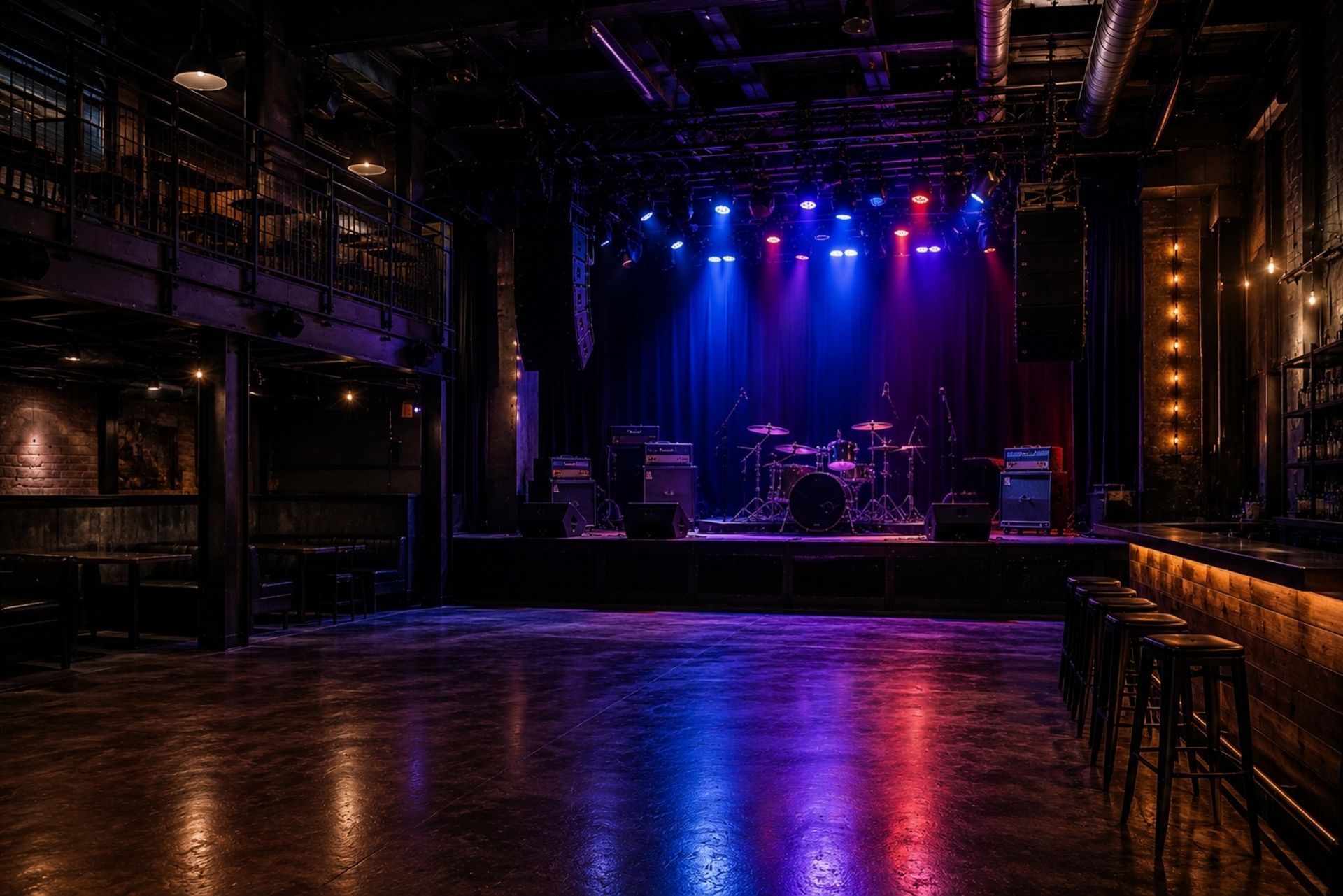
Running a live music venue in Michigan means juggling a hundred moving parts: booking acts, managing staff, keeping the sound system from blowing out on a Saturday night. Insurance probably isn't the part that excites you. But it's the part that keeps everything else from falling apart when something goes wrong. And in a state where independent music venues contribute significant economic impact to local communities, getting your coverage right isn't optional. Michigan has specific laws around alcohol liability, fire safety, and employer obligations that directly shape what insurance you need and how much it costs. Whether you run a 100-capacity dive bar with weekend bands or a 2,000-seat concert hall, the stakes are real. A single slip-and-fall claim or liquor liability lawsuit can wipe out years of revenue. This guide breaks down the insurance requirements, realistic cost expectations, and compliance obligations that MI venue operators actually need to understand.
Essential Insurance Coverage for Michigan Venues
Michigan venue operators face a unique combination of risks that generic business insurance policies rarely address well. You're dealing with large crowds, amplified sound, alcohol service, expensive equipment, and performers who may or may not have their own coverage. Each of these creates a distinct liability exposure.
The baseline coverage most venues need includes general liability, commercial property, liquor liability, workers' compensation, and some form of inland marine or equipment floater. Many operators also carry umbrella policies to extend their liability limits, which has become increasingly important as entertainment industry market pressures continue to push claim costs higher in 2026. Skipping any of these creates gaps that can be financially devastating.
General Liability and Michigan Dram Shop Laws
General liability is the foundation. It covers bodily injury and property damage claims from third parties: a patron trips over a cable, gets hit by a crowd surfer, or slips on a wet floor. For Michigan venues, standard GL limits start at $1 million per occurrence and $2 million aggregate, though landlords and municipalities often require higher limits.
Here's where Michigan gets specific. The state's Dram Shop Act (MCL 436.1801) holds liquor licensees liable if they serve alcohol to a visibly intoxicated person who then causes injury to a third party. This isn't a theoretical risk. Dram shop claims in Michigan regularly produce six-figure settlements, and nuclear verdicts are reshaping how carriers price liability risk across the board.
Standard general liability policies exclude liquor liability. You need a separate liquor liability policy or endorsement, and Michigan insurers price this based on your annual alcohol revenue. A venue doing $500,000 in bar sales annually will pay significantly more than one doing $100,000. This is one area where working with a broker who understands high-risk hospitality, like GrayStone Insurance Group, makes a measurable difference in both coverage quality and premium accuracy.
Property and Equipment Protection
Your building, interior buildout, sound systems, lighting rigs, and stage equipment represent a massive investment. Commercial property insurance covers damage from fire, storms, vandalism, and other covered perils. But standard property policies often undervalue the specialized equipment that live music venues depend on.
Inland marine or equipment floater policies fill this gap. They cover portable and installed sound equipment, mixing boards, lighting systems, and instruments owned by the venue. If you've invested $150,000 in a sound system, make sure your policy reflects replacement cost, not depreciated value. The difference between those two numbers can be $80,000 or more after a claim.
One common mistake: assuming the performer's gear is their problem. It usually is, but if your faulty wiring damages a touring band's equipment, your venue could be on the hook. Equipment breakdown coverage, sometimes called mechanical breakdown insurance, protects against electrical failures and HVAC malfunctions that can cascade into bigger losses.
Workers' Compensation State Mandates
Michigan law requires workers' compensation coverage for virtually all employers, with very limited exceptions. If you have even one employee, you need it. This applies to bartenders, sound techs, door staff, and anyone else on your payroll. The penalties for non-compliance are severe: fines of up to $1,000 per day and potential criminal misdemeanor charges.
Independent contractors are a gray area that trips up many venue operators. Michigan uses a multi-factor test to determine worker classification, and simply calling someone a contractor doesn't make it so. If your "independent" sound engineer works a regular schedule, uses your equipment, and takes direction from your staff, the state may classify them as an employee. That means you owe workers' comp coverage for them, and retroactive penalties if you didn't carry it.
INDEX
GrayStone Insurance Group is fully licensed and permitted to provide specialty commercial insurance solutions for high-risk and hard-to-place businesses across 17 states.
We proudly serve high-risk and hard-to-place businesses from coast to coast. As an independent specialty brokerage, our team works with leading Excess & Surplus and specialty carriers to make sure restaurants, bars, contractors, trucking companies, manufacturers, and other hard-to-place operations receive coverage that fits their real risks in California, Colorado, Florida, Georgia, Illinois, Iowa, Maryland, Michigan, Missouri, Nevada, New York, North Carolina, South Carolina, Tennessee, Texas, Utah, and Washington.
Every policy has boundaries. Knowing them up front is how you avoid an uncovered claim. Common exclusions include:
Every policy has boundaries. Knowing them up front is how you avoid an uncovered claim. Common exclusions include:
Every policy has boundaries. Knowing them up front is how you avoid an uncovered claim. Common exclusions include:
General Liability responds to the core exposures most operations in this category face. A typical policy answers third-party claims and the defense costs that come with them, so a single incident doesn't put the business at risk.
If your firm provides any design, engineering, or consulting services alongside construction, you need both. A GL policy won't cover a claim alleging your design specifications caused a building envelope failure. That's a professional liability exposure, and it's one of the fastest-growing claim categories in construction.
General liability covers the basics: a patron slips on a wet floor, a ceiling tile falls, someone trips over a cord. Liquor liability is a separate, specialized coverage that responds when alcohol service is the proximate cause of an injury or property damage. Most general liability policies explicitly exclude alcohol-related claims, which means relying on GL alone leaves your biggest risk completely uncovered.
Liquor liability premiums for NC bars typically range from $2,500 to $12,000 annually, depending on revenue, venue type, and claims history. High-volume nightclubs with entertainment and dance floors sit at the top of that range. GrayStone Insurance Group works with carriers that specialize in these placements, which matters because many standard agencies simply can't get competitive quotes for venues with significant liquor exposure.
Liquor Liability vs. General Liability
This is the coverage gap that sinks nightclub owners. Standard general liability policies almost always exclude assault and battery claims, and nightclubs are where these claims happen most frequently. A patron gets punched by another patron, or a bouncer uses excessive force: without an assault and battery endorsement, you're paying for the defense and any settlement out of pocket.
These endorsements typically add $1,500 to $5,000 to your annual premium, but the alternative is absorbing a claim that can easily exceed $100,000. Some carriers offer sub-limits (say, $100,000 per occurrence within a $1 million policy), while others provide full-limit coverage. Read the fine print carefully, because sub-limited assault and battery coverage can still leave you significantly exposed.
Assault and Battery Endorsements
Comparing Coverage: Basic vs. Comprehensive Protection
Not every venue needs the same policy structure. A small bar hosting acoustic sets twice a month has different exposure than a dedicated concert venue with nightly shows and a full bar program. Here's how basic and comprehensive coverage stacks up:
| Coverage Element | Basic Protection | Comprehensive Protection |
|---|---|---|
| General Liability | $1M per occurrence / $2M aggregate | $2M per occurrence / $5M aggregate |
| Liquor Liability | Included via endorsement, lower limits | Standalone policy, $1M+ limits |
| Property | Building and basic contents | Building, contents, equipment floaters |
| Workers' Comp | State minimum | State minimum plus employer's liability |
| Umbrella/Excess | None | $1M-$5M umbrella |
| Event Cancellation | Not included | Included for headliner shows |
| Assault & Battery | Often excluded | Sub-limited or full coverage |
The assault and battery line is worth paying attention to. Many standard policies exclude claims arising from fights or security incidents, which are among the most common claims at music venues. If your policy excludes A&B, you're essentially self-insuring your highest-frequency risk.
Factors Influencing Insurance Costs in Michigan
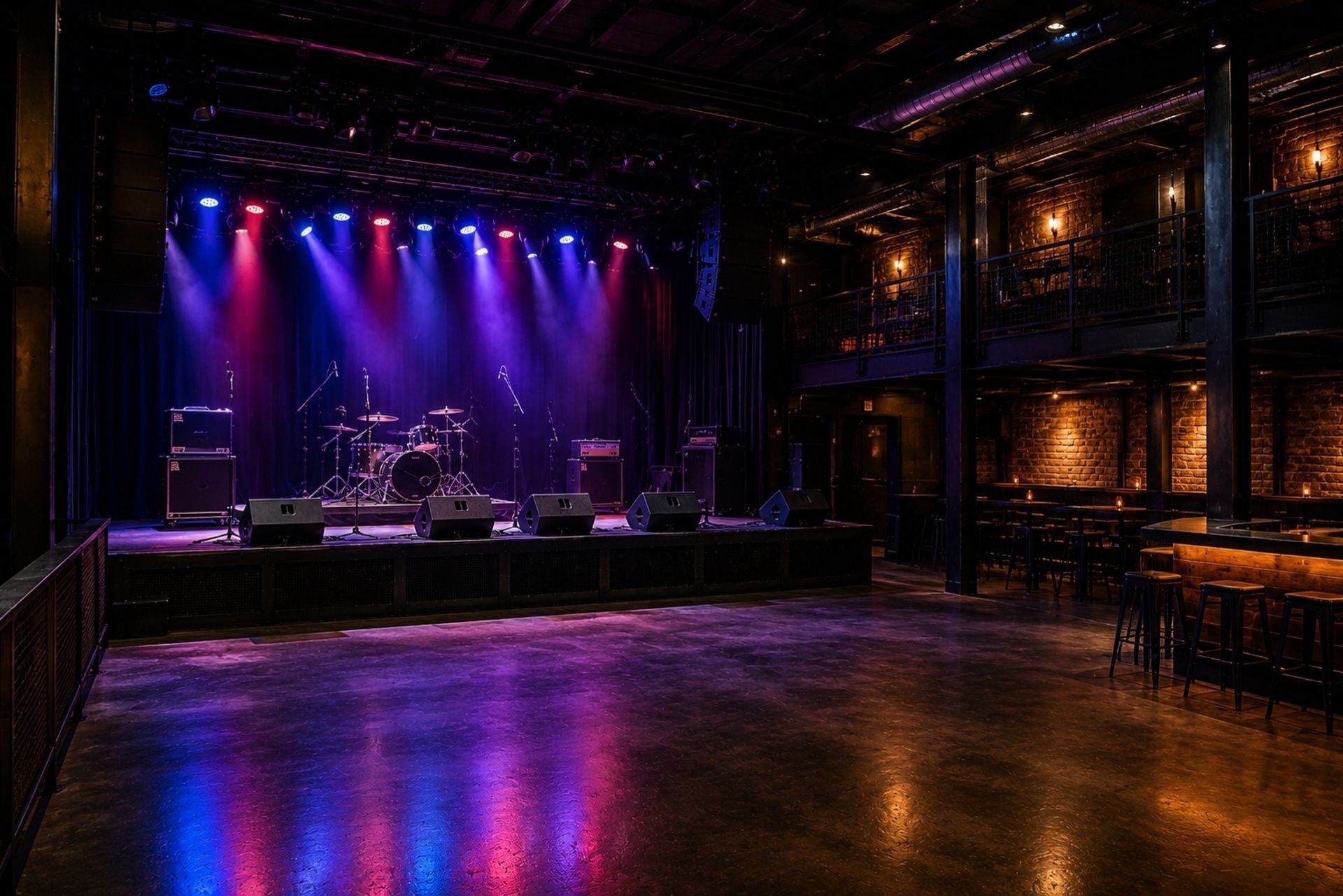
Pricing for venue insurance in Michigan varies widely. Basic liability coverage for single-day live music events typically ranges from $300 to $1,500 or more, depending on attendance size and whether alcohol is served. Annual policies for full-time venues run anywhere from $5,000 to $50,000+, with most mid-size venues landing in the $12,000 to $25,000 range for a comprehensive package.
Venue Capacity and Alcohol Sales Volume
These are the two biggest premium drivers. A 200-capacity room pays less than a 1,500-capacity venue, all else being equal. Insurers price general liability partly on square footage and maximum occupancy because more people means more potential claims.
Alcohol sales volume matters even more. Liquor liability premiums are typically calculated as a percentage of gross alcohol revenue. A venue where bar sales represent 60% of total revenue will face higher premiums than one where alcohol is 20% of the business. Some carriers also factor in the ratio of beer and wine sales versus spirits, since higher-proof drinks correlate with more intoxication-related incidents.
Historical Claims and Safety Records
Your loss history follows you. Venues with prior claims, especially liquor liability or assault-related claims, will pay substantially more. Three or more claims in a five-year period can make you difficult to insure through standard markets entirely.
That said, a clean record works in your favor. Venues that can demonstrate documented safety protocols, trained security staff, responsible beverage service certification, and regular maintenance records often qualify for better rates. GrayStone Insurance Group's brokers, who average 20 years of experience in high-risk placements, frequently help venue operators present their risk profile in a way that gets better underwriting outcomes. The data you bring to the table matters.
Every policy has boundaries. Knowing them up front is how you avoid an uncovered claim. Common exclusions include:
Every policy has boundaries. Knowing them up front is how you avoid an uncovered claim. Common exclusions include:
Every policy has boundaries. Knowing them up front is how you avoid an uncovered claim. Common exclusions include:
General Liability responds to the core exposures most operations in this category face. A typical policy answers third-party claims and the defense costs that come with them, so a single incident doesn't put the business at risk.
Compliance and Licensing Requirements for MI Operators
Insurance and licensing are intertwined in Michigan. You can't maintain one without the other, and lapses in either can shut you down.
Michigan Liquor Control Commission (MLCC) Standards
The MLCC regulates all alcohol sales in Michigan, and live music venues serving alcohol must hold the appropriate license class. Most venues need a Class C license (for spirits, beer, and wine) or a specific entertainment permit. The MLCC can and does require proof of insurance as a condition of licensure.
Specific MLCC requirements include maintaining liquor liability coverage with minimum limits that satisfy commission standards. If your policy lapses, the MLCC can suspend your license. Reinstatement isn't automatic and involves additional fees and potential hearings. Keep your certificates of insurance current and make sure your insurer sends renewal confirmations directly to the MLCC.
The commission also conducts compliance checks and can issue violations for overservice, service to minors, and failure to maintain required insurance documentation on premises. Each violation increases your risk profile and, by extension, your insurance costs.
Local Municipal Fire and Safety Codes
Beyond state requirements, your municipality imposes its own fire and safety codes that directly affect your insurance. Maximum occupancy limits are set by local fire marshals based on building layout, exits, and fire suppression systems. Exceeding posted capacity isn't just a code violation: it can void your insurance coverage entirely.
Most Michigan municipalities require annual fire inspections for entertainment venues. Common issues that trigger problems include blocked exits, inadequate emergency lighting, expired fire extinguishers, and improper storage of pyrotechnics or stage effects. If your venue uses any special effects involving flame, fog, or CO2, you'll need specific permits and may need additional insurance endorsements.
Detroit, Grand Rapids, Ann Arbor, and Lansing each have their own supplemental requirements beyond state code. Check with your local building and fire departments before assuming you're compliant based on state standards alone.
Common Questions About Venue Insurance
Do I need insurance for a one-time concert or festival? Yes. Single-event policies are available and typically cost $300 to $1,500 depending on attendance and alcohol service. Most property owners and municipalities require proof of event insurance before granting permits.
Does my general liability policy cover fights at my venue? Usually not. Most standard GL policies exclude assault and battery. You need a specific endorsement or a policy designed for entertainment venues that includes A&B coverage.
Are touring performers covered under my venue's insurance? Your policy covers your liability, not theirs. If a performer injures an audience member with a thrown object, your venue may still face a claim. Require performers to carry their own liability insurance and name your venue as an additional insured.
How does Michigan's no-fault auto law affect my venue? If a patron leaves your venue intoxicated and causes a car accident, Michigan's no-fault system covers their medical bills through auto insurance. But the injured third party can still sue your venue under the Dram Shop Act for serving a visibly intoxicated person.
Can I bundle my venue insurance into one policy? Yes. A Business Owner's Policy, or BOP, bundles general liability and property coverage. However, BOPs rarely include adequate liquor liability or entertainment-specific coverages, so you'll still need supplemental policies.
What happens if my insurance lapses? Beyond losing coverage, a lapse can trigger MLCC license suspension, lease violations, and difficulty obtaining future coverage. Carriers view lapses as a red flag, and your next policy will likely cost more.
Every policy has boundaries. Knowing them up front is how you avoid an uncovered claim. Common exclusions include:
Every policy has boundaries. Knowing them up front is how you avoid an uncovered claim. Common exclusions include:
Every policy has boundaries. Knowing them up front is how you avoid an uncovered claim. Common exclusions include:
General Liability responds to the core exposures most operations in this category face. A typical policy answers third-party claims and the defense costs that come with them, so a single incident doesn't put the business at risk.
Your Next Steps Toward Securing Your Venue
Getting the right insurance for a Michigan music venue isn't about buying the cheapest policy. It's about matching your actual risk exposures to coverage that will hold up when you need it. The venues that get burned are the ones running on bare-minimum policies that exclude their most likely claims.
Start by auditing your current coverage against the categories outlined above. Pay special attention to liquor liability limits, assault and battery exclusions, and equipment valuations. If you're underinsured in any of these areas, you're carrying risk you probably can't afford. Carriers that specialize in entertainment and event insurance understand the nuances that generalist agencies miss.
GrayStone Insurance Group works with Michigan venue operators who've been declined or poorly served by standard carriers. With a 94% client retention rate built on transparent advocacy, their team can assess your specific risk profile and place coverage that actually fits. Reach out for a consultation before your next renewal: the cost of getting this wrong is always higher than the cost of getting it right.
ABOUT THE AUTHOR:
CHAD KRAMER
I started GrayStone Insurance Group in 2018 with a simple conviction: the businesses everyone else turns away deserve a broker who won't. What began as a one-person operation has grown into a specialty commercial brokerage with offices across the country — but the mission hasn't changed. We find solutions for high-risk and hard-to-place businesses when other agencies run the other way.
I built this agency on integrity, hard work, and the tenacity to do the hard things well. Through our access to Excess & Surplus and specialty markets, my team and I place coverage standard carriers can't — and I treat every client's business like my own.
If you've been declined, non-renewed, or told your business is too complicated to insure, let's talk.
Coverages & policies
Plain-language coverage, expertly placed.
We lead with commercial lines and round out personal coverage where you need it. Every policy comes with an explanation — not jargon.

Contractors
Third-party bodily injury & property damage — the foundation for any operation.

Liquor Liability
Critical for bars, restaurants and venues serving alcohol — including A&B.

Commercial Property
Buildings, contents and equipment — including distressed and vacant risk.

Workers' Compensation
Statutory coverage for your crew — including high-mod and high-hazard classes.

Commercial Umbrella
Extra liability limits over your primary policies — essential for high-exposure risk.
Products Liability
Manufacturers, CBD and consumer-product exposure — including imports.
What clients say
Brokers who actually place it.
FAQ
Answers for the risks others won't cover
Getting declined, non-renewed, or told your business is "too high-risk" is frustrating — but it doesn't mean you're out of options. Here are answers to the questions we hear most from business owners who need coverage the standard market won't provide.
What kind of insurance does GrayStone specialize in?
We're a specialty commercial brokerage built for high-risk and hard-to-place businesses — the risks standard carriers often turn away. Through our access to Excess & Surplus (E&S) and specialty markets, we place coverage that everyday agencies can't. Hospitality and construction are among our deepest areas of expertise.
My business was declined or non-renewed elsewhere. Can you still help?
That's exactly what we do. A decline, a non-renewal, or a tough claims history doesn't mean you're out of options — it means your risk needs a broker with the right market access. Tell us your situation and we'll get to work finding a fit.
What is Excess & Surplus (E&S) insurance?
E&S is specialty coverage for risks that standard "admitted" carriers won't write — often because a business is higher-risk, unusual, or has a complex history. As an independent broker, we tap into these specialty markets to place coverage where a typical agency hits a dead end.
What industries do you work with?
We cover a wide range of commercial industries — from restaurants, bars, and hospitality to contractors, trucking, manufacturing, cannabis, and more. If your industry is considered high-risk or hard-to-place, there's a good chance we've handled it.
Will you work with businesses that have prior claims or losses?
Yes. Prior claims and losses are part of many of the risks we place every day. Every business is evaluated on its own merits — and a rocky history is often exactly why a specialty broker can help where others won't.
Are you an independent broker?
Yes. We're not tied to a single carrier, so we shop your risk across multiple specialty and E&S markets to find coverage that actually fits — instead of forcing you into a one-size-fits-all policy.
Insights & resources
Know your risk before you buy.