
General Liability responds to the core exposures most operations in this category face. A typical policy answers third-party claims and the defense costs that come with them, so a single incident doesn't put the business at risk.
Heavy Equipment and Transport Risks
Debris removal requires serious machinery: excavators, front-end loaders, grapple trucks, roll-off containers, and flatbed trailers. Each piece of equipment represents a significant asset that needs inland marine or equipment floater coverage. The transport component adds commercial auto liability, often with vehicles exceeding 26,000 pounds GVW, which triggers its own set of underwriting requirements.
Equipment breakdowns during emergency response work compound the problem. When a hydraulic line fails on an excavator at a disaster site, the contractor faces not just repair costs but potential delay penalties and the expense of bringing in replacement equipment on short notice.
Spray Foam Insulation (SPF) Complications
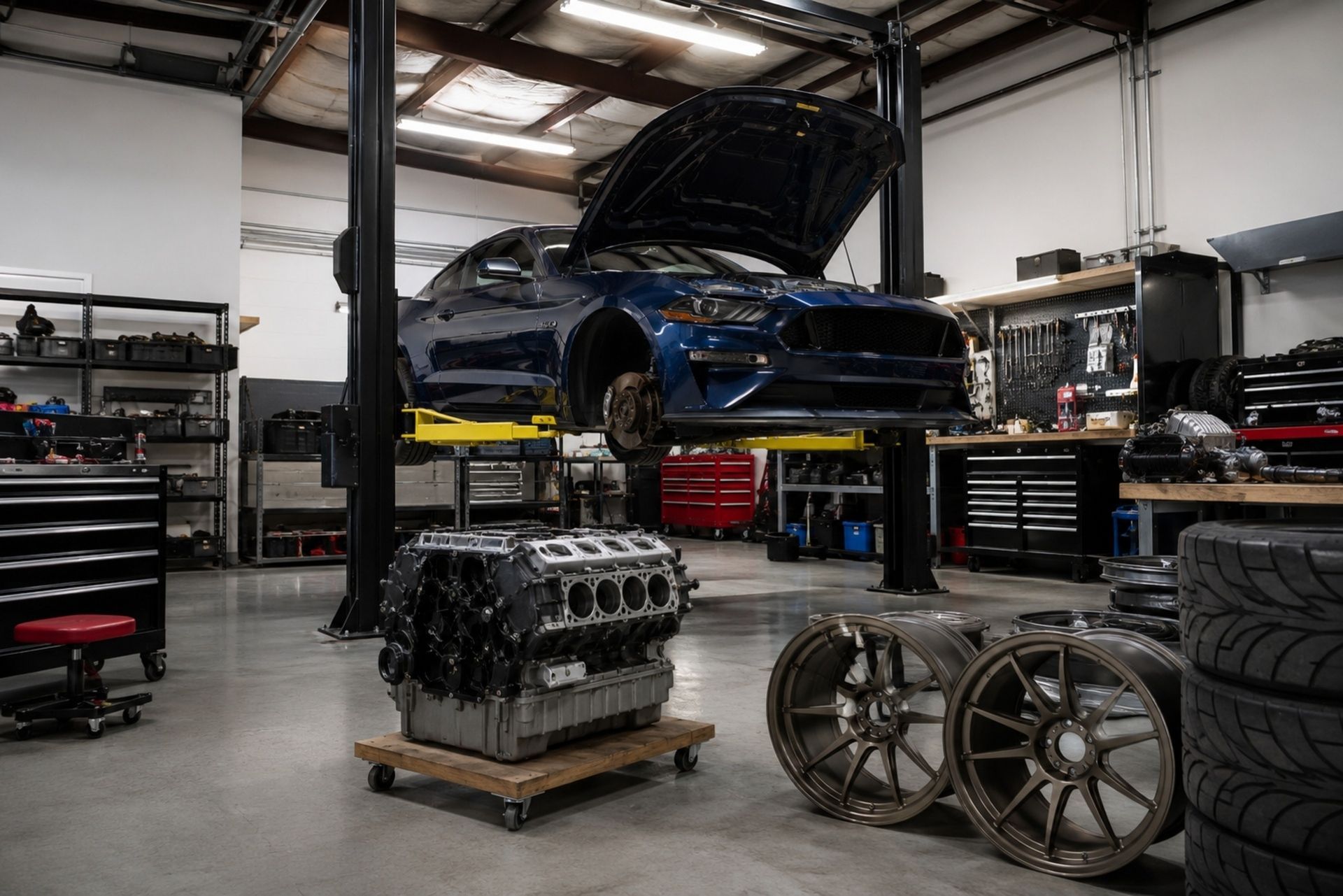
A performance shop owner in Houston recently told me his insurance got non-renewed mid-policy after his carrier discovered he was doing ECU tuning on turbocharged engines. No claims. No incidents. Just a carrier that realized what the shop actually does and decided the risk wasn't worth it. This story isn't unusual. Finding insurance for performance shops is one of the hardest placements in the specialty automotive world, and the problem is getting worse. Commercial auto and garage liability rates for specialty automotive businesses have increased by 7% to 15% in the first quarter of 2026 alone, and that's for shops that can even get quoted. If your shop touches turbo kits, dyno tuning, nitrous systems, or racing components, you already know the drill: applications denied, exclusions stacked, or premiums so high they eat your margins. This piece breaks down exactly why coverage for performance and tuning shops is so difficult to place and what GrayStone Insurance Group does differently to get these businesses covered properly.
The High-Risk Reality of Performance Shop Operations
Performance shops occupy a unique and uncomfortable space in the insurance world. You're not a standard auto repair facility swapping brake pads and doing oil changes. You're modifying vehicles to operate beyond factory specifications, sometimes dramatically so. That distinction matters enormously to underwriters.
The risk profile of a performance shop includes elements that make traditional carriers deeply uncomfortable: modified engines producing double or triple their factory horsepower, vehicles driven at extreme speeds on tracks or off-road, and aftermarket components that void manufacturer warranties. A single catastrophic failure on a customer's modified vehicle can generate a liability claim in the six- or seven-figure range. Insurers see these operations and calculate that the frequency and severity of potential claims far exceed what a standard garage policy is designed to handle.
Why Traditional Carriers Avoid Custom Tuning and Modifications
Standard commercial insurers build their risk models around predictable operations. A brake shop, a tire center, or a general mechanic fits neatly into actuarial tables built over decades of claims data. Performance shops don't.
Custom tuning introduces variables that are nearly impossible for traditional underwriters to model. When your technician writes a custom ECU map for a twin-turbo build, the insurer has no standardized way to assess the risk of that specific calibration failing at 7,000 RPM on a highway. The insurance industry's growing reliance on AI-powered risk modeling is helping some specialty carriers price these risks more accurately, but most mainstream insurers simply don't have the data or appetite to try.
There's also the question of completed operations liability. Once that modified vehicle leaves your bay, your shop remains liable for the work performed. If a customer's supercharger kit fails and causes a wreck six months later, the claim comes back to you. Traditional carriers often exclude completed operations for modification work entirely, leaving shops exposed to their biggest risk.
The Financial Impact of Component Failure at High Speeds
The math here is sobering. A stock sedan in a fender-bender might generate $15,000 to $30,000 in claims. A modified vehicle experiencing component failure at track speeds or on a highway can produce claims exceeding $500,000 when you factor in bodily injury, vehicle damage, and third-party property destruction.
I've seen claims where a poorly secured turbo oil line caused an engine fire on a customer's car two weeks after installation. The resulting claim included the vehicle replacement, a damaged garage where the car was parked, and medical bills for minor burns. Total: $340,000. That single claim exceeded what the shop paid in premiums over its entire operating history.
This kind of exposure is why carriers either decline performance shops outright or load policies with exclusions that gut the coverage. And shops that don't read their policies carefully often discover these gaps only when they file a claim.
INDEX
GrayStone Insurance Group is fully licensed and permitted to provide specialty commercial insurance solutions for high-risk and hard-to-place businesses across 17 states.
We proudly serve high-risk and hard-to-place businesses from coast to coast. As an independent specialty brokerage, our team works with leading Excess & Surplus and specialty carriers to make sure restaurants, bars, contractors, trucking companies, manufacturers, and other hard-to-place operations receive coverage that fits their real risks in California, Colorado, Florida, Georgia, Illinois, Iowa, Maryland, Michigan, Missouri, Nevada, New York, North Carolina, South Carolina, Tennessee, Texas, Utah, and Washington.
Every policy has boundaries. Knowing them up front is how you avoid an uncovered claim. Common exclusions include:
Every policy has boundaries. Knowing them up front is how you avoid an uncovered claim. Common exclusions include:
Every policy has boundaries. Knowing them up front is how you avoid an uncovered claim. Common exclusions include:
General Liability responds to the core exposures most operations in this category face. A typical policy answers third-party claims and the defense costs that come with them, so a single incident doesn't put the business at risk.
If your firm provides any design, engineering, or consulting services alongside construction, you need both. A GL policy won't cover a claim alleging your design specifications caused a building envelope failure. That's a professional liability exposure, and it's one of the fastest-growing claim categories in construction.
Core Coverages vs. Specialized Performance Protection
Most shop owners assume their garage liability policy covers everything happening under their roof. That assumption has cost a lot of people a lot of money. The gap between what standard garage policies cover and what a performance shop actually needs is significant.
Comparison: Standard Garage Liability vs. Performance-Specific Policies
Here's where the differences become concrete:
| Coverage Area | Standard Garage Policy | Performance-Specific Policy |
|---|---|---|
| General Liability | Included | Included |
| Completed Operations | Often excluded for mods | Included for specified work |
| Dyno Operations | Typically excluded | Covered with safety protocols |
| Customer Vehicle (Garagekeepers) | Limited to book value | Can cover modified value |
| Track Testing | Excluded | Available as endorsement |
| Product Liability (Parts Sold) | Basic coverage | Extended to aftermarket parts |
| Professional Liability | Not included | Available for tuning errors |
| Nitrous/Forced Induction Work | Excluded | Covered with restrictions |
The garagekeepers coverage gap alone catches many shops off guard. A customer drops off a $120,000 modified Supra, and your standard policy covers it at book value for a stock model, maybe $45,000. If that car is damaged or destroyed in your care, you're personally on the hook for the difference.
Understanding Professional Liability for Engine Calibrations
Professional liability, sometimes called errors and omissions coverage, is critical for shops doing ECU tuning and calibration work. This coverage protects you when a tuning decision, not a mechanical failure, causes damage.
Say your tuner sets timing too aggressively on a customer's built engine, and the result is detonation that destroys the motor. That's not a product defect. It's a professional error in calibration. Without professional liability coverage, your general liability policy likely won't respond to that claim. The state-by-state insurance market conditions heading into 2026 show tightening availability for professional liability in specialty auto, making early placement even more important.
GrayStone Insurance Group has seen this exact scenario play out multiple times with shops that came to them after a claim was denied under a standard policy. The fix isn't complicated, but it requires a broker who understands what tuning shops actually do day to day.
The 2026 market has seen property catastrophe rates drop 14.7% in early renewals, which is good news for builders risk. But excess liability premiums have moved sharply in the other direction, with hikes ranging from 7% to well above that depending on the risk profile. Getting the right stack of coverage at the right price requires more than just calling your local agent.
How GrayStone Navigates the Hard-to-Place Market
Getting performance shop insurance placed requires a broker who speaks two languages: the technical language of the shop and the risk language of the underwriter. Most brokers don't know what a dyno pull is, let alone how to explain to an underwriter why it's a controlled process with manageable risk.
GrayStone's approach relies on brokers averaging 20 years of experience in hard-to-place markets, combined with data-driven underwriting intelligence that helps match shops with the right specialty carriers. Instead of submitting a generic application to a dozen carriers and hoping one bites, they build a risk narrative that frames the shop's operations in terms underwriters can evaluate.
Leveraging Specialized Underwriting for Dyno Operations
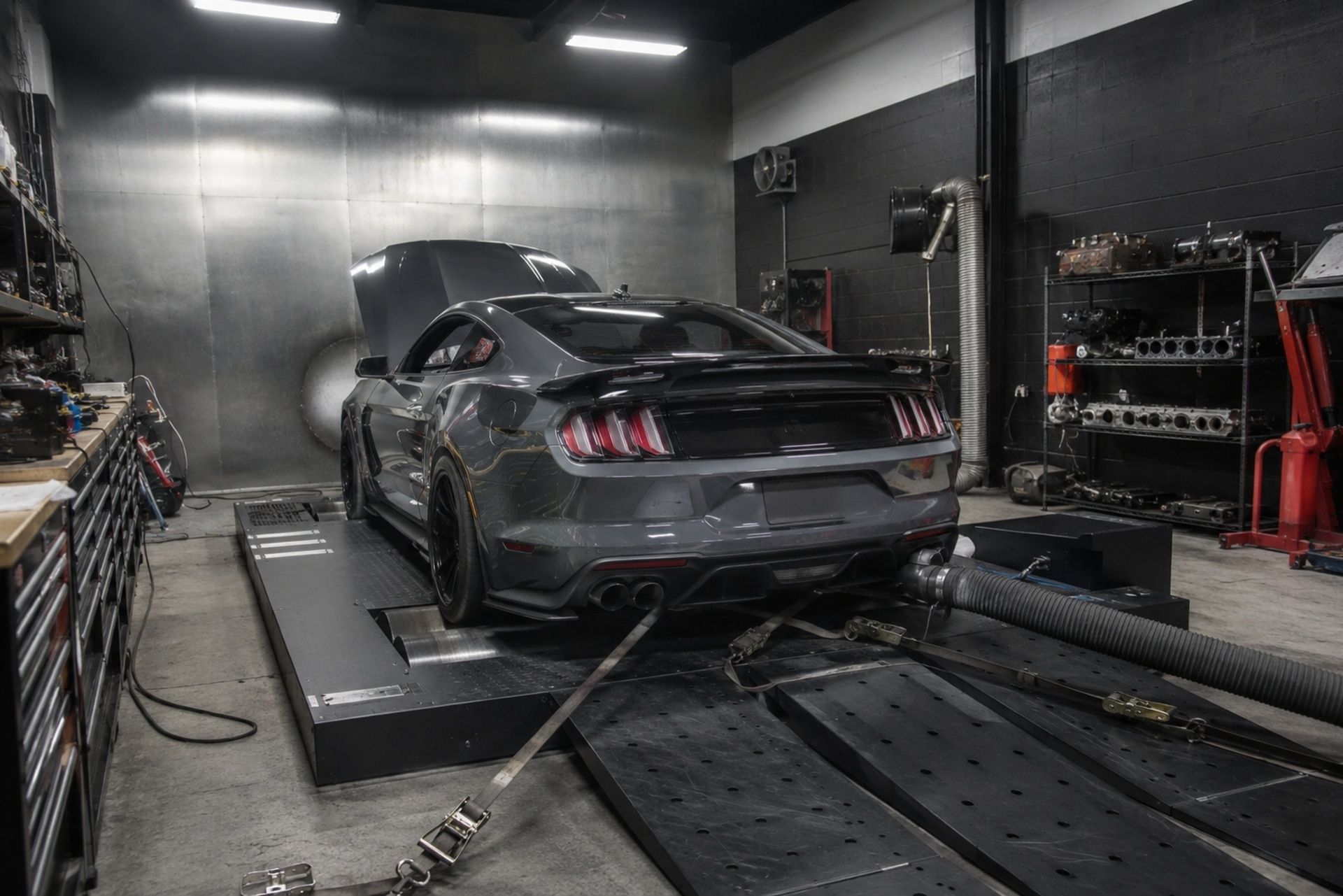
Dyno operations are one of the most common reasons performance shops get declined. Underwriters picture an engine exploding on a dyno and sending shrapnel through the shop. That can happen, but it's rare when proper safety protocols are in place.
The key is presenting dyno operations with documentation: containment systems, safety straps, blast shields, fire suppression, and operator training records. GrayStone works with shops to build this documentation before submitting to underwriters, which dramatically changes the conversation. Instead of "this shop runs engines at redline indoors," the narrative becomes "this shop operates a contained dyno cell with documented safety procedures and incident-free history."
That distinction has been the difference between a declination and a bindable quote more times than I can count.
Custom Solutions for Off-Road and Racing Exclusions
Nearly every standard policy excludes racing and off-road activities. For shops that build race cars, prep off-road vehicles, or test customer builds at the track, these exclusions effectively void coverage for a significant portion of their work.
Specialty carriers accessed through GrayStone can write endorsements that cover track testing, off-road builds, and even some sanctioned racing support. These aren't blanket coverages. They come with specific conditions around driver qualifications, event types, and vehicle specifications. But they exist, and for shops that need them, they're the difference between operating with real protection and operating with a policy full of holes. You can explore GrayStone's approach to performance shop coverage to see how these placements are structured.
Every policy has boundaries. Knowing them up front is how you avoid an uncovered claim. Common exclusions include:
Every policy has boundaries. Knowing them up front is how you avoid an uncovered claim. Common exclusions include:
Every policy has boundaries. Knowing them up front is how you avoid an uncovered claim. Common exclusions include:
General Liability responds to the core exposures most operations in this category face. A typical policy answers third-party claims and the defense costs that come with them, so a single incident doesn't put the business at risk.
Essential Safety Protocols to Lower Your Premiums
Underwriters reward shops that demonstrate genuine risk management. Here are the protocols that have the biggest impact on your premium:
- Install and maintain fire suppression systems in dyno rooms and welding areas
- Use vehicle restraint systems rated for the horsepower levels you're testing
- Require signed work authorizations detailing every modification performed
- Maintain detailed records of all tuning files, dyno sheets, and calibration changes
- Carry out annual safety training for all technicians, with documentation
- Install security cameras covering the shop floor, parking area, and dyno cell
- Keep customer vehicles in a secured, fire-rated storage area overnight
These aren't just insurance checkboxes. They're practices that reduce actual incidents. The broader industry trend toward proactive risk management is reshaping how specialty carriers evaluate shops, and the ones investing in safety infrastructure are seeing meaningful premium reductions of 10% to 20%.
Why does my insurance keep going up even though I haven't had any claims? Claims in the broader construction industry drive rate increases across the board. Even with a clean loss history, you're affected by market-wide trends like nuclear verdicts and increased material costs that inflate claim values.
Can I save money by classifying workers as subcontractors instead of employees? This is one of the most common and dangerous mistakes contractors make. Misclassification can result in audit penalties, uncovered workers' comp claims, and state fines. If a worker is functionally an employee, treat them as one.
What limits should I carry for general liability? Most commercial contracts require $1M per occurrence and $2M aggregate at minimum, with an umbrella policy bringing total limits to $5M or more. Your specific needs depend on project size and contract requirements.
Do I need a separate policy for each project? Not usually. A practice policy covers all your operations, though large projects may require project-specific coverage or wrap-ups. Your broker should review each contract to determine what's needed.
What happens if my subcontractor's insurance lapses mid-project? You're exposed. Your policy may respond, but you'll likely face a deductible and potential premium increase. Continuous certificate tracking is essential, and many contractors now use automated verification platforms.
How long does completed operations coverage last? Typically tied to your policy period, but statutes of repose vary by state: some allow construction defect claims up to 10 years after completion. Make sure your coverage extends long enough to match your state's statute.
When admitted carriers decline your application, the surplus lines market becomes your path to coverage. Surplus lines insurers aren't bound by the same rate and form regulations as admitted carriers, giving them flexibility to write policies for unusual or high-hazard risks. The U.S. surplus lines market has grown substantially as more businesses find themselves unable to secure standard market coverage.
Working with a broker who has established surplus lines relationships is critical. GrayStone Insurance Group, for example, specializes in placing coverage for hard-to-place contractors through its surplus lines partnerships, using data-driven risk modeling to match operators with the right carrier. Not every surplus lines broker understands construction, so look for one with specific trade experience.
Navigating the Surplus Lines Market
Impact of Claims History on Future Premiums
Your loss history follows you. A single large claim can increase premiums for three to five years, and multiple claims within a short window can make you virtually uninsurable in the standard market. Your experience modification rate (EMR) in workers comp directly reflects your claims history relative to peers in your classification.
The good news: you can improve your EMR over time by reducing claim frequency and severity. Implement return-to-work programs, contest questionable claims, and invest in loss control. Brokers with deep industry knowledge, like those averaging 20+ years of experience at firms such as GrayStone, can help you build a narrative around your risk improvement efforts that resonates with underwriters.
Start with your safety program. Documented training, proper PPE protocols, and a clean claims history are the fastest path to lower premiums. Beyond that, working with a broker who understands risk assessment for specialty construction trades can help you avoid overpaying for coverage you don't need while making sure you're not exposed on the coverages you do.
Bundling your GL, inland marine, and commercial auto with a single carrier or program often yields better pricing than buying each separately. Raising your deductible from $1,000 to $2,500 can also reduce premiums by 10-15% on general liability.
FAQ: How can I lower my insurance costs without losing coverage?
What This Means for Your Business
Concrete finishing is a skilled trade that deserves insurance coverage designed for its actual risks, not a generic contractor policy with half the important coverages stripped out. The difficulty in placing this insurance isn't a reflection of your business: it's a reflection of a market that doesn't understand your trade well enough to price it fairly.
If you're paying too much, carrying policies with critical exclusions, or getting declined altogether, the problem is almost certainly your current broker's market access, not your operation. GrayStone Insurance Group specializes in exactly these hard-to-place risks, connecting concrete contractors with carriers who actually want to write this business.
The right policy protects your equipment, your completed work, your crew, and your reputation. Don't settle for less just because a few carriers said no. Reach out to GrayStone and get a quote built around what your concrete business actually does.
Common Questions About Performance Shop Insurance
Does my standard garage policy cover dyno testing? Almost certainly not. Most standard garage policies exclude dynamometer operations entirely. You need a specific endorsement or a specialty policy that includes dyno coverage with documented safety protocols.
What happens if a customer crashes a car I modified? Your completed operations coverage responds to claims arising from your work. If your modification contributed to the accident, you could be liable. Without proper completed operations coverage, you're paying out of pocket.
Can I get coverage for race car builds? Yes, but not from standard carriers. Specialty markets can write coverage for race car fabrication and preparation, though they'll typically exclude coverage while the vehicle is actually competing.
How much does performance shop insurance cost? Premiums vary widely based on revenue, services offered, and claims history. Most shops pay between $8,000 and $25,000 annually for a comprehensive package. Shops doing heavy forced induction or nitrous work land on the higher end.
Do I need separate coverage for parts I sell? If you sell aftermarket parts, you need product liability coverage. Your general liability won't cover a claim arising from a defective turbo kit you sold, even if you didn't install it.
Will my premium go down if I stop doing certain services? Possibly. Dropping high-risk services like nitrous installation can reduce your premium, but it also reduces your revenue. A better approach is documenting safety protocols for those services and working with a broker who can present them properly to underwriters.
Every policy has boundaries. Knowing them up front is how you avoid an uncovered claim. Common exclusions include:
Every policy has boundaries. Knowing them up front is how you avoid an uncovered claim. Common exclusions include:
Every policy has boundaries. Knowing them up front is how you avoid an uncovered claim. Common exclusions include:
General Liability responds to the core exposures most operations in this category face. A typical policy answers third-party claims and the defense costs that come with them, so a single incident doesn't put the business at risk.
Making the Right Choice for Your Shop's Future
Performance shops face a real coverage crisis, and the market isn't getting easier. Rates are climbing, carriers are pulling back from specialty auto, and the shops that wait until renewal to figure this out are the ones scrambling for coverage with bad options.
The shops that fare best treat insurance as part of their business strategy, not an afterthought. They document their safety practices, maintain clean claims histories, and work with brokers who understand their operations. GrayStone Insurance Group's 94% client retention rate exists because shop owners who find proper coverage tend to stay put.
If your current policy is full of exclusions you didn't know about, or if you've been declined and don't know where to turn, start by getting an honest assessment of your actual exposure. The cost of the right policy is always less than the cost of the wrong claim.
ABOUT THE AUTHOR:
CHAD KRAMER
I started GrayStone Insurance Group in 2018 with a simple conviction: the businesses everyone else turns away deserve a broker who won't. What began as a one-person operation has grown into a specialty commercial brokerage with offices across the country — but the mission hasn't changed. We find solutions for high-risk and hard-to-place businesses when other agencies run the other way.
I built this agency on integrity, hard work, and the tenacity to do the hard things well. Through our access to Excess & Surplus and specialty markets, my team and I place coverage standard carriers can't — and I treat every client's business like my own.
If you've been declined, non-renewed, or told your business is too complicated to insure, let's talk.
Coverages & policies
Plain-language coverage, expertly placed.
We lead with commercial lines and round out personal coverage where you need it. Every policy comes with an explanation — not jargon.

Contractors
Third-party bodily injury & property damage — the foundation for any operation.

Liquor Liability
Critical for bars, restaurants and venues serving alcohol — including A&B.

Commercial Property
Buildings, contents and equipment — including distressed and vacant risk.

Workers' Compensation
Statutory coverage for your crew — including high-mod and high-hazard classes.

Commercial Umbrella
Extra liability limits over your primary policies — essential for high-exposure risk.
Products Liability
Manufacturers, CBD and consumer-product exposure — including imports.
What clients say
Brokers who actually place it.
FAQ
Answers for the risks others won't cover
Getting declined, non-renewed, or told your business is "too high-risk" is frustrating — but it doesn't mean you're out of options. Here are answers to the questions we hear most from business owners who need coverage the standard market won't provide.
What kind of insurance does GrayStone specialize in?
We're a specialty commercial brokerage built for high-risk and hard-to-place businesses — the risks standard carriers often turn away. Through our access to Excess & Surplus (E&S) and specialty markets, we place coverage that everyday agencies can't. Hospitality and construction are among our deepest areas of expertise.
My business was declined or non-renewed elsewhere. Can you still help?
That's exactly what we do. A decline, a non-renewal, or a tough claims history doesn't mean you're out of options — it means your risk needs a broker with the right market access. Tell us your situation and we'll get to work finding a fit.
What is Excess & Surplus (E&S) insurance?
E&S is specialty coverage for risks that standard "admitted" carriers won't write — often because a business is higher-risk, unusual, or has a complex history. As an independent broker, we tap into these specialty markets to place coverage where a typical agency hits a dead end.
What industries do you work with?
We cover a wide range of commercial industries — from restaurants, bars, and hospitality to contractors, trucking, manufacturing, cannabis, and more. If your industry is considered high-risk or hard-to-place, there's a good chance we've handled it.
Will you work with businesses that have prior claims or losses?
Yes. Prior claims and losses are part of many of the risks we place every day. Every business is evaluated on its own merits — and a rocky history is often exactly why a specialty broker can help where others won't.
Are you an independent broker?
Yes. We're not tied to a single carrier, so we shop your risk across multiple specialty and E&S markets to find coverage that actually fits — instead of forcing you into a one-size-fits-all policy.
Insights & resources
Know your risk before you buy.