

General Liability responds to the core exposures most operations in this category face. A typical policy answers third-party claims and the defense costs that come with them, so a single incident doesn't put the business at risk.
Deck building might sound straightforward, but insuring a deck construction business is anything but. Most contractors who specialize in residential and commercial decking have been turned away by at least one carrier, sometimes several, before finding coverage that actually fits their risk profile. The problem isn't that deck builders are reckless or uninsurable. It's that their work sits in an awkward middle ground between carpentry, general contracting, and structural engineering, and most standard insurance programs aren't designed to handle that overlap.
If you've been shopping for deck builders insurance and keep hitting dead ends, you're not alone. Construction sector CGL premiums have risen between 12% and 18% year-over-year in early 2026, and specialty trades like decking are feeling the squeeze hardest. Carriers are tightening their appetites, raising minimum premiums, and adding exclusions that gut the coverage deck builders actually need. This article breaks down exactly why placement is so difficult, what coverage you genuinely need, and how firms like GrayStone Insurance Group solve the problem when standard markets won't.
The Unique Risk Profile of Deck Building Professionals
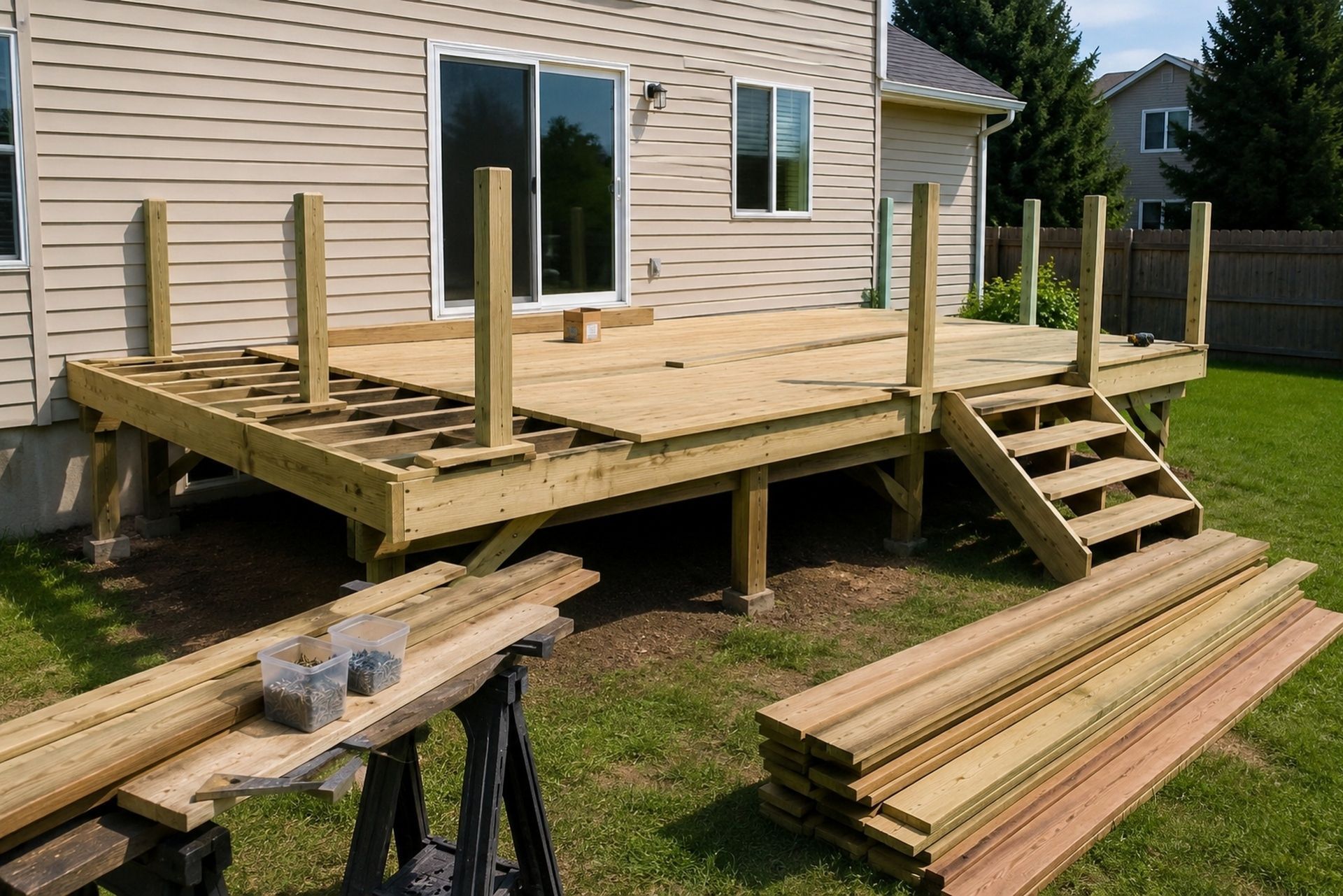
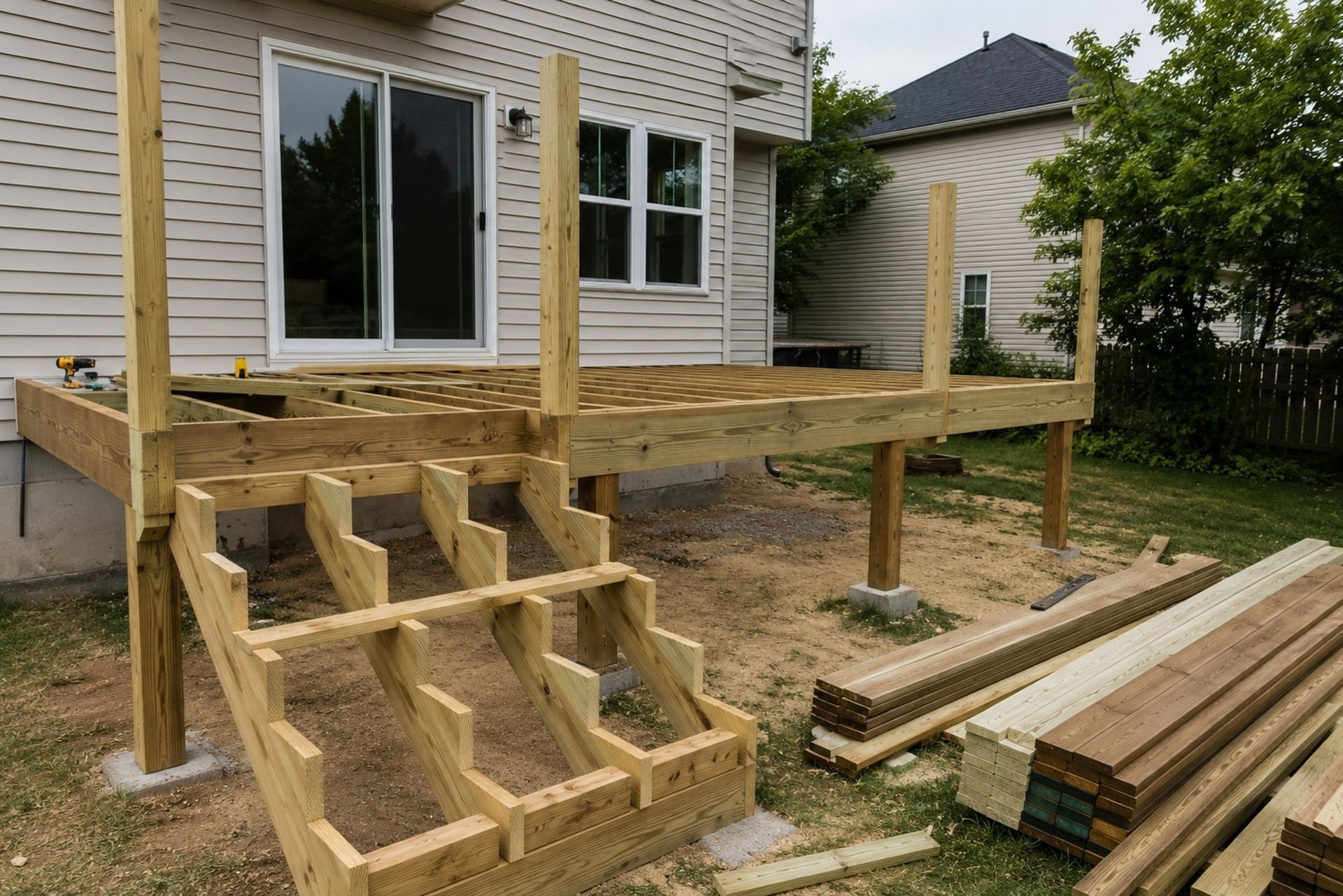
Deck builders occupy a strange spot in the insurance world. They're not doing simple interior carpentry, and they're not pouring foundations for high-rises. But the risks they carry often rival both. A poorly built deck can collapse under load, injure homeowners, or trigger structural damage to the attached building. These aren't hypothetical scenarios: deck collapse claims regularly result in six-figure settlements, especially when multiple injuries are involved.
What makes the risk profile unusual is the combination of structural liability, height exposure, and the sheer variety of project types. A single deck builder might install a simple backyard platform one week and a multi-level wraparound deck with integrated hot tub support the next. Each project carries different load requirements, code compliance standards, and material considerations. Underwriters who can't parse these differences tend to just say no.
Height and Structural Integrity Concerns
Most carriers classify any work above a certain height threshold, typically 15 to 20 feet, as elevated construction. Second-story decks, rooftop platforms, and hillside installations regularly exceed this. The moment your projects involve height, you're looking at higher premiums, additional exclusions, or outright declination.
Structural integrity is the other big concern. Decks are load-bearing structures, and a failure doesn't just damage property. It can cause catastrophic injuries. Insurers look at your engineering practices, whether you pull permits consistently, and how you handle soil and footing assessments. If you can't demonstrate a systematic approach to structural safety, many carriers won't touch you. The construction insurance market outlook for 2026 shows underwriters are paying closer attention to structural risk than at any point in the past decade.
The Overlap Between Carpentry and General Contracting
Here's where classification gets messy. Insurance carriers slot contractors into specific class codes, and deck builders don't fit neatly into any single one. You might get coded as a carpenter, a general contractor, or even a specialty framing contractor depending on who's writing the policy. Each classification carries different rate tables, exclusion sets, and audit expectations.
The real problem is that deck builders often do work that spans multiple classifications. You might frame the structure, install railings, pour footings, and even handle electrical for deck lighting. A carrier that's comfortable insuring carpentry might balk at the concrete or electrical exposure. This classification confusion leads to coverage gaps that don't surface until you file a claim, which is the worst possible time to discover your policy doesn't actually cover what you do.
INDEX
GrayStone Insurance Group is fully licensed and permitted to provide specialty commercial insurance solutions for high-risk and hard-to-place businesses across 17 states.
We proudly serve high-risk and hard-to-place businesses from coast to coast. As an independent specialty brokerage, our team works with leading Excess & Surplus and specialty carriers to make sure restaurants, bars, contractors, trucking companies, manufacturers, and other hard-to-place operations receive coverage that fits their real risks in California, Colorado, Florida, Georgia, Illinois, Iowa, Maryland, Michigan, Missouri, Nevada, New York, North Carolina, South Carolina, Tennessee, Texas, Utah, and Washington.
Every policy has boundaries. Knowing them up front is how you avoid an uncovered claim. Common exclusions include:
Every policy has boundaries. Knowing them up front is how you avoid an uncovered claim. Common exclusions include:
Every policy has boundaries. Knowing them up front is how you avoid an uncovered claim. Common exclusions include:
General Liability responds to the core exposures most operations in this category face. A typical policy answers third-party claims and the defense costs that come with them, so a single incident doesn't put the business at risk.
If your firm provides any design, engineering, or consulting services alongside construction, you need both. A GL policy won't cover a claim alleging your design specifications caused a building envelope failure. That's a professional liability exposure, and it's one of the fastest-growing claim categories in construction.
Why Standard Carriers Often Decline Deck Builders
Standard admitted carriers prefer predictable, well-defined risks. Deck construction doesn't check those boxes. The combination of structural liability, height exposure, variable project scope, and subcontractor involvement creates a risk profile that most standard programs simply aren't built to underwrite.
Declination rates for deck builders have climbed steadily as property-casualty conditions have tightened across the construction sector. Carriers that wrote deck builders five years ago are now restricting their appetites or exiting the class entirely. The result is a growing population of legitimate, experienced deck contractors who can't find coverage through normal channels.
Common Exclusions for Multi-Family and Condo Projects
Even when a carrier agrees to write a policy for a deck builder, the exclusions can be brutal. Multi-family residential projects and condominium work are among the most commonly excluded project types. Why? Because these projects involve shared structures, HOA liability exposure, and the potential for class-action claims if something goes wrong.
A deck collapse at a single-family home is a serious claim. A deck collapse at a 40-unit condo complex is a catastrophic one. Carriers know this, and many simply exclude all multi-family and condo work from their deck builder policies. If a significant portion of your revenue comes from these project types, a standard policy with these exclusions is essentially useless. You're paying premiums for coverage that doesn't protect the work you actually do.
Strict Limitations on Subcontracted Labor
Subcontractor use is another major sticking point. Many deck builders bring in subs for specific tasks: concrete work, electrical, or railing fabrication. Standard carriers often impose strict limits on how much of your total revenue can come from subcontracted work, sometimes capping it at 10% to 15%.
Exceed that threshold and your policy might void, or the carrier might refuse to renew. Some policies require you to verify that every subcontractor carries their own insurance with specific minimum limits, which sounds reasonable until you're trying to hire a two-person concrete crew that doesn't carry $1 million in GL coverage. The administrative burden alone pushes many deck builders toward non-compliance, which creates exactly the kind of gap that leads to denied claims.
| Feature | General Liability (GL) | Professional Liability (PL) |
|---|---|---|
| What it covers | Bodily injury, property damage from your operations | Errors, omissions, or negligent professional advice |
| Example claim | A customer trips over your tools at a job site | You spec the wrong breaker panel, causing an overload |
| Trigger | Physical harm or damage | Financial loss from professional mistakes |
| Completed operations | Yes, typically included | Depends on policy form |
| Defense costs | Usually outside the limit | Often inside the limit (erodes coverage) |
| Typical cost | $800-$2,500/year for solo operators | $500-$1,500/year depending on revenue |
Comparing Essential Coverage Types for Deck Construction
Deck builders need more than just a general liability policy. The right coverage program includes several layers, and understanding the difference between them matters when you're evaluating quotes.
General Liability vs. Professional Liability Comparison Chart
| Coverage Type | What It Covers | Why Deck Builders Need It | Typical Limits |
|---|---|---|---|
| General Liability (CGL) | Bodily injury, property damage, completed operations | Covers injuries on job sites and damage from finished work | $1M per occurrence / $2M aggregate |
| Professional Liability (E&O) | Design errors, specification mistakes, faulty recommendations | Protects against claims that your design or material choices caused failure | $500K to $2M |
| Workers' Compensation | Employee injuries on the job | Required in most states; covers medical costs and lost wages | State-mandated minimums |
| Inland Marine / Tools & Equipment | Theft or damage to tools, materials in transit | Protects expensive saws, compressors, and materials on job sites | $25K to $250K |
| Commercial Auto | Vehicles used for business | Covers trucks hauling lumber, trailers, and crew transport | $1M combined single limit |
| Umbrella / Excess Liability | Additional limits above primary policies | Critical for larger projects where a single claim could exceed base limits | $1M to $5M |
One mistake I see constantly: deck builders carrying only general liability and assuming it covers design-related claims. It doesn't. If a homeowner claims you recommended the wrong decking material or designed a structure that couldn't handle snow load, that's a professional liability claim, and your CGL policy will deny it. Both coverages are essential, and they serve completely different purposes.
Standard carriers follow rigid underwriting boxes. If you don't fit, you're out. That's where working with a specialized brokerage changes the equation. GrayStone Insurance Group focuses specifically on hard-to-place commercial risks, and electrical contractors are one of the classes where that expertise matters most.
With brokers averaging 20 years of experience and a 94% client retention rate, GrayStone doesn't just submit your application to the first carrier that comes up. They build a risk narrative around your business, highlighting safety programs, training certifications, and loss control measures that standard carriers often ignore during their automated underwriting process.
Every policy has boundaries. Knowing them up front is how you avoid an uncovered claim. Common exclusions include:
Every policy has boundaries. Knowing them up front is how you avoid an uncovered claim. Common exclusions include:
Every policy has boundaries. Knowing them up front is how you avoid an uncovered claim. Common exclusions include:
General Liability responds to the core exposures most operations in this category face. A typical policy answers third-party claims and the defense costs that come with them, so a single incident doesn't put the business at risk.
How GrayStone Navigates the Hard-to-Place Market
Finding insurance for deck builders requires more than just submitting applications to a dozen carriers and hoping one bites. It requires knowing which markets actually write this class of business, understanding their specific appetites, and presenting the risk in a way that gets to yes.
GrayStone Insurance Group has built its practice around exactly this kind of hard-to-place business. With brokers averaging 20 years of experience in specialty commercial insurance, they understand the nuances that make deck builders difficult to insure and know which markets can handle the exposure. Their 94% client retention rate reflects something important: once deck builders find coverage that actually works, they tend to stick around.
Access to Specialized Surplus Lines Markets
When admitted carriers decline a risk, surplus lines markets become the path forward. These are non-admitted carriers that operate with more flexibility in pricing and policy terms. They can write coverage that standard carriers won't, including multi-family deck projects, high-height work, and operations with significant subcontractor involvement.
GrayStone maintains relationships with surplus lines carriers that specifically appetite deck construction risks. This matters because surplus lines placement isn't just about finding any carrier willing to write a policy. It's about finding the right carrier whose program actually fits your operation. A surplus lines policy with the wrong exclusions is just as useless as no policy at all. The 2026 construction insurance market analysis confirms that surplus lines capacity for specialty trades has grown even as admitted markets have contracted.
Tailored Risk Management to Lower Premiums
Insurance cost isn't fixed. How you present your business to underwriters directly affects your premium. GrayStone uses data-driven risk modeling to identify the specific factors driving your rates up and then works with you to address them before going to market.
This might mean documenting your safety program more thoroughly, restructuring how you manage subcontractor certificates, or adjusting your project mix to reduce concentration in high-risk categories. Small operational changes can translate to meaningful premium reductions. A deck builder who can demonstrate consistent permit compliance, engineer-stamped plans for elevated structures, and a formal safety training program looks dramatically different to an underwriter than one who can't.
Yes. The E&S market exists specifically for situations like this. You'll likely pay more, and your policy may include higher deductibles or specific exclusions related to past claim types. Demonstrating corrective action since those claims occurred helps significantly at renewal.
FProtecting Your Business for the Long Term
FAQ: How long does it take to get a hard-to-place policy?
Anywhere from a few days to several weeks. Simple E&S placements for well-documented risks can move quickly. Complex accounts requiring multiple carrier submissions, manuscript endorsements, or layered programs take longer. Starting the process 60-90 days before your renewal date is a smart move.
Your general liability policy does not cover your own property. You need an inland marine policy, sometimes called a tools and equipment floater, to cover theft of your tools from a vehicle, job site, or storage location. These policies typically cost $300 to $1,500 per year and are worth every penny.
FAQ: Does my policy cover my tools if they are stolen from my truck?
Common Questions About Deck Building Insurance
Do I need insurance even if I only build residential decks? Yes. Residential work carries significant completed operations liability. If a deck you built three years ago collapses and injures someone, you could face a claim. Most states also require general liability and workers' comp before issuing contractor licenses.
How much does deck builder insurance typically cost? Annual premiums for a small deck building operation generally range from $3,000 to $8,000 for general liability alone, depending on revenue, project types, and claims history. Adding workers' comp, professional liability, and commercial auto can bring total costs to $12,000 to $25,000 or more.
Can I get coverage if I've been declined by other carriers? Absolutely. Being declined by standard carriers doesn't mean you're uninsurable. It usually means you need a broker with access to surplus lines markets and specialty programs designed for your risk class.
What's the biggest coverage mistake deck builders make? Carrying only general liability without professional liability or adequate completed operations coverage. Claims from finished projects, sometimes filed years after completion, are among the most common and expensive.
Does my policy cover work done by subcontractors? It depends on your policy terms. Some policies extend coverage to sub work, others exclude it entirely. You need to verify this with your broker and ensure your subs carry their own insurance.
Standard carriers follow rigid underwriting boxes. If you don't fit, you're out. That's where working with a specialized brokerage changes the equation. GrayStone Insurance Group focuses specifically on hard-to-place commercial risks, and electrical contractors are one of the classes where that expertise matters most.
With brokers averaging 20 years of experience and a 94% client retention rate, GrayStone doesn't just submit your application to the first carrier that comes up. They build a risk narrative around your business, highlighting safety programs, training certifications, and loss control measures that standard carriers often ignore during their automated underwriting process.
Every policy has boundaries. Knowing them up front is how you avoid an uncovered claim. Common exclusions include:
Every policy has boundaries. Knowing them up front is how you avoid an uncovered claim. Common exclusions include:
Every policy has boundaries. Knowing them up front is how you avoid an uncovered claim. Common exclusions include:
General Liability responds to the core exposures most operations in this category face. A typical policy answers third-party claims and the defense costs that come with them, so a single incident doesn't put the business at risk.
What This Means for Your Business Growth
Deck builders who can't find proper insurance coverage are stuck. They can't bid on commercial projects, can't meet general contractor insurance requirements, and carry personal financial exposure that could wipe them out after a single claim. The insurance problem isn't just an administrative headache: it's a ceiling on your business.
The good news is that coverage exists, even in a tightening construction insurance market. It just requires working with a broker who knows where to look and how to position your risk. GrayStone Insurance Group specializes in placing coverage for contractors that standard carriers decline, and their team can typically identify viable options within days, not weeks.
If you've been turned down, quoted with unworkable exclusions, or are simply paying too much for coverage that doesn't fit, reach out to GrayStone for a review of your current program. The right insurance partner doesn't just write a policy: they help you build a risk management foundation that supports growth.
ABOUT THE AUTHOR:
CHAD KRAMER
I started GrayStone Insurance Group in 2018 with a simple conviction: the businesses everyone else turns away deserve a broker who won't. What began as a one-person operation has grown into a specialty commercial brokerage with offices across the country — but the mission hasn't changed. We find solutions for high-risk and hard-to-place businesses when other agencies run the other way.
I built this agency on integrity, hard work, and the tenacity to do the hard things well. Through our access to Excess & Surplus and specialty markets, my team and I place coverage standard carriers can't — and I treat every client's business like my own.
If you've been declined, non-renewed, or told your business is too complicated to insure, let's talk.
Coverages & policies
Plain-language coverage, expertly placed.
We lead with commercial lines and round out personal coverage where you need it. Every policy comes with an explanation — not jargon.

Contractors
Third-party bodily injury & property damage — the foundation for any operation.

Liquor Liability
Critical for bars, restaurants and venues serving alcohol — including A&B.

Commercial Property
Buildings, contents and equipment — including distressed and vacant risk.

Workers' Compensation
Statutory coverage for your crew — including high-mod and high-hazard classes.

Commercial Umbrella
Extra liability limits over your primary policies — essential for high-exposure risk.
Products Liability
Manufacturers, CBD and consumer-product exposure — including imports.
What clients say
Brokers who actually place it.
FAQ
Answers for the risks others won't cover
Getting declined, non-renewed, or told your business is "too high-risk" is frustrating — but it doesn't mean you're out of options. Here are answers to the questions we hear most from business owners who need coverage the standard market won't provide.
What kind of insurance does GrayStone specialize in?
We're a specialty commercial brokerage built for high-risk and hard-to-place businesses — the risks standard carriers often turn away. Through our access to Excess & Surplus (E&S) and specialty markets, we place coverage that everyday agencies can't. Hospitality and construction are among our deepest areas of expertise.
My business was declined or non-renewed elsewhere. Can you still help?
That's exactly what we do. A decline, a non-renewal, or a tough claims history doesn't mean you're out of options — it means your risk needs a broker with the right market access. Tell us your situation and we'll get to work finding a fit.
What is Excess & Surplus (E&S) insurance?
E&S is specialty coverage for risks that standard "admitted" carriers won't write — often because a business is higher-risk, unusual, or has a complex history. As an independent broker, we tap into these specialty markets to place coverage where a typical agency hits a dead end.
What industries do you work with?
We cover a wide range of commercial industries — from restaurants, bars, and hospitality to contractors, trucking, manufacturing, cannabis, and more. If your industry is considered high-risk or hard-to-place, there's a good chance we've handled it.
Will you work with businesses that have prior claims or losses?
Yes. Prior claims and losses are part of many of the risks we place every day. Every business is evaluated on its own merits — and a rocky history is often exactly why a specialty broker can help where others won't.
Are you an independent broker?
Yes. We're not tied to a single carrier, so we shop your risk across multiple specialty and E&S markets to find coverage that actually fits — instead of forcing you into a one-size-fits-all policy.
Insights & resources
Know your risk before you buy.