
General Liability responds to the core exposures most operations in this category face. A typical policy answers third-party claims and the defense costs that come with them, so a single incident doesn't put the business at risk.
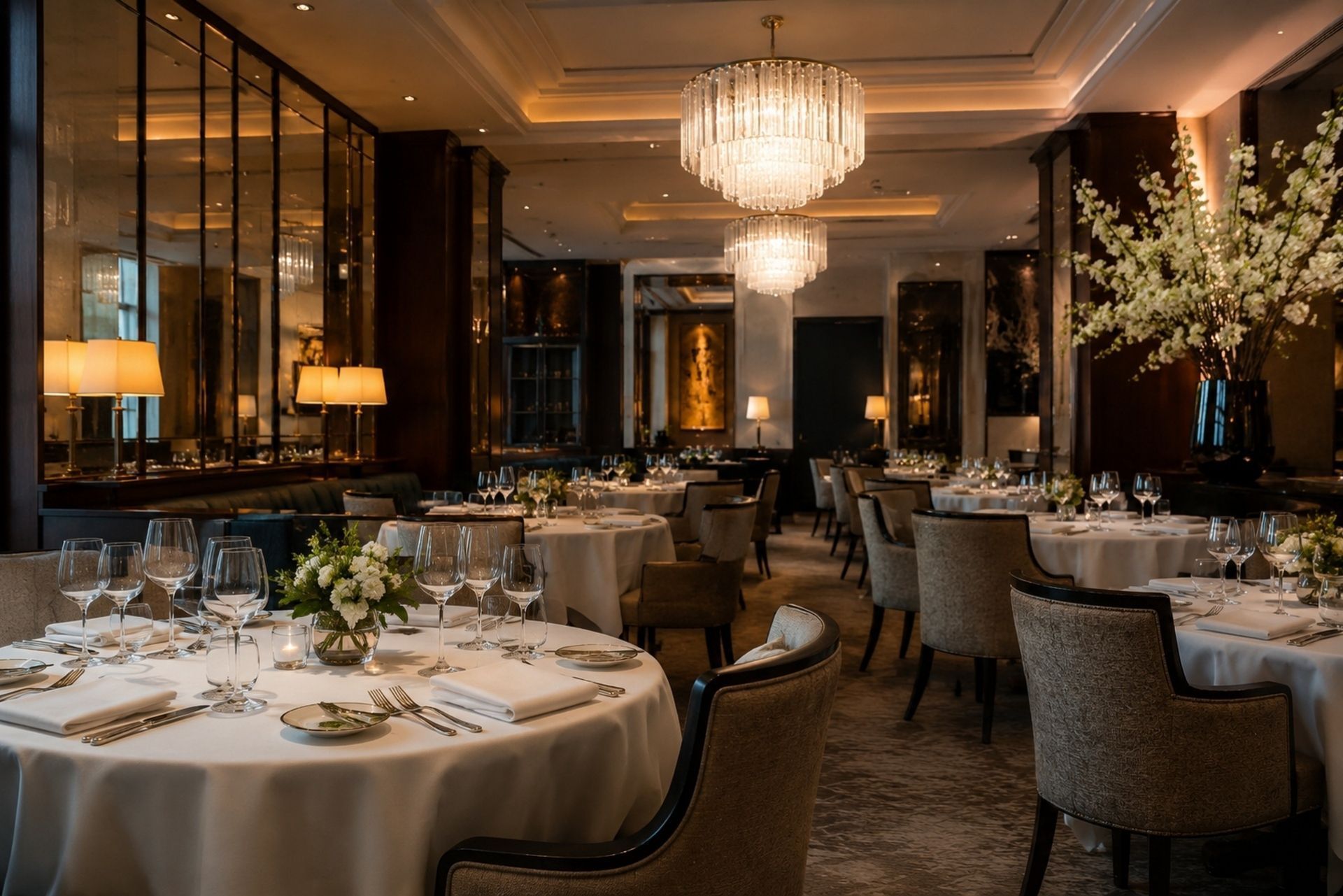
A Michelin-starred restaurant with $2 million in custom Italian marble, a 3,000-bottle wine cellar, and tableside flambé service walks into an insurance office. The agent runs it through their standard system and gets a declination within 48 hours. This scenario plays out constantly across the U.S., and it catches restaurant owners off guard every time. Fine dining establishments carry a risk profile that most standard carriers simply don't want to touch: high property values, extensive liquor programs, complex liability exposures, and operational details that don't fit neatly into a checkbox questionnaire. Getting insurance for a fine dining restaurant isn't just hard; it's one of the most consistently difficult placements in the hospitality sector. Understanding why carriers shy away from these risks, and knowing where to find coverage that actually fits, can save owners months of frustration and thousands of dollars. Here's what you need to know about placing coverage for high-end restaurants in 2026.
The Unique Risk Profile of Fine Dining Establishments
Fine dining restaurants aren't just restaurants with higher prices. They operate differently from casual concepts in ways that directly affect their insurance profile. The combination of expensive build-outs, open-flame cooking techniques, high alcohol sales ratios, and large staff counts creates a layered risk that standard commercial policies weren't designed to handle. A single kitchen fire at a fine dining restaurant can easily exceed $1 million in damages before you even factor in lost income during the rebuild.
High-Value Property and Specialized Equipment
Most casual restaurants carry $200,000 to $500,000 in total property value. A high-end restaurant? Think $1.5 million to $5 million or more. Custom wood-fired ovens imported from Spain, sous vide equipment banks, temperature-controlled wine storage systems, and bespoke furniture all push property values into territory that makes underwriters nervous. Replacing a commercial pizza oven takes a few weeks. Replacing a hand-built Josper grill imported from Barcelona can take six months.
The real problem is that standard business owner policies (BOPs) cap property coverage at levels that leave fine dining operators dramatically underinsured. When a loss happens, the gap between what the policy covers and what it actually costs to rebuild can bankrupt an otherwise profitable business.
Liquor Liability and High-End Beverage Programs
Alcohol often represents 30% to 40% of revenue at fine dining restaurants, compared to 15% to 20% at casual concepts. That revenue concentration creates significant liquor liability exposure. A sommelier pouring $400 bottles of Burgundy all night means patrons are spending more, drinking more, and potentially leaving impaired. Liquor liability claims involving serious auto accidents regularly settle in the $500,000 to $2 million range.
The surge in "Other Liability" costs, which have increased 247% since 2010, makes this exposure even more alarming for carriers. Social inflation has driven jury awards higher across every liability category, and alcohol-related claims sit right in the crosshairs.
INDEX
The Unique Risk Profile of Fine Dining Establishments
Why Standard Carriers Often Decline Fine Dining Risks
Comparing Coverage: Standard BOP vs. Specialized Fine Dining Policies
How GrayStone Navigates Market Challenges
Essential Protections for High-End Restaurants
GrayStone Insurance Group is fully licensed and permitted to provide specialty commercial insurance solutions for high-risk and hard-to-place businesses across 17 states.
We proudly serve high-risk and hard-to-place businesses from coast to coast. As an independent specialty brokerage, our team works with leading Excess & Surplus and specialty carriers to make sure restaurants, bars, contractors, trucking companies, manufacturers, and other hard-to-place operations receive coverage that fits their real risks in California, Colorado, Florida, Georgia, Illinois, Iowa, Maryland, Michigan, Missouri, Nevada, New York, North Carolina, South Carolina, Tennessee, Texas, Utah, and Washington.
Every policy has boundaries. Knowing them up front is how you avoid an uncovered claim. Common exclusions include:
Every policy has boundaries. Knowing them up front is how you avoid an uncovered claim. Common exclusions include:
Every policy has boundaries. Knowing them up front is how you avoid an uncovered claim. Common exclusions include:
General Liability responds to the core exposures most operations in this category face. A typical policy answers third-party claims and the defense costs that come with them, so a single incident doesn't put the business at risk.
If your firm provides any design, engineering, or consulting services alongside construction, you need both. A GL policy won't cover a claim alleging your design specifications caused a building envelope failure. That's a professional liability exposure, and it's one of the fastest-growing claim categories in construction.
Why Standard Carriers Often Decline Fine Dining Risks
Standard carriers build their appetite around predictable, high-volume business classes. They want to insure 500 similar pizza shops, not one unique tasting-menu restaurant with a $3 million build-out and a celebrity chef. The underwriting math doesn't work the same way.
The Complexity of Valuing Custom Interior Build-Outs
Here's where things get tricky. A standard carrier's property valuation tool might estimate replacement cost based on square footage and construction type. That works fine for a strip-mall sandwich shop. It fails completely for a restaurant with hand-plastered walls, custom millwork, imported light fixtures, and a $200,000 sound system. Underwriters who can't accurately value the property can't accurately price the risk, so they decline it rather than guess wrong.
I've seen restaurants with $800,000 in tenant improvements get offered policies with $250,000 in coverage. That's not insurance; that's a false sense of security.
Liability Concerns with Valet and Off-Premises Catering
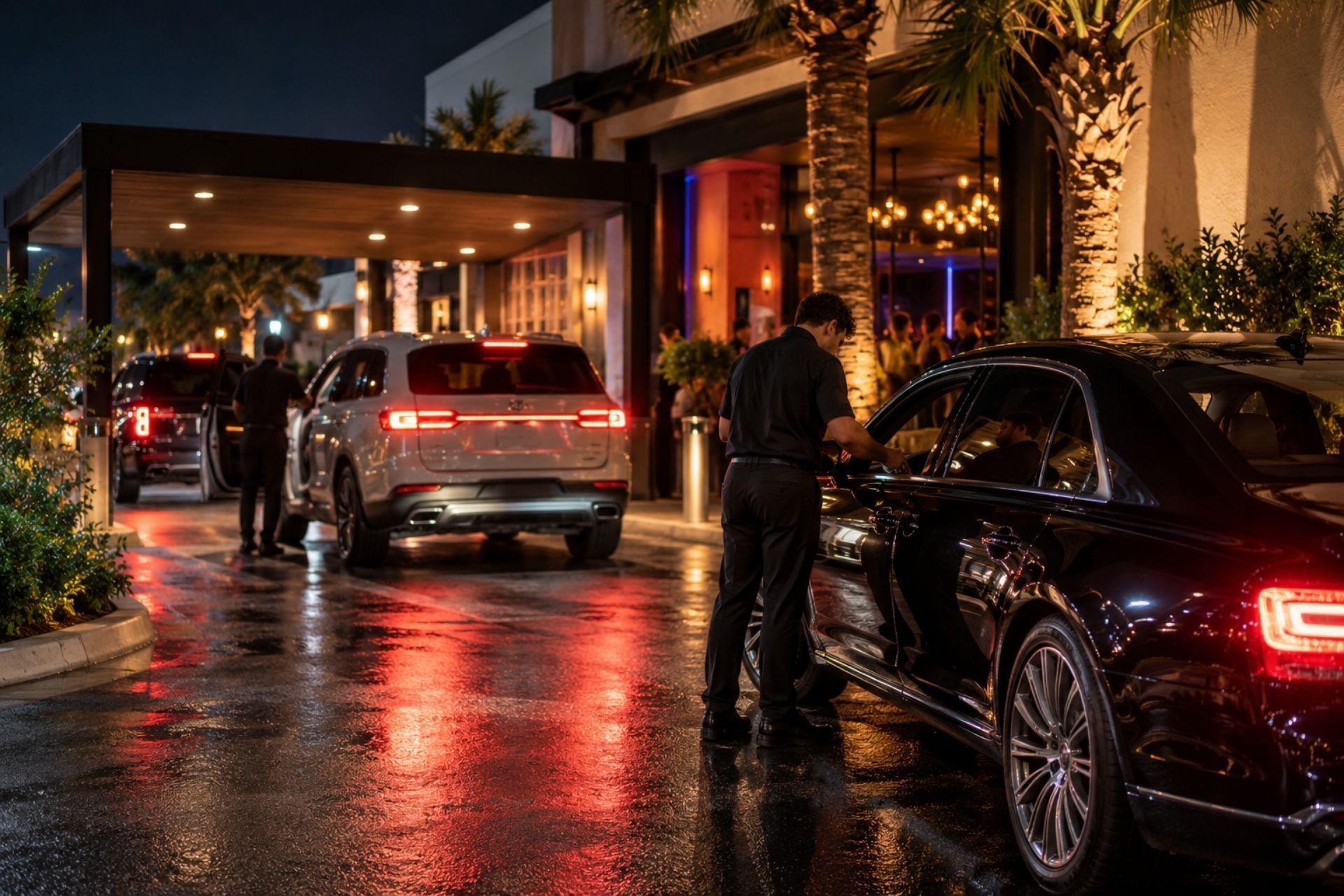
Many fine dining restaurants offer valet parking and off-premises catering for private events. Both services introduce liability exposures that fall outside standard restaurant policies. Valet operations create garagekeepers liability and hired/non-owned auto exposure. A valet damages a guest's $150,000 Mercedes, and suddenly you're looking at a claim that exceeds most standard policy sub-limits.
Off-premises catering adds another layer: food safety risks in uncontrolled environments, temporary liquor service at private venues, and potential injuries at locations the restaurant doesn't own or control. Standard carriers see these add-ons as red flags, not revenue streams.
| Feature | General Liability (GL) | Professional Liability (PL) |
|---|---|---|
| What it covers | Bodily injury, property damage from your operations | Errors, omissions, or negligent professional advice |
| Example claim | A customer trips over your tools at a job site | You spec the wrong breaker panel, causing an overload |
| Trigger | Physical harm or damage | Financial loss from professional mistakes |
| Completed operations | Yes, typically included | Depends on policy form |
| Defense costs | Usually outside the limit | Often inside the limit (erodes coverage) |
| Typical cost | $800-$2,500/year for solo operators | $500-$1,500/year depending on revenue |
One mistake I see constantly: deck builders carrying only general liability and assuming it covers design-related claims. It doesn't. If a homeowner claims you recommended the wrong decking material or designed a structure that couldn't handle snow load, that's a professional liability claim, and your CGL policy will deny it. Both coverages are essential, and they serve completely different purposes.
Comparing Coverage: Standard BOP vs. Specialized Fine Dining Policies
The differences between a standard business owner policy and a properly structured fine dining program are significant. Most restaurant owners don't realize how many gaps exist until they file a claim.
Coverage Comparison Table
| Coverage Area | Standard BOP | Specialized Fine Dining Policy |
|---|---|---|
| Property Limits | $500K-$1M typical cap | $3M-$10M+ available |
| Wine/Spirits Inventory | Limited or excluded | Full replacement value coverage |
| Equipment Breakdown | Basic coverage | Covers imported/custom equipment |
| Liquor Liability | Often excluded or minimal | $1M-$5M limits common |
| Valet/Parking | Not included | Garagekeepers liability available |
| Food Spoilage | $5K-$10K sub-limit | $50K-$250K available |
| Off-Premises Catering | Excluded | Endorsement available |
| Business Income | 12-month max | Extended to 18-24 months |
The business income line deserves special attention. Fine dining restaurants take longer to rebuild than casual concepts because of custom finishes and specialized equipment. A 12-month business income limit can expire while you're still waiting for a custom hood system to clear permitting.
Standard carriers follow rigid underwriting boxes. If you don't fit, you're out. That's where working with a specialized brokerage changes the equation. GrayStone Insurance Group focuses specifically on hard-to-place commercial risks, and electrical contractors are one of the classes where that expertise matters most.
With brokers averaging 20 years of experience and a 94% client retention rate, GrayStone doesn't just submit your application to the first carrier that comes up. They build a risk narrative around your business, highlighting safety programs, training certifications, and loss control measures that standard carriers often ignore during their automated underwriting process.
Every policy has boundaries. Knowing them up front is how you avoid an uncovered claim. Common exclusions include:
Every policy has boundaries. Knowing them up front is how you avoid an uncovered claim. Common exclusions include:
Every policy has boundaries. Knowing them up front is how you avoid an uncovered claim. Common exclusions include:
General Liability responds to the core exposures most operations in this category face. A typical policy answers third-party claims and the defense costs that come with them, so a single incident doesn't put the business at risk.
How GrayStone Navigates Market Challenges
Placing insurance for high-end restaurants requires access to markets that most retail agents simply don't have. GrayStone Insurance Group has built relationships with specialty carriers and surplus lines markets specifically because their client base includes hard-to-place hospitality risks. Their brokers, averaging 20 years of industry experience, understand how to present fine dining risks in ways that get underwriters to say yes instead of reaching for the decline button.
Access to Surplus Lines and Niche Underwriters
The surplus lines market exists precisely for risks that standard carriers won't write. These are non-admitted carriers with more flexibility in pricing and policy design. For fine dining restaurants, surplus lines carriers can build manuscript policies that address specific exposures like tableside cooking, rare wine collections, or celebrity chef endorsement risks.
The commercial property and casualty market has been shifting in 2026, with some lines softening while others remain firm. Having a broker who understands which markets are currently competitive for restaurant risks makes a measurable difference in both premium cost and coverage quality.
Tailored Risk Management to Lower Premiums
GrayStone doesn't just place policies; they help restaurants reduce their risk profile to attract better terms. This might mean recommending specific fire suppression upgrades, implementing documented alcohol service training programs, or restructuring valet operations to reduce exposure. Using AI-powered risk modeling tools, they can show underwriters concrete data about a restaurant's risk management practices rather than relying on generic industry assumptions.
A restaurant that can demonstrate lower-than-average claim frequency through documented safety protocols will almost always get better pricing than one that simply fills out an application and hopes for the best.
Yes. The E&S market exists specifically for situations like this. You'll likely pay more, and your policy may include higher deductibles or specific exclusions related to past claim types. Demonstrating corrective action since those claims occurred helps significantly at renewal.
FProtecting Your Business for the Long Term
FAQ: How long does it take to get a hard-to-place policy?
Anywhere from a few days to several weeks. Simple E&S placements for well-documented risks can move quickly. Complex accounts requiring multiple carrier submissions, manuscript endorsements, or layered programs take longer. Starting the process 60-90 days before your renewal date is a smart move.
Your general liability policy does not cover your own property. You need an inland marine policy, sometimes called a tools and equipment floater, to cover theft of your tools from a vehicle, job site, or storage location. These policies typically cost $300 to $1,500 per year and are worth every penny.
FAQ: Does my policy cover my tools if they are stolen from my truck?
Do I need separate insurance for delivery drivers?
If your employees deliver food using their own vehicles, you need hired and non-owned auto coverage. Their personal auto policies won't cover accidents that happen during work. If you use third-party delivery services, review your contract carefully: you may still carry some liability exposure depending on how the arrangement is structured.
Essential Protections for High-End Restaurants
Beyond the basics of property and liability, fine dining restaurants need several specialized coverages that are easy to overlook during the buying process.
Food Spoilage and Power Outage Coverage
A single walk-in cooler failure can destroy $50,000 or more in premium proteins, aged meats, and specialty ingredients. Standard policies typically cap food spoilage at $5,000 to $10,000, which barely covers the dry-aged beef program at most high-end steakhouses. Power outage coverage is equally critical: a 48-hour outage during summer can wipe out an entire wine cellar if backup systems fail.
The fix is straightforward but requires intentional policy design. Spoilage limits should match actual inventory values, and power outage triggers should be broad enough to cover utility failures, not just on-premises electrical issues.
Employment Practices Liability Insurance (EPLI)
Fine dining restaurants typically employ 50 to 150 staff members across front-of-house, kitchen, and management roles. That headcount, combined with the high-pressure culture common in fine dining kitchens, creates real employment practices exposure. Wrongful termination claims, harassment allegations, and wage disputes are among the fastest-growing liability categories in the hospitality sector.
EPLI policies cover defense costs and settlements for employment-related claims. For a restaurant with 75 employees, a single wrongful termination lawsuit can easily cost $100,000 in legal fees alone, even if the restaurant wins. The
broader trend of nuclear verdicts and social inflation has pushed EPLI from a "nice-to-have" into an essential coverage for any restaurant with significant staff.
Standard carriers follow rigid underwriting boxes. If you don't fit, you're out. That's where working with a specialized brokerage changes the equation. GrayStone Insurance Group focuses specifically on hard-to-place commercial risks, and electrical contractors are one of the classes where that expertise matters most.
With brokers averaging 20 years of experience and a 94% client retention rate, GrayStone doesn't just submit your application to the first carrier that comes up. They build a risk narrative around your business, highlighting safety programs, training certifications, and loss control measures that standard carriers often ignore during their automated underwriting process.
Every policy has boundaries. Knowing them up front is how you avoid an uncovered claim. Common exclusions include:
Every policy has boundaries. Knowing them up front is how you avoid an uncovered claim. Common exclusions include:
Every policy has boundaries. Knowing them up front is how you avoid an uncovered claim. Common exclusions include:
General Liability responds to the core exposures most operations in this category face. A typical policy answers third-party claims and the defense costs that come with them, so a single incident doesn't put the business at risk.
Common Questions About Fine Dining Insurance
How much does insurance for a fine dining restaurant typically cost? Expect $15,000 to $50,000 annually depending on location, revenue, liquor sales ratio, and claims history. Restaurants in major metros with high liquor revenue will land at the upper end.
Can I just get a standard restaurant policy and add endorsements? Sometimes, but it rarely provides adequate coverage. Standard policies have built-in limitations on property values, liquor liability, and business income that endorsements can't always fix.
What's the biggest coverage gap you see in fine dining policies? Business income and extra expense coverage. Restaurants underestimate how long a rebuild takes and run out of coverage before they reopen. Always push for 18 to 24 months minimum.
Does my wine collection need separate coverage? If your wine inventory exceeds $25,000, yes. Standard property policies treat wine like any other inventory and apply sub-limits that won't come close to replacing a curated cellar.
Why do carriers care about tableside cooking and flambé service? Open flame in a dining room creates fire risk in a space full of guests. Carriers want to see documented safety protocols, proper equipment, and trained staff before they'll cover it.
Do I need cyber liability insurance for my restaurant?
If you process credit card payments and store customer data for reservations, yes. A data breach at a high-end restaurant creates both financial liability and serious reputational damage.
Yes. The E&S market exists specifically for situations like this. You'll likely pay more, and your policy may include higher deductibles or specific exclusions related to past claim types. Demonstrating corrective action since those claims occurred helps significantly at renewal.
FProtecting Your Business for the Long Term
FAQ: How long does it take to get a hard-to-place policy?
Anywhere from a few days to several weeks. Simple E&S placements for well-documented risks can move quickly. Complex accounts requiring multiple carrier submissions, manuscript endorsements, or layered programs take longer. Starting the process 60-90 days before your renewal date is a smart move.
Your general liability policy does not cover your own property. You need an inland marine policy, sometimes called a tools and equipment floater, to cover theft of your tools from a vehicle, job site, or storage location. These policies typically cost $300 to $1,500 per year and are worth every penny.
FAQ: Does my policy cover my tools if they are stolen from my truck?
Beyond the basics of property and liability, fine dining restaurants need several specialized coverages that are easy to overlook during the buying process.
Do I need separate insurance for delivery drivers?
If your employees deliver food using their own vehicles, you need hired and non-owned auto coverage. Their personal auto policies won't cover accidents that happen during work. If you use third-party delivery services, review your contract carefully: you may still carry some liability exposure depending on how the arrangement is structured.
Making the Right Choice for Your Restaurant's Future
Food Spoilage and Power Outage Coverage
Finding the right insurance for a fine dining restaurant takes more than calling three agents and comparing quotes. The risks are too specific, the property values too high, and the liability exposures too complex for a generic approach. Restaurants that treat insurance as an afterthought end up discovering their coverage gaps at the worst possible moment: after a loss.
Work with a broker who specializes in hard-to-place hospitality risks and understands the difference between a policy that looks adequate on paper and one that actually responds when you need it. GrayStone Insurance Group builds programs specifically for restaurants that standard carriers won't touch, with coverage limits and endorsements designed around how fine dining operations actually work.
If your current policy has gaps you're not sure about, or if you've been declined and don't know where to turn,
reach out to GrayStone for a coverage review. The best time to fix your insurance is before you need to use it.
ABOUT THE AUTHOR:
CHAD KRAMER
I started GrayStone Insurance Group in 2018 with a simple conviction: the businesses everyone else turns away deserve a broker who won't. What began as a one-person operation has grown into a specialty commercial brokerage with offices across the country — but the mission hasn't changed. We find solutions for high-risk and hard-to-place businesses when other agencies run the other way.
I built this agency on integrity, hard work, and the tenacity to do the hard things well. Through our access to Excess & Surplus and specialty markets, my team and I place coverage standard carriers can't — and I treat every client's business like my own.
If you've been declined, non-renewed, or told your business is too complicated to insure, let's talk.
Coverages & policies
Plain-language coverage, expertly placed.
We lead with commercial lines and round out personal coverage where you need it. Every policy comes with an explanation — not jargon.

Contractors
Third-party bodily injury & property damage — the foundation for any operation.

Liquor Liability
Critical for bars, restaurants and venues serving alcohol — including A&B.

Commercial Property
Buildings, contents and equipment — including distressed and vacant risk.

Workers' Compensation
Statutory coverage for your crew — including high-mod and high-hazard classes.

Commercial Umbrella
Extra liability limits over your primary policies — essential for high-exposure risk.
Products Liability
Manufacturers, CBD and consumer-product exposure — including imports.
What clients say
Brokers who actually place it.
FAQ
Answers for the risks others won't cover
Getting declined, non-renewed, or told your business is "too high-risk" is frustrating — but it doesn't mean you're out of options. Here are answers to the questions we hear most from business owners who need coverage the standard market won't provide.
What kind of insurance does GrayStone specialize in?
We're a specialty commercial brokerage built for high-risk and hard-to-place businesses — the risks standard carriers often turn away. Through our access to Excess & Surplus (E&S) and specialty markets, we place coverage that everyday agencies can't. Hospitality and construction are among our deepest areas of expertise.
My business was declined or non-renewed elsewhere. Can you still help?
That's exactly what we do. A decline, a non-renewal, or a tough claims history doesn't mean you're out of options — it means your risk needs a broker with the right market access. Tell us your situation and we'll get to work finding a fit.
What is Excess & Surplus (E&S) insurance?
E&S is specialty coverage for risks that standard "admitted" carriers won't write — often because a business is higher-risk, unusual, or has a complex history. As an independent broker, we tap into these specialty markets to place coverage where a typical agency hits a dead end.
What industries do you work with?
We cover a wide range of commercial industries — from restaurants, bars, and hospitality to contractors, trucking, manufacturing, cannabis, and more. If your industry is considered high-risk or hard-to-place, there's a good chance we've handled it.
Will you work with businesses that have prior claims or losses?
Yes. Prior claims and losses are part of many of the risks we place every day. Every business is evaluated on its own merits — and a rocky history is often exactly why a specialty broker can help where others won't.
Are you an independent broker?
Yes. We're not tied to a single carrier, so we shop your risk across multiple specialty and E&S markets to find coverage that actually fits — instead of forcing you into a one-size-fits-all policy.
Insights & resources
Know your risk before you buy.