
General Liability responds to the core exposures most operations in this category face. A typical policy answers third-party claims and the defense costs that come with them, so a single incident doesn't put the business at risk.
Roofing contractors face one of the toughest insurance markets of any trade. Every year, thousands of qualified roofers struggle to find a carrier willing to write their policy, and the ones who do get quoted often face premiums that feel punishing. The problem isn't that roofers are bad business owners. It's that the risk profile of roofing work sits at the intersection of everything insurers hate: heights, weather exposure, fire hazards, and high employee turnover. A single workers' compensation claim from a fall can exceed $100,000, and property damage from a botched tear-off can run even higher. For contractors trying to grow, this creates a frustrating cycle where the better your revenue numbers look, the harder it becomes to find affordable coverage. Understanding why roofers' insurance is so difficult to place, and knowing which brokers actually specialize in solving this problem, can mean the difference between staying operational and shutting your doors. This guide breaks down the real reasons carriers run from roofing risks and what you can do about it.
The High Stakes of Roofing Insurance
Roofing ranks consistently among the most dangerous occupations in the United States. The Bureau of Labor Statistics still lists it as one of the top five deadliest jobs, and insurers price their policies accordingly. A general contractor doing interior remodels might pay $15 per $1,000 of payroll for workers' comp. A roofing contractor doing steep-slope residential work? That number can jump to $40 or more per $1,000 of payroll, depending on the state and claims history.
The financial exposure doesn't stop at employee injuries. Roofers carry enormous liability for the structures they work on. An improperly installed membrane that leaks six months later can cause $200,000 in interior damage to a commercial building. A torch-down application that ignites insulation can destroy a home. These aren't hypothetical scenarios: they're the kinds of claims that cross adjusters' desks regularly.
What makes the stakes especially high is that most roofing businesses operate on thin margins. A 15% to 20% profit margin is considered healthy in the trade, which means a single large premium increase or uncovered claim can wipe out an entire year's earnings. The insurance question isn't academic for roofers. It's existential.
INDEX
GrayStone Insurance Group is fully licensed and permitted to provide specialty commercial insurance solutions for high-risk and hard-to-place businesses across 17 states.
We proudly serve high-risk and hard-to-place businesses from coast to coast. As an independent specialty brokerage, our team works with leading Excess & Surplus and specialty carriers to make sure restaurants, bars, contractors, trucking companies, manufacturers, and other hard-to-place operations receive coverage that fits their real risks in California, Colorado, Florida, Georgia, Illinois, Iowa, Maryland, Michigan, Missouri, Nevada, New York, North Carolina, South Carolina, Tennessee, Texas, Utah, and Washington.
Every policy has boundaries. Knowing them up front is how you avoid an uncovered claim. Common exclusions include:
Every policy has boundaries. Knowing them up front is how you avoid an uncovered claim. Common exclusions include:
Every policy has boundaries. Knowing them up front is how you avoid an uncovered claim. Common exclusions include:
General Liability responds to the core exposures most operations in this category face. A typical policy answers third-party claims and the defense costs that come with them, so a single incident doesn't put the business at risk.
If your firm provides any design, engineering, or consulting services alongside construction, you need both. A GL policy won't cover a claim alleging your design specifications caused a building envelope failure. That's a professional liability exposure, and it's one of the fastest-growing claim categories in construction.
Why Carriers Avoid the Roofing Industry
Standard insurance carriers use actuarial models that assign risk scores to different trades. Roofing consistently scores among the highest, and for reasons that go beyond just "it's dangerous." The combination of environmental exposure, physical hazards, and workforce instability makes roofing a class of business that most underwriters would rather skip entirely.
Gravity and the Risk of Catastrophic Falls
Falls remain the leading cause of death in construction, and roofing accounts for a disproportionate share of those fatalities. Working at heights of 15 to 40 feet on pitched surfaces, often in wind or heat, creates conditions where a single misstep can result in a life-altering injury. Carriers know that even with proper fall protection, the frequency of claims in roofing dwarfs most other trades.
The cost of these claims has risen sharply. Medical inflation, longer rehabilitation periods, and rising litigation costs mean that a fall claim that might have settled for $60,000 a decade ago now routinely exceeds $150,000. Carriers that write roofing risks need deep reserves to absorb these losses, and many simply don't want the exposure on their books.
The Open Roof Hazard and Water Damage Claims
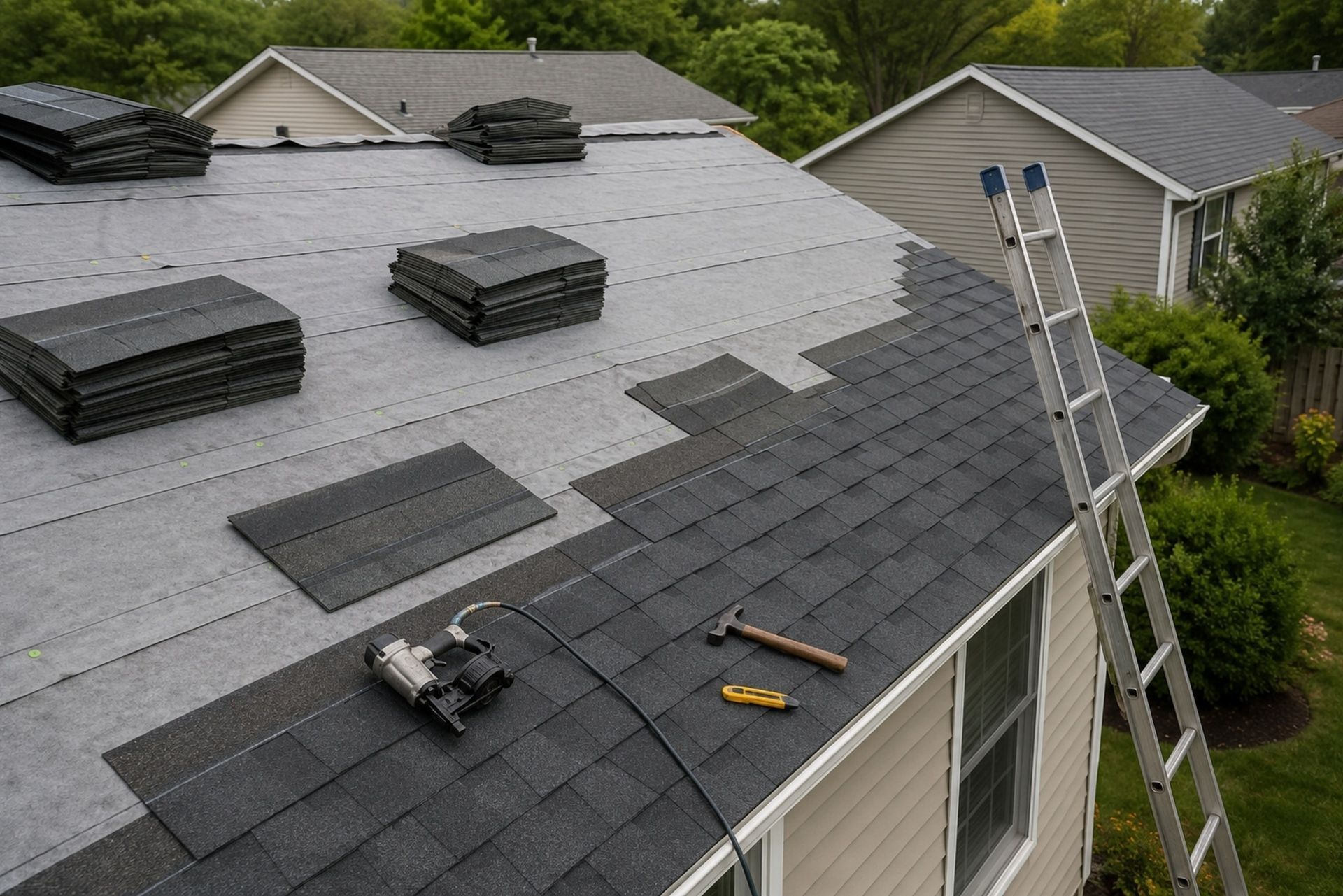
Here's a risk that doesn't get enough attention: the moment a roofer tears off existing material, the building below is exposed. If an unexpected storm rolls in, or if the crew doesn't tarp properly at the end of the day, water intrusion can cause catastrophic damage to interiors, inventory, and electrical systems.
These claims fall under the contractor's general liability policy, and they can be enormous. A commercial building with exposed ceilings, server rooms, or finished office space can generate six-figure water damage claims from a single afternoon rainstorm. Carriers track these incidents closely, and inexperienced crews lead to significantly higher claim frequency, with many insurers now requiring proof of five or more years of management experience before they'll even quote a roofing risk.
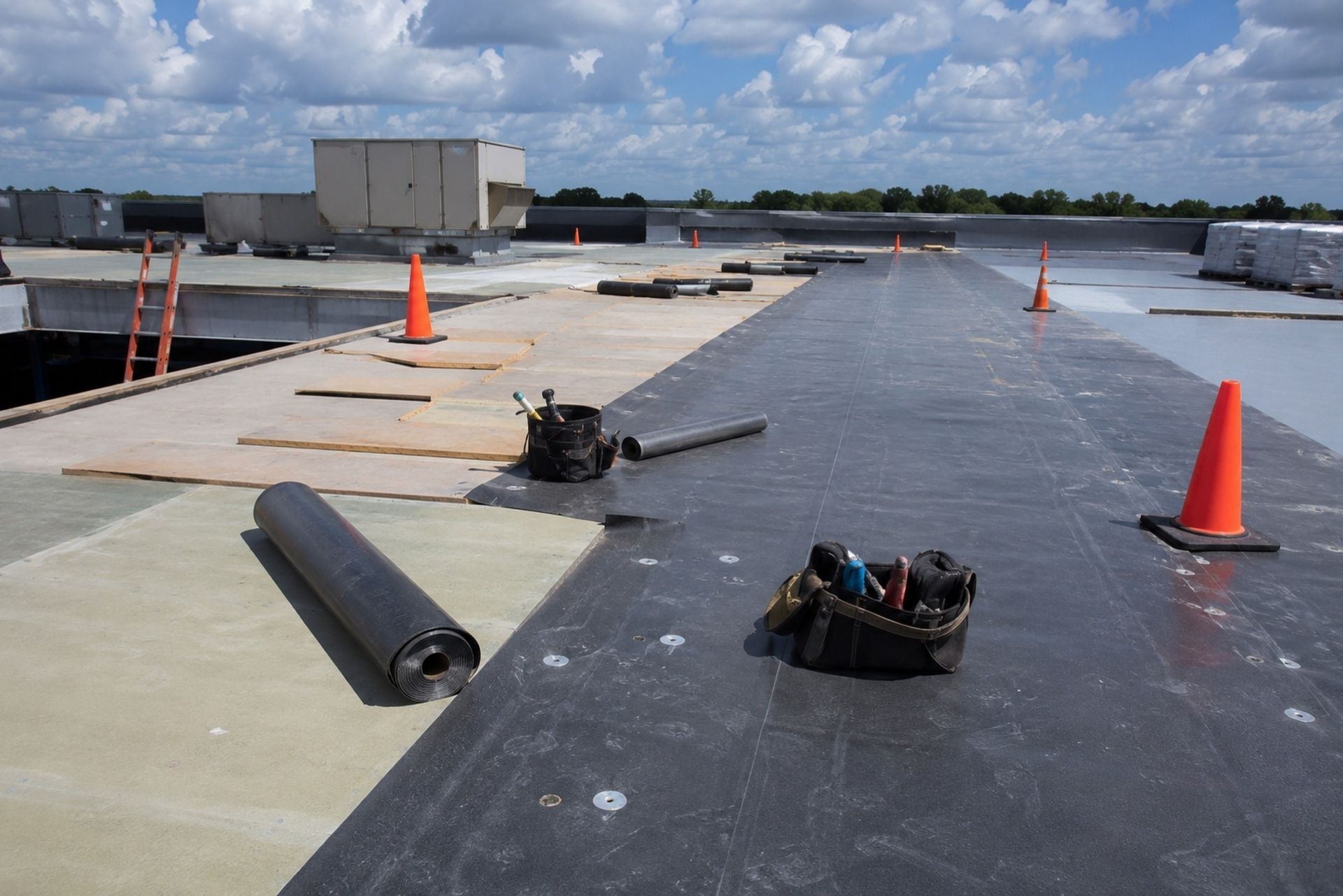
Fire Risks Associated with Hot-Mop and Torch-Down Applications
Not all roofing work carries fire risk, but the methods that do are enough to make underwriters nervous about the entire industry. Hot-mop applications involve heating asphalt to over 400 degrees Fahrenheit. Torch-down modified bitumen requires an open flame applied directly to roofing material. Both methods have caused structure fires, and the resulting claims often include not just property damage but business interruption losses for the building's occupants.
Carriers that do write these risks typically require detailed safety protocols, fire watch procedures, and sometimes even separate fire liability endorsements. Many standard markets simply exclude hot work entirely, leaving contractors who perform these services with very few options.
Common Policy Exclusions to Watch For
Even when a roofer finds a willing carrier, the policy itself can contain exclusions that leave dangerous gaps. Knowing what to look for before you sign is critical.
- Residential exclusions: Some commercial roofing policies exclude residential work entirely, which is a problem if you take on the occasional homeowner job.
- Height limitations: Certain policies cap coverage at specific heights, like 3 stories or 40 feet, leaving taller projects uninsured.
- Subcontractor exclusions: If you use subs and your policy doesn't include coverage for their work, you're exposed to their mistakes.
- Hot work exclusions: As mentioned, torch-down and hot-mop work is frequently carved out of standard GL policies.
- EIFS and exterior insulation exclusions: Policies may exclude work involving exterior insulation finishing systems due to historical moisture claims.
Read every exclusion carefully. A policy that looks affordable on the declarations page can be worthless if the exclusions gut your actual coverage.
Every policy has boundaries. Knowing them up front is how you avoid an uncovered claim. Common exclusions include:
Every policy has boundaries. Knowing them up front is how you avoid an uncovered claim. Common exclusions include:
Every policy has boundaries. Knowing them up front is how you avoid an uncovered claim. Common exclusions include:
General Liability responds to the core exposures most operations in this category face. A typical policy answers third-party claims and the defense costs that come with them, so a single incident doesn't put the business at risk.
Comparing Standard vs. Specialized Roofing Coverage
The difference between a standard commercial policy and one designed for roofing contractors is substantial. Here's how they typically compare:
| Coverage Feature | Standard Commercial Policy | Specialized Roofing Policy |
|---|---|---|
| Fall-related claims | Often limited or sublimited | Full coverage with higher limits |
| Hot work / torch-down | Frequently excluded | Included with safety requirements |
| Completed operations | Basic coverage, short tail | Extended tail, higher sublimits |
| Tools and equipment | Minimal inland marine | Comprehensive equipment floater |
| Subcontractor coverage | Usually excluded | Available with proper certificates |
| Height restrictions | Common (3-story cap) | Flexible based on actual work scope |
| Workers' comp integration | Separate, often hard to place | Bundled or coordinated placement |
The specialized policy costs more upfront, but it actually covers the work you do. A cheaper standard policy that excludes half your operations isn't insurance: it's a false sense of security.
Yes. The E&S market exists specifically for situations like this. You'll likely pay more, and your policy may include higher deductibles or specific exclusions related to past claim types. Demonstrating corrective action since those claims occurred helps significantly at renewal.
FProtecting Your Business for the Long Term
FAQ: How long does it take to get a hard-to-place policy?
Anywhere from a few days to several weeks. Simple E&S placements for well-documented risks can move quickly. Complex accounts requiring multiple carrier submissions, manuscript endorsements, or layered programs take longer. Starting the process 60-90 days before your renewal date is a smart move.
How GrayStone Navigates the Hard Market
Finding coverage for roofing contractors requires more than just submitting applications to a list of carriers and hoping someone bites. It demands relationships with specialty markets, a deep understanding of how to present roofing risks, and the ability to structure policies that actually match how contractors operate. GrayStone Insurance Group has built its practice around exactly these kinds of hard-to-place risks, with brokers averaging 20 years of experience in the specialty insurance market.
Access to Surplus Lines and Niche Markets
When admitted carriers decline a roofing risk, surplus lines markets become the primary option. These are non-admitted carriers that operate with more underwriting flexibility. They can write policies that standard carriers won't touch, including high-hazard roofing operations with hot work exposure.
GrayStone maintains relationships with dozens of surplus lines carriers and managing general agents who specialize in construction risks. This matters because surplus lines underwriting is relationship-driven. A submission from a broker with a track record of presenting clean, well-documented risks gets better terms than one from an agency that writes roofing once a year. The difference can be thousands of dollars in premium and significantly broader coverage terms.
The agency also uses data-driven underwriting intelligence to present risks in ways that highlight a contractor's safety record, training programs, and loss control measures. This approach helps secure competitive pricing even for contractors with imperfect claims histories.
Customizing Policies for Residential vs. Commercial Work
A roofer who does $2 million in residential re-roofing has a completely different risk profile than one doing $2 million in commercial flat roof installations. The exposures, claim patterns, and coverage needs diverge significantly, and a one-size-fits-all policy serves neither well.
GrayStone structures programs that reflect the actual scope of work. Residential contractors might need stronger completed operations coverage since callbacks and leak claims tend to surface months after the job. Commercial contractors often need higher general liability limits and specific coverage for work on occupied buildings. The agency's 94% client retention rate speaks to how well these tailored programs perform over time: contractors stay because the coverage actually works when they need it.
Every policy has boundaries. Knowing them up front is how you avoid an uncovered claim. Common exclusions include:
Every policy has boundaries. Knowing them up front is how you avoid an uncovered claim. Common exclusions include:
Every policy has boundaries. Knowing them up front is how you avoid an uncovered claim. Common exclusions include:
General Liability responds to the core exposures most operations in this category face. A typical policy answers third-party claims and the defense costs that come with them, so a single incident doesn't put the business at risk.
Frequently Asked Questions About Roofing Insurance
Why is my roofing insurance so much more expensive than other contractors? Your premiums reflect the statistical likelihood and severity of claims in roofing. Falls, fire, and property damage claims are more frequent and more costly than in most other trades, so carriers charge accordingly.
Can I get insurance if I've had claims in the past three years? Yes, but your options narrow. Surplus lines carriers will still consider you, especially if you can demonstrate what corrective actions you've taken since the claims occurred. A good broker can frame your risk to emphasize improvements.
Do I need separate workers' comp and general liability policies? In most states, yes. Workers' comp covers employee injuries, while general liability covers damage to third-party property and bodily injury to non-employees. They protect against different exposures and are typically written by different carriers for roofing risks.
What's the minimum coverage most general contractors require from roofing subs? Most GCs require at least $1 million per occurrence and $2 million aggregate in general liability, plus workers' comp at statutory limits. Some commercial projects require $5 million or more in umbrella coverage.
Does my policy cover work done by my subcontractors? Only if your policy includes a subcontractor endorsement. Without it, you're potentially liable for their work but without coverage for their mistakes. Always verify this with your broker.
How long does it take to get a roofing insurance quote? Standard markets that accept roofing can quote in a few days. Surplus lines placements typically take one to three weeks because the underwriting process is more detailed and may require loss runs, safety documentation, and crew experience verification.
Yes. The E&S market exists specifically for situations like this. You'll likely pay more, and your policy may include higher deductibles or specific exclusions related to past claim types. Demonstrating corrective action since those claims occurred helps significantly at renewal.
FProtecting Your Business for the Long Term
FAQ: How long does it take to get a hard-to-place policy?
Anywhere from a few days to several weeks. Simple E&S placements for well-documented risks can move quickly. Complex accounts requiring multiple carrier submissions, manuscript endorsements, or layered programs take longer. Starting the process 60-90 days before your renewal date is a smart move.
Protecting Your Business for the Long Haul
Roofing insurance is hard to place because the risks are real and the claims are expensive. That's not going to change. What can change is how you approach the problem. Working with a specialty broker who understands construction risks, maintaining clean loss runs, investing in crew training, and choosing the right policy structure all make a measurable difference in both availability and cost.
If you're tired of getting declined or paying premiums that eat into your margins, it's worth having a conversation with a brokerage that specializes in exactly this kind of placement. GrayStone Insurance Group works with roofing contractors across the country, placing coverage through surplus lines and specialty markets that most agencies don't access. Reach out to their team to get a coverage review tailored to your specific operations, crew size, and risk profile. The right policy won't just protect your business: it'll give you the confidence to bid on bigger jobs and grow without the constant worry that one bad day could end everything.
ABOUT THE AUTHOR:
CHAD KRAMER
I started GrayStone Insurance Group in 2018 with a simple conviction: the businesses everyone else turns away deserve a broker who won't. What began as a one-person operation has grown into a specialty commercial brokerage with offices across the country — but the mission hasn't changed. We find solutions for high-risk and hard-to-place businesses when other agencies run the other way.
I built this agency on integrity, hard work, and the tenacity to do the hard things well. Through our access to Excess & Surplus and specialty markets, my team and I place coverage standard carriers can't — and I treat every client's business like my own.
If you've been declined, non-renewed, or told your business is too complicated to insure, let's talk.
Coverages & policies
Plain-language coverage, expertly placed.
We lead with commercial lines and round out personal coverage where you need it. Every policy comes with an explanation — not jargon.

Contractors
Third-party bodily injury & property damage — the foundation for any operation.

Liquor Liability
Critical for bars, restaurants and venues serving alcohol — including A&B.

Commercial Property
Buildings, contents and equipment — including distressed and vacant risk.

Workers' Compensation
Statutory coverage for your crew — including high-mod and high-hazard classes.

Commercial Umbrella
Extra liability limits over your primary policies — essential for high-exposure risk.
Products Liability
Manufacturers, CBD and consumer-product exposure — including imports.
What clients say
Brokers who actually place it.
FAQ
Answers for the risks others won't cover
Getting declined, non-renewed, or told your business is "too high-risk" is frustrating — but it doesn't mean you're out of options. Here are answers to the questions we hear most from business owners who need coverage the standard market won't provide.
What kind of insurance does GrayStone specialize in?
We're a specialty commercial brokerage built for high-risk and hard-to-place businesses — the risks standard carriers often turn away. Through our access to Excess & Surplus (E&S) and specialty markets, we place coverage that everyday agencies can't. Hospitality and construction are among our deepest areas of expertise.
My business was declined or non-renewed elsewhere. Can you still help?
That's exactly what we do. A decline, a non-renewal, or a tough claims history doesn't mean you're out of options — it means your risk needs a broker with the right market access. Tell us your situation and we'll get to work finding a fit.
What is Excess & Surplus (E&S) insurance?
E&S is specialty coverage for risks that standard "admitted" carriers won't write — often because a business is higher-risk, unusual, or has a complex history. As an independent broker, we tap into these specialty markets to place coverage where a typical agency hits a dead end.
What industries do you work with?
We cover a wide range of commercial industries — from restaurants, bars, and hospitality to contractors, trucking, manufacturing, cannabis, and more. If your industry is considered high-risk or hard-to-place, there's a good chance we've handled it.
Will you work with businesses that have prior claims or losses?
Yes. Prior claims and losses are part of many of the risks we place every day. Every business is evaluated on its own merits — and a rocky history is often exactly why a specialty broker can help where others won't.
Are you an independent broker?
Yes. We're not tied to a single carrier, so we shop your risk across multiple specialty and E&S markets to find coverage that actually fits — instead of forcing you into a one-size-fits-all policy.
Insights & resources
Know your risk before you buy.