
General Liability responds to the core exposures most operations in this category face. A typical policy answers third-party claims and the defense costs that come with them, so a single incident doesn't put the business at risk.
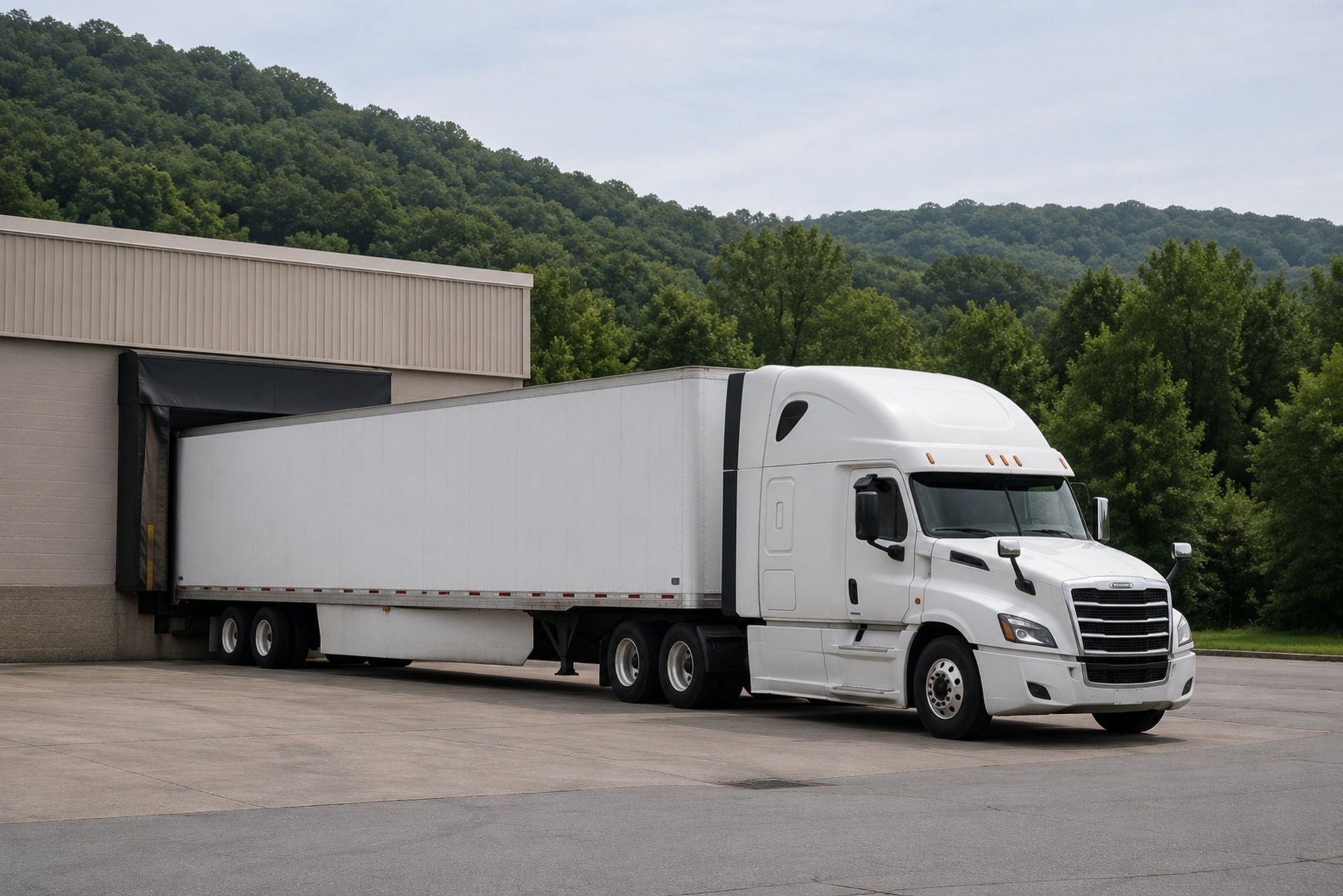
Running a trucking operation in North Carolina puts you in a unique position. The state sits at a crossroads of major freight corridors, and its regulatory environment doesn't always mirror what you'll find at the federal level. If you're hauling goods across the Tar Heel State or beyond its borders, your insurance setup can make or break your business. NC trucking operators saw a 5% average rate increase in early 2026, even as national commercial auto premiums dropped by about 6%. That divergence alone should tell you that cookie-cutter insurance advice doesn't cut it here. Whether you're an owner-operator running a single rig or managing a mid-size fleet, understanding the specific requirements, real costs, and compliance rules for commercial trucking insurance in North Carolina is essential to keeping your wheels turning and your business protected.
North Carolina Commercial Trucking Insurance Requirements
North Carolina has its own set of rules layered on top of federal mandates, which means you're dealing with two regulatory frameworks at once. The state's Department of Insurance and the NC Industrial Commission both play roles in what coverage you need to carry. Getting this wrong isn't just expensive: it can shut down your operation entirely.
State-Specific Minimum Liability Limits
North Carolina requires all commercial motor vehicles to carry liability insurance, but the minimums depend on your vehicle's weight and what you're hauling. For-hire carriers operating intrastate with vehicles over 26,001 pounds must carry at least $750,000 in liability coverage. Smaller commercial vehicles may qualify for lower thresholds, but those minimums still exceed what most personal auto policies cover.
The state also requires you to file proof of insurance with the NC Utilities Commission if you're operating as a for-hire carrier. This isn't optional, and it's not something you can handle after the fact. Your policy has to be in place and properly filed before you start hauling. One thing many new operators miss: NC doesn't just check your coverage at registration. The state can audit your filings, and gaps in coverage create real legal exposure.
Federal FMCSA Regulations for Interstate Carriers
If your trucks cross state lines, the Federal Motor Carrier Safety Administration sets the floor for your insurance. General freight carriers need a minimum of $750,000 in liability, but that number jumps significantly for hazmat haulers. Carriers transporting oil or hazardous materials face FMCSA insurance requirements that can reach $1 million or even $5 million depending on the commodity.
The FMCSA also requires you to maintain a BMC-91 or BMC-91X filing, which is your proof of financial responsibility. Letting this lapse, even briefly, can trigger an out-of-service order. That means your trucks sit idle while you scramble to fix the paperwork. For NC operators running interstate routes, staying current on both state and federal filings is a non-negotiable part of doing business.
North Carolina Workers' Compensation Rules
North Carolina requires workers' compensation coverage for any business with three or more employees, and this applies to trucking companies just like any other employer. Owner-operators working solo can exempt themselves, but the moment you hire a second driver or a dispatcher, you're getting close to that threshold.
The NC Industrial Commission oversees these requirements and doesn't take kindly to non-compliance. Penalties include fines of up to $1 per day per employee, and in serious cases, criminal misdemeanor charges. If a driver gets injured on the job and you don't have coverage, you're personally liable for medical costs and lost wages. That's a risk no trucking operator should take.
INDEX
North Carolina Commercial Trucking Insurance Requirements
Essential Coverage Types for NC Operators
Quick Comparison: Basic vs. Comprehensive Trucking Coverage
Factors Influencing Trucking Insurance Costs in North Carolina
Maintaining Compliance and Avoiding Penalties
GrayStone Insurance Group is fully licensed and permitted to provide specialty commercial insurance solutions for high-risk and hard-to-place businesses across 17 states.
We proudly serve high-risk and hard-to-place businesses from coast to coast. As an independent specialty brokerage, our team works with leading Excess & Surplus and specialty carriers to make sure restaurants, bars, contractors, trucking companies, manufacturers, and other hard-to-place operations receive coverage that fits their real risks in California, Colorado, Florida, Georgia, Illinois, Iowa, Maryland, Michigan, Missouri, Nevada, New York, North Carolina, South Carolina, Tennessee, Texas, Utah, and Washington.
Every policy has boundaries. Knowing them up front is how you avoid an uncovered claim. Common exclusions include:
Every policy has boundaries. Knowing them up front is how you avoid an uncovered claim. Common exclusions include:
Every policy has boundaries. Knowing them up front is how you avoid an uncovered claim. Common exclusions include:
General Liability responds to the core exposures most operations in this category face. A typical policy answers third-party claims and the defense costs that come with them, so a single incident doesn't put the business at risk.
If your firm provides any design, engineering, or consulting services alongside construction, you need both. A GL policy won't cover a claim alleging your design specifications caused a building envelope failure. That's a professional liability exposure, and it's one of the fastest-growing claim categories in construction.
Essential Coverage Types for NC Operators
Beyond the legally required minimums, smart operators carry coverage that protects against the real-world risks of trucking. A bare-bones policy might keep you legal, but it won't keep you solvent after a major claim.
Primary Liability and Physical Damage
Primary liability covers damage and injuries you cause to others. Physical damage covers your own truck and trailer. Most lenders require physical damage coverage if you're financing your equipment, but even if you own your rig outright, replacing a $150,000 truck out of pocket isn't realistic for most operators.
Physical damage policies typically split into two parts: collision (covers accidents) and comprehensive (covers theft, fire, vandalism, and weather damage). In North Carolina, where hurricanes and severe storms hit the eastern part of the state regularly, comprehensive coverage isn't a luxury. GrayStone Insurance Group works with operators who've learned this lesson the hard way: one hailstorm or flooding event can total equipment that took years to pay off.
Motor Truck Cargo and Bobtail Insurance
Cargo insurance protects the freight you're hauling. If you're a for-hire carrier, most shippers and brokers require you to carry at least $100,000 in cargo coverage, though many contracts demand more. The FMCSA requires a BMC-32 filing for cargo coverage if you're an interstate carrier.
Bobtail insurance covers your truck when you're driving without a trailer attached, like heading home after dropping a load. Your primary liability policy often excludes this scenario, which creates a dangerous gap. Non-trucking liability serves a similar purpose for leased operators driving under their own authority during off-duty hours. Missing either of these coverages is one of the most common mistakes new NC operators make.
Quick Comparison: Basic vs. Comprehensive Trucking Coverage
| Coverage Feature | Basic (Minimum Legal) | Comprehensive (Recommended) |
|---|---|---|
| Primary Liability | $750,000 (state/federal min) | $1M+ (protects against nuclear verdicts) |
| Physical Damage | Not required unless financed | Collision + comprehensive |
| Cargo Insurance | Required for for-hire (BMC-32) | Higher limits ($250K+) |
| Bobtail/Non-Trucking | Not required | Included |
| Workers' Comp | Required with 3+ employees | Required with 3+ employees |
| Umbrella/Excess | Not required | $1M-$5M excess liability |
| Downtime Coverage | Not required | Covers lost income during repairs |
The gap between basic and comprehensive coverage is where most financial disasters happen.
Nuclear verdicts in trucking have pushed jury awards well past $10 million in recent years, making minimum liability limits feel dangerously thin.
Every policy has boundaries. Knowing them up front is how you avoid an uncovered claim. Common exclusions include:
Every policy has boundaries. Knowing them up front is how you avoid an uncovered claim. Common exclusions include:
Every policy has boundaries. Knowing them up front is how you avoid an uncovered claim. Common exclusions include:
General Liability responds to the core exposures most operations in this category face. A typical policy answers third-party claims and the defense costs that come with them, so a single incident doesn't put the business at risk.
Factors Influencing Trucking Insurance Costs in North Carolina
Insurance costs for NC trucking operations vary widely. A single owner-operator might pay $8,000 to $15,000 annually, while a small fleet can easily spend $50,000 or more. Understanding what drives those numbers helps you control them.
Driver Safety Records and CDL Experience
Your drivers' records are the single biggest factor in your premium. A clean CSA score and no at-fault accidents in the past three to five years can save you thousands. On the flip side, a single serious violation or DUI on a driver's record can double your rate for that vehicle.
Insurers also look at CDL experience. Most carriers want drivers with at least two years of experience. If you're hiring newer CDL holders, expect to pay a surcharge, sometimes 15-25% more per driver. This is one area where GrayStone's brokers, who average 20 years in the insurance market, can help find carriers willing to write policies for less experienced drivers without charging astronomical premiums.
Equipment Type and Operating Radius
A local delivery truck operating within a 50-mile radius costs far less to insure than an over-the-road tractor-trailer running coast to coast. The type of freight matters too. Hauling general commodities is straightforward; hauling refrigerated goods, machinery, or hazmat materials pushes premiums higher because the cost of commercial truck insurance scales with risk exposure.
Older equipment also costs more to insure in some cases because it's more likely to break down or be involved in mechanical-failure accidents. Trucks equipped with dash cams, ELDs, and collision avoidance systems often qualify for discounts, so investing in safety technology pays for itself over time.
What happens if a show gets canceled last minute?
Standard policies don't cover event cancellation. If a headliner cancels, severe weather shuts you down, or a power outage kills the show, you're absorbing the full financial loss unless you have a dedicated event cancellation policy. These policies typically cover lost ticket revenue, non-refundable deposits, and marketing expenses. For venues that rely on ticket sales as a primary revenue stream, this coverage pays for itself the first time you need it.
Maintaining Compliance and Avoiding Penalties
Staying compliant isn't a one-time task. It's an ongoing responsibility that requires attention to filings, deadlines, and regulatory changes.
The Role of Form E and Form H Filings
Form E is the uniform motor carrier bodily injury and property damage certificate of insurance. Form H covers cargo insurance. Both must be filed with the FMCSA for interstate carriers, and they must remain active and current. If your insurer cancels your policy, they're required to notify the FMCSA, which triggers a countdown to an out-of-service order.
The catch is that reinstatement isn't instant. Even if you secure new coverage the same day, processing the new filing can take days or weeks. During that window, you're technically non-compliant. Planning ahead and working with an agency that understands these timelines, like GrayStone Insurance Group, prevents costly gaps that ground your fleet.
Understanding North Carolina Rate Bureau (NCRB) Standards
The North Carolina Rate Bureau is a unique institution. Unlike most states where insurers set their own rates, the NCRB files rates that apply to all carriers writing commercial auto insurance in North Carolina. This means less price variation between carriers for standard policies, but it also means you can't always shop around for dramatically lower rates on identical coverage.
Where you can find savings is through experience modifications, safety credits, and choosing carriers that specialize in trucking. The NCRB system rewards clean loss histories, so investing in driver training and safety programs directly reduces your premiums over time. The NC Department of Insurance provides guidance on how rates are determined and what recourse you have if you believe you're being overcharged.
Every policy has boundaries. Knowing them up front is how you avoid an uncovered claim. Common exclusions include:
Every policy has boundaries. Knowing them up front is how you avoid an uncovered claim. Common exclusions include:
Every policy has boundaries. Knowing them up front is how you avoid an uncovered claim. Common exclusions include:
General Liability responds to the core exposures most operations in this category face. A typical policy answers third-party claims and the defense costs that come with them, so a single incident doesn't put the business at risk.
Common Questions About NC Trucking Insurance
How much does trucking insurance cost per truck in North Carolina? Expect to pay between $8,000 and $20,000 per truck annually for a standard policy. Costs vary based on driver experience, equipment type, cargo, and operating radius.
Do owner-operators need workers' comp in NC? Not if you're truly solo with no employees. Once you have three or more workers, North Carolina law requires workers' compensation coverage.
Can I get insurance with a new CDL and no experience? Yes, but it's harder and more expensive. Some carriers won't write new CDL holders at all. Working with a specialized agency improves your chances significantly.
What happens if my FMCSA filing lapses? You'll receive a notice and have a short window to reinstate. If you don't, you'll get an out-of-service order, and operating during that period carries serious federal penalties.
Does NC require uninsured motorist coverage for commercial trucks? North Carolina requires uninsured/underinsured motorist coverage on all motor vehicle policies unless the insured specifically rejects it in writing.
Why are NC trucking insurance rates going up while national rates are dropping? North Carolina's rate bureau system, combined with higher claim severity in the state and increased litigation costs, has kept rates climbing even as broader market conditions soften.
What happens if a show gets canceled last minute?
Standard policies don't cover event cancellation. If a headliner cancels, severe weather shuts you down, or a power outage kills the show, you're absorbing the full financial loss unless you have a dedicated event cancellation policy. These policies typically cover lost ticket revenue, non-refundable deposits, and marketing expenses. For venues that rely on ticket sales as a primary revenue stream, this coverage pays for itself the first time you need it.
Making the Right Choice for Your Fleet
Getting trucking insurance right in North Carolina takes more than picking the cheapest quote. The state's unique rate bureau system, combined with federal FMCSA requirements, creates a compliance environment where small oversights lead to big problems. Your insurance should match the actual risks you face on the road, not just satisfy a regulatory checkbox.
Start by auditing your current coverage against the requirements outlined here. Look for gaps in cargo, bobtail, and excess liability coverage. Review your drivers' records and invest in the safety technology that earns premium discounts. And if you're running a high-risk operation or struggling to find a carrier willing to write your policy, reach out to GrayStone Insurance Group. Their team specializes in placing coverage for operations that other agencies turn away, and their 94% client retention rate speaks to the kind of service that keeps trucking businesses protected year after year.
Your trucks keep North Carolina's economy moving. The right insurance keeps your trucks moving too.
ABOUT THE AUTHOR:
CHAD KRAMER
I started GrayStone Insurance Group in 2018 with a simple conviction: the businesses everyone else turns away deserve a broker who won't. What began as a one-person operation has grown into a specialty commercial brokerage with offices across the country — but the mission hasn't changed. We find solutions for high-risk and hard-to-place businesses when other agencies run the other way.
I built this agency on integrity, hard work, and the tenacity to do the hard things well. Through our access to Excess & Surplus and specialty markets, my team and I place coverage standard carriers can't — and I treat every client's business like my own.
If you've been declined, non-renewed, or told your business is too complicated to insure, let's talk.
Coverages & policies
Plain-language coverage, expertly placed.
We lead with commercial lines and round out personal coverage where you need it. Every policy comes with an explanation — not jargon.

Contractors
Third-party bodily injury & property damage — the foundation for any operation.

Liquor Liability
Critical for bars, restaurants and venues serving alcohol — including A&B.

Commercial Property
Buildings, contents and equipment — including distressed and vacant risk.

Workers' Compensation
Statutory coverage for your crew — including high-mod and high-hazard classes.

Commercial Umbrella
Extra liability limits over your primary policies — essential for high-exposure risk.
Products Liability
Manufacturers, CBD and consumer-product exposure — including imports.
What clients say
Brokers who actually place it.
FAQ
Answers for the risks others won't cover
Getting declined, non-renewed, or told your business is "too high-risk" is frustrating — but it doesn't mean you're out of options. Here are answers to the questions we hear most from business owners who need coverage the standard market won't provide.
What kind of insurance does GrayStone specialize in?
We're a specialty commercial brokerage built for high-risk and hard-to-place businesses — the risks standard carriers often turn away. Through our access to Excess & Surplus (E&S) and specialty markets, we place coverage that everyday agencies can't. Hospitality and construction are among our deepest areas of expertise.
My business was declined or non-renewed elsewhere. Can you still help?
That's exactly what we do. A decline, a non-renewal, or a tough claims history doesn't mean you're out of options — it means your risk needs a broker with the right market access. Tell us your situation and we'll get to work finding a fit.
What is Excess & Surplus (E&S) insurance?
E&S is specialty coverage for risks that standard "admitted" carriers won't write — often because a business is higher-risk, unusual, or has a complex history. As an independent broker, we tap into these specialty markets to place coverage where a typical agency hits a dead end.
What industries do you work with?
We cover a wide range of commercial industries — from restaurants, bars, and hospitality to contractors, trucking, manufacturing, cannabis, and more. If your industry is considered high-risk or hard-to-place, there's a good chance we've handled it.
Will you work with businesses that have prior claims or losses?
Yes. Prior claims and losses are part of many of the risks we place every day. Every business is evaluated on its own merits — and a rocky history is often exactly why a specialty broker can help where others won't.
Are you an independent broker?
Yes. We're not tied to a single carrier, so we shop your risk across multiple specialty and E&S markets to find coverage that actually fits — instead of forcing you into a one-size-fits-all policy.
Insights & resources
Know your risk before you buy.