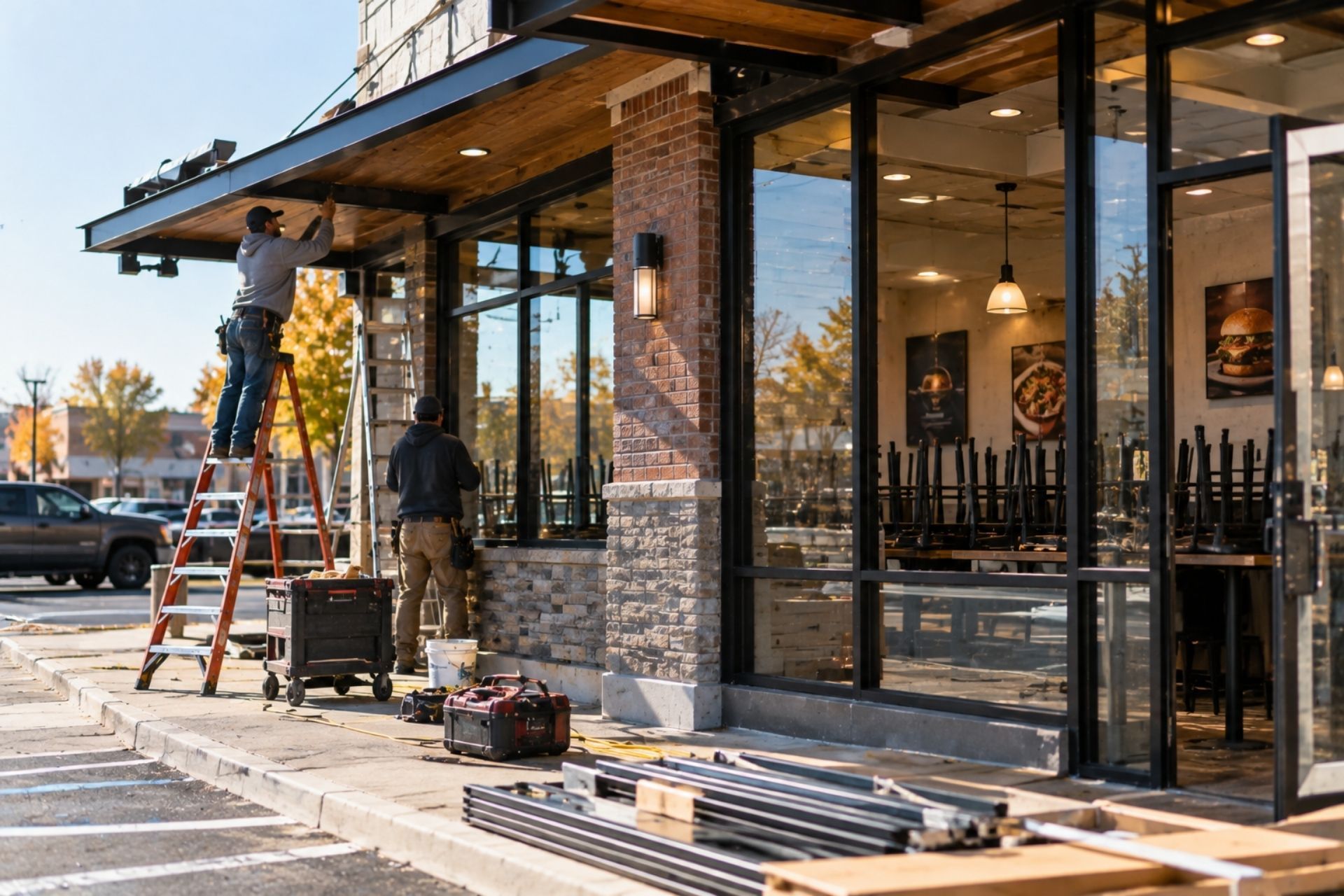

A construction worker falls from scaffolding. A line cook burns her hand on a flat-top grill. A warehouse employee throws out his back lifting a pallet. These aren't hypothetical scenarios: they're Tuesday. And if you run a business with employees, each one of these incidents can cost you tens of thousands of dollars or more. The Bureau of Labor Statistics recorded 2.5 million workplace injuries and illnesses in private industry in 2024, and while that number dipped slightly from the prior year, it's still staggering. Understanding how workers compensation insurance works, what it covers, what it excludes, and whether your business legally needs it can save you from financial disaster. This guide breaks all of that down in plain language, whether you're running a nightclub, a roofing crew, or a hemp processing facility.
What is Workers Compensation Insurance?
Workers compensation insurance is a type of business insurance that pays for medical care and lost wages when an employee gets hurt or sick because of their job. Every state except Texas mandates it for most employers, though the specific rules vary wildly depending on where you operate and how many people you employ. The system has been around for over a century, and it exists because the old way of handling workplace injuries, lawsuits, was slow, expensive, and terrible for everyone involved.
The Purpose of No-Fault Coverage
The "no-fault" part is what makes workers comp unique. An employee doesn't have to prove their employer did something wrong to receive benefits. Slip on a wet floor? Covered. Develop carpal tunnel from repetitive motion? Covered. The trade-off is that employees generally give up their right to sue their employer for negligence in exchange for guaranteed benefits. This arrangement keeps injured workers from going bankrupt while protecting businesses from unpredictable jury verdicts.
How It Protects Both Employers and Employees
For employees, the protection is obvious: their medical bills get paid, and they receive a portion of their wages while they recover. For employers, the value is less visible but equally important. Without workers comp, a single serious injury could result in a lawsuit that shuts down your business. The policy absorbs that risk. It also covers your legal defense costs if an employee does file a claim against you. The workers compensation system has actually been performing well financially, maintaining a 91% calendar year combined ratio for 2025, marking the 12th consecutive year of strong results. That stability means the system works, and premiums have remained relatively predictable for employers.
INDEX
GrayStone Insurance Group is fully licensed and permitted to provide specialty commercial insurance solutions for high-risk and hard-to-place businesses across 17 states.
We proudly serve high-risk and hard-to-place businesses from coast to coast. As an independent specialty brokerage, our team works with leading Excess & Surplus and specialty carriers to make sure restaurants, bars, contractors, trucking companies, manufacturers, and other hard-to-place operations receive coverage that fits their real risks in California, Colorado, Florida, Georgia, Illinois, Iowa, Maryland, Michigan, Missouri, Nevada, New York, North Carolina, South Carolina, Tennessee, Texas, Utah, and Washington.

What Does Workers Comp Actually Cover?
The coverage is broader than most business owners realize. It kicks in for any injury or illness that's directly connected to the employee's job duties, regardless of who was at fault.
Medical Expenses and Rehabilitation
This is the core of any workers comp policy. It pays for emergency room visits, surgeries, prescription medications, physical therapy, and ongoing rehabilitation. If a construction worker needs knee surgery after a fall, the policy covers the surgeon, the hospital stay, the follow-up appointments, and the physical therapy sessions. There are no deductibles or copays for the injured employee. The insurer picks up the full tab for all reasonable and necessary treatment.
Lost Wages and Disability Benefits
When an employee can't work because of a job-related injury, workers comp replaces a portion of their income, typically around two-thirds of their average weekly wage, up to a state-set maximum. Benefits break down into four categories: temporary total disability (can't work at all right now), temporary partial disability (can work but in a limited capacity), permanent total disability (will never return to full work capacity), and permanent partial disability (has lasting impairment but can still work). The average settlement amounts vary significantly based on injury severity and state, but serious claims routinely reach five or six figures.
Employer Liability and Legal Defense
Most policies include an "employers liability" component, sometimes called Part B coverage. This protects you if an employee sues you outside the workers comp system, which can happen in specific circumstances like third-party claims or cases involving gross negligence. The policy pays for your attorney, court costs, and any settlement or judgment. For high-risk industries like construction or manufacturing, this piece of the policy is worth its weight in gold.
Common Exclusions: What Is Not Covered
Not every workplace incident triggers coverage. Injuries that happen while an employee is intoxicated or under the influence of drugs are typically excluded. Self-inflicted injuries and injuries resulting from horseplay or fighting usually won't qualify either. If an employee gets hurt commuting to or from work, that's generally not covered, though injuries during work-related travel are.
Independent contractors aren't covered under your policy, which is why proper worker classification matters enormously. Misclassifying employees as contractors to avoid workers comp obligations is one of the most common and costly mistakes business owners make. State auditors actively look for this, and the penalties can include back-premium charges, fines, and even criminal prosecution.
Occupational diseases are covered, but proving the connection to work can be tricky. OSHA has been expanding its heat illness prevention efforts, which means heat-related claims in outdoor industries like roofing and landscaping are getting more attention and more scrutiny from regulators.
Does Your Business Need a Policy?
The short answer for most employers: yes, it's legally required. The longer answer depends on your state, your industry, and how your workforce is structured.
State-Specific Requirements and Employee Thresholds
Requirements differ dramatically from state to state. California and New York require coverage as soon as you hire your first employee. Alabama and Georgia don't kick in until you have five or more employees. Some states, like Florida, have different thresholds for different industries: construction companies need coverage with just one employee, while non-construction businesses get a higher threshold. Texas remains the only state where workers comp is entirely optional for private employers, though going without it exposes you to lawsuits with no cap on damages.
If you operate in multiple states, you need coverage that satisfies each state's requirements. This is where things get complicated fast, especially for businesses in industries like trucking or traveling construction crews. GrayStone Insurance Group works with employers across multiple jurisdictions and can help sort through overlapping state mandates, something their brokers handle regularly for clients in construction and transportation.
Rules for Independent Contractors and Sole Proprietors
Sole proprietors and single-member LLCs can usually exempt themselves from workers comp requirements, though some states allow them to opt in. If you're a sole proprietor in construction, opting in is smart: general contractors often won't hire subcontractors who lack coverage because the liability rolls uphill.
Independent contractors are not your employees and shouldn't be on your workers comp policy. But if the state determines that your "contractor" is actually an employee based on how you control their work, you're on the hook for coverage retroactively. The IRS and state labor boards have been cracking down on misclassification, and the financial consequences are severe.
Comparing Workers Comp to Other Business Insurance
Business owners sometimes confuse workers comp with general liability insurance. They're completely different products that protect against different risks. Workers comp covers your employees. General liability covers third parties like customers, vendors, or passersby.
Comparison Chart: Workers Comp vs. General Liability
| Feature | Workers Compensation | General Liability |
|---|---|---|
| Who it protects | Your employees | Third parties (customers, visitors) |
| What it covers | Work-related injuries/illnesses | Bodily injury, property damage, advertising injury |
| Legal requirement | Required in 49 states | Not required by law (but often required by contracts) |
| Covers medical bills | Yes, for employees | Yes, for third parties |
| Covers lost wages | Yes | No |
| Covers lawsuits | Yes (employer liability) | Yes (third-party claims) |
| Typical annual cost | $500-$5,000+ for small businesses | $400-$2,000+ for small businesses |
Most businesses need both policies. A restaurant needs workers comp for the server who slips in the kitchen and general liability for the customer who slips in the dining room. They're complementary, not interchangeable.
Frequently Asked Questions
Do I need insurance if I only have one part-time employee?
In many states, yes. California, Connecticut, and several others require coverage regardless of whether employees are full-time or part-time. Check your state's specific threshold because the penalties for non-compliance apply even for a single uncovered part-time worker.
How much does a typical policy cost?
Costs vary based on your industry, payroll size, claims history, and state. A small office-based business might pay $500 to $1,500 per year, while a roofing company could pay $10,000 or more. The NCCI's 2026 analysis shows that the workers compensation market remains financially healthy, which has helped keep rate increases modest for most employers.
What happens if I don't have coverage and an employee gets hurt?
You're personally liable for all medical costs and lost wages. Most states also impose heavy fines, and some classify it as a criminal offense. In New York, failing to carry workers comp is a felony for repeat offenders. You could also face a stop-work order that shuts your business down immediately.
Does it cover employees who work from home?
Yes, if the injury is work-related. An employee who trips over a power cord during a work call at their home office could file a valid claim. The challenge is proving the injury happened during work activities, which is why clear remote work policies matter.
Can I cancel my policy if I let all my staff go?
You can, but timing matters. Most states require you to maintain coverage as long as you have even one employee on payroll. Cancel prematurely and you'll face fines and potential gaps in coverage if you rehire. Talk to your broker before canceling to make sure you're compliant.
Making the Right Choice for Your Team
Workers compensation coverage isn't optional for most businesses, and treating it as an afterthought is one of the most expensive mistakes an employer can make. The right policy protects your employees when they need it most and shields your business from claims that could otherwise drain your accounts or force you to close.
For businesses in high-risk industries like construction, hospitality, nightlife, or cannabis, finding affordable coverage can be genuinely difficult. Standard carriers often decline these risks entirely. GrayStone Insurance Group specializes in placing coverage for exactly these types of businesses, with brokers who average 20 years of experience and a 94% client retention rate that speaks to the quality of their service. If you've been turned down elsewhere or you're paying more than you should, it's worth having a conversation with a specialist who understands your industry.
Don't wait for an injury to find out whether your coverage is adequate. Review your policy annually, classify your workers correctly, and work with a broker who knows the difference between checking a box and actually protecting your people.
ABOUT THE AUTHOR:
CHAD KRAMER
I started GrayStone Insurance Group in 2018 with a simple conviction: the businesses everyone else turns away deserve a broker who won't. What began as a one-person operation has grown into a specialty commercial brokerage with offices across the country — but the mission hasn't changed. We find solutions for high-risk and hard-to-place businesses when other agencies run the other way.
I built this agency on integrity, hard work, and the tenacity to do the hard things well. Through our access to Excess & Surplus and specialty markets, my team and I place coverage standard carriers can't — and I treat every client's business like my own.
If you've been declined, non-renewed, or told your business is too complicated to insure, let's talk.
Coverages & policies
Plain-language coverage, expertly placed.
We lead with commercial lines and round out personal coverage where you need it. Every policy comes with an explanation — not jargon.

Contractors
Third-party bodily injury & property damage — the foundation for any operation.

Liquor Liability
Critical for bars, restaurants and venues serving alcohol — including A&B.

Commercial Property
Buildings, contents and equipment — including distressed and vacant risk.

Workers' Compensation
Statutory coverage for your crew — including high-mod and high-hazard classes.

Commercial Umbrella
Extra liability limits over your primary policies — essential for high-exposure risk.
Products Liability
Manufacturers, CBD and consumer-product exposure — including imports.
What clients say
Brokers who actually place it.
FAQ
Answers for the risks others won't cover
Getting declined, non-renewed, or told your business is "too high-risk" is frustrating — but it doesn't mean you're out of options. Here are answers to the questions we hear most from business owners who need coverage the standard market won't provide.
What kind of insurance does GrayStone specialize in?
We're a specialty commercial brokerage built for high-risk and hard-to-place businesses — the risks standard carriers often turn away. Through our access to Excess & Surplus (E&S) and specialty markets, we place coverage that everyday agencies can't. Hospitality and construction are among our deepest areas of expertise.
My business was declined or non-renewed elsewhere. Can you still help?
That's exactly what we do. A decline, a non-renewal, or a tough claims history doesn't mean you're out of options — it means your risk needs a broker with the right market access. Tell us your situation and we'll get to work finding a fit.
What is Excess & Surplus (E&S) insurance?
E&S is specialty coverage for risks that standard "admitted" carriers won't write — often because a business is higher-risk, unusual, or has a complex history. As an independent broker, we tap into these specialty markets to place coverage where a typical agency hits a dead end.
What industries do you work with?
We cover a wide range of commercial industries — from restaurants, bars, and hospitality to contractors, trucking, manufacturing, cannabis, and more. If your industry is considered high-risk or hard-to-place, there's a good chance we've handled it.
Will you work with businesses that have prior claims or losses?
Yes. Prior claims and losses are part of many of the risks we place every day. Every business is evaluated on its own merits — and a rocky history is often exactly why a specialty broker can help where others won't.
Are you an independent broker?
Yes. We're not tied to a single carrier, so we shop your risk across multiple specialty and E&S markets to find coverage that actually fits — instead of forcing you into a one-size-fits-all policy.
Insights & resources
Know your risk before you buy.