
General Liability responds to the core exposures most operations in this category face. A typical policy answers third-party claims and the defense costs that come with them, so a single incident doesn't put the business at risk.
Running a trucking operation in Washington State means dealing with some of the most complex insurance requirements in the country. Between the WUTC, FMCSA, and a patchwork of state-specific rules, even experienced owner-operators can get tripped up. And the stakes are real: one lapsed filing or coverage gap can pull your authority and park your trucks. Whether you're hauling freight across the Cascades or running containers out of the Port of Tacoma, getting your commercial trucking insurance right in Washington isn't optional. It's the foundation everything else sits on. This guide breaks down the actual requirements, realistic cost expectations, and compliance details that WA operators need to know heading into 2026 and beyond. If you've been quoted wildly different premiums or aren't sure whether your current policy actually covers what you think it does, you're in the right place.
Understanding Washington State Trucking Insurance Mandates
Washington treats trucking insurance more seriously than many states, and the enforcement mechanisms have teeth. The state requires all for-hire motor carriers to maintain continuous proof of financial responsibility, and any lapse can result in immediate suspension of your operating authority. This isn't a warning-and-fix-it situation: your trucks stop moving.
The Washington Utilities and Transportation Commission oversees intrastate carriers, while the FMCSA handles interstate authority. If you operate both within and outside state lines, you're answering to two regulatory bodies simultaneously. That dual layer of oversight means your insurance program needs to satisfy both sets of requirements, and the stricter standard always wins.
Minimum Liability and Cargo Requirements
For intrastate carriers in Washington, the minimum liability insurance requirement depends on what you're hauling. General freight carriers need at least $750,000 in primary liability coverage. If you're transporting hazardous materials, that number jumps to $5 million. Household goods movers face their own set of requirements, including cargo insurance minimums that protect the shipper's property.
Cargo coverage minimums vary by commodity type, but most WA operators carry between $100,000 and $250,000 in cargo insurance. One thing to keep in mind: your liability minimum is a floor, not a ceiling. Most shippers and brokers require $1 million in primary auto liability before they'll tender a load, so meeting the state minimum alone won't keep freight moving to your trucks.
Washington Utilities and Transportation Commission (WUTC) Filings
Every intrastate carrier in Washington must file proof of insurance directly with the WUTC. This means your insurance provider submits a Form E (for liability) or Form H (for cargo) on your behalf. If your insurer cancels or non-renews your policy, they're required to notify the WUTC, which triggers an automatic suspension process.
Here's where operators get caught: switching insurers without coordinating the filing timeline. There's no grace period. If your old carrier files a cancellation notice before your new carrier files proof of coverage, your authority gets suspended, sometimes for days while paperwork clears. Firms like GrayStone Insurance Group, which specialize in hard-to-place commercial risks, typically coordinate these filings tightly to avoid gaps that could shut down your operation.
INDEX
GrayStone Insurance Group is fully licensed and permitted to provide specialty commercial insurance solutions for high-risk and hard-to-place businesses across 17 states.
We proudly serve high-risk and hard-to-place businesses from coast to coast. As an independent specialty brokerage, our team works with leading Excess & Surplus and specialty carriers to make sure restaurants, bars, contractors, trucking companies, manufacturers, and other hard-to-place operations receive coverage that fits their real risks in California, Colorado, Florida, Georgia, Illinois, Iowa, Maryland, Michigan, Missouri, Nevada, New York, North Carolina, South Carolina, Tennessee, Texas, Utah, and Washington.
Every policy has boundaries. Knowing them up front is how you avoid an uncovered claim. Common exclusions include:
Every policy has boundaries. Knowing them up front is how you avoid an uncovered claim. Common exclusions include:
Every policy has boundaries. Knowing them up front is how you avoid an uncovered claim. Common exclusions include:
General Liability responds to the core exposures most operations in this category face. A typical policy answers third-party claims and the defense costs that come with them, so a single incident doesn't put the business at risk.
If your firm provides any design, engineering, or consulting services alongside construction, you need both. A GL policy won't cover a claim alleging your design specifications caused a building envelope failure. That's a professional liability exposure, and it's one of the fastest-growing claim categories in construction.
Comparison of Essential Coverage Options
Trucking insurance isn't a single policy: it's a stack of coverages that work together. The two most commonly confused are primary auto liability and general liability. They cover fundamentally different risks, and you almost certainly need both.
Coverage Comparison Table: Primary Liability vs. General Liability
| Feature | Primary Auto Liability | General Liability |
|---|---|---|
| What it covers | Bodily injury and property damage from truck accidents | Injuries or damage at your business premises, or from non-driving operations |
| Required by law? | Yes, for all motor carriers | Not mandated by FMCSA/WUTC, but often required by contracts |
| Typical limits | $750K to $1M+ | $1M per occurrence / $2M aggregate |
| Filed with WUTC? | Yes, via Form E | No |
| Common claims | Rear-end collisions, jackknife accidents, cargo spills on roadways | Slip-and-fall at your yard, damage during loading/unloading |
| Average annual cost | $8,000 - $14,000 per truck | $1,200 - $3,500 per year |
Most owner-operators focus exclusively on primary liability because it's the legal requirement. But general liability fills critical gaps, especially if you have a terminal, yard, or warehouse where third parties are present.
Factors Influencing Trucking Insurance Costs in WA
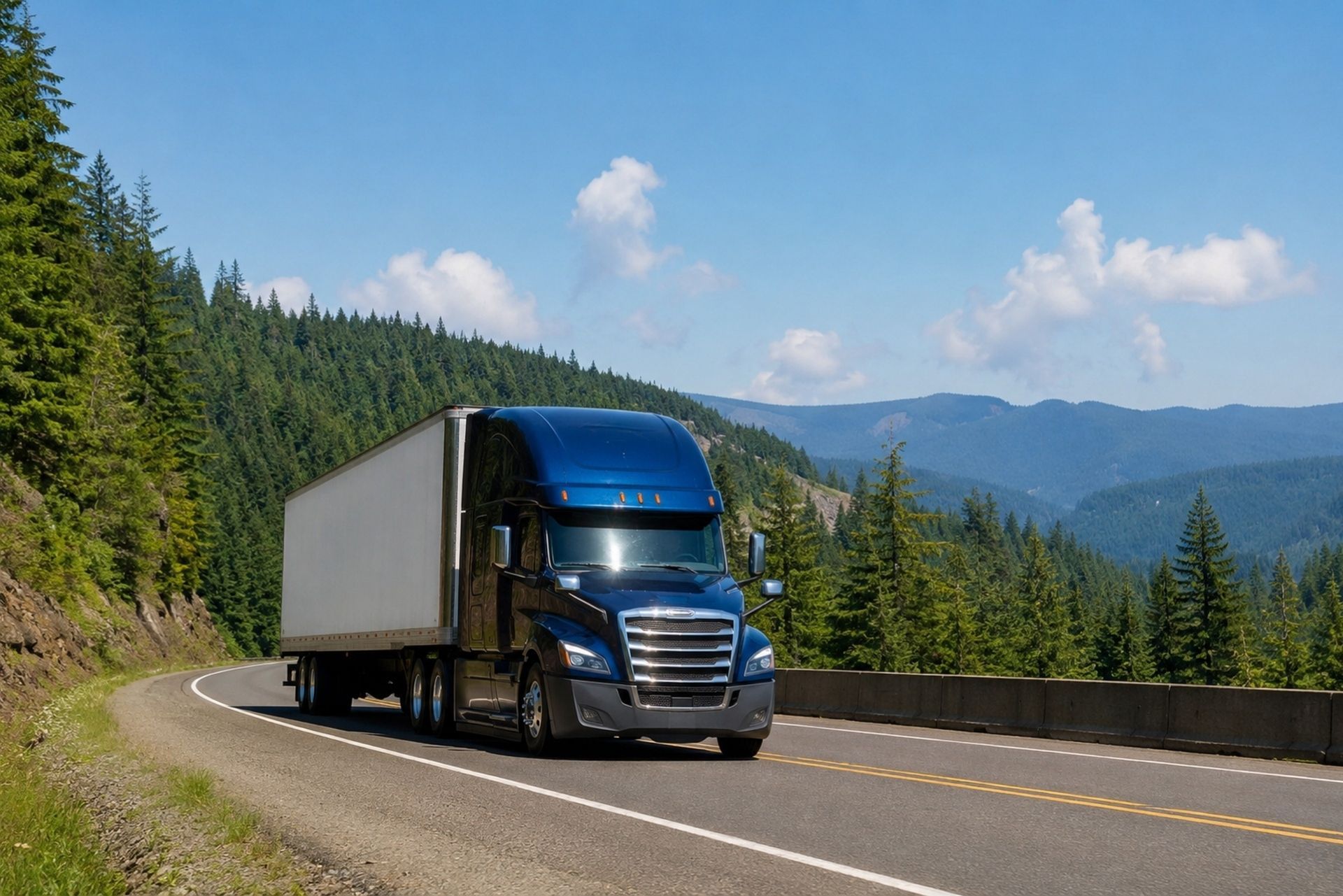
Washington operators typically pay more than the national average for trucking insurance. The combination of urban congestion around Seattle-Tacoma, mountain pass driving conditions, and high litigation costs in King County courts all push premiums upward. That said, the range is wide, and your specific risk profile matters more than state averages.
The Impact of Driving Records and CDL Experience
Your drivers are your biggest insurance variable. A fleet with clean MVRs and experienced CDL holders (five-plus years) will pay dramatically less than an operation staffing newer drivers or anyone with recent violations. Insurers pull PSP reports and CSA scores during underwriting, and a single serious violation can increase your per-truck premium by 20-40%.
The 2026 DOT compliance updates for motor carriers have tightened drug and alcohol clearinghouse requirements, making it harder to onboard drivers with prior violations. That's actually good news for clean operators: the tighter the screening standards, the more insurers reward fleets that maintain them.
Regional Price Differences: Seattle Urban vs. Rural Routes
A truck running daily routes through downtown Seattle or along I-5 through Tacoma will cost significantly more to insure than one hauling agricultural products between Yakima and Spokane. Urban congestion means more accidents, higher repair costs, and larger jury verdicts. Carriers operating primarily east of the Cascades often see premiums 15-25% lower than their Puget Sound counterparts.
Route profiles matter during underwriting. If your operation splits between urban and rural, make sure your broker presents that mix accurately. A blanket "Seattle-based" classification when half your miles are in rural Eastern Washington means you're overpaying.
Every policy has boundaries. Knowing them up front is how you avoid an uncovered claim. Common exclusions include:
Every policy has boundaries. Knowing them up front is how you avoid an uncovered claim. Common exclusions include:
Every policy has boundaries. Knowing them up front is how you avoid an uncovered claim. Common exclusions include:
General Liability responds to the core exposures most operations in this category face. A typical policy answers third-party claims and the defense costs that come with them, so a single incident doesn't put the business at risk.
Staying Compliant with Federal and State Regulations
Compliance isn't a one-time checkbox. It's an ongoing obligation that requires active management, especially for operators crossing state lines. Falling out of compliance, even briefly, can mean fines, authority suspension, or worse: denied claims when you need coverage most.
FMCSA Requirements for Interstate Operators
If you cross state lines, FMCSA rules layer on top of Washington's state requirements. The federal minimum for general freight carriers has been $750,000 since 1985, but that number may be changing soon. A bill introduced in the U.S. House proposes raising the federal minimum insurance requirement for motor carriers from $750,000 to $5 million. The legislation, known as the GHOSTRUCK Act, was introduced in April 2026 and targets uninsured and underinsured carriers operating on public highways.
Whether or not this bill passes, the direction is clear: minimum requirements are going up. Operators currently carrying only $750,000 in coverage should seriously consider increasing limits now. Waiting until a mandate hits means buying coverage in a rush alongside every other carrier, which drives up costs.
Maintaining Your IRP and IFTA Credentials
Your International Registration Plan and International Fuel Tax Agreement credentials are tied to your insurance status. A lapse in coverage can trigger IRP registration cancellation, which means your apportioned plates become invalid. Getting pulled over with invalid registration is a quick way to get your truck impounded and face steep fines.
IFTA compliance is separate from insurance, but the administrative burden compounds. Missing a quarterly fuel tax filing while simultaneously dealing with an insurance lapse creates a cascade of problems. Smart operators build a compliance calendar and treat these deadlines with the same urgency as payroll.
Common Questions About WA Trucking Insurance
How much does a commercial policy cost in Washington?
Average premiums range from $8,000 to $15,000 per truck depending on your safety history, cargo type, and operating radius. New ventures with less than two years of authority typically land at the higher end. Experienced operators with clean records and established loss histories can push below $8,000 in some cases.
Do I need insurance if I only drive within state lines?
Yes, intrastate carriers must still meet WA state liability minimums and register with the WUTC. There's no exemption for staying within Washington's borders. You'll need to file Form E proof of liability coverage with the commission before you can legally haul freight.
What is bobtail insurance and do I need it?
Bobtail coverage protects you when driving your truck without a trailer attached, typically after dropping a load. It's often required by motor carriers for independent contractors operating under their authority. If you're an owner-operator leased to a carrier, check your lease agreement: most require it.
How can I lower my monthly insurance payments?
Improving your CSA score and installing telematics devices like dashcams and ELDs can trigger significant discounts, sometimes 10-15% off your premium. GrayStone Insurance Group uses data-driven risk modeling to identify these savings opportunities, particularly for operators whose safety investments aren't reflected in their current pricing. Bundling coverages under a single program rather than buying piecemeal policies also tends to reduce total cost.
Every policy has boundaries. Knowing them up front is how you avoid an uncovered claim. Common exclusions include:
Every policy has boundaries. Knowing them up front is how you avoid an uncovered claim. Common exclusions include:
Every policy has boundaries. Knowing them up front is how you avoid an uncovered claim. Common exclusions include:
General Liability responds to the core exposures most operations in this category face. A typical policy answers third-party claims and the defense costs that come with them, so a single incident doesn't put the business at risk.
Your Next Steps for Secure Operations
Getting commercial trucking insurance right in Washington requires more than picking the cheapest quote. It means understanding how state WUTC filings, federal FMCSA requirements, and your specific risk profile interact. The potential increase in federal minimums to $5 million makes this an especially important time to review your coverage limits and ensure you're not caught scrambling if new legislation passes.
Start by pulling your current CSA scores, reviewing your driver MVRs, and confirming that all WUTC filings are current and accurate. If you're running a high-risk operation or have been declined by standard carriers, working with a specialized agency like GrayStone Insurance Group, where brokers average 20 years of industry experience, can make the difference between getting placed at a reasonable rate and getting stuck with a surplus lines policy that bleeds your margins.
Your insurance program should protect your business without strangling it. Get your compliance house in order, invest in the safety tech that earns premium discounts, and work with people who actually understand trucking. That's how you keep rolling.
ABOUT THE AUTHOR:
CHAD KRAMER
I started GrayStone Insurance Group in 2018 with a simple conviction: the businesses everyone else turns away deserve a broker who won't. What began as a one-person operation has grown into a specialty commercial brokerage with offices across the country — but the mission hasn't changed. We find solutions for high-risk and hard-to-place businesses when other agencies run the other way.
I built this agency on integrity, hard work, and the tenacity to do the hard things well. Through our access to Excess & Surplus and specialty markets, my team and I place coverage standard carriers can't — and I treat every client's business like my own.
If you've been declined, non-renewed, or told your business is too complicated to insure, let's talk.
Coverages & policies
Plain-language coverage, expertly placed.
We lead with commercial lines and round out personal coverage where you need it. Every policy comes with an explanation — not jargon.

Contractors
Third-party bodily injury & property damage — the foundation for any operation.

Liquor Liability
Critical for bars, restaurants and venues serving alcohol — including A&B.

Commercial Property
Buildings, contents and equipment — including distressed and vacant risk.

Workers' Compensation
Statutory coverage for your crew — including high-mod and high-hazard classes.

Commercial Umbrella
Extra liability limits over your primary policies — essential for high-exposure risk.
Products Liability
Manufacturers, CBD and consumer-product exposure — including imports.
What clients say
Brokers who actually place it.
FAQ
Answers for the risks others won't cover
Getting declined, non-renewed, or told your business is "too high-risk" is frustrating — but it doesn't mean you're out of options. Here are answers to the questions we hear most from business owners who need coverage the standard market won't provide.
What kind of insurance does GrayStone specialize in?
We're a specialty commercial brokerage built for high-risk and hard-to-place businesses — the risks standard carriers often turn away. Through our access to Excess & Surplus (E&S) and specialty markets, we place coverage that everyday agencies can't. Hospitality and construction are among our deepest areas of expertise.
My business was declined or non-renewed elsewhere. Can you still help?
That's exactly what we do. A decline, a non-renewal, or a tough claims history doesn't mean you're out of options — it means your risk needs a broker with the right market access. Tell us your situation and we'll get to work finding a fit.
What is Excess & Surplus (E&S) insurance?
E&S is specialty coverage for risks that standard "admitted" carriers won't write — often because a business is higher-risk, unusual, or has a complex history. As an independent broker, we tap into these specialty markets to place coverage where a typical agency hits a dead end.
What industries do you work with?
We cover a wide range of commercial industries — from restaurants, bars, and hospitality to contractors, trucking, manufacturing, cannabis, and more. If your industry is considered high-risk or hard-to-place, there's a good chance we've handled it.
Will you work with businesses that have prior claims or losses?
Yes. Prior claims and losses are part of many of the risks we place every day. Every business is evaluated on its own merits — and a rocky history is often exactly why a specialty broker can help where others won't.
Are you an independent broker?
Yes. We're not tied to a single carrier, so we shop your risk across multiple specialty and E&S markets to find coverage that actually fits — instead of forcing you into a one-size-fits-all policy.
Insights & resources
Know your risk before you buy.