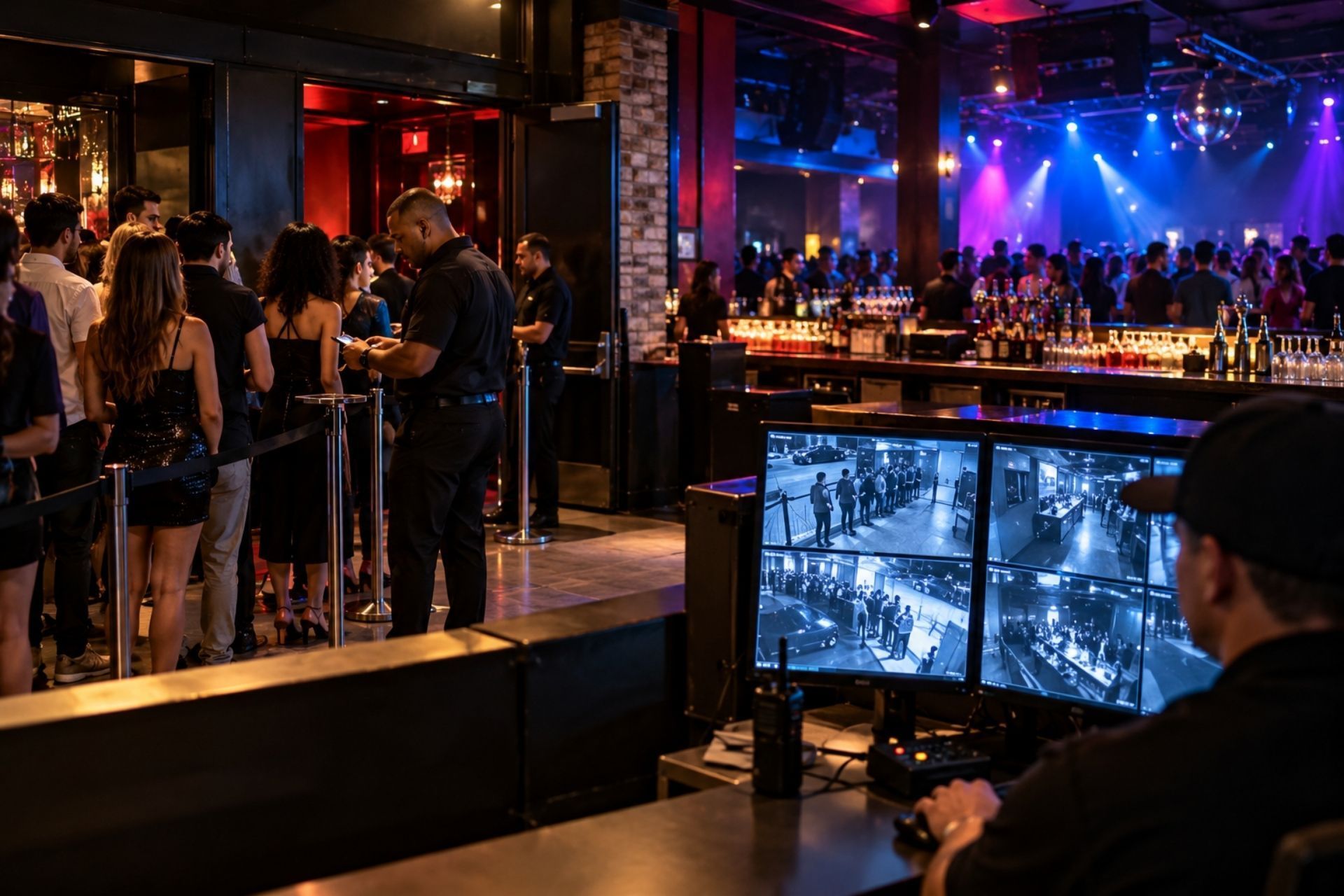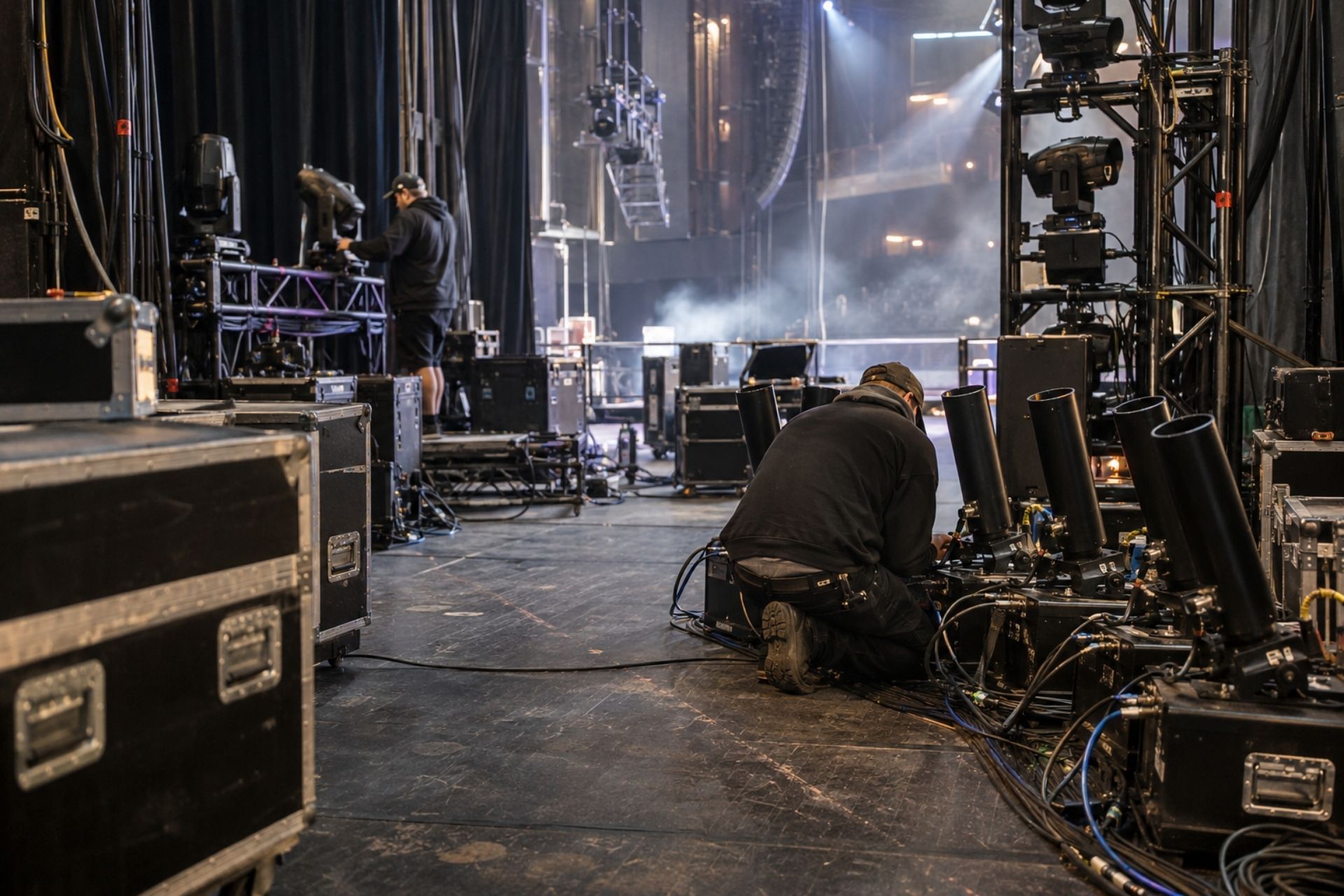

General Liability responds to the core exposures most operations in this category face. A typical policy answers third-party claims and the defense costs that come with them, so a single incident doesn't put the business at risk.
Georgia requires workers' compensation for any business with three or more employees. That threshold is lower than many states, and it catches a lot of small venue operators off guard. Your door staff, bartenders, sound engineers, and even regular part-time stagehands count toward that number.
The penalties for non-compliance are steep: fines up to $10,000 and potential criminal misdemeanor charges. Georgia's State Board of Workers' Compensation actively investigates complaints, and injured employees who discover you lack coverage can sue you directly - without the protections that workers' comp provides to employers. Don't gamble on this one.
Workers' Compensation Laws in Georgia
Running a contracting business in New York is expensive enough before you factor in insurance. Between the state's unique labor laws, municipal licensing patchwork, and some of the highest construction insurance premiums in the country, getting your coverage wrong can cost you a project, a license, or worse: your entire business. New York contractor insurance requirements are stricter than most states, and the penalties for non-compliance hit fast. A single lapse in workers' compensation coverage can trigger stop-work orders, daily fines of $2,000, and even criminal charges for repeat offenders. The good news? The market is shifting in contractors' favor heading into late 2026, with significant rate decreases on the horizon. But cheaper premiums don't help if you're carrying the wrong coverage or handing GCs certificates that don't match contract requirements. This guide breaks down what NY operators actually need to know: the mandatory coverages, what drives your costs, how to stay compliant, and where contractors most often trip up. Whether you're a solo electrician in Buffalo or running a 40-person crew in Manhattan, the rules apply to you, and they're enforced aggressively.
Mandatory Insurance Requirements for NY Contractors
New York is one of the most heavily regulated states for contractor insurance, and the requirements go beyond what you'd find in neighboring states like New Jersey or Connecticut. The state mandates specific coverages that must be in place before you pull permits, sign subcontracts, or step onto a jobsite.
The big three mandatory coverages are workers' compensation, disability benefits (including Paid Family Leave), and general liability insurance. Miss any one of these, and you're exposed to fines, project shutdowns, and personal liability. The state actively audits contractors through the Workers' Compensation Board, and general contractors increasingly verify coverage before allowing subs on site.
What catches many newer contractors off guard is that these aren't just "nice to have" policies you buy once and forget. Each has specific reporting requirements, certificate formats, and renewal timelines that demand ongoing attention.
Workers' Compensation and Disability Benefits
Every New York employer, including contractors with even one employee, must carry workers' compensation insurance. There's no small-business exemption. Sole proprietors and partners can opt out for themselves, but the moment you hire anyone, including part-time laborers, coverage is mandatory.
Here's the bright spot: New York workers' compensation loss costs are set to decrease by 21.9% effective October 1, 2026, continuing a multi-year downward trend. This marks the ninth consecutive annual decrease, which means real savings for contractors who maintain clean loss histories. That said, your actual premium depends on your experience modification rate (EMR), payroll size, and classification codes.
Disability benefits are a separate requirement. New York mandates short-term disability coverage (DBL) for off-the-job injuries and illnesses. The 2026 DBL premium rates from NYSIF remain modest, but you also need Paid Family Leave (PFL) coverage. For 2026, PFL benefits cover 67% of an employee's average weekly wage, capped at 67% of the statewide average weekly wage. Employees fund PFL through payroll deductions, but you're responsible for securing the policy.
General Liability and the NY Labor Law (Action Over)
General liability insurance protects against third-party bodily injury and property damage claims. Most GCs require $1 million per occurrence and $2 million aggregate as a baseline, though NYC projects frequently demand higher limits.
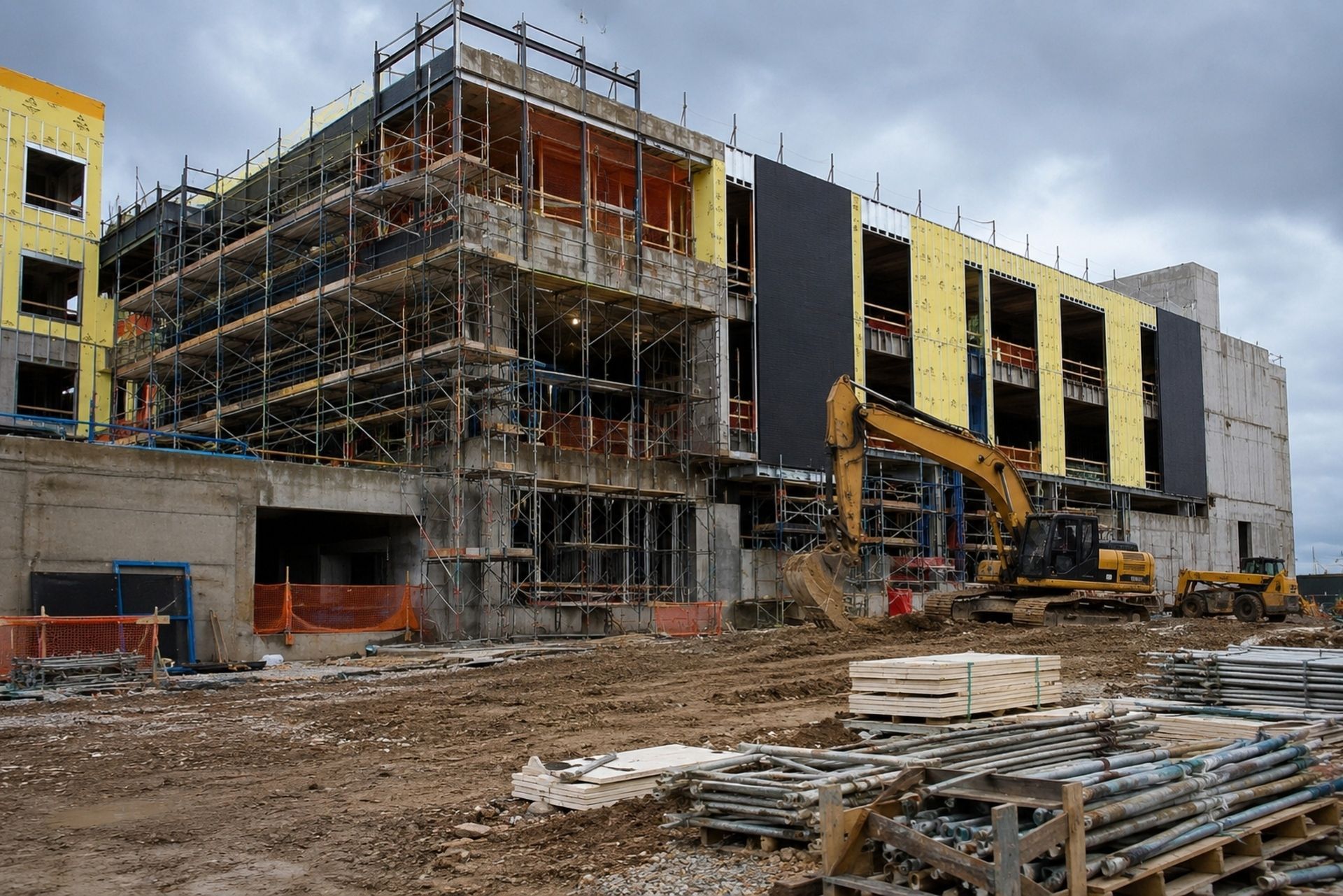
The real cost driver in New York is Labor Law Sections 240 and 241, commonly called the "Scaffold Law." New York is the only state with absolute liability for gravity-related injuries on construction sites, meaning property owners and general contractors are liable regardless of the injured worker's own negligence. NY construction insurance costs are 200% to 500% higher than other states largely because of this law.
This creates what insurers call "action over" exposure. When an injured employee collects workers' comp, then sues the property owner under Section 240, the owner's insurer often turns around and sues the subcontractor's GL policy. Your general liability policy needs to account for this exposure, and many standard carriers won't touch it. Firms like GrayStone Insurance Group, which specialize in hard-to-place construction risks, often become essential partners for contractors facing these coverage challenges.
Licensing Requirements by Municipality
New York has no single statewide contractor license. Instead, licensing is handled at the city, county, or town level, and requirements vary wildly. NYC requires a Department of Buildings license for general contractors, plumbers, electricians, and several specialty trades. Westchester County has its own home improvement contractor registration. Nassau and Suffolk counties on Long Island require separate registrations.
Each municipality typically requires proof of insurance as part of the licensing application. Some require specific minimum limits. NYC, for example, mandates that licensed GCs carry at least $1 million in general liability. Failing to maintain continuous coverage can result in license suspension, and reinstatement isn't automatic. Check your specific municipality's requirements before assuming you're covered.

INDEX
GrayStone Insurance Group is fully licensed and permitted to provide specialty commercial insurance solutions for high-risk and hard-to-place businesses across 17 states.
We proudly serve high-risk and hard-to-place businesses from coast to coast. As an independent specialty brokerage, our team works with leading Excess & Surplus and specialty carriers to make sure restaurants, bars, contractors, trucking companies, manufacturers, and other hard-to-place operations receive coverage that fits their real risks in California, Colorado, Florida, Georgia, Illinois, Iowa, Maryland, Michigan, Missouri, Nevada, New York, North Carolina, South Carolina, Tennessee, Texas, Utah, and Washington.
Every policy has boundaries. Knowing them up front is how you avoid an uncovered claim. Common exclusions include:
Every policy has boundaries. Knowing them up front is how you avoid an uncovered claim. Common exclusions include:
Every policy has boundaries. Knowing them up front is how you avoid an uncovered claim. Common exclusions include:
General Liability responds to the core exposures most operations in this category face. A typical policy answers third-party claims and the defense costs that come with them, so a single incident doesn't put the business at risk.
If your firm provides any design, engineering, or consulting services alongside construction, you need both. A GL policy won't cover a claim alleging your design specifications caused a building envelope failure. That's a professional liability exposure, and it's one of the fastest-growing claim categories in construction.
CBobtail and Non-Trucking Liability Insurance
Bobtail insurance covers your truck when you're driving without a trailer attached, typically between loads or heading to a pickup. Non-trucking liability is similar but applies when you're using the truck for personal purposes outside of dispatch. These coverages fill gaps that your primary liability policy doesn't cover. Owner-operators leased to a carrier especially need to pay attention here, because the carrier's policy usually only covers you while you're under dispatch.
| Coverage Element | Basic Tier | Comprehensive Tier |
|---|---|---|
| General Liability | $1M per occurrence | $2M per occurrence |
| Product Liability | Often excluded or limited | Included with $1M-$2M limits |
| Crop/Inventory | Not included | Included with agreed-value endorsement |
| Product Recall | Not included | Included |
| Business Interruption | Limited | Full coverage with 12-month indemnity |
| Workers' Compensation | Add-on | Bundled |
| Approximate Annual Cost | $2,500-$5,000 | $8,000-$20,000+ |
Key Coverage Types and Comparison
Beyond the mandatory minimums, most NY contractors need several additional policies to actually operate without gaps. The right combination depends on your trade, project size, and contract requirements.
Comparison of Essential Coverage Limits
| Coverage Type | Typical Minimum | NYC Project Standard | Required By |
|---|---|---|---|
| General Liability | $1M / $2M aggregate | $2M / $4M aggregate | GCs, property owners |
| Workers' Compensation | Statutory limits | Statutory limits | NYS Law |
| Commercial Auto | $1M combined single limit | $1M-$5M CSL | Contract terms |
| Umbrella/Excess | $1M-$2M | $5M-$10M | GC contracts |
| Disability (DBL) | Statutory | Statutory | NYS Law |
| Inland Marine/Tools | Varies by value | Varies by value | Optional but smart |
| Professional Liability | $1M per claim | $1M-$2M per claim | Design-build contracts |
One thing to keep in mind: umbrella policies in New York are particularly important because of the Scaffold Law exposure. A $1 million GL policy evaporates quickly in a gravity-related injury claim. Most experienced contractors carry at least $5 million in umbrella coverage for NYC work.
| Coverage Type | Basic Package | Comprehensive Package |
|---|---|---|
| General Liability | $1M per occurrence | $2M+ per occurrence |
| Property Coverage | Building contents only | Contents + equipment floaters |
| Liquor Liability | $500K limit | $1M-$2M limit |
| Workers' Comp | State minimum | State minimum + employer's liability |
| Event Cancellation | Not included | Per-event or annual policy |
| Cyber Liability | Not included | Covers ticketing data breaches |
| Umbrella/Excess | Not included | $1M-$5M excess layer |
| Hired/Non-Owned Auto | $8,000-$15,000 | $25,000-$60,000+ |
| Feature | General Liability | Professional Liability |
|---|---|---|
| Covers | Bodily injury, property damage, advertising injury | Errors, omissions, negligent advice |
| Typical Limit | $1M per occurrence / $2M aggregate | $500K to $2M per claim |
| Claims Trigger | Physical harm or damage occurs | Financial loss from professional error |
| Required By | Most GCs, project owners, municipalities | Design-build contracts, engineering projects |
| Average Annual Cost (Solo) | $430 - $780 | $800 - $2,500 |
| Deductible Range | $500 - $2,500 | $2,500 - $10,000 |
Factors Influencing Insurance Costs in New York
Your premiums aren't random. They're calculated using a handful of variables that you can partially control.
Trade Risk Classification and Payroll Impact
Workers' compensation premiums are driven by classification codes assigned to your trade. A carpentry contractor (class code 5403) pays a dramatically different rate than an electrical contractor (class code 5190). Roofing contractors face some of the highest rates in the state.
Your total payroll directly multiplies against these rates. A roofing company with $500,000 in annual payroll will pay multiples more than a painting contractor with the same payroll. Keeping accurate payroll records matters because audits can result in significant additional premium charges if your actual payroll exceeds your estimate. The continued decrease in loss costs statewide helps offset some of this burden, but high-risk trades still face substantial premiums.
Geographic Rating: NYC vs. Upstate NY
Location is the other major cost factor. Insurance carriers apply geographic rating territories, and New York City commands the highest rates in the state. A general contractor doing identical work in Syracuse might pay 40-60% less in GL premiums than the same contractor in Brooklyn.
This disparity exists because of claim frequency, jury award sizes, and the Scaffold Law's outsized impact in urban high-rise construction. The true cost of NYC's Scaffold Law adds billions in annual costs to the city's construction economy. Contractors working across multiple territories should discuss territory-based rating with their broker to ensure they're not overpaying based on where their office sits versus where the actual work happens.
Every policy has boundaries. Knowing them up front is how you avoid an uncovered claim. Common exclusions include:
Every policy has boundaries. Knowing them up front is how you avoid an uncovered claim. Common exclusions include:
Every policy has boundaries. Knowing them up front is how you avoid an uncovered claim. Common exclusions include:
General Liability responds to the core exposures most operations in this category face. A typical policy answers third-party claims and the defense costs that come with them, so a single incident doesn't put the business at risk.
Maintaining Compliance and Managing Certificates
Having the right policies is only half the battle. Proving you have them, correctly and consistently, is where many contractors stumble.
Understanding the ACORD 25 Certificate of Insurance
The ACORD 25 is the standard certificate of insurance form used across the construction industry. GCs, property owners, and project managers will request one before you start any work. The certificate itself doesn't change your coverage: it simply confirms what's in place.
Common mistakes include listing incorrect additional insured endorsements, failing to include the proper project address, and submitting certificates with upcoming expiration dates. Many GCs now use automated certificate tracking platforms that reject non-compliant submissions instantly. Make sure your broker understands NY-specific endorsement requirements, particularly CG 20 10 and CG 20 37 for additional insured status on ongoing and completed operations.
Subcontractor Verification and Hold Harmless Agreements
If you hire subcontractors, you inherit their insurance risk. An uninsured sub who gets hurt on your project becomes your workers' comp claim. A sub who damages property without GL coverage leaves you holding the bill.
Verify every subcontractor's coverage before they start work. Require certificates naming you as additional insured, and collect them annually, not just at project start. Hold harmless agreements (indemnification clauses) should be part of every subcontract. These agreements shift liability back to the responsible party, but they're only as strong as the insurance backing them up. GrayStone Insurance Group's brokers, with an average of 20 years in the market, often help contractors structure subcontractor requirements that actually hold up when claims arise.
A small club (under 300 capacity) in Georgia typically pays between $8,000 and $15,000 annually for a package including general liability, liquor liability, and property coverage. Workers' comp adds another $2,000-$6,000 depending on payroll size. Per-event coverage for one-off shows runs $188-$280 per day.
How much does insurance usually cost for a small club?
Most startups can expect to pay between $2,500 and $6,000 annually for a basic general liability policy. Adding product liability typically pushes the total to $5,000 to $10,000, depending on your product type and projected revenue.
FAQ: How much does a basic policy cost for a startup?
FAQ: Can I get coverage if my hemp tests over 0.3% THC?
A hot test creates serious problems. The crop must be destroyed under federal and state law, and your insurer may not cover the loss unless you have a specific endorsement for THC compliance failure. Some specialty carriers offer this coverage, but it's not standard.
FAQ: Will my homeowners insurance cover my small hemp farm?
Almost certainly not. Homeowners policies exclude commercial agricultural operations, and hemp's association with cannabis makes this even less likely. You need a standalone commercial policy, even for a small grow operation.
Common Questions About NY Contractor Insurance
Do sole proprietors need workers' comp in New York? Not for themselves, but the moment you hire anyone, even a part-time helper, coverage is mandatory. Many GCs also require sole props to carry a workers' comp policy or provide a formal exemption certificate.
How much does general liability cost for a small NY contractor? Expect $3,000-$8,000 annually for a small operation outside NYC. In the five boroughs, premiums often start at $8,000-$15,000 or more depending on your trade and revenue.
Can I use my personal auto policy for work vehicles? No. Personal auto policies exclude commercial use. If you're hauling tools or materials, you need a commercial auto policy. Claims denied under personal policies leave you fully exposed.
What happens if my workers' comp lapses? The Workers' Compensation Board can issue penalties of $2,000 per day for every day you operate without coverage. Repeat violations carry criminal penalties.
Does New York require contractor bonds? Some municipalities do. NYC requires a bond for licensed home improvement contractors. Requirements vary by trade and location, so check with your local licensing authority.
Is the Scaffold Law likely to be reformed? Reform efforts have stalled repeatedly in Albany despite strong industry lobbying. As of 2026, Section 240 remains unchanged, and contractors should plan their insurance programs assuming it stays in place.
Every policy has boundaries. Knowing them up front is how you avoid an uncovered claim. Common exclusions include:
Every policy has boundaries. Knowing them up front is how you avoid an uncovered claim. Common exclusions include:
Every policy has boundaries. Knowing them up front is how you avoid an uncovered claim. Common exclusions include:
General Liability responds to the core exposures most operations in this category face. A typical policy answers third-party claims and the defense costs that come with them, so a single incident doesn't put the business at risk.
Your Next Steps for Secure Operations
New York's contractor insurance requirements are complex, but they're not impossible to manage well. The key takeaways: carry all mandatory coverages without gaps, understand how the Scaffold Law inflates your liability exposure, verify every subcontractor's insurance, and keep your certificates current and accurate.
The 21.9% workers' comp loss cost decrease taking effect in October 2026 creates a real opportunity to reduce your total cost of risk, especially if you pair it with a clean claims history and accurate payroll reporting. Use this as a trigger to review your entire insurance program, not just your comp policy.
If your current broker struggles to place your coverage or can't explain your experience mod, it's time for a second opinion. GrayStone Insurance Group specializes in exactly these situations, particularly for contractors that traditional carriers decline. Reach out for a coverage review before your next renewal, and make sure your insurance program is built for how New York actually works, not how you wish it did.
ABOUT THE AUTHOR:
CHAD KRAMER
I started GrayStone Insurance Group in 2018 with a simple conviction: the businesses everyone else turns away deserve a broker who won't. What began as a one-person operation has grown into a specialty commercial brokerage with offices across the country — but the mission hasn't changed. We find solutions for high-risk and hard-to-place businesses when other agencies run the other way.
I built this agency on integrity, hard work, and the tenacity to do the hard things well. Through our access to Excess & Surplus and specialty markets, my team and I place coverage standard carriers can't — and I treat every client's business like my own.
If you've been declined, non-renewed, or told your business is too complicated to insure, let's talk.
Coverages & policies
Plain-language coverage, expertly placed.
We lead with commercial lines and round out personal coverage where you need it. Every policy comes with an explanation — not jargon.

Contractors
Third-party bodily injury & property damage — the foundation for any operation.

Liquor Liability
Critical for bars, restaurants and venues serving alcohol — including A&B.

Commercial Property
Buildings, contents and equipment — including distressed and vacant risk.

Workers' Compensation
Statutory coverage for your crew — including high-mod and high-hazard classes.

Commercial Umbrella
Extra liability limits over your primary policies — essential for high-exposure risk.
Products Liability
Manufacturers, CBD and consumer-product exposure — including imports.
What clients say
Brokers who actually place it.
FAQ
Answers for the risks others won't cover
Getting declined, non-renewed, or told your business is "too high-risk" is frustrating — but it doesn't mean you're out of options. Here are answers to the questions we hear most from business owners who need coverage the standard market won't provide.
What kind of insurance does GrayStone specialize in?
We're a specialty commercial brokerage built for high-risk and hard-to-place businesses — the risks standard carriers often turn away. Through our access to Excess & Surplus (E&S) and specialty markets, we place coverage that everyday agencies can't. Hospitality and construction are among our deepest areas of expertise.
My business was declined or non-renewed elsewhere. Can you still help?
That's exactly what we do. A decline, a non-renewal, or a tough claims history doesn't mean you're out of options — it means your risk needs a broker with the right market access. Tell us your situation and we'll get to work finding a fit.
What is Excess & Surplus (E&S) insurance?
E&S is specialty coverage for risks that standard "admitted" carriers won't write — often because a business is higher-risk, unusual, or has a complex history. As an independent broker, we tap into these specialty markets to place coverage where a typical agency hits a dead end.
What industries do you work with?
We cover a wide range of commercial industries — from restaurants, bars, and hospitality to contractors, trucking, manufacturing, cannabis, and more. If your industry is considered high-risk or hard-to-place, there's a good chance we've handled it.
Will you work with businesses that have prior claims or losses?
Yes. Prior claims and losses are part of many of the risks we place every day. Every business is evaluated on its own merits — and a rocky history is often exactly why a specialty broker can help where others won't.
Are you an independent broker?
Yes. We're not tied to a single carrier, so we shop your risk across multiple specialty and E&S markets to find coverage that actually fits — instead of forcing you into a one-size-fits-all policy.
Insights & resources
Know your risk before you buy.