

General Liability responds to the core exposures most operations in this category face. A typical policy answers third-party claims and the defense costs that come with them, so a single incident doesn't put the business at risk.
Tampa's trucking operators deal with a set of pressures that most other metro areas simply don't share. Between a booming port that funnels cargo through tight urban corridors, hurricane seasons that seem to get worse every year, and some of the highest accident rates in the state, finding the right commercial trucking insurance here is less about checking a box and more about protecting your livelihood. Florida's regulatory framework adds another layer: the state's liability tiers, PIP requirements, and federal filing obligations create a patchwork of mandates that trip up even experienced owner-operators. If you run trucks in or through the Tampa Bay region, the coverage decisions you make today will determine whether a single bad claim wipes you out or stays manageable. This piece breaks down what Florida actually requires, what optional coverages earn their premium, and the specific risks Tampa operators face that insurers are watching closely. Whether you're hauling containers out of Port Tampa Bay or running dry van loads on I-4, the goal here is to give you a clear picture of what your policy needs to look like in 2026.
Navigating the Tampa Commercial Trucking Landscape
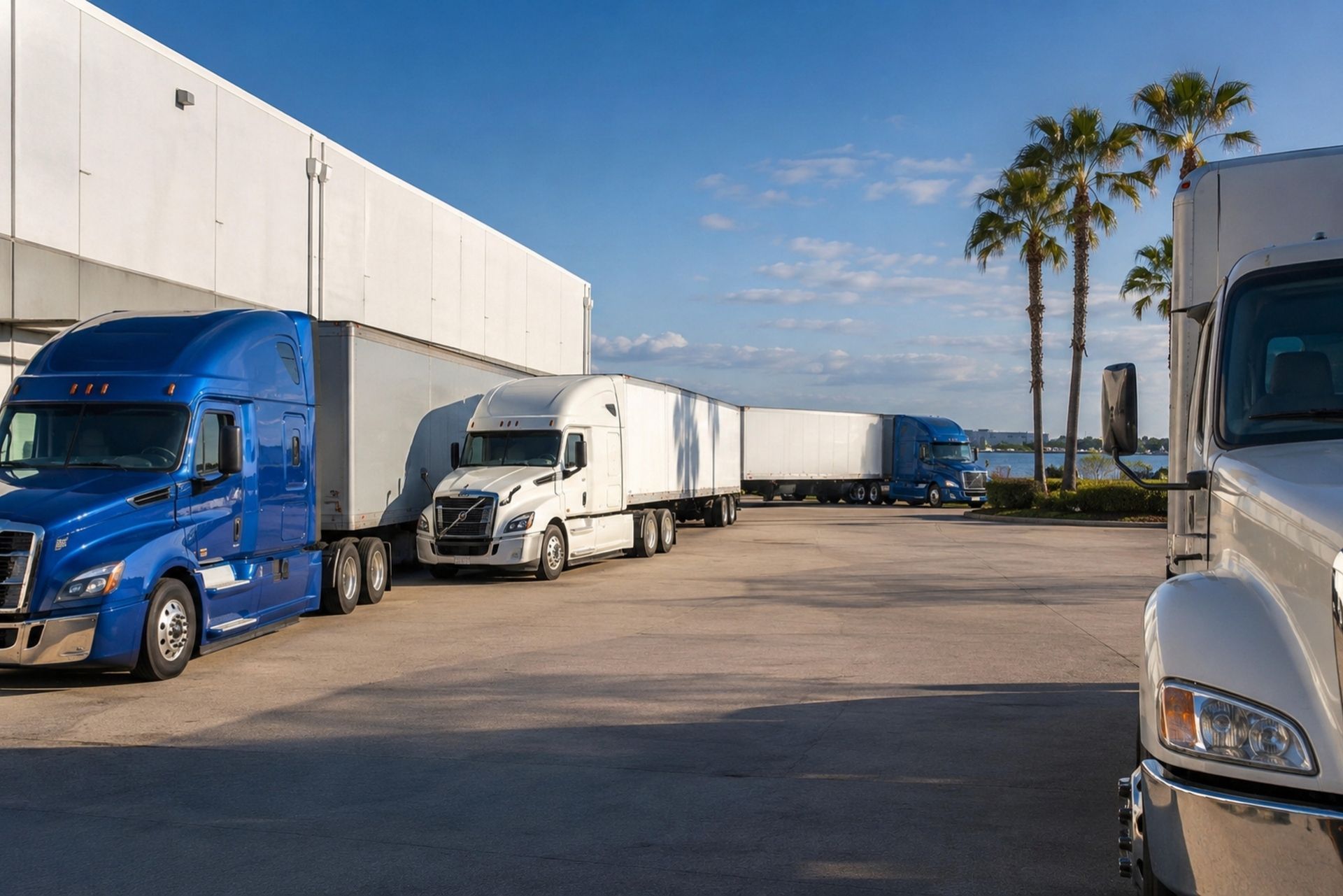
Tampa sits at the intersection of several forces that make trucking insurance uniquely complicated. Port Tampa Bay is Florida's largest bulk cargo port, and the volume of maritime freight moving through the region has been climbing steadily. That cargo doesn't sit at the dock: it gets loaded onto trucks and pushed through some of the most congested corridors in the Southeast.
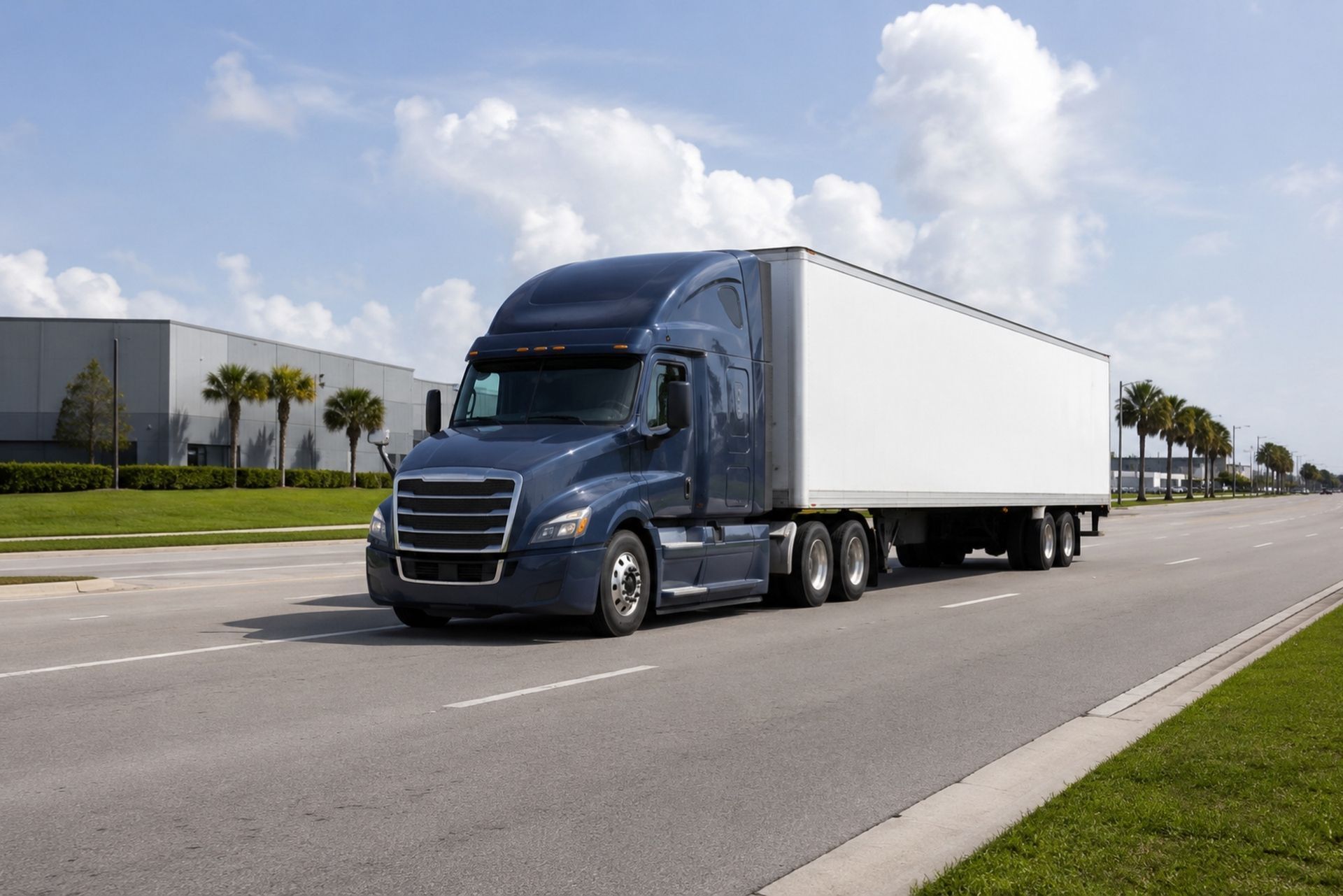
The result is a high-density operating environment where claims frequency runs above the national average. Tampa-area roads see some of the highest accident rates in Florida, and commercial vehicles are disproportionately represented in severe crashes. Insurers know this. If you're based in Hillsborough or Pinellas County, your premiums already reflect that risk profile.
What makes this market especially tricky is that many Tampa trucking operations fall into categories traditional carriers don't want to touch: newer authorities, mixed fleets, or operators hauling specialized cargo. Agencies like GrayStone Insurance Group that focus specifically on hard-to-place commercial risks tend to understand these nuances better than generalist brokers who write a trucking policy once a quarter. The Tampa trucking landscape demands a broker who knows both the local risk environment and the underwriting appetite of specialty markets.
INDEX
GrayStone Insurance Group is fully licensed and permitted to provide specialty commercial insurance solutions for high-risk and hard-to-place businesses across 17 states.
We proudly serve high-risk and hard-to-place businesses from coast to coast. As an independent specialty brokerage, our team works with leading Excess & Surplus and specialty carriers to make sure restaurants, bars, contractors, trucking companies, manufacturers, and other hard-to-place operations receive coverage that fits their real risks in California, Colorado, Florida, Georgia, Illinois, Iowa, Maryland, Michigan, Missouri, Nevada, New York, North Carolina, South Carolina, Tennessee, Texas, Utah, and Washington.
Every policy has boundaries. Knowing them up front is how you avoid an uncovered claim. Common exclusions include:
Every policy has boundaries. Knowing them up front is how you avoid an uncovered claim. Common exclusions include:
Every policy has boundaries. Knowing them up front is how you avoid an uncovered claim. Common exclusions include:
General Liability responds to the core exposures most operations in this category face. A typical policy answers third-party claims and the defense costs that come with them, so a single incident doesn't put the business at risk.
If your firm provides any design, engineering, or consulting services alongside construction, you need both. A GL policy won't cover a claim alleging your design specifications caused a building envelope failure. That's a professional liability exposure, and it's one of the fastest-growing claim categories in construction.
Florida State Requirements and Minimum Coverage
Primary Liability and PD/PIP Mandates
Florida structures its intrastate trucking liability requirements by vehicle weight, which catches some operators off guard. Vehicles up to 34,999 lbs require a minimum of $50,000 in liability coverage. That number climbs as gross vehicle weight increases, with heavier rigs needing $100,000 or more depending on cargo type and operating radius.
Every registered vehicle in Florida must also carry Personal Injury Protection (PIP) at $10,000 minimum. PIP is a no-fault coverage, meaning it pays regardless of who caused the accident. For trucking operators, this sits alongside your commercial auto liability policy, not as a replacement for it. Property damage liability has its own minimum of $10,000 under Florida statute, though most commercial policies bundle this into the primary liability limit.
One mistake I see regularly: operators assume that meeting the state minimum is enough. It's not. A single serious accident involving a loaded truck can generate claims well into six or seven figures. The state minimum exists to keep you legal, not to keep you solvent.
Federal FMCSA Filings for Interstate Hauling
If your trucks cross state lines, federal requirements layer on top of Florida's mandates. The FMCSA requires a minimum of $750,000 in liability coverage for general freight carriers, jumping to $1,000,000 for carriers hauling oil and $5,000,000 for certain hazardous materials. You'll need a BMC-91 (surety bond) or BMC-91X (trust fund agreement) on file, plus a BOC-3 designation of process agents.
The evolving liability exposure for freight brokers has also changed how carriers think about their own coverage. Recent court rulings have redefined how negligent hiring claims apply in broker-carrier relationships, which means your liability exposure may be broader than your current policy accounts for. If you're hauling interstate loads brokered through third parties, this is worth reviewing with your agent.
Comparison of Essential vs. Optional Trucking Coverage
Not every coverage type is legally required, but some optional coverages pay for themselves the first time you file a claim. The table below breaks down what's mandatory versus what's smart.
Coverage Comparison Table
| Coverage Type | Required? | Typical Limits | Why It Matters |
|---|---|---|---|
| Primary Liability | Yes (state + federal) | $50K-$5M depending on weight/cargo | Covers bodily injury and property damage to others |
| PIP (Personal Injury Protection) | Yes (FL mandate) | $10,000 minimum | No-fault medical coverage for driver |
| Physical Damage | No (unless financed) | Actual cash value of vehicle | Covers your own truck: collision and comprehensive |
| Motor Truck Cargo | No (but often contractually required) | $25K-$250K+ | Protects freight you're hauling |
| Non-Trucking Liability | No | $1M common | Covers bobtail or personal use of truck |
| Occupational Accident | No (but critical for owner-ops) | Varies | Medical and disability for non-W2 drivers |
| Umbrella/Excess Liability | No | $1M-$5M+ | Extra protection above primary limits |
| Trailer Interchange | No | Matches trailer value | Covers trailers you don't own but are pulling |
The coverages most often skipped by Tampa operators - cargo, physical damage on older trucks, and umbrella policies - are exactly the ones that generate the most painful out-of-pocket losses. A $200,000 cargo claim on an uninsured load doesn't care that your liability policy was in good standing.
Every policy has boundaries. Knowing them up front is how you avoid an uncovered claim. Common exclusions include:
Every policy has boundaries. Knowing them up front is how you avoid an uncovered claim. Common exclusions include:
Every policy has boundaries. Knowing them up front is how you avoid an uncovered claim. Common exclusions include:
General Liability responds to the core exposures most operations in this category face. A typical policy answers third-party claims and the defense costs that come with them, so a single incident doesn't put the business at risk.
Specific Challenges for Tampa-Based Operators
Managing Risks Near Port Tampa Bay
Port Tampa Bay handles millions of tons of cargo annually, and the trucking operations feeding into and out of the port face a distinct set of risks. Container yards, tight turning radii, and mixed traffic with longshoremen and equipment create frequent low-speed collision claims. These aren't highway wrecks: they're fender-benders, crushed trailers, and dock strikes that add up fast.
Cargo risk is also elevated around the port. Refrigerated loads, hazardous materials, and high-value consumer goods all move through Tampa Bay regularly. If your motor truck cargo coverage doesn't match the actual value of what you're hauling, you're self-insuring the gap. The industry's push for collaboration on safety standards has helped, but individual operators still need to carry coverage that reflects their specific exposure.
Weather-Related Risks: Hurricanes and Flood Zones
Tampa's hurricane risk isn't theoretical: it's a recurring operational reality. A significant portion of Hillsborough County sits in FEMA-designated flood zones, and trucks parked in low-lying yards during a storm surge event can be total losses. Comprehensive physical damage coverage typically includes flood and wind damage, but check your policy's deductible structure. Many insurers apply separate, higher deductibles for named storms.
Beyond direct damage, hurricanes disrupt operations for weeks. Fuel shortages, road closures, and supply chain delays mean lost revenue. Some operators carry business interruption or downtime coverage to offset this, though it's less common in trucking than in other industries. If your fleet generates $15,000 or more per week in revenue, even a two-week shutdown from a hurricane creates a $30,000 hole that no liability policy will fill.
Traffic Volatility on I-4 and I-75 Corridors
I-4 between Tampa and Orlando consistently ranks among the most dangerous highways in the country. I-75 through Hillsborough and Pasco counties isn't far behind. For trucking operators running these corridors daily, the accident exposure is real and measurable.
The combination of high speeds, aggressive passenger vehicle drivers, and construction zones creates a claims environment where frequency and severity both run hot. Nuclear verdicts: jury awards exceeding $10 million: have become more common in Florida trucking cases, and the legislative efforts to provide relief for truckers reflect how serious the problem has become. Carrying an umbrella policy of at least $1 million above your primary limits isn't optional if you're running I-4 regularly. It's a survival strategy.
What happens if a show gets canceled last minute?
Standard policies don't cover event cancellation. If a headliner cancels, severe weather shuts you down, or a power outage kills the show, you're absorbing the full financial loss unless you have a dedicated event cancellation policy. These policies typically cover lost ticket revenue, non-refundable deposits, and marketing expenses. For venues that rely on ticket sales as a primary revenue stream, this coverage pays for itself the first time you need it.
Common Questions About Tampa Trucking Insurance
How much does commercial trucking insurance cost in Tampa? Expect to pay between $8,000 and $18,000 annually per truck for a basic policy, with rates climbing significantly for new authorities, poor safety records, or specialized cargo. Tampa's high claims frequency pushes premiums above the state average.
Can I get coverage with a new USDOT number? Yes, but your options are limited. Most standard carriers won't write a policy for authorities less than two years old. Specialty agencies like GrayStone Insurance Group work specifically with hard-to-place risks, including new authorities that traditional markets decline.
Does my policy cover hurricane damage to parked trucks? Only if you carry comprehensive physical damage coverage. Liability-only policies won't pay for weather damage to your own vehicles. Watch for named-storm deductibles, which can be 2-5% of the vehicle's insured value.
Do I need cargo insurance if the broker provides it? Broker cargo coverage protects the broker's interest, not yours. If freight is damaged or stolen while on your truck, you're the one facing the claim. Carry your own motor truck cargo policy.
What's the difference between bobtail and non-trucking liability? Bobtail coverage applies when you're driving without a trailer. Non-trucking liability covers personal use of a commercial vehicle when you're not under dispatch. They overlap but aren't identical: talk to your agent about which one fits your operation.
Are owner-operators required to carry workers' comp in Florida? Sole proprietors and partners in the trucking industry can exempt themselves from Florida workers' comp requirements. But if you hire even one driver, you need a policy. Occupational accident coverage is a common alternative for independent owner-operators.
What is bobtail insurance and do I need it?
Bobtail coverage protects you when driving your truck without a trailer attached, typically after dropping a load. It's often required by motor carriers for independent contractors operating under their authority. If you're an owner-operator leased to a carrier, check your lease agreement: most require it.
Making the Right Choice for Your Fleet
The insurance decisions Tampa trucking operators face in 2026 are shaped by a combination of state mandates, federal requirements, and local risk factors that don't exist in most other markets. Florida's tiered liability structure sets the floor, but the ceiling: what you actually need to survive a serious claim: is determined by where you operate, what you haul, and how much risk you're willing to absorb personally.
Don't build your coverage around minimums. Build it around your worst realistic scenario. A loaded truck jackknifing on I-4 during rush hour, a container of electronics stolen from a port staging area, a fleet of trucks flooded during a named storm: these aren't hypotheticals in Tampa. They're Tuesday.
GrayStone Insurance Group's brokers, with an average of 20 years in the market and a 94% client retention rate, specialize in building policies for exactly these situations. If your current coverage was quoted by someone who doesn't understand Tampa's specific risk profile, it's worth getting a second opinion before your next renewal. The right policy isn't the cheapest one: it's the one that actually pays when you need it.
ABOUT THE AUTHOR:
CHAD KRAMER
I started GrayStone Insurance Group in 2018 with a simple conviction: the businesses everyone else turns away deserve a broker who won't. What began as a one-person operation has grown into a specialty commercial brokerage with offices across the country — but the mission hasn't changed. We find solutions for high-risk and hard-to-place businesses when other agencies run the other way.
I built this agency on integrity, hard work, and the tenacity to do the hard things well. Through our access to Excess & Surplus and specialty markets, my team and I place coverage standard carriers can't — and I treat every client's business like my own.
If you've been declined, non-renewed, or told your business is too complicated to insure, let's talk.
Coverages & policies
Plain-language coverage, expertly placed.
We lead with commercial lines and round out personal coverage where you need it. Every policy comes with an explanation — not jargon.

Contractors
Third-party bodily injury & property damage — the foundation for any operation.

Liquor Liability
Critical for bars, restaurants and venues serving alcohol — including A&B.

Commercial Property
Buildings, contents and equipment — including distressed and vacant risk.

Workers' Compensation
Statutory coverage for your crew — including high-mod and high-hazard classes.

Commercial Umbrella
Extra liability limits over your primary policies — essential for high-exposure risk.
Products Liability
Manufacturers, CBD and consumer-product exposure — including imports.
What clients say
Brokers who actually place it.
FAQ
Answers for the risks others won't cover
Getting declined, non-renewed, or told your business is "too high-risk" is frustrating — but it doesn't mean you're out of options. Here are answers to the questions we hear most from business owners who need coverage the standard market won't provide.
What kind of insurance does GrayStone specialize in?
We're a specialty commercial brokerage built for high-risk and hard-to-place businesses — the risks standard carriers often turn away. Through our access to Excess & Surplus (E&S) and specialty markets, we place coverage that everyday agencies can't. Hospitality and construction are among our deepest areas of expertise.
My business was declined or non-renewed elsewhere. Can you still help?
That's exactly what we do. A decline, a non-renewal, or a tough claims history doesn't mean you're out of options — it means your risk needs a broker with the right market access. Tell us your situation and we'll get to work finding a fit.
What is Excess & Surplus (E&S) insurance?
E&S is specialty coverage for risks that standard "admitted" carriers won't write — often because a business is higher-risk, unusual, or has a complex history. As an independent broker, we tap into these specialty markets to place coverage where a typical agency hits a dead end.
What industries do you work with?
We cover a wide range of commercial industries — from restaurants, bars, and hospitality to contractors, trucking, manufacturing, cannabis, and more. If your industry is considered high-risk or hard-to-place, there's a good chance we've handled it.
Will you work with businesses that have prior claims or losses?
Yes. Prior claims and losses are part of many of the risks we place every day. Every business is evaluated on its own merits — and a rocky history is often exactly why a specialty broker can help where others won't.
Are you an independent broker?
Yes. We're not tied to a single carrier, so we shop your risk across multiple specialty and E&S markets to find coverage that actually fits — instead of forcing you into a one-size-fits-all policy.
Insights & resources
Know your risk before you buy.