
General Liability responds to the core exposures most operations in this category face. A typical policy answers third-party claims and the defense costs that come with them, so a single incident doesn't put the business at risk.
Running a bar or nightclub in Illinois means operating in one of the most insurance-intensive business categories in the country. Between the state's strict Dram Shop Act, mandatory workers' compensation requirements, and the elevated risk profile that comes with serving alcohol to crowds, getting your coverage right isn't optional: it's survival. Most bar owners I've worked with underestimate what they actually need until a claim hits, and by then, the gaps in their policy become painfully expensive lessons. Illinois operators face unique compliance demands that differ from neighboring states, and the penalties for getting it wrong range from fines to full license revocation. This guide breaks down the specific insurance requirements, realistic cost expectations, and compliance obligations that IL bar and nightclub operators need to understand in 2026. Whether you're opening your first venue in Chicago's River North or running a downstate roadhouse that's been in the family for decades, the fundamentals apply across the board. The insurance market for nightlife businesses has tightened considerably over the past few years, with many standard carriers refusing to write policies for establishments where alcohol accounts for more than 50% of revenue. That's exactly the kind of hard-to-place risk that requires a specialized approach, and where having an experienced broker makes the difference between adequate protection and a policy full of exclusions you didn't know existed.
Essential Insurance Coverages for Illinois Bar Owners
Every Illinois bar needs a foundation of core coverages before adding industry-specific policies. The basics start with a commercial general liability (CGL) policy and commercial property insurance, but the list grows quickly once you factor in the realities of running a venue where people drink, dance, and occasionally make terrible decisions. A standard business owner's policy (BOP) bundles property and liability together, but most nightlife businesses need endorsements and standalone policies that go well beyond a basic BOP. The trick is building a coverage stack that addresses your actual risk exposure without paying for things you don't need. A 50-seat neighborhood tavern and a 500-capacity nightclub with bottle service have wildly different risk profiles, and their insurance should reflect that.
General Liability and Property Protection
General liability insurance is your first line of defense against slip-and-fall claims, property damage to third parties, and bodily injury lawsuits. For Illinois bars, CGL policies typically cost between $2,000 and $12,000 annually depending on your location, capacity, and claims history. Property insurance covers your physical assets: the building itself (if you own it), furniture, bar equipment, inventory, and signage. One thing most owners overlook is business interruption coverage, which pays lost income if a covered event forces you to close temporarily. A kitchen fire that shuts you down for three months can be more financially devastating than the fire damage itself.
Assault and Battery Coverage
Here's where things get specific to nightlife. Standard CGL policies almost always exclude assault and battery claims, which means that bar fight your bouncer broke up last Saturday? If someone sues, your general liability policy probably won't cover it. You need a separate assault and battery endorsement or standalone policy. This coverage protects against claims arising from altercations between patrons, use of force by security staff, and even allegations of sexual assault on your premises. Premiums vary significantly based on your venue type: a craft cocktail lounge pays far less than a late-night dance club. Expect to budget $1,500 to $5,000 annually for this coverage, and make sure the policy covers both first-party and third-party claims.
Workers' Compensation Laws in Illinois
Illinois requires workers' compensation insurance for virtually every business with employees, and there are no exceptions for small bars. Even a single part-time bartender triggers the mandate. The state's workers' comp rates are calculated using classification codes, and bars fall under codes that reflect the physical nature of the work: lifting kegs, standing for long shifts, and the inherent risks of working around intoxicated patrons. Illinois workers' comp benefit rates were updated for 2026, and employers should verify they're using current rate tables. Failing to carry workers' comp in Illinois is a criminal offense that can result in fines of $500 per day of noncompliance, and injured employees can sue you directly without the protections the workers' comp system normally provides.
INDEX
GrayStone Insurance Group is fully licensed and permitted to provide specialty commercial insurance solutions for high-risk and hard-to-place businesses across 17 states.
We proudly serve high-risk and hard-to-place businesses from coast to coast. As an independent specialty brokerage, our team works with leading Excess & Surplus and specialty carriers to make sure restaurants, bars, contractors, trucking companies, manufacturers, and other hard-to-place operations receive coverage that fits their real risks in California, Colorado, Florida, Georgia, Illinois, Iowa, Maryland, Michigan, Missouri, Nevada, New York, North Carolina, South Carolina, Tennessee, Texas, Utah, and Washington.
Every policy has boundaries. Knowing them up front is how you avoid an uncovered claim. Common exclusions include:
Every policy has boundaries. Knowing them up front is how you avoid an uncovered claim. Common exclusions include:
Every policy has boundaries. Knowing them up front is how you avoid an uncovered claim. Common exclusions include:
General Liability responds to the core exposures most operations in this category face. A typical policy answers third-party claims and the defense costs that come with them, so a single incident doesn't put the business at risk.
If your firm provides any design, engineering, or consulting services alongside construction, you need both. A GL policy won't cover a claim alleging your design specifications caused a building envelope failure. That's a professional liability exposure, and it's one of the fastest-growing claim categories in construction.
Iowa requires workers' compensation insurance for any business with two or more employees, and virtually every bar and nightclub meets that threshold. Bartenders, servers, bouncers, DJs, cleaning staff: they all count. The rates for nightclub workers' comp are higher than typical retail because the injury frequency is elevated. Back injuries from lifting kegs, cuts from broken glass, and repetitive strain injuries from bartending are all common claims.
Independent contractors like guest DJs or promotional staff create a gray area. Iowa applies an economic reality test to determine whether someone is truly independent or functionally an employee. Misclassifying employees as contractors to avoid workers' comp premiums is one of the fastest ways to draw a state audit and penalty.
Workers' Compensation for IA Nightclub Staff
Understanding Liquor Liability and the Illinois Dram Shop Act
Liquor liability is the single most critical coverage for any Illinois establishment that serves alcohol. The state's Dram Shop Act creates a legal framework that holds bars directly responsible for injuries and damages caused by intoxicated patrons they served. This isn't theoretical: Illinois courts enforce these claims aggressively, and settlements regularly reach the statutory maximum. If you serve someone who's visibly intoxicated and they cause a car accident on the way home, the injured party can sue your bar directly. Your standard CGL policy won't cover this. You need a dedicated liquor liability policy, and in Illinois, you need one that specifically addresses Dram Shop exposure.
Legal Limits and Liability Caps
The Illinois Dram Shop Act sets specific liability caps that are adjusted annually based on the Consumer Price Index. As of January 20, 2026, the liability limits stand at $90,411.50 per person for bodily injury and the same amount for property damage. That cap applies per incident, per claimant, meaning a single drunk-driving accident involving multiple victims can generate claims that stack well beyond $100,000. Your liquor liability policy needs to cover at least these statutory limits, though most brokers recommend carrying significantly higher limits. A $1 million liquor liability policy is standard for most mid-sized bars, and venues with higher volume or late-night hours should consider $2 million or more.
Host Liquor vs. Retail Liquor Liability
This distinction trips up a lot of business owners. Host liquor liability covers businesses that serve alcohol incidentally, like a restaurant hosting a private event with a cash bar. Retail liquor liability covers establishments whose primary business involves selling alcohol: bars, nightclubs, taverns, and brewpubs. If alcohol sales represent more than a small percentage of your revenue, you need retail liquor liability, not host liquor. The pricing difference is substantial because the risk exposure is fundamentally different. Illinois operators should also be aware that the ILCC launched a new compliance portal in 2026 to streamline licensing and enforcement, making it easier for regulators to track violations and for operators to verify their compliance status.
Comparison of Coverage Levels for Nightclubs
Understanding what each tier of coverage actually includes helps you make smarter purchasing decisions. Here's how the three most common coverage packages compare for Illinois nightclubs:
| Coverage Feature | Basic | Standard | Premium |
|---|---|---|---|
| General Liability | $500K/$1M | $1M/$2M | $2M/$5M |
| Liquor Liability | $300K | $1M | $2M+ |
| Property Coverage | Building only | Building + contents | Building + contents + business income |
| Assault & Battery | Excluded | $100K sublimit | $500K+ standalone |
| Workers' Comp | State minimum | State minimum | State minimum + employer's liability |
| Cyber Liability | Not included | Not included | $250K included |
| Umbrella/Excess | Not included | $1M | $2M-$5M |
| Estimated Annual Cost | $4,000-$8,000 | $10,000-$20,000 | $25,000-$50,000+ |
Most Illinois nightclubs operating past midnight with capacities over 200 should be looking at standard or premium tiers. The basic package leaves too many gaps, particularly around assault and battery and liquor liability limits.
Every policy has boundaries. Knowing them up front is how you avoid an uncovered claim. Common exclusions include:
Every policy has boundaries. Knowing them up front is how you avoid an uncovered claim. Common exclusions include:
Every policy has boundaries. Knowing them up front is how you avoid an uncovered claim. Common exclusions include:
General Liability responds to the core exposures most operations in this category face. A typical policy answers third-party claims and the defense costs that come with them, so a single incident doesn't put the business at risk.
Factors That Influence Your Premium Costs
Insurance pricing for bars and nightclubs isn't arbitrary. Underwriters evaluate a specific set of risk factors, and understanding them gives you some control over what you pay. Your claims history carries the most weight: a clean record over three to five years can reduce premiums by 15-25%, while even one liquor liability claim can double your rates at renewal..
Venue Size and Annual Revenue
Larger venues with higher revenues pay more because the exposure is greater. A bar generating $500,000 in annual revenue will pay roughly half what a $2 million venue pays for comparable coverage. Square footage matters too, since more space means more slip-and-fall exposure, more exits to monitor, and more potential for crowd-related incidents. Underwriters also look at your food-to-alcohol revenue ratio. Bars where food represents 40% or more of sales are viewed as lower risk than pure drinking establishments, and that shows up in pricing. If you can shift your revenue mix even slightly toward food, it's worth doing for insurance purposes alone.
Safety Protocols and Security Staffing
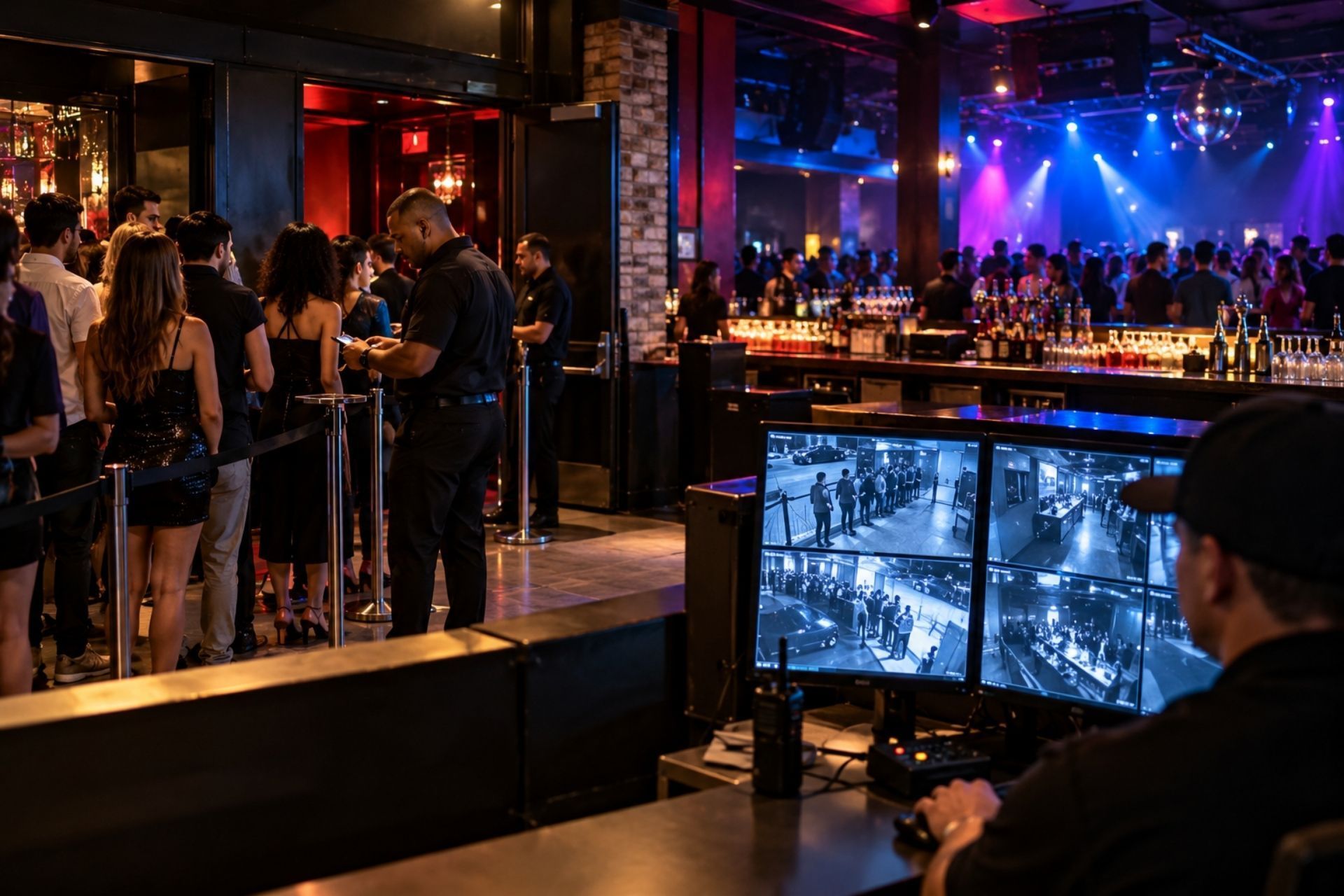
Your security setup directly affects your premiums. Venues with trained, licensed security staff, functioning camera systems, and documented incident protocols get better rates. GrayStone Insurance Group works with IL operators to identify these risk-reduction strategies during the quoting process, often finding savings that offset the cost of better security. ID-scanning technology, server training certifications like BASSET (Beverage Alcohol Sellers and Servers Education and Training), and written policies for cutting off intoxicated patrons all signal to underwriters that you're managing your risk proactively. The Illinois Liquor Control Commission's quarterly newsletter regularly highlights compliance best practices that can help reduce your risk profile.
Every policy has boundaries. Knowing them up front is how you avoid an uncovered claim. Common exclusions include:
Every policy has boundaries. Knowing them up front is how you avoid an uncovered claim. Common exclusions include:
Every policy has boundaries. Knowing them up front is how you avoid an uncovered claim. Common exclusions include:
General Liability responds to the core exposures most operations in this category face. A typical policy answers third-party claims and the defense costs that come with them, so a single incident doesn't put the business at risk.
Is liquor liability required if I only sell beer and wine?
Missouri's dram shop statute applies to all alcohol, not just spirits. If a patron gets visibly intoxicated on beer at your establishment and injures someone afterward, you face the same liability exposure as a full bar. Liquor liability coverage is strongly recommended regardless of what you serve.
Common Questions About IL Bar Insurance
Do I need liquor liability insurance if I only serve beer and wine? Yes. The Dram Shop Act applies to all alcohol service regardless of type. Beer and wine can impair patrons just as effectively as spirits, and you're equally liable for over-service.
Can I bundle all my bar insurance into one policy? Partially. A BOP covers property and general liability, but liquor liability, assault and battery, and workers' comp are typically separate policies or endorsements. An experienced broker can package them efficiently.
How quickly can I get coverage for a new bar opening? Standard timelines run two to four weeks, but hard-to-place risks can take longer. GrayStone Insurance Group's data-driven underwriting approach often accelerates placement for complex nightlife risks, sometimes binding coverage within days.
What happens if my liquor license lapses? Your liquor liability policy may automatically void if your license isn't active. Always verify that your license renewal dates align with your policy period.
Does my landlord's insurance cover my bar? No. Your landlord's policy covers the building structure only. You need your own policy for contents, liability, and business operations. Most commercial leases require proof of your own coverage.
Are DJs and live performers covered under my policy? Usually not automatically. You may need to add them as additional insureds or require they carry their own liability coverage. Check your policy language carefully.
Next Steps for Securing Your Policy
Getting the right insurance for your Illinois bar or nightclub comes down to three things: understanding your specific risk exposure, meeting the state's legal requirements, and working with a broker who actually knows this industry. The Dram Shop Act alone creates liability exposure that most general insurance agents aren't equipped to handle properly. Illinois workers' comp rates, as outlined in the current rate charts, add another layer of cost that needs to be factored into your operating budget from day one.
Start by auditing your current coverage against the comparison table above. If you're carrying basic-tier coverage on a venue that should be at standard or premium levels, you're exposed. If you don't have standalone assault and battery coverage, that's a gap that could cost you six figures in a single incident.
GrayStone Insurance Group specializes in exactly these kinds of high-risk placements, with brokers who average 20 years of experience and a 94% client retention rate built on getting these details right. Reach out for a coverage review, bring your current policies, and get a clear picture of where you stand before your next renewal date arrives.
ABOUT THE AUTHOR:
CHAD KRAMER
I started GrayStone Insurance Group in 2018 with a simple conviction: the businesses everyone else turns away deserve a broker who won't. What began as a one-person operation has grown into a specialty commercial brokerage with offices across the country — but the mission hasn't changed. We find solutions for high-risk and hard-to-place businesses when other agencies run the other way.
I built this agency on integrity, hard work, and the tenacity to do the hard things well. Through our access to Excess & Surplus and specialty markets, my team and I place coverage standard carriers can't — and I treat every client's business like my own.
If you've been declined, non-renewed, or told your business is too complicated to insure, let's talk.
Coverages & policies
Plain-language coverage, expertly placed.
We lead with commercial lines and round out personal coverage where you need it. Every policy comes with an explanation — not jargon.

Contractors
Third-party bodily injury & property damage — the foundation for any operation.

Liquor Liability
Critical for bars, restaurants and venues serving alcohol — including A&B.

Commercial Property
Buildings, contents and equipment — including distressed and vacant risk.

Workers' Compensation
Statutory coverage for your crew — including high-mod and high-hazard classes.

Commercial Umbrella
Extra liability limits over your primary policies — essential for high-exposure risk.
Products Liability
Manufacturers, CBD and consumer-product exposure — including imports.
What clients say
Brokers who actually place it.
FAQ
Answers for the risks others won't cover
Getting declined, non-renewed, or told your business is "too high-risk" is frustrating — but it doesn't mean you're out of options. Here are answers to the questions we hear most from business owners who need coverage the standard market won't provide.
What kind of insurance does GrayStone specialize in?
We're a specialty commercial brokerage built for high-risk and hard-to-place businesses — the risks standard carriers often turn away. Through our access to Excess & Surplus (E&S) and specialty markets, we place coverage that everyday agencies can't. Hospitality and construction are among our deepest areas of expertise.
My business was declined or non-renewed elsewhere. Can you still help?
That's exactly what we do. A decline, a non-renewal, or a tough claims history doesn't mean you're out of options — it means your risk needs a broker with the right market access. Tell us your situation and we'll get to work finding a fit.
What is Excess & Surplus (E&S) insurance?
E&S is specialty coverage for risks that standard "admitted" carriers won't write — often because a business is higher-risk, unusual, or has a complex history. As an independent broker, we tap into these specialty markets to place coverage where a typical agency hits a dead end.
What industries do you work with?
We cover a wide range of commercial industries — from restaurants, bars, and hospitality to contractors, trucking, manufacturing, cannabis, and more. If your industry is considered high-risk or hard-to-place, there's a good chance we've handled it.
Will you work with businesses that have prior claims or losses?
Yes. Prior claims and losses are part of many of the risks we place every day. Every business is evaluated on its own merits — and a rocky history is often exactly why a specialty broker can help where others won't.
Are you an independent broker?
Yes. We're not tied to a single carrier, so we shop your risk across multiple specialty and E&S markets to find coverage that actually fits — instead of forcing you into a one-size-fits-all policy.
Insights & resources
Know your risk before you buy.