
Most contractors don't realize their general liability policy excludes coverage for their own tools, equipment, and materials in transit or stored at job sites. That's where inland marine insurance fills the gap. It covers items like generators, scaffolding, laser levels, and specialty tools whether they're on a truck, at a staging area, or locked in a job-site trailer.
Theft from construction sites remains a persistent problem. A single theft event involving a skid steer or a set of commercial-grade power tools can easily exceed $50,000. Inland marine policies are relatively affordable compared to the replacement cost of losing uninsured equipment mid-project. If you're hauling anything of value between locations, this coverage is non-negotiable.
General Liability responds to the core exposures most operations in this category face. A typical policy answers third-party claims and the defense costs that come with them, so a single incident doesn't put the business at risk.
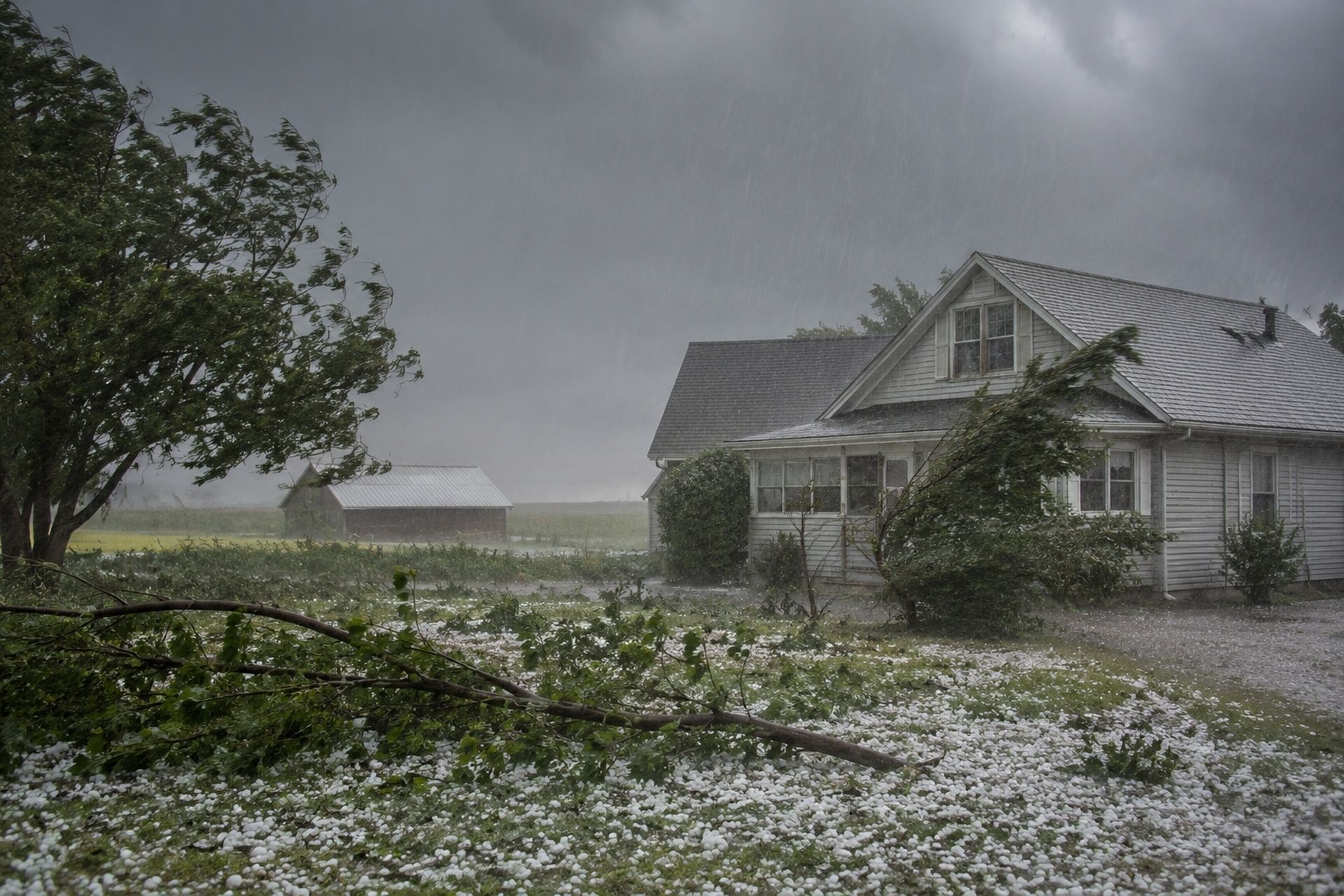
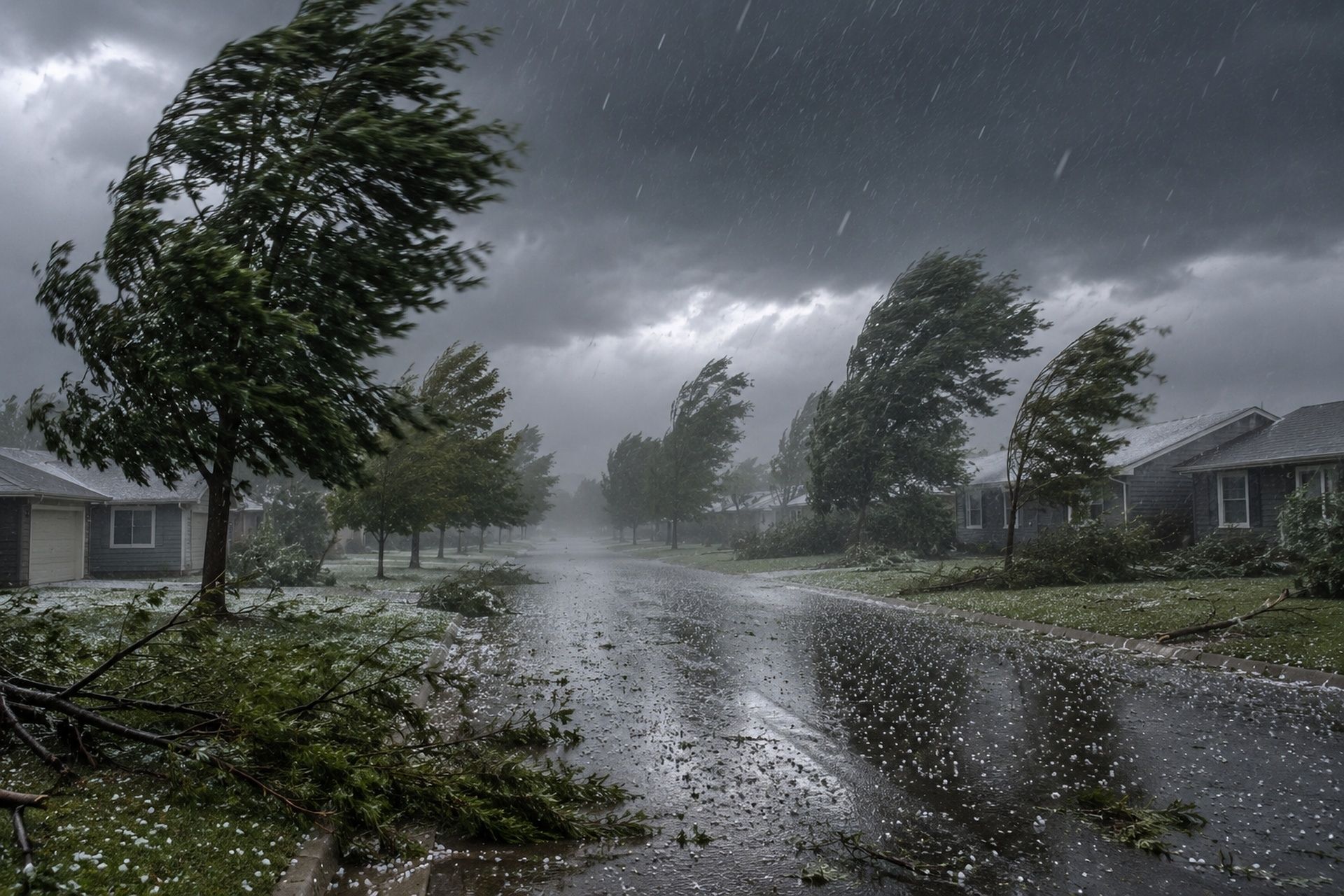
A single hailstorm can shatter skylights, peel back commercial roofing, and leave a business owner staring at a six-figure repair bill before lunch. Wind events don't need to be hurricanes to cause serious damage: straight-line winds at 60 mph can rip HVAC units off rooftops and send debris through storefront windows. For businesses operating in construction, hospitality, manufacturing, or any industry with significant physical assets, understanding how wind and hail coverage actually works is the difference between a manageable insurance claim and a financial crisis. Severe convective storms have generated more than $50 billion in insured losses for three consecutive years, and that trend shows no signs of slowing. This piece breaks down what windstorm and hail insurance covers, where the gaps hide, and which businesses should treat this coverage as non-negotiable.
Understanding Windstorm and Hail Insurance Basics
Wind and hail coverage protects commercial properties against physical damage caused by these specific weather events. Unlike a comprehensive all-risk policy, this coverage is often written as a distinct endorsement or carved out with its own deductible structure. The reason? Insurers price wind and hail risk differently from fire, theft, or liability because the exposure is heavily geography-dependent. A warehouse in Oklahoma faces a fundamentally different hail risk profile than one in Vermont.
Most business owners encounter wind and hail terms buried inside their commercial property policy. But the details matter enormously: deductible type, sublimits, and exclusion language can turn what looks like full coverage into something far less protective when a storm actually hits.
How Wind and Hail Coverage Works With Commercial Property Insurance
Wind and hail protection typically sits within a commercial property policy rather than standing alone. Your property policy covers the building structure, business personal property inside it, and sometimes outdoor signage or fencing. Wind and hail damage triggers this coverage when the cause of loss matches the policy's peril definitions.
Here's where it gets tricky. Many commercial property policies assign a separate, higher deductible specifically for wind and hail claims. You might carry a $2,500 deductible for fire damage but a $25,000 or percentage-based deductible for wind. That separate deductible catches a lot of business owners off guard after a storm. Always check your declarations page for wind/hail-specific deductible language before assuming your standard deductible applies.
The Difference Between Named Peril and Open Peril Policies
Named peril policies list every covered cause of loss explicitly. If "windstorm" and "hail" appear on that list, you're covered for those events. If they don't, you're not. Open peril policies (sometimes called "all-risk") work in reverse: everything is covered unless the policy specifically excludes it.
Open peril policies generally offer broader protection, but they cost more. For high-risk businesses, named peril policies can leave dangerous gaps. A named peril policy might cover wind damage to your roof but exclude damage from wind-driven rain that enters through a compromised wall. The distinction matters most during claims adjusting, when insurers parse the exact cause of each dollar of damage.
INDEX
Understanding Windstorm and Hail Insurance Basics
What is Covered and What is Excluded
Comparing Deductible Structures
Which Businesses Need Specific Windstorm Protection?
Common Questions About Wind and Hail Claims
2026 Market Conditions for Wind and Hail Coverage
How to Reduce Your Wind and Hail Premiums
GrayStone Insurance Group is fully licensed and permitted to provide specialty commercial insurance solutions for high-risk and hard-to-place businesses across 17 states.
We proudly serve high-risk and hard-to-place businesses from coast to coast. As an independent specialty brokerage, our team works with leading Excess & Surplus and specialty carriers to make sure restaurants, bars, contractors, trucking companies, manufacturers, and other hard-to-place operations receive coverage that fits their real risks in California, Colorado, Florida, Georgia, Illinois, Iowa, Maryland, Michigan, Missouri, Nevada, New York, North Carolina, South Carolina, Tennessee, Texas, Utah, and Washington.
Every policy has boundaries. Knowing them up front is how you avoid an uncovered claim. Common exclusions include:
Every policy has boundaries. Knowing them up front is how you avoid an uncovered claim. Common exclusions include:
Every policy has boundaries. Knowing them up front is how you avoid an uncovered claim. Common exclusions include:
General Liability responds to the core exposures most operations in this category face. A typical policy answers third-party claims and the defense costs that come with them, so a single incident doesn't put the business at risk.
Here's the uncomfortable truth: most commercial general liability (CGL) policies contain explicit assault and battery exclusions. Insurers added these exclusions because assault-related claims tend to be expensive and unpredictable. A single incident at a nightclub can generate $200,000 or more in legal defense and settlement costs.
CGL policies are built around the concept of "accidental" or "unintentional" harm. A fistfight is, by definition, intentional. Even if your business didn't cause the fight, the underlying act was deliberate, and that's enough for most standard carriers to deny the claim. This is exactly why a separate assault and battery policy or endorsement exists: to cover the gap your CGL policy was never designed to fill.
Why General Liability Often Excludes These Claims
What is Covered and What is Excluded
The gap between what business owners think is covered and what actually is covered tends to be widest with wind and hail claims. Knowing both sides of that equation prevents ugly surprises.
Commonly Covered Damage: Roofs, Windows, and Siding
Standard wind and hail coverage pays for direct physical damage to your building's exterior and, in many cases, interior damage caused by wind or hail breaching the building envelope. Typical covered losses include:
- Roof damage from hail impact or wind uplift
- Broken windows and glass storefronts
- Siding, gutters, and exterior trim destruction
- Damage to outdoor signs and awnings
- Interior water damage when wind creates an opening in the roof or walls
The key phrase is "direct physical loss." If hail cracks your roof and rain pours in, the resulting water damage to inventory is generally covered because the hail created the opening. That causal chain matters for claims.
Standard Exclusions: Flood, Cosmetic Damage, and Neglect
Even solid wind and hail policies exclude certain losses. Flood damage is the big one: wind-driven storm surge and flooding require separate flood insurance, period. A hurricane can cause both wind damage and flooding simultaneously, and your wind policy only pays for the wind portion.
Cosmetic damage exclusions have become increasingly common, especially for metal roofs. If hail dents your roof but doesn't compromise its function, many insurers won't pay. Deferred maintenance is another frequent exclusion: if your roof was already in poor condition and wind finished it off, expect a coverage fight. Wear-and-tear, gradual deterioration, and damage from lack of maintenance all fall outside coverage.
Business Interruption and Extra Expense Coverage
Physical damage is only half the financial hit. If a windstorm forces your restaurant, hotel, or manufacturing facility to close for repairs, lost revenue can exceed the property damage itself. Business interruption coverage replaces lost income during the restoration period, while extra expense coverage pays for temporary relocation costs or expedited repairs.
Not every commercial property policy includes business interruption for wind events automatically. Some policies apply a waiting period (often 72 hours) before business interruption kicks in. Others sublimit wind-related interruption claims. If your business can't afford to close for even a few days, verify these terms explicitly with your broker.
Comparing Deductible Structures
Percentage vs. Flat Dollar Deductibles: What You'll Actually Pay
This is where wind and hail insurance gets expensive fast. Two deductible structures dominate commercial wind and hail coverage:
| Feature | Flat Dollar Deductible | Percentage Deductible |
|---|---|---|
| How it works | Fixed amount (e.g., $5,000) | Percentage of insured value (e.g., 2-5%) |
| Predictability | You know the exact out-of-pocket cost | Changes with property value |
| Typical range | $1,000 - $50,000 | 1% - 10% of building value |
| Best for | Lower-value properties | Required in high-risk zones |
| Example on $2M building | $10,000 deductible | $40,000 - $100,000 deductible |
Percentage deductibles are standard in coastal and tornado-prone areas. On a $2 million building with a 5% wind deductible, you're absorbing the first $100,000 of damage yourself. That's a number many business owners don't fully grasp until they're filing a claim.
Every policy has boundaries. Knowing them up front is how you avoid an uncovered claim. Common exclusions include:
Every policy has boundaries. Knowing them up front is how you avoid an uncovered claim. Common exclusions include:
Every policy has boundaries. Knowing them up front is how you avoid an uncovered claim. Common exclusions include:
General Liability responds to the core exposures most operations in this category face. A typical policy answers third-party claims and the defense costs that come with them, so a single incident doesn't put the business at risk.
Which Businesses Need Specific Windstorm Protection?
Every commercial property owner should carry some level of wind and hail coverage, but certain businesses face outsized risk that demands specialized attention.
Coastal Regions and High-Risk Wind Zones
Businesses along the Gulf Coast, Atlantic seaboard, and in Tornado Alley face the highest wind exposure. In some coastal counties, standard commercial property insurers exclude wind entirely, forcing businesses into state wind pools or surplus lines markets. Texas, Florida, and South Carolina all operate state-backed wind insurance programs because private carriers won't write the risk at affordable rates.
Hurricane-prone businesses face a complex season ahead in 2026, and even a "quiet" coast doesn't guarantee safety. Inland businesses in states like Oklahoma, Kansas, and Nebraska deal with severe convective storms that produce damaging hail multiple times per season. For these operations, wind and hail coverage isn't optional: it's survival planning.
Industries With High Physical Asset Exposure
Construction companies with equipment yards, hospitality businesses with large glass facades, and manufacturers with expansive roof footprints all carry elevated wind and hail risk. Solar farms and renewable energy installations are particularly vulnerable: hail can destroy panels worth millions in minutes, which is why parametric hail insurance products have emerged specifically for these assets.
Trucking companies with fleet yards, cannabis cultivators with greenhouse operations, and nightclub owners with rooftop venues all share a common thread: significant physical assets exposed to the sky. GrayStone Insurance Group works with many of these hard-to-place businesses, and the brokers there consistently find that clients underestimate their wind exposure until they see a proper risk assessment.
Can I add this to my existing policy as a rider?
Often, yes. Many carriers offer assault and battery as an endorsement to an existing general liability policy. This is usually cheaper than buying a standalone policy. That said, standalone policies sometimes offer higher limits and broader coverage terms. GrayStone's brokers can help determine which structure makes more sense based on your specific risk profile and claims history.
Common Questions About Wind and Hail Claims
Frequently Asked Questions
Does my standard commercial property policy already include wind and hail? Usually yes, but often with a separate (higher) deductible and potential sublimits. Check your declarations page for wind/hail-specific terms. In coastal zones, wind may be excluded entirely.
What's the difference between wind damage and flood damage during a hurricane? Wind damage comes from the force of the wind itself: blown-off roofing, broken windows, airborne debris. Flood damage comes from rising water, storm surge, or overflow. You need separate policies for each, and adjusters will determine which damage falls under which cause.
How long do I have to file a wind or hail claim? Most policies require prompt notice, typically within 60-90 days. Some states mandate specific timeframes. Document damage immediately with photos and videos, and contact your insurer within days, not weeks.
Will my premiums increase after a wind or hail claim? Often yes, especially if the claim is large. In high-risk areas, even one claim can trigger non-renewal. That said, carrying appropriate deductibles and demonstrating mitigation efforts (like impact-resistant roofing) can help manage renewal pricing.
Can I buy wind-only or hail-only coverage? Yes. Standalone wind policies exist, particularly through state wind pools. Parametric hail coverage, offered by companies like Swiss Re's parametric solutions division, pays based on measured hail size at your location rather than assessed damage.
Every policy has boundaries. Knowing them up front is how you avoid an uncovered claim. Common exclusions include:
Every policy has boundaries. Knowing them up front is how you avoid an uncovered claim. Common exclusions include:
Every policy has boundaries. Knowing them up front is how you avoid an uncovered claim. Common exclusions include:
General Liability responds to the core exposures most operations in this category face. A typical policy answers third-party claims and the defense costs that come with them, so a single incident doesn't put the business at risk.
Security companies face a unique double exposure. Their employees are the ones most likely to be involved in physical confrontations, and they're often the ones accused of using excessive force. A security firm without assault and battery coverage is essentially operating without a net.
Contract security providers should pay close attention to policy language around "use of force" definitions. Some policies limit coverage to "reasonable force," which creates room for the insurer to deny claims if a court later determines the force used was excessive. Look for policies that cover the defense costs regardless of the outcome.
Security Firms and Bouncer Services
Behavioral health centers, psychiatric facilities, group homes, and emergency rooms all deal with patients or clients who may become physically aggressive. Staff injuries and patient-on-patient incidents are common in these settings.
The challenge here is that many healthcare liability policies treat assault-related injuries differently than standard patient care claims. A dedicated assault and battery endorsement fills this gap and protects the facility against lawsuits from both staff and patients. Social service agencies working with at-risk populations face similar exposure.
Healthcare Facilities and Social Services
2026 Market Conditions for Wind and Hail Coverage
Global property insurance rates fell by 9% in the first quarter of 2026, with U.S. property rates following a similar downward trend. That's good news for businesses shopping for wind and hail coverage. After several years of hardening rates, competition among carriers has returned, and capacity is more available than it was in 2024 or 2025.
That said, U.S. severe convective storm losses have already
surpassed $22 billion in 2026, which could tighten pricing in the most affected regions by year's end. Hail has become
a leading driver of insured losses on par with major hurricanes, a shift that's reshaping how carriers underwrite this peril. Businesses renewing policies in the second half of 2026 should lock in rates sooner rather than later.
Why Small Businesses Need Protection
Small businesses account for a disproportionate share of EPLI claims, partly because they're less likely to have formal HR departments, documented policies, or consistent termination procedures. A manager at a 15-person company who fires someone without documentation creates immediate legal exposure.
The irony is that small businesses are also the least likely to carry EPLI coverage. Many assume their size protects them or that employees won't bother suing a small operation. That assumption is expensive. The EEOC's enforcement activity shows no preference for targeting only large employers: small businesses face the same legal standards as Fortune 500 companies.
Can I add this to my existing policy as a rider?
Often, yes. Many carriers offer assault and battery as an endorsement to an existing general liability policy. This is usually cheaper than buying a standalone policy. That said, standalone policies sometimes offer higher limits and broader coverage terms. GrayStone's brokers can help determine which structure makes more sense based on your specific risk profile and claims history.
How to Reduce Your Wind and Hail Premiums
You can't control the weather, but you can control how insurers view your risk. Impact-resistant roofing materials (Class 4 rated) can reduce wind/hail premiums by 15-28% depending on the carrier. Hurricane shutters, reinforced garage doors, and proper roof tie-downs all signal lower risk to underwriters.
Working with a broker who understands wind and hail underwriting makes a measurable difference. GrayStone Insurance Group's team uses data-driven risk modeling to present your property's specific mitigation features to carriers, which often results in better pricing than going through a generalist agent. When your broker can show an underwriter exactly what wind-rated materials you've installed and how your property compares to surrounding structures, the conversation shifts from "how much more will this cost" to "what discount applies."
Bundling wind coverage with your broader commercial property program rather than purchasing standalone wind policies also tends to produce better overall pricing, though this isn't always possible in coastal exclusion zones
Every policy has boundaries. Knowing them up front is how you avoid an uncovered claim. Common exclusions include:
Every policy has boundaries. Knowing them up front is how you avoid an uncovered claim. Common exclusions include:
Every policy has boundaries. Knowing them up front is how you avoid an uncovered claim. Common exclusions include:
General Liability responds to the core exposures most operations in this category face. A typical policy answers third-party claims and the defense costs that come with them, so a single incident doesn't put the business at risk.
Security companies face a unique double exposure. Their employees are the ones most likely to be involved in physical confrontations, and they're often the ones accused of using excessive force. A security firm without assault and battery coverage is essentially operating without a net.
Contract security providers should pay close attention to policy language around "use of force" definitions. Some policies limit coverage to "reasonable force," which creates room for the insurer to deny claims if a court later determines the force used was excessive. Look for policies that cover the defense costs regardless of the outcome.
Security Firms and Bouncer Services
Behavioral health centers, psychiatric facilities, group homes, and emergency rooms all deal with patients or clients who may become physically aggressive. Staff injuries and patient-on-patient incidents are common in these settings.
The challenge here is that many healthcare liability policies treat assault-related injuries differently than standard patient care claims. A dedicated assault and battery endorsement fills this gap and protects the facility against lawsuits from both staff and patients. Social service agencies working with at-risk populations face similar exposure.
Healthcare Facilities and Social Services
Understanding Parametric Wind and Hail Products
STraditional indemnity policies pay based on assessed damage after a loss. Parametric products work differently: they pay a predetermined amount when a measurable weather event (like hail above a certain diameter or wind speeds exceeding a threshold) occurs at or near your location. No adjuster visit, no damage assessment, no lengthy claims process.
These products are gaining traction among businesses that need fast cash flow after a storm. A restaurant chain with 30 locations across Texas might carry parametric hail coverage that triggers automatic payment within days of a qualifying hailstorm, giving them immediate funds for emergency repairs while the traditional claim works through the system. The trade-off is that parametric payouts may not perfectly match actual losses: you could receive more or less than the real damage costs.
Why Small Businesses Need Protection
Small businesses account for a disproportionate share of EPLI claims, partly because they're less likely to have formal HR departments, documented policies, or consistent termination procedures. A manager at a 15-person company who fires someone without documentation creates immediate legal exposure.
The irony is that small businesses are also the least likely to carry EPLI coverage. Many assume their size protects them or that employees won't bother suing a small operation. That assumption is expensive. The EEOC's enforcement activity shows no preference for targeting only large employers: small businesses face the same legal standards as Fortune 500 companies.
Can I add this to my existing policy as a rider?
Often, yes. Many carriers offer assault and battery as an endorsement to an existing general liability policy. This is usually cheaper than buying a standalone policy. That said, standalone policies sometimes offer higher limits and broader coverage terms. GrayStone's brokers can help determine which structure makes more sense based on your specific risk profile and claims history.
The Bottom Line: Protecting Your Business Assets
Wind and hail damage ranks among the most common and most expensive property losses for commercial operations in the U.S., and the risk is growing. The businesses that handle these events best aren't the ones with the biggest insurance budgets: they're the ones who actually understand their policy terms before a storm hits.
Read your deductible structure. Know whether your policy uses percentage or flat-dollar deductibles for wind events. Confirm that business interruption coverage applies to wind losses without excessive waiting periods. Check for cosmetic damage exclusions if you have a metal roof. These details determine whether your coverage actually works when you need it.
If your business operates in a high-risk industry or geography and you're unsure whether your current coverage adequately addresses wind and hail exposure, talk to a specialist. GrayStone Insurance Group's brokers have two decades of average experience placing coverage for exactly the kinds of businesses that standard carriers struggle to insure. A 15-minute policy review now beats a six-figure surprise after the next storm.
ABOUT THE AUTHOR:
CHAD KRAMER
I started GrayStone Insurance Group in 2018 with a simple conviction: the businesses everyone else turns away deserve a broker who won't. What began as a one-person operation has grown into a specialty commercial brokerage with offices across the country — but the mission hasn't changed. We find solutions for high-risk and hard-to-place businesses when other agencies run the other way.
I built this agency on integrity, hard work, and the tenacity to do the hard things well. Through our access to Excess & Surplus and specialty markets, my team and I place coverage standard carriers can't — and I treat every client's business like my own.
If you've been declined, non-renewed, or told your business is too complicated to insure, let's talk.
Coverages & policies
Plain-language coverage, expertly placed.
We lead with commercial lines and round out personal coverage where you need it. Every policy comes with an explanation — not jargon.

Contractors
Third-party bodily injury & property damage — the foundation for any operation.

Liquor Liability
Critical for bars, restaurants and venues serving alcohol — including A&B.

Commercial Property
Buildings, contents and equipment — including distressed and vacant risk.

Workers' Compensation
Statutory coverage for your crew — including high-mod and high-hazard classes.

Commercial Umbrella
Extra liability limits over your primary policies — essential for high-exposure risk.
Products Liability
Manufacturers, CBD and consumer-product exposure — including imports.
What clients say
Brokers who actually place it.
FAQ
Answers for the risks others won't cover
Getting declined, non-renewed, or told your business is "too high-risk" is frustrating — but it doesn't mean you're out of options. Here are answers to the questions we hear most from business owners who need coverage the standard market won't provide.
What kind of insurance does GrayStone specialize in?
We're a specialty commercial brokerage built for high-risk and hard-to-place businesses — the risks standard carriers often turn away. Through our access to Excess & Surplus (E&S) and specialty markets, we place coverage that everyday agencies can't. Hospitality and construction are among our deepest areas of expertise.
My business was declined or non-renewed elsewhere. Can you still help?
That's exactly what we do. A decline, a non-renewal, or a tough claims history doesn't mean you're out of options — it means your risk needs a broker with the right market access. Tell us your situation and we'll get to work finding a fit.
What is Excess & Surplus (E&S) insurance?
E&S is specialty coverage for risks that standard "admitted" carriers won't write — often because a business is higher-risk, unusual, or has a complex history. As an independent broker, we tap into these specialty markets to place coverage where a typical agency hits a dead end.
What industries do you work with?
We cover a wide range of commercial industries — from restaurants, bars, and hospitality to contractors, trucking, manufacturing, cannabis, and more. If your industry is considered high-risk or hard-to-place, there's a good chance we've handled it.
Will you work with businesses that have prior claims or losses?
Yes. Prior claims and losses are part of many of the risks we place every day. Every business is evaluated on its own merits — and a rocky history is often exactly why a specialty broker can help where others won't.
Are you an independent broker?
Yes. We're not tied to a single carrier, so we shop your risk across multiple specialty and E&S markets to find coverage that actually fits — instead of forcing you into a one-size-fits-all policy.
Insights & resources
Know your risk before you buy.