
General Liability responds to the core exposures most operations in this category face. A typical policy answers third-party claims and the defense costs that come with them, so a single incident doesn't put the business at risk.
A single assault claim at a Michigan bar can easily exceed $250,000 in legal costs and settlements. A kitchen fire that shuts you down for three months can drain every dollar you've saved over years of operation. And if you're serving alcohol without proper liability coverage, the Michigan Liquor Control Commission can pull your license before you even get to court.
Running a bar or nightclub in Michigan means operating in one of the most liability-heavy business categories that exists. The state's dram shop laws are aggressive, workers' comp requirements are strict, and the cost of getting insurance wrong is measured in closed doors and personal bankruptcy. Whether you're opening a cocktail lounge in Royal Oak or running a dance club in Grand Rapids, understanding insurance requirements, actual costs, and compliance obligations isn't optional: it's the difference between staying open and losing everything. This guide breaks down exactly what Michigan operators need to know about coverage, premiums, and staying on the right side of state law in 2026.
Navigating Michigan's Legal Landscape for Hospitality Businesses
Michigan holds bar and nightclub owners to a higher standard than most states. The Michigan Liquor Control Code, combined with one of the country's most plaintiff-friendly dram shop statutes, creates a legal environment where a single incident involving an intoxicated patron can result in six- or seven-figure liability. The state doesn't just allow lawsuits against establishments that over-serve: it actively encourages them through statutory frameworks that make proving liability relatively straightforward for plaintiffs.
For MI operators, this means insurance isn't just a business expense. It's the primary shield between your personal assets and a legal system designed to hold you accountable for what happens inside your venue and after patrons leave it.
Mandatory Liquor Liability Under Michigan Law
Michigan requires every establishment with a liquor license to carry liquor liability insurance. The statutory minimum sits at $50,000, but that number is almost laughably inadequate for real-world claims. In practice, 95% of new policies in 2026 are being written at limits far above the minimum, typically $300,000 to $1 million per occurrence.
Here's why: a single dram shop claim involving a drunk driving fatality routinely generates settlements between $500,000 and $2 million. If your policy caps at $50,000, you're personally on the hook for the rest. Most experienced brokers, including the team at GrayStone Insurance Group, won't even recommend a policy below $300,000 for a standard bar operation, and nightclubs with high-volume alcohol sales should be looking at $1 million minimum.
The Michigan Liquor Control Commission can also audit your coverage at any time. Letting your policy lapse, even for a single day, puts your license at immediate risk.
Michigan Workers' Compensation Rules for Nightlife Staff
If you have even one employee in Michigan, you need workers' compensation insurance. There's no small-employer exemption for bars or nightclubs. The state is strict about this: operating without workers' comp can result in fines up to $1,000 per day plus criminal misdemeanor charges.
Nightlife businesses face elevated workers' comp rates because the injury frequency is genuinely higher. Wet floors, broken glass, heavy lifting, late-night altercations with patrons: these aren't hypothetical risks. They happen weekly. Bouncers and security staff carry some of the highest classification codes in the hospitality industry, which directly impacts your premium.
One mistake I see operators make repeatedly is misclassifying employees as independent contractors to avoid workers' comp costs. Michigan's Wage and Hour Division actively investigates this, and the penalties for misclassification include back-payment of premiums plus fines that can reach tens of thousands of dollars.
INDEX
GrayStone Insurance Group is fully licensed and permitted to provide specialty commercial insurance solutions for high-risk and hard-to-place businesses across 17 states.
We proudly serve high-risk and hard-to-place businesses from coast to coast. As an independent specialty brokerage, our team works with leading Excess & Surplus and specialty carriers to make sure restaurants, bars, contractors, trucking companies, manufacturers, and other hard-to-place operations receive coverage that fits their real risks in California, Colorado, Florida, Georgia, Illinois, Iowa, Maryland, Michigan, Missouri, Nevada, New York, North Carolina, South Carolina, Tennessee, Texas, Utah, and Washington.
Every policy has boundaries. Knowing them up front is how you avoid an uncovered claim. Common exclusions include:
Every policy has boundaries. Knowing them up front is how you avoid an uncovered claim. Common exclusions include:
Every policy has boundaries. Knowing them up front is how you avoid an uncovered claim. Common exclusions include:
General Liability responds to the core exposures most operations in this category face. A typical policy answers third-party claims and the defense costs that come with them, so a single incident doesn't put the business at risk.
If your firm provides any design, engineering, or consulting services alongside construction, you need both. A GL policy won't cover a claim alleging your design specifications caused a building envelope failure. That's a professional liability exposure, and it's one of the fastest-growing claim categories in construction.
Essential Insurance Coverages for MI Bar Owners
Beyond the state-mandated minimums, a properly insured Michigan bar needs several layers of coverage working together. Gaps between policies are where claims destroy businesses.
General Liability vs. Liquor Liability: Key Differences
These two policies cover fundamentally different risks, and confusing them is a common and expensive mistake.
| Coverage Type | What It Covers | Typical Limits | Annual Cost Range |
|---|---|---|---|
| General Liability | Slip-and-fall injuries, property damage, advertising claims | $1M per occurrence / $2M aggregate | $2,500 - $7,500 |
| Liquor Liability | Claims arising from serving alcohol to intoxicated persons | $300K - $1M per occurrence | $4,000 - $15,000+ |
General liability won't cover a dram shop claim. Liquor liability won't cover a patron who trips on a loose carpet tile. You need both, and they need to be coordinated so there are no coverage gaps between them.
Assault and Battery Endorsements
Standard general liability policies almost universally exclude assault and battery claims. This is a critical gap for nightclubs, late-night bars, and any venue with a dance floor or live entertainment. A patron gets punched by another patron, your bouncer uses excessive force, or a fight spills into your parking lot: without an assault and battery endorsement, you're paying those legal bills out of pocket.
These endorsements typically add $1,500 to $5,000 annually to your premium, depending on venue size and incident history. Some carriers won't offer them at all for nightclubs, which is exactly where working with a specialized agency matters. GrayStone Insurance Group, for example, works specifically with high-risk hospitality businesses that standard carriers often decline, and their brokers know which markets will write assault and battery coverage without punitive exclusions.
Commercial Property and Business Interruption
Your building, equipment, inventory, and furnishings need commercial property coverage. But the coverage most operators overlook is business interruption insurance, which replaces lost income if you're forced to close due to a covered event.
A kitchen fire that takes three months to repair doesn't just cost you the repair bill. It costs you three months of revenue, plus ongoing expenses like rent and loan payments that don't pause because your doors are closed. Business interruption coverage bridges that gap. For a bar generating $40,000 to $80,000 in monthly revenue, even a short closure without this coverage can be fatal to the business.
Comparison of Standard vs. Comprehensive Nightclub Policies
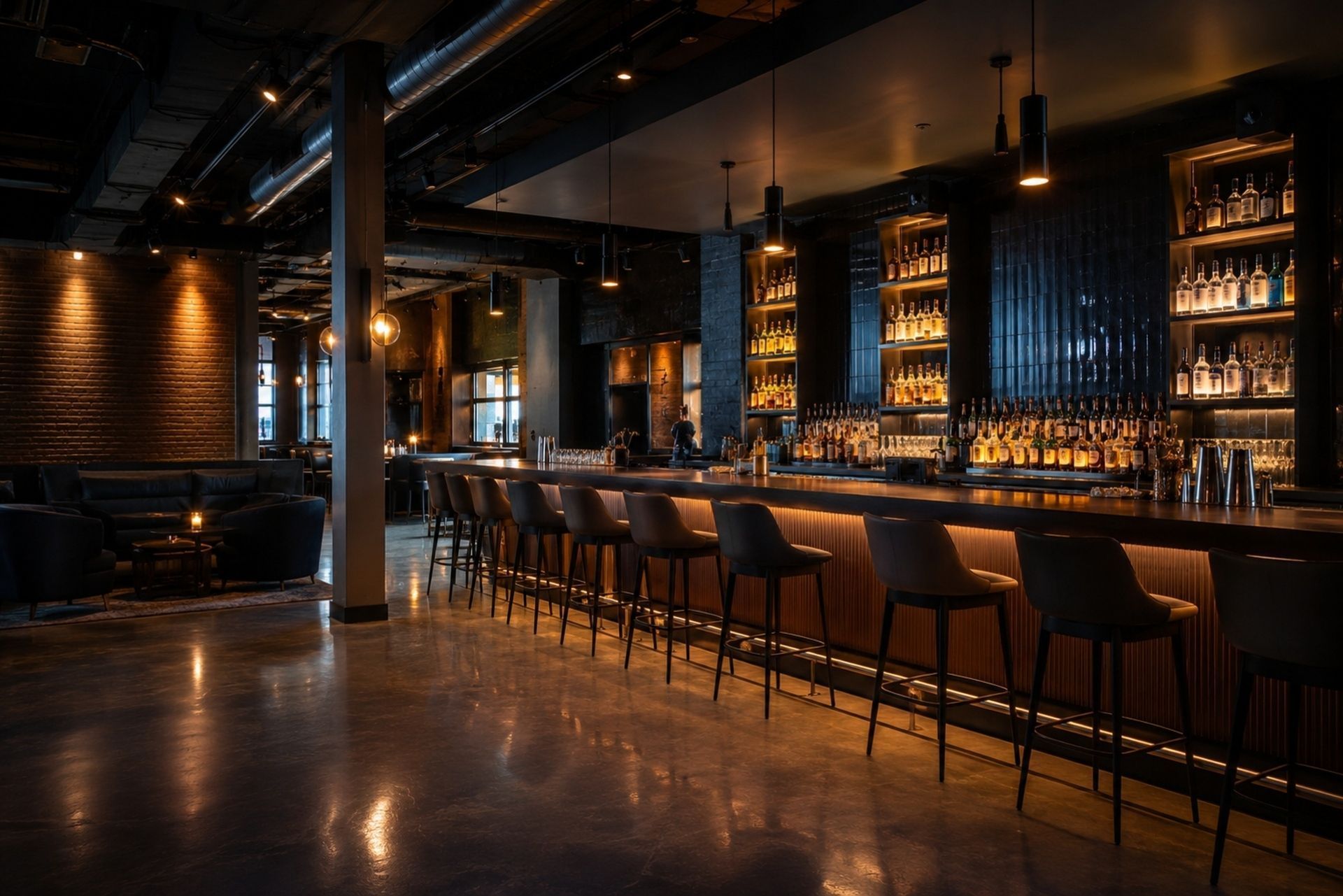
The difference between a basic bar policy and a comprehensive nightclub package is significant, both in what's covered and what it costs.
| Feature | Standard Bar Policy | Comprehensive Nightclub Policy |
|---|---|---|
| General Liability | $1M / $2M | $1M / $2M |
| Liquor Liability | $300K | $1M+ |
| Assault & Battery | Excluded | Included |
| Security Staff Coverage | Limited | Full coverage |
| Entertainment Liability | Not included | DJ, live music, events covered |
| Business Interruption | Optional add-on | Typically included |
| Estimated Annual Premium | $8,000 - $15,000 | $18,000 - $45,000+ |
A neighborhood pub with modest alcohol sales and no entertainment can often get by with a standard package. A nightclub with DJs, bottle service, a capacity over 200, and hours extending past 2 AM needs the comprehensive approach. Trying to save money by underinsuring a high-volume nightclub is one of the fastest ways to lose the entire business after a single incident.
Every policy has boundaries. Knowing them up front is how you avoid an uncovered claim. Common exclusions include:
Every policy has boundaries. Knowing them up front is how you avoid an uncovered claim. Common exclusions include:
Every policy has boundaries. Knowing them up front is how you avoid an uncovered claim. Common exclusions include:
General Liability responds to the core exposures most operations in this category face. A typical policy answers third-party claims and the defense costs that come with them, so a single incident doesn't put the business at risk.
Factors Influencing Insurance Premiums in Michigan
Your premium isn't pulled from thin air. Underwriters evaluate specific risk factors, and understanding them gives you some control over what you pay.
The Impact of Alcohol Sales Volume on Costs
The single biggest factor in your liquor liability premium is how much alcohol you sell relative to food. A gastropub where food accounts for 60% of revenue will pay dramatically less than a nightclub where alcohol represents 90% of sales.
Underwriters typically use a ratio: if alcohol exceeds 75% of gross revenue, expect premiums to jump 30% to 50% compared to a food-heavy establishment. This is one reason some bar owners strategically build out their food programs. Even adding a modest kitchen menu can shift your risk profile enough to save thousands annually on premiums.
Annual gross receipts matter too. A bar doing $500,000 in annual revenue faces different underwriting than one doing $2 million. Higher volume means more pours, more intoxicated patrons, and more potential claims.
Location Risks: Detroit vs. Rural Michigan Areas
Where your bar sits on a map directly affects your premium. Urban venues in Detroit, Flint, and Saginaw typically face premiums 20% to 40% higher than comparable establishments in rural areas or smaller cities like Traverse City or Marquette.
Crime rates, population density, proximity to highways, and local claims history all feed into the calculation. A bar in downtown Detroit near a high-traffic entertainment district carries different risk than a lakeside tavern in Petoskey. That said, rural bars aren't immune to high premiums: a venue on a two-lane highway with documented drunk driving incidents in the area can see location-based surcharges too.
Your claims history over the past three to five years is the other major variable. Even one significant liquor liability claim can increase your renewal premium by 25% or more.
Every policy has boundaries. Knowing them up front is how you avoid an uncovered claim. Common exclusions include:
Every policy has boundaries. Knowing them up front is how you avoid an uncovered claim. Common exclusions include:
Every policy has boundaries. Knowing them up front is how you avoid an uncovered claim. Common exclusions include:
General Liability responds to the core exposures most operations in this category face. A typical policy answers third-party claims and the defense costs that come with them, so a single incident doesn't put the business at risk.
Is liquor liability required if I only sell beer and wine?
Missouri's dram shop statute applies to all alcohol, not just spirits. If a patron gets visibly intoxicated on beer at your establishment and injures someone afterward, you face the same liability exposure as a full bar. Liquor liability coverage is strongly recommended regardless of what you serve.
Common Questions About Michigan Bar Insurance
Do I need insurance if I only have one employee?
Do I need liquor liability insurance if I only serve beer and wine? Yes. Michigan's dram shop laws apply to all alcohol sales, regardless of type. Beer and wine can impair patrons just as effectively as spirits, and the liability exposure is identical.
Can my liquor license be revoked for an insurance lapse? Absolutely. The Michigan Liquor Control Commission requires continuous coverage. A lapse, even for a few days, can trigger suspension or revocation proceedings against your license.
How much does bar insurance cost in Michigan on average? A standard bar with moderate alcohol sales should budget $10,000 to $20,000 annually for a complete insurance package. High-volume nightclubs with entertainment can easily reach $30,000 to $45,000 or more.
Does my homeowners' policy cover my bar if I own the building? No. Homeowners' insurance excludes commercial operations entirely. You need a separate commercial property policy for the building and its contents.
What happens if a patron is injured by another patron in my bar? Without an assault and battery endorsement, your general liability policy likely excludes the claim. You'd be responsible for legal defense costs and any settlement out of pocket.
Are food trucks or pop-ups at my bar covered under my policy? Usually not. Third-party vendors operating on your premises should carry their own insurance, and you should require certificates of insurance naming you as an additional insured before they set up.
Protecting Your Business and Your Liquor License
Michigan's legal framework for bars and nightclubs is designed to protect the public, and that means the financial consequences for operators who cut corners on insurance are severe. A single uninsured claim can result in personal liability, license revocation, and permanent closure.
The smart approach is building a coverage portfolio that matches your actual risk profile: not the state minimums, not a one-size-fits-all package, but a program tailored to your venue type, location, revenue mix, and operational hours. Agencies like GrayStone Insurance Group specialize in exactly this kind of high-risk commercial insurance placement, with brokers who understand the difference between insuring a quiet wine bar and a 500-capacity nightclub.
Get your policies reviewed annually, keep your claims history clean, and never let coverage lapse. Your liquor license, your livelihood, and your personal assets depend on it. If your current agent doesn't specialize in hospitality and nightlife risk, it's worth having a conversation with one who does.
ABOUT THE AUTHOR:
CHAD KRAMER
I started GrayStone Insurance Group in 2018 with a simple conviction: the businesses everyone else turns away deserve a broker who won't. What began as a one-person operation has grown into a specialty commercial brokerage with offices across the country — but the mission hasn't changed. We find solutions for high-risk and hard-to-place businesses when other agencies run the other way.
I built this agency on integrity, hard work, and the tenacity to do the hard things well. Through our access to Excess & Surplus and specialty markets, my team and I place coverage standard carriers can't — and I treat every client's business like my own.
If you've been declined, non-renewed, or told your business is too complicated to insure, let's talk.
Coverages & policies
Plain-language coverage, expertly placed.
We lead with commercial lines and round out personal coverage where you need it. Every policy comes with an explanation — not jargon.

Contractors
Third-party bodily injury & property damage — the foundation for any operation.

Liquor Liability
Critical for bars, restaurants and venues serving alcohol — including A&B.

Commercial Property
Buildings, contents and equipment — including distressed and vacant risk.

Workers' Compensation
Statutory coverage for your crew — including high-mod and high-hazard classes.

Commercial Umbrella
Extra liability limits over your primary policies — essential for high-exposure risk.
Products Liability
Manufacturers, CBD and consumer-product exposure — including imports.
What clients say
Brokers who actually place it.
FAQ
Answers for the risks others won't cover
Getting declined, non-renewed, or told your business is "too high-risk" is frustrating — but it doesn't mean you're out of options. Here are answers to the questions we hear most from business owners who need coverage the standard market won't provide.
What kind of insurance does GrayStone specialize in?
We're a specialty commercial brokerage built for high-risk and hard-to-place businesses — the risks standard carriers often turn away. Through our access to Excess & Surplus (E&S) and specialty markets, we place coverage that everyday agencies can't. Hospitality and construction are among our deepest areas of expertise.
My business was declined or non-renewed elsewhere. Can you still help?
That's exactly what we do. A decline, a non-renewal, or a tough claims history doesn't mean you're out of options — it means your risk needs a broker with the right market access. Tell us your situation and we'll get to work finding a fit.
What is Excess & Surplus (E&S) insurance?
E&S is specialty coverage for risks that standard "admitted" carriers won't write — often because a business is higher-risk, unusual, or has a complex history. As an independent broker, we tap into these specialty markets to place coverage where a typical agency hits a dead end.
What industries do you work with?
We cover a wide range of commercial industries — from restaurants, bars, and hospitality to contractors, trucking, manufacturing, cannabis, and more. If your industry is considered high-risk or hard-to-place, there's a good chance we've handled it.
Will you work with businesses that have prior claims or losses?
Yes. Prior claims and losses are part of many of the risks we place every day. Every business is evaluated on its own merits — and a rocky history is often exactly why a specialty broker can help where others won't.
Are you an independent broker?
Yes. We're not tied to a single carrier, so we shop your risk across multiple specialty and E&S markets to find coverage that actually fits — instead of forcing you into a one-size-fits-all policy.
Insights & resources
Know your risk before you buy.