
General Liability responds to the core exposures most operations in this category face. A typical policy answers third-party claims and the defense costs that come with them, so a single incident doesn't put the business at risk.
Corpus Christi sits right where the Gulf of Mexico meets some of the most active hurricane corridors in the country. If you're a contractor working in this part of Texas, your insurance needs look nothing like those of someone framing houses in Dallas or pouring concrete in Austin. Between salt air eating through equipment, windstorm exposure that keeps underwriters up at night, and a construction market that ranges from marina work to petrochemical facility builds, finding the right contractor insurance in Corpus Christi requires local knowledge most generic agencies simply don't have. The Coastal Bend throws curveballs that standard policies weren't designed to handle: flooding from storm surge, corrosion damage timelines that accelerate by years compared to inland Texas, and municipal permitting requirements tied to specific coverage documentation. General contractors here typically pay between $150 and $400 per month for a standard $1M/$2M general liability policy, but that baseline number can shift dramatically depending on your trade, crew size, and the types of projects you take on. Getting the wrong policy isn't just expensive: it can shut down a job site overnight. This guide breaks down what Corpus Christi operators actually face, what Texas requires, and how to build coverage that holds up when the wind picks up.
Understanding Contractor Insurance in the Coastal Bend
The Coastal Bend region creates a unique insurance environment that most inland contractors never have to think about. Corpus Christi's proximity to the Gulf means that every policy conversation starts with weather exposure, but the challenges go deeper than hurricanes. The city's ongoing infrastructure investments, port expansion projects, and steady residential development mean contractors are working across a wide spectrum of risk profiles, often simultaneously.
What makes this market particularly tricky is that many national carriers have pulled back from coastal Texas in recent years. That's left a gap where contractors need specialized brokers who understand which surplus lines carriers will actually write coastal construction risks. GrayStone Insurance Group has built a reputation for placing exactly these kinds of hard-to-insure contractors, with brokers averaging 20 years of experience who know which markets are writing Coastal Bend business right now.
Why Corpus Christi Geography Impacts Your Policy
Corpus Christi sits on a barrier island system. That geographic reality means flood zones, wind pools, and coastal building codes all factor into your insurance picture. The Texas Windstorm Insurance Association (TWIA) covers the first tier of coastal counties, and contractors working in these zones often need to carry windstorm coverage separately from their standard property or inland marine policies.
Your proximity to saltwater also matters. Underwriters calculate equipment depreciation faster for coastal contractors because salt exposure shortens the useful life of everything from scaffolding to power tools. A contractor running the same Bobcat in Corpus Christi versus San Antonio will see different replacement cost calculations, and that directly affects your inland marine premiums.
Common Local Projects and Their Specific Risks
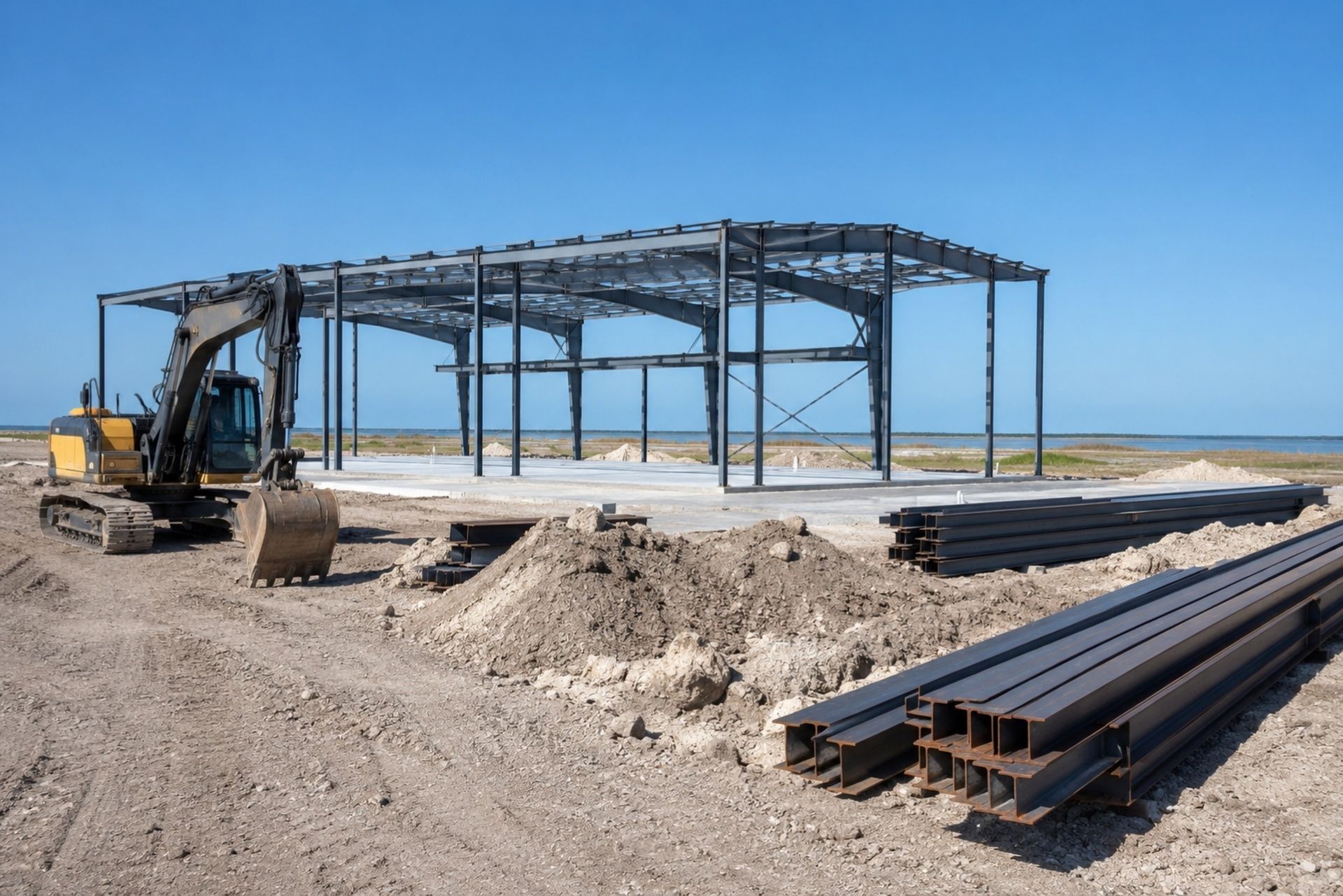
Corpus Christi contractors work on everything from seawall repairs and marina construction to residential roofing and commercial buildouts along the waterfront. Each project type carries distinct risks that your policy needs to address.
Marina and dock work, for example, requires coverage that accounts for over-water operations: a standard general liability policy won't cover damage to vessels or structures below the waterline. The city's own marina insurance requirements spell out specific minimums that contractors must meet before stepping onto a city-owned facility. Petrochemical facility work near the Port of Corpus Christi demands pollution liability coverage. Residential roofers, meanwhile, face some of the highest per-square pricing in the state because of wind exposure, but their liability premiums reflect that elevated claim frequency too.
INDEX
GrayStone Insurance Group is fully licensed and permitted to provide specialty commercial insurance solutions for high-risk and hard-to-place businesses across 17 states.
We proudly serve high-risk and hard-to-place businesses from coast to coast. As an independent specialty brokerage, our team works with leading Excess & Surplus and specialty carriers to make sure restaurants, bars, contractors, trucking companies, manufacturers, and other hard-to-place operations receive coverage that fits their real risks in California, Colorado, Florida, Georgia, Illinois, Iowa, Maryland, Michigan, Missouri, Nevada, New York, North Carolina, South Carolina, Tennessee, Texas, Utah, and Washington.
Every policy has boundaries. Knowing them up front is how you avoid an uncovered claim. Common exclusions include:
Every policy has boundaries. Knowing them up front is how you avoid an uncovered claim. Common exclusions include:
Every policy has boundaries. Knowing them up front is how you avoid an uncovered claim. Common exclusions include:
General Liability responds to the core exposures most operations in this category face. A typical policy answers third-party claims and the defense costs that come with them, so a single incident doesn't put the business at risk.
If your firm provides any design, engineering, or consulting services alongside construction, you need both. A GL policy won't cover a claim alleging your design specifications caused a building envelope failure. That's a professional liability exposure, and it's one of the fastest-growing claim categories in construction.
Texas State Requirements and Local Compliance
Texas gives contractors more flexibility than most states, but that flexibility comes with real consequences if you get it wrong. The state doesn't require a general contractor's license at the state level, which means insurance often serves as the primary proof of professionalism and financial responsibility on job sites.
Texas Workers' Compensation Laws for Contractors
Texas is one of the few states where workers' compensation insurance isn't mandatory for private employers. That sounds like a cost savings, but it's a trap for contractors who don't understand the trade-off. If you opt out of workers' comp (becoming a "non-subscriber"), you lose several powerful legal defenses if an employee gets hurt on the job. You can't argue contributory negligence, fellow-employee negligence, or assumption of risk.
Most general contractors and project owners now require subs to carry workers' comp regardless of the state minimum. New insurance transparency rules taking effect in Texas in 2026 also mean your workers' comp carrier must provide clearer explanations of coverage decisions, which gives your employees more visibility into their benefits. If you're running crews of three or more, carrying workers' comp is almost always the smarter financial decision.
Commercial Auto and Liability Minimums in Texas
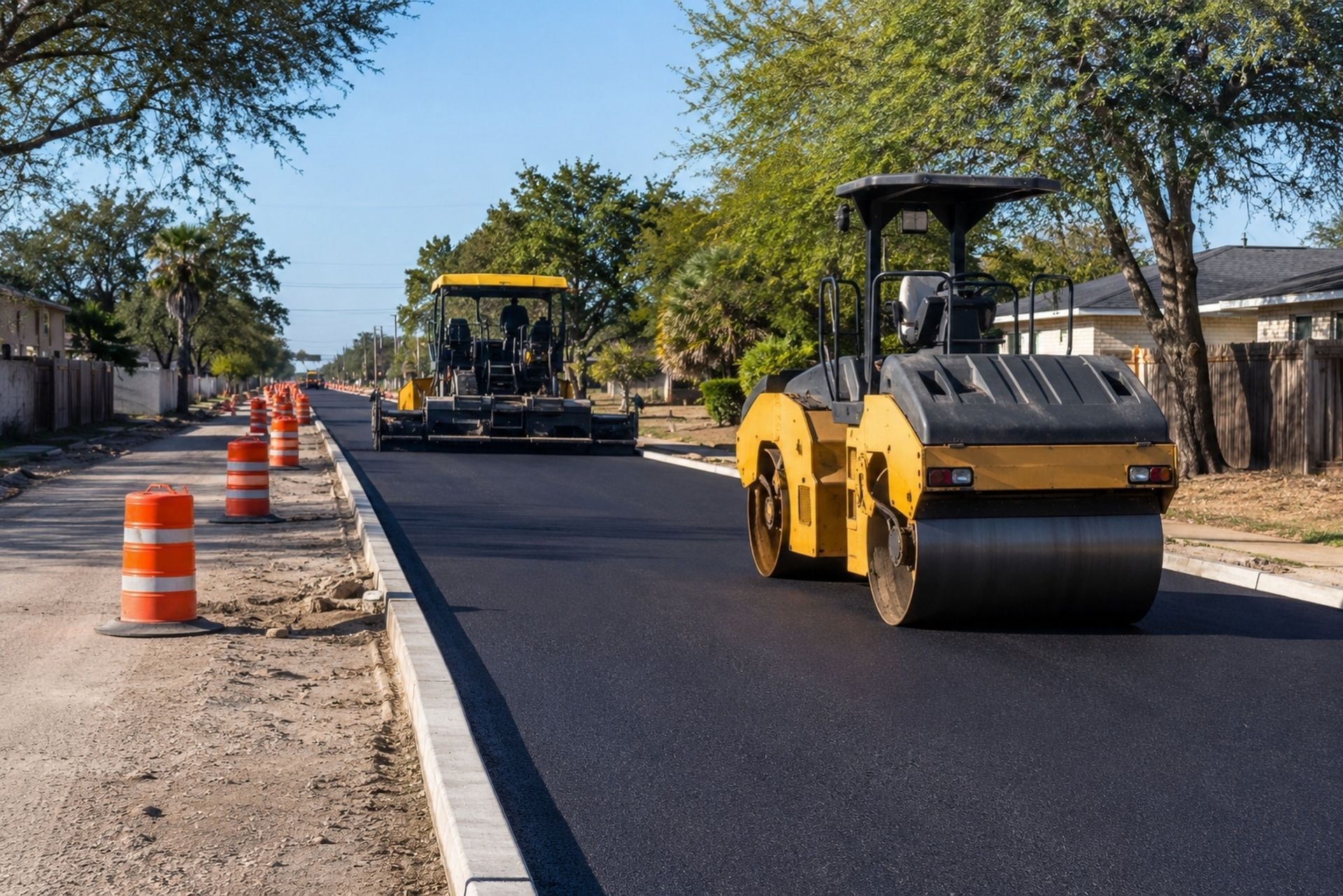
Texas requires minimum auto liability of 30/60/25: that's $30,000 per person, $60,000 per accident for bodily injury, and $25,000 for property damage. For a contractor hauling equipment on I-37 or running crew trucks across Nueces County, those minimums are dangerously low. A single accident involving a loaded trailer can blow past $25,000 in property damage before the tow truck arrives.
Most commercial contracts require $1 million combined single limit auto coverage. Certificate of insurance requirements vary by state and by project, but in Texas, general contractors increasingly demand that subs carry $1M/$2M general liability and $1M auto as baseline proof of coverage before they'll issue a subcontract.
Comparing Essential Coverage Types
Not every policy does the same job, and confusing general liability with professional liability is one of the most common mistakes contractors make.
Comparison Table: General Liability vs. Professional Liability
| Feature | Bodily injury, property damage, personal injury to third parties | Professional Liability |
|---|---|---|
| What it covers | Bodily injury, property damage, personal injury to third parties | Errors, omissions, and negligent professional advice |
| Who needs it | Every contractor | Design-build firms, engineers, consultants |
| Typical limit | Visitor trips over materials on$1M per occurrence / $2M aggregateyour job site | $1M per claim / $1M aggregate |
| Trigger | Physical harm or property damage occurs | Client suffers financial loss from your professional error |
| Common claim example | Visitor trips over materials on your job site | Your design spec causes a structural deficiency |
| Cost range (Corpus Christi) | $150-$400/month for general contractors | $100-$300/month depending on revenue |
Most trade contractors: roofers, plumbers, electricians, framers: only need general liability. But if you're a GC who also handles design work or project management, professional liability fills a gap that GL won't touch.
Inland Marine: Protecting Tools in Transit
Inland marine insurance is one of the most overlooked coverages for Corpus Christi contractors. It protects your tools, equipment, and materials while they're in transit or stored at a job site: locations your standard commercial property policy typically excludes.
Think about it this way: your shop might be covered under a business property policy, but the $40,000 in tools sitting in your truck or staged at a waterfront job site isn't. Inland marine fills that gap. For Corpus Christi operators specifically, policies should include coverage for damage from windblown debris and saltwater intrusion, both of which are common claim triggers in this area. A good broker will make sure your inland marine policy doesn't have a named-storm exclusion that would void coverage exactly when you need it most.
Every policy has boundaries. Knowing them up front is how you avoid an uncovered claim. Common exclusions include:
Every policy has boundaries. Knowing them up front is how you avoid an uncovered claim. Common exclusions include:
Every policy has boundaries. Knowing them up front is how you avoid an uncovered claim. Common exclusions include:
General Liability responds to the core exposures most operations in this category face. A typical policy answers third-party claims and the defense costs that come with them, so a single incident doesn't put the business at risk.
Unique Hazards for Corpus Christi Operators
Coastal construction carries risks that inland contractors rarely encounter. Two stand out above the rest for contractors working in and around the Corpus Christi area.
Windstorm and Hurricane Considerations
Hurricane Harvey in 2017 reshaped how insurers view Coastal Bend construction risk. Since then, windstorm deductibles for coastal properties have climbed, and contractors are increasingly being asked to carry builder's risk policies with wind coverage built in. TWIA provides wind and hail coverage for properties in the 14 first-tier coastal counties, but contractors need to verify that their own policies: general liability, inland marine, and builder's risk: don't exclude wind events.
One common gap: your general liability policy covers damage you cause to someone else's property, but if a hurricane scatters your unsecured materials across a neighboring property, some policies will deny the claim under a "force of nature" exclusion. GrayStone Insurance Group's data-driven underwriting approach helps identify these gaps before they become six-figure problems, matching contractors with carriers who actually write wind-inclusive coastal policies.
Saltwater Corrosion and Equipment Longevity
Salt air corrodes metal, degrades rubber seals, and shortens the lifespan of virtually every piece of equipment on a Corpus Christi job site. This isn't a cosmetic issue: it's a financial one. Equipment that might last 10 years in Austin may need replacement in 6 or 7 years here.
Your inland marine and equipment floater policies need to reflect actual replacement costs, not depreciated book values based on inland useful-life tables. The construction industry is already adapting to shifting workforce and equipment demands, and coastal contractors should push their brokers to use coastal-adjusted depreciation schedules. If your policy pays out based on a 10-year depreciation curve for a piece of equipment that realistically lasts 6 years in salt air, you're going to be significantly underpaid on a claim.
What happens if a show gets canceled last minute?
Standard policies don't cover event cancellation. If a headliner cancels, severe weather shuts you down, or a power outage kills the show, you're absorbing the full financial loss unless you have a dedicated event cancellation policy. These policies typically cover lost ticket revenue, non-refundable deposits, and marketing expenses. For venues that rely on ticket sales as a primary revenue stream, this coverage pays for itself the first time you need it.
Common Questions About Local Contractor Coverage
Do I need a contractor's license to work in Corpus Christi? Texas doesn't require a state-level general contractor license, but certain trades like electrical and plumbing do require state licensing. The City of Corpus Christi also has its own permitting requirements that may require proof of insurance.
Is workers' comp really optional in Texas? Yes, but opting out removes your legal defenses if an employee sues. Most GCs require subs to carry it, and Texas contractor insurance requirements effectively make it a business necessity even though it's not a legal mandate.
What's the difference between TWIA coverage and my regular policy? TWIA covers wind and hail damage in coastal counties. Your standard property or liability policy likely excludes wind in TWIA-eligible areas, so you need both.
How do I know if my tools are covered at the job site? Check your inland marine policy. Standard commercial property policies typically only cover items at your listed business location, not at remote job sites or in transit.
Can I get coverage if other agencies have turned me down? Yes. Agencies like GrayStone specialize in hard-to-place risks. Their 94% client retention rate reflects an ability to find coverage where others can't, particularly for high-risk coastal and construction operations.
Are new Texas insurance rules affecting contractors in 2026? New
reporting and transparency requirements for Texas insurers are changing how policies are documented and explained, giving contractors more clarity on what's actually covered.
What is bobtail insurance and do I need it?
Bobtail coverage protects you when driving your truck without a trailer attached, typically after dropping a load. It's often required by motor carriers for independent contractors operating under their authority. If you're an owner-operator leased to a carrier, check your lease agreement: most require it.
Making the Right Choice for Your Trade
Contractor insurance in Corpus Christi isn't something you can set and forget. The combination of coastal weather exposure, salt-driven equipment wear, and Texas-specific regulatory quirks means your coverage needs regular review, ideally before hurricane season each year.
The smartest move is working with a broker who understands both the Coastal Bend market and the specific risks your trade carries. A roofer's policy should look very different from a marine contractor's, and both should look different from what a GC running residential subdivisions needs. The construction hiring landscape continues to shift, and as crews grow or project types change, your insurance should adapt with them.
Get your policies reviewed before you sign your next subcontract. Talk to a broker who knows coastal Texas, ask hard questions about wind exclusions and equipment depreciation, and make sure your coverage actually protects the business you've built. Reach out to GrayStone Insurance Group for a policy review tailored to your trade and your territory.
ABOUT THE AUTHOR:
CHAD KRAMER
I started GrayStone Insurance Group in 2018 with a simple conviction: the businesses everyone else turns away deserve a broker who won't. What began as a one-person operation has grown into a specialty commercial brokerage with offices across the country — but the mission hasn't changed. We find solutions for high-risk and hard-to-place businesses when other agencies run the other way.
I built this agency on integrity, hard work, and the tenacity to do the hard things well. Through our access to Excess & Surplus and specialty markets, my team and I place coverage standard carriers can't — and I treat every client's business like my own.
If you've been declined, non-renewed, or told your business is too complicated to insure, let's talk.
Coverages & policies
Plain-language coverage, expertly placed.
We lead with commercial lines and round out personal coverage where you need it. Every policy comes with an explanation — not jargon.

Contractors
Third-party bodily injury & property damage — the foundation for any operation.

Liquor Liability
Critical for bars, restaurants and venues serving alcohol — including A&B.

Commercial Property
Buildings, contents and equipment — including distressed and vacant risk.

Workers' Compensation
Statutory coverage for your crew — including high-mod and high-hazard classes.

Commercial Umbrella
Extra liability limits over your primary policies — essential for high-exposure risk.
Products Liability
Manufacturers, CBD and consumer-product exposure — including imports.
What clients say
Brokers who actually place it.
FAQ
Answers for the risks others won't cover
Getting declined, non-renewed, or told your business is "too high-risk" is frustrating — but it doesn't mean you're out of options. Here are answers to the questions we hear most from business owners who need coverage the standard market won't provide.
What kind of insurance does GrayStone specialize in?
We're a specialty commercial brokerage built for high-risk and hard-to-place businesses — the risks standard carriers often turn away. Through our access to Excess & Surplus (E&S) and specialty markets, we place coverage that everyday agencies can't. Hospitality and construction are among our deepest areas of expertise.
My business was declined or non-renewed elsewhere. Can you still help?
That's exactly what we do. A decline, a non-renewal, or a tough claims history doesn't mean you're out of options — it means your risk needs a broker with the right market access. Tell us your situation and we'll get to work finding a fit.
What is Excess & Surplus (E&S) insurance?
E&S is specialty coverage for risks that standard "admitted" carriers won't write — often because a business is higher-risk, unusual, or has a complex history. As an independent broker, we tap into these specialty markets to place coverage where a typical agency hits a dead end.
What industries do you work with?
We cover a wide range of commercial industries — from restaurants, bars, and hospitality to contractors, trucking, manufacturing, cannabis, and more. If your industry is considered high-risk or hard-to-place, there's a good chance we've handled it.
Will you work with businesses that have prior claims or losses?
Yes. Prior claims and losses are part of many of the risks we place every day. Every business is evaluated on its own merits — and a rocky history is often exactly why a specialty broker can help where others won't.
Are you an independent broker?
Yes. We're not tied to a single carrier, so we shop your risk across multiple specialty and E&S markets to find coverage that actually fits — instead of forcing you into a one-size-fits-all policy.
Insights & resources
Know your risk before you buy.