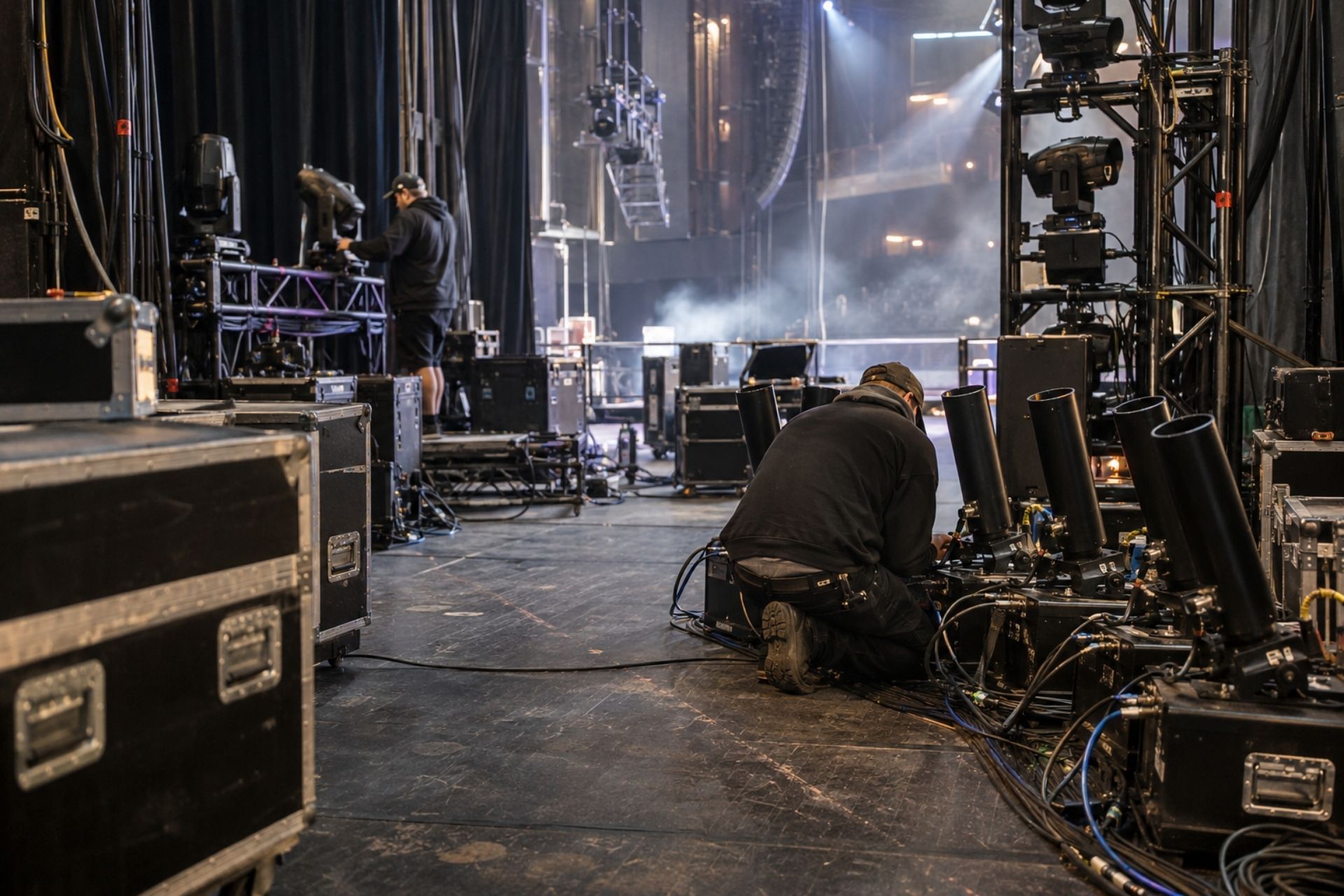

Most contractors don't realize their general liability policy excludes coverage for their own tools, equipment, and materials in transit or stored at job sites. That's where inland marine insurance fills the gap. It covers items like generators, scaffolding, laser levels, and specialty tools whether they're on a truck, at a staging area, or locked in a job-site trailer.
Theft from construction sites remains a persistent problem. A single theft event involving a skid steer or a set of commercial-grade power tools can easily exceed $50,000. Inland marine policies are relatively affordable compared to the replacement cost of losing uninsured equipment mid-project. If you're hauling anything of value between locations, this coverage is non-negotiable.
General Liability responds to the core exposures most operations in this category face. A typical policy answers third-party claims and the defense costs that come with them, so a single incident doesn't put the business at risk.
Colorado's commercial insurance market has a personality all its own. Between wildfire seasons that keep getting longer, a hailstorm belt that runs right through the state's most populated corridor, and a legal cannabis industry that most carriers still won't touch, getting the right coverage here requires more than a quick online quote. If you run a business that traditional insurers consider "complicated," you already know the frustration of getting declined or quoted premiums that feel punitive. This article breaks down the state-specific requirements you need to meet, where the market is headed in 2026, and what options exist when standard carriers say no. Whether you're pouring concrete in Colorado Springs, running a dispensary in Denver, or managing a whitewater rafting outfit near Buena Vista, the stakes are real: one uncovered claim can bury a business. Colorado's regulatory environment, combined with its unique geography, creates a market where understanding the details isn't optional. It's the difference between a policy that actually protects you and one that falls apart when you need it most. The good news? Even the hardest-to-place businesses have paths to solid coverage if you know where to look
Mandatory Commercial Insurance Requirements in Colorado
Colorado doesn't mess around with its insurance mandates. The state requires specific coverages depending on your business type, employee count, and operations. Getting these wrong isn't just risky: it's illegal, and the penalties can be steep.
Every employer with one or more employees must carry workers' compensation insurance. There's no minimum employee threshold like some states have. Commercial auto requirements apply to any vehicle used for business purposes. And while general liability isn't technically mandated by state law, most landlords, contracts, and licensing boards require it, making it a practical necessity for nearly every Colorado business.
The Division of Insurance actively enforces compliance, and they've increased audit activity over the past two years. If you're operating without required coverages, fines can reach $500 per day per violation, and you expose yourself to personal liability for any workplace injuries.
Workers' Compensation Laws and Exemptions
Colorado's workers' comp system is one of the more straightforward in the country, but there are a few wrinkles worth knowing. Every employer must carry coverage from day one of hiring, with very limited exemptions. Sole proprietors and partners can opt out, and certain corporate officers can file for exemption, but the default is coverage required.
Here's a bright spot for 2026: Colorado businesses will see a 6.9% average decrease in workers' compensation loss costs, marking the 12th consecutive year of rate reductions. That's meaningful savings, especially for labor-intensive industries like construction and manufacturing. The reductions reflect improved workplace safety trends and lower claim frequency statewide.
One mistake I see constantly: business owners classifying workers as independent contractors to avoid workers' comp obligations. Colorado has cracked down hard on misclassification, and the penalties include back premiums, fines, and potential criminal charges. If someone works set hours, uses your equipment, and follows your direction, they're likely an employee in the state's eyes regardless of what your contract says.
Commercial Auto Insurance Minimums
Colorado requires the following minimums for commercial auto policies: $25,000 per person for bodily injury, $50,000 per accident for bodily injury, and $15,000 for property damage. These are the legal floors, not recommendations.
For most commercial operations, those minimums are dangerously low. A single serious accident involving a company truck can generate claims well into six figures. Most brokers with real-world experience will recommend at least $100,000/$300,000/$100,000 limits, with a commercial umbrella on top. If you're in trucking or delivery, federal requirements push those numbers even higher.
Uninsured and underinsured motorist coverage isn't required in Colorado, but rejecting it requires a signed written waiver. Given that roughly 12% of Colorado drivers lack insurance, skipping this coverage is a gamble most business owners shouldn't take.
INDEX
GrayStone Insurance Group is fully licensed and permitted to provide specialty commercial insurance solutions for high-risk and hard-to-place businesses across 17 states.
We proudly serve high-risk and hard-to-place businesses from coast to coast. As an independent specialty brokerage, our team works with leading Excess & Surplus and specialty carriers to make sure restaurants, bars, contractors, trucking companies, manufacturers, and other hard-to-place operations receive coverage that fits their real risks in California, Colorado, Florida, Georgia, Illinois, Iowa, Maryland, Michigan, Missouri, Nevada, New York, North Carolina, South Carolina, Tennessee, Texas, Utah, and Washington.
Every policy has boundaries. Knowing them up front is how you avoid an uncovered claim. Common exclusions include:
Every policy has boundaries. Knowing them up front is how you avoid an uncovered claim. Common exclusions include:
Every policy has boundaries. Knowing them up front is how you avoid an uncovered claim. Common exclusions include:
General Liability responds to the core exposures most operations in this category face. A typical policy answers third-party claims and the defense costs that come with them, so a single incident doesn't put the business at risk.
Here's the uncomfortable truth: most commercial general liability (CGL) policies contain explicit assault and battery exclusions. Insurers added these exclusions because assault-related claims tend to be expensive and unpredictable. A single incident at a nightclub can generate $200,000 or more in legal defense and settlement costs.
CGL policies are built around the concept of "accidental" or "unintentional" harm. A fistfight is, by definition, intentional. Even if your business didn't cause the fight, the underlying act was deliberate, and that's enough for most standard carriers to deny the claim. This is exactly why a separate assault and battery policy or endorsement exists: to cover the gap your CGL policy was never designed to fill.
Why General Liability Often Excludes These Claims
Physical damage is only half the financial hit. If a windstorm forces your restaurant, hotel, or manufacturing facility to close for repairs, lost revenue can exceed the property damage itself. Business interruption coverage replaces lost income during the restoration period, while extra expense coverage pays for temporary relocation costs or expedited repairs.
Not every commercial property policy includes business interruption for wind events automatically. Some policies apply a waiting period (often 72 hours) before business interruption kicks in. Others sublimit wind-related interruption claims. If your business can't afford to close for even a few days, verify these terms explicitly with your broker.
Business Interruption and Extra Expense Coverage
Understanding the Colorado Insurance Market Appetite
The Colorado insurance market in 2026 is a study in contrasts. Some industries are seeing competitive pricing and eager carriers, while others face a shrinking pool of options. Understanding where your business falls on this spectrum saves you time and money.
Carrier appetite is shaped by loss history, and Colorado's recent years have been rough. Catastrophic wildfire losses, record hail damage along the Front Range, and rising litigation costs have made underwriters cautious. That said, the market isn't uniformly hard. Businesses with clean loss runs and strong risk management programs still find competitive options.
Industries Carriers Currently Favor
Standard carriers are actively writing policies for Colorado's tech sector, professional services firms, and light manufacturing operations. These industries carry predictable risk profiles and generate relatively few large claims.
Healthcare practices, accounting firms, and SaaS companies typically get multiple competitive quotes. Restaurants without liquor service, retail shops, and office-based businesses also find plenty of carrier interest. The common thread is low physical risk and minimal liability exposure.
On the other end, liquor liability costs continue to climb for bars, restaurants with full bars, and event venues. Colorado's dram shop laws create significant exposure for alcohol-serving establishments, and carriers price accordingly. If you're running a nightclub or brewery taproom, expect to work harder for coverage.
Regional Risk Factors: Wildfires and Hail Impact
Geography matters enormously in Colorado insurance pricing. The wildfire-urban interface continues expanding as development pushes into mountain communities, and the Colorado FAIR Plan exists specifically for properties that can't find coverage in the standard market due to fire risk.
Hail is the other major driver. The Front Range corridor from Fort Collins through Colorado Springs sits in one of the most active hail zones in North America. Businesses with significant property exposure in this area routinely face higher premiums, larger deductibles, and cosmetic damage exclusions. The FAIR Plan's exclusion structure is worth reviewing if you're considering it as a fallback, because the gaps can be significant.
These regional factors don't just affect property insurance. They ripple into business interruption coverage, commercial auto rates, and even general liability pricing for outdoor operations.
Coverage Comparison: General Liability vs. Professional Liability
This is one of the most common areas of confusion for Colorado business owners. General liability and professional liability cover fundamentally different risks, and many businesses need both.
General liability protects against third-party bodily injury and property damage claims. If a customer slips on your floor or your employee damages a client's property during a job, GL responds. Professional liability, sometimes called errors and omissions insurance, covers claims arising from your professional services or advice: a design flaw, a missed deadline that causes financial harm, or negligent consultation.
The distinction matters because a GL policy won't cover a professional negligence claim, and a professional liability policy won't pay for a slip-and-fall. Assuming one covers the other is a gap that has cost Colorado businesses millions in uninsured losses.
Comparison Table: Coverage Scope and Value
| Feature | General Liability | Professional Liability |
|---|---|---|
| Covers bodily injury | Yes | No |
| Covers property damage | Yes | Rarely |
| Covers professional errors | No | Yes |
| Covers advertising injury | Yes | No |
| Typical annual premium (CO) | $500 - $3,000+ | $800 - $5,000+ |
| Who needs it | Nearly every business | Service-based and advisory firms |
| Claims-made vs. occurrence | Usually occurrence | Usually claims-made |
| Required by contracts | Almost always | Often for professional services |
One critical note on professional liability: most policies are written on a claims-made basis, meaning coverage only applies if the policy is active when the claim is filed, not when the error occurred. If you cancel a claims-made policy without purchasing tail coverage, you lose protection for past work. This catches a lot of business owners off guard.
Every policy has boundaries. Knowing them up front is how you avoid an uncovered claim. Common exclusions include:
Every policy has boundaries. Knowing them up front is how you avoid an uncovered claim. Common exclusions include:
Every policy has boundaries. Knowing them up front is how you avoid an uncovered claim. Common exclusions include:
General Liability responds to the core exposures most operations in this category face. A typical policy answers third-party claims and the defense costs that come with them, so a single incident doesn't put the business at risk.
Solutions for Colorado High-Risk Businesses
If your business has been declined by two or more standard carriers, you're officially in "hard-to-place" territory. That doesn't mean you're uninsurable: it means you need a different approach.
High-risk businesses in Colorado include cannabis operations, construction contractors with heavy equipment, bars and nightclubs, outdoor recreation companies, and any business with a problematic claims history. The standard admitted market simply isn't built for these risk profiles, but the surplus lines market is.
GrayStone Insurance Group works specifically with businesses in this category, using data-driven risk modeling to match complex risks with carriers who actually want to write them. Their brokers average 20 years in the industry, which matters when you're trying to place a policy that requires creative structuring and deep carrier relationships.
Navigating the Surplus Lines Market
The surplus lines market, also called the excess and surplus (E&S) market, exists for risks that admitted carriers won't write. These are non-admitted carriers that operate with more pricing and coverage flexibility, though they aren't backed by the Colorado guaranty fund.
Working with a surplus lines broker isn't like shopping for standard insurance. The process involves detailed applications, loss run analysis, and sometimes on-site inspections. Turnaround times are longer, and premiums are typically higher. But for businesses that can't find coverage elsewhere, this market is essential.
Colorado requires surplus lines placements to go through licensed surplus lines brokers, and there's a 3% surplus lines tax on premiums. Make sure your broker handles this correctly: improper placements can void your coverage.
Options for Cannabis, Construction, and Outdoor Recreation
Cannabis businesses face a unique challenge because marijuana remains federally illegal, which keeps most admitted carriers away. Still, cannabis-specific insurance programs have expanded significantly, covering everything from product liability to crop loss. Colorado's updated retailer purchase limits also affect how policies are structured for dispensaries and cultivation facilities.
Construction contractors with heavy civil or residential work often need specialized programs that bundle GL, workers' comp, and builder's risk under coordinated terms. GrayStone's experience placing construction risks means they understand the specific endorsements Colorado contractors need, like completed operations coverage that extends well beyond project completion.
Outdoor recreation companies, from ski operations to rafting outfitters, need policies that account for participant injury risk, seasonal operations, and remote locations. Waivers help but don't eliminate liability. These businesses typically need custom-built programs from carriers who understand adventure and recreation risk.
Can I add this to my existing policy as a rider?
Often, yes. Many carriers offer assault and battery as an endorsement to an existing general liability policy. This is usually cheaper than buying a standalone policy. That said, standalone policies sometimes offer higher limits and broader coverage terms. GrayStone's brokers can help determine which structure makes more sense based on your specific risk profile and claims history.
Common Questions About Colorado Business Insurance
Frequently Asked Questions
Is general liability insurance required by law in Colorado? No, but most commercial leases, contracts, and professional licenses require it. Operating without GL is technically legal but practically impossible for most businesses.
How much does commercial insurance cost for a small Colorado business? A basic BOP (business owner's policy) runs $500 to $2,500 annually for low-risk operations. High-risk businesses can pay $5,000 to $25,000 or more depending on industry and claims history.
Can I get commercial insurance for a Colorado cannabis business? Yes, though options are limited to surplus lines carriers and specialty programs. Expect higher premiums and more restrictive terms than traditional industries.
What happens if I don't carry workers' compensation in Colorado? You face fines of up to $500 per day, personal liability for employee injuries, and potential criminal penalties. The state does not take this lightly.
Does Colorado require commercial umbrella insurance? No state law requires it, but umbrella policies are strongly recommended for any business with significant liability exposure. They're relatively inexpensive for the protection they provide.
How do wildfires affect my commercial property insurance?
Properties in high-risk fire zones face higher premiums, limited carrier options, and may need to use the
Colorado FAIR Plan as a last resort. Mitigation efforts like defensible space can help with pricing.
Every policy has boundaries. Knowing them up front is how you avoid an uncovered claim. Common exclusions include:
Every policy has boundaries. Knowing them up front is how you avoid an uncovered claim. Common exclusions include:
Every policy has boundaries. Knowing them up front is how you avoid an uncovered claim. Common exclusions include:
General Liability responds to the core exposures most operations in this category face. A typical policy answers third-party claims and the defense costs that come with them, so a single incident doesn't put the business at risk.
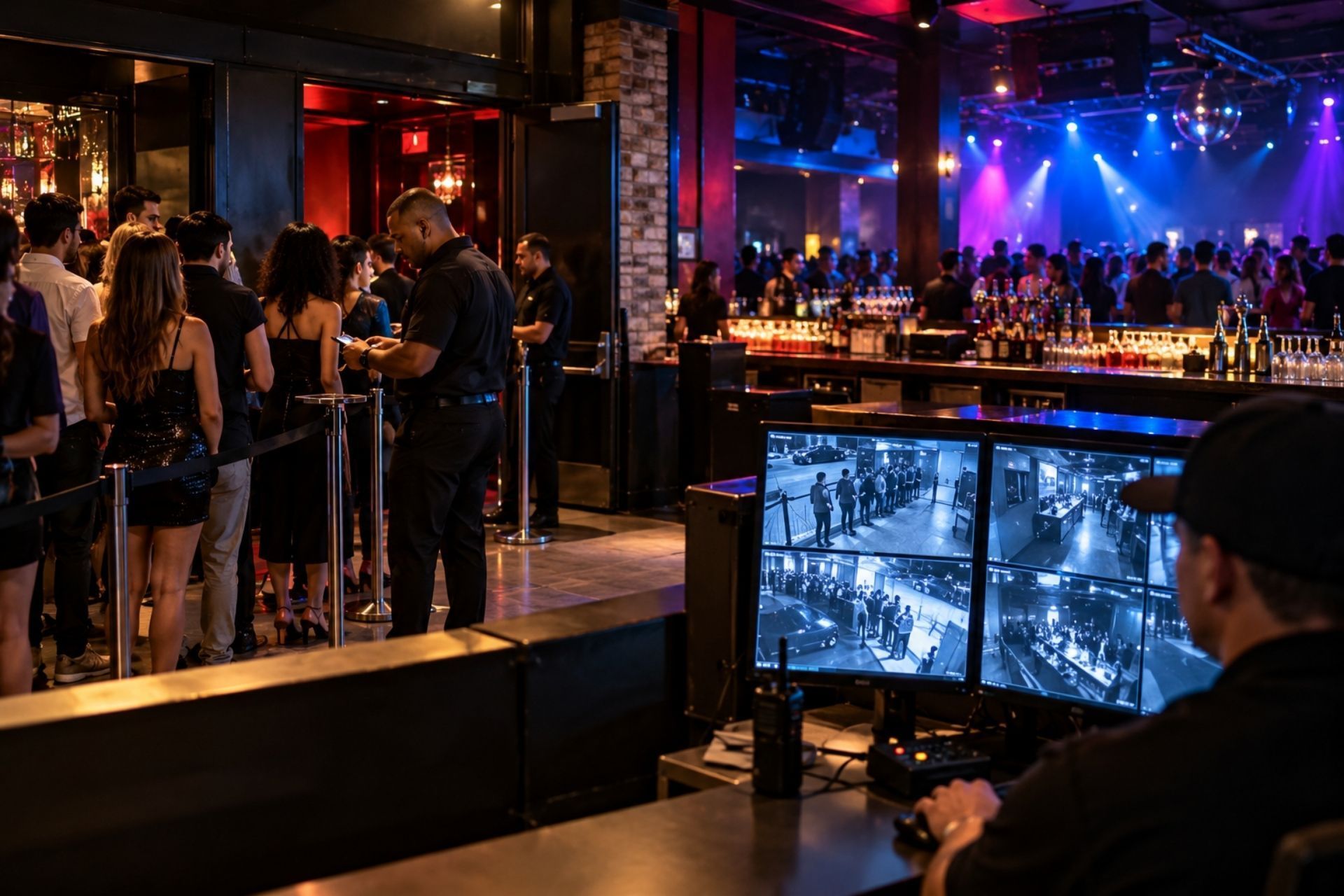
Security companies face a unique double exposure. Their employees are the ones most likely to be involved in physical confrontations, and they're often the ones accused of using excessive force. A security firm without assault and battery coverage is essentially operating without a net.
Contract security providers should pay close attention to policy language around "use of force" definitions. Some policies limit coverage to "reasonable force," which creates room for the insurer to deny claims if a court later determines the force used was excessive. Look for policies that cover the defense costs regardless of the outcome.
Security Firms and Bouncer Services
Behavioral health centers, psychiatric facilities, group homes, and emergency rooms all deal with patients or clients who may become physically aggressive. Staff injuries and patient-on-patient incidents are common in these settings.
The challenge here is that many healthcare liability policies treat assault-related injuries differently than standard patient care claims. A dedicated assault and battery endorsement fills this gap and protects the facility against lawsuits from both staff and patients. Social service agencies working with at-risk populations face similar exposure.
Healthcare Facilities and Social Services
Making the Right Choice for Your CO Business
Colorado's commercial insurance requirements are clear, but finding the right coverage, especially for high-risk operations, takes more than checking boxes. The state's unique combination of natural disaster exposure, a thriving cannabis industry, and active construction sector means many businesses fall outside what standard carriers want to write.
The most important thing you can do is work with a broker who understands both Colorado's regulatory environment and the surplus lines market. A 94% client retention rate, like the one GrayStone Insurance Group maintains, doesn't happen by accident: it comes from matching businesses with coverage that actually holds up when claims hit.
Start by reviewing your current policies against the requirements and coverage types outlined here. If you're underinsured, uninsured for specific risks, or paying too much because your broker doesn't know the E&S market, it's time for a second opinion. The right coverage exists. You just need someone who knows where to find it.
ABOUT THE AUTHOR:
CHAD KRAMER
I started GrayStone Insurance Group in 2018 with a simple conviction: the businesses everyone else turns away deserve a broker who won't. What began as a one-person operation has grown into a specialty commercial brokerage with offices across the country — but the mission hasn't changed. We find solutions for high-risk and hard-to-place businesses when other agencies run the other way.
I built this agency on integrity, hard work, and the tenacity to do the hard things well. Through our access to Excess & Surplus and specialty markets, my team and I place coverage standard carriers can't — and I treat every client's business like my own.
If you've been declined, non-renewed, or told your business is too complicated to insure, let's talk.
Coverages & policies
Plain-language coverage, expertly placed.
We lead with commercial lines and round out personal coverage where you need it. Every policy comes with an explanation — not jargon.

Contractors
Third-party bodily injury & property damage — the foundation for any operation.

Liquor Liability
Critical for bars, restaurants and venues serving alcohol — including A&B.

Commercial Property
Buildings, contents and equipment — including distressed and vacant risk.

Workers' Compensation
Statutory coverage for your crew — including high-mod and high-hazard classes.

Commercial Umbrella
Extra liability limits over your primary policies — essential for high-exposure risk.
Products Liability
Manufacturers, CBD and consumer-product exposure — including imports.
What clients say
Brokers who actually place it.
FAQ
Answers for the risks others won't cover
Getting declined, non-renewed, or told your business is "too high-risk" is frustrating — but it doesn't mean you're out of options. Here are answers to the questions we hear most from business owners who need coverage the standard market won't provide.
What kind of insurance does GrayStone specialize in?
We're a specialty commercial brokerage built for high-risk and hard-to-place businesses — the risks standard carriers often turn away. Through our access to Excess & Surplus (E&S) and specialty markets, we place coverage that everyday agencies can't. Hospitality and construction are among our deepest areas of expertise.
My business was declined or non-renewed elsewhere. Can you still help?
That's exactly what we do. A decline, a non-renewal, or a tough claims history doesn't mean you're out of options — it means your risk needs a broker with the right market access. Tell us your situation and we'll get to work finding a fit.
What is Excess & Surplus (E&S) insurance?
E&S is specialty coverage for risks that standard "admitted" carriers won't write — often because a business is higher-risk, unusual, or has a complex history. As an independent broker, we tap into these specialty markets to place coverage where a typical agency hits a dead end.
What industries do you work with?
We cover a wide range of commercial industries — from restaurants, bars, and hospitality to contractors, trucking, manufacturing, cannabis, and more. If your industry is considered high-risk or hard-to-place, there's a good chance we've handled it.
Will you work with businesses that have prior claims or losses?
Yes. Prior claims and losses are part of many of the risks we place every day. Every business is evaluated on its own merits — and a rocky history is often exactly why a specialty broker can help where others won't.
Are you an independent broker?
Yes. We're not tied to a single carrier, so we shop your risk across multiple specialty and E&S markets to find coverage that actually fits — instead of forcing you into a one-size-fits-all policy.
Insights & resources
Know your risk before you buy.