
South Carolina Contractor Insurance

Most contractors don't realize their general liability policy excludes coverage for their own tools, equipment, and materials in transit or stored at job sites. That's where inland marine insurance fills the gap. It covers items like generators, scaffolding, laser levels, and specialty tools whether they're on a truck, at a staging area, or locked in a job-site trailer.


Theft from construction sites remains a persistent problem. A single theft event involving a skid steer or a set of commercial-grade power tools can easily exceed $50,000. Inland marine policies are relatively affordable compared to the replacement cost of losing uninsured equipment mid-project. If you're hauling anything of value between locations, this coverage is non-negotiable.

General Liability responds to the core exposures most operations in this category face. A typical policy answers third-party claims and the defense costs that come with them, so a single incident doesn't put the business at risk.

GeSouth Carolina contractors with four or more employees are legally required to carry workers' compensation insurance, and non-compliance penalties can reach up to $1,000 per day of violation. That adds up fast. Even if you have fewer than four employees, many general contractors and project owners will require proof of workers' comp before letting you on a jobsite.


Sole proprietors and partners can exempt themselves from coverage, but doing so creates personal liability exposure that most experienced contractors regret. If a subcontractor you hire doesn't carry workers' comp, you could be held responsible for their injuries under SC law. This is one of the most common and expensive mistakes small contractors make.

Running a contracting business in South Carolina means juggling bids, managing crews, and keeping projects on schedule. What too many contractors overlook until it's too late is the insurance side of things. A single workplace injury or property damage claim can wipe out a year's worth of profit, and operating without the right coverage can get your license pulled. Whether you're a solo roofer in Charleston or running a 20-person framing crew in Greenville, understanding what insurance South Carolina actually requires, what it costs, and how to stay compliant isn't optional. It's the foundation your business stands on. The rules here aren't identical to neighboring states, and the penalties for getting it wrong are steep enough to shut down small operations entirely. This guide breaks down exactly what SC contractors need to know heading into 2026.

South Carolina's contractor licensing system runs through the Department of Labor, Licensing and Regulation (LLR), and the requirements vary significantly depending on the type of work you perform and the size of your projects. The state doesn't have a single blanket rule. Instead, it layers licensing tiers with corresponding insurance and bonding obligations.


Getting this wrong isn't just a paperwork headache. Operating without proper licensing or insurance can result in fines, project shutdowns, and even criminal charges. The LLR conducts active enforcement, and homeowners increasingly verify contractor credentials before signing contracts.

General Contractor vs. Residential Specialty Requirements

General contractors handling projects over $5,000 need a license from the SC Contractors' Licensing Board. The licensing tiers (Groups 1 through 5) are based on the maximum dollar value of projects you take on, with Group 1 covering unlimited project sizes and Group 5 capped at $15,000. Each tier carries different financial statement and bonding requirements.


Residential specialty contractors, like HVAC technicians, plumbers, and electricians, fall under separate licensing boards with their own insurance mandates. A residential builder working on projects under $200,000 has different documentation requirements than a commercial GC bidding on a $2 million office renovation. The key takeaway: check your specific trade category with the LLR before assuming you know what's needed.

Workers' Compensation Laws for SC Small Businesses

South Carolina contractors with four or more employees are legally required to carry workers' compensation insurance, and non-compliance penalties can reach up to $1,000 per day of violation. That adds up fast. Even if you have fewer than four employees, many general contractors and project owners will require proof of workers' comp before letting you on a jobsite.


Sole proprietors and partners can exempt themselves from coverage, but doing so creates personal liability exposure that most experienced contractors regret. If a subcontractor you hire doesn't carry workers' comp, you could be held responsible for their injuries under SC law. This is one of the most common and expensive mistakes small contractors make.

Surety Bond Thresholds for the SC LLR

The LLR requires surety bonds as part of the licensing process, and the bond amounts correspond to your licensing group. Group 5 contractors need a $5,000 bond, while Group 1 contractors need a $15,000 bond. These bonds protect consumers: if you fail to complete a project or violate your contract, the bond provides a financial remedy.


Bond premiums typically run 1% to 3% of the bond amount for contractors with good credit. A contractor with a credit score below 650 might pay 5% to 10%, which makes maintaining good personal credit a real business expense consideration.

Chad Kramer
CEO · Licensed Author

GrayStone Insurance Group is fully licensed and permitted to provide specialty commercial insurance solutions for high-risk and hard-to-place businesses across 17 states.

We proudly serve high-risk and hard-to-place businesses from coast to coast. As an independent specialty brokerage, our team works with leading Excess & Surplus and specialty carriers to make sure restaurants, bars, contractors, trucking companies, manufacturers, and other hard-to-place operations receive coverage that fits their real risks in California, Colorado, Florida, Georgia, Illinois, Iowa, Maryland, Michigan, Missouri, Nevada, New York, North Carolina, South Carolina, Tennessee, Texas, Utah, and Washington.

Every policy has boundaries. Knowing them up front is how you avoid an uncovered claim. Common exclusions include:

Every policy has boundaries. Knowing them up front is how you avoid an uncovered claim. Common exclusions include:

Every policy has boundaries. Knowing them up front is how you avoid an uncovered claim. Common exclusions include:

General Liability responds to the core exposures most operations in this category face. A typical policy answers third-party claims and the defense costs that come with them, so a single incident doesn't put the business at risk.

Here's the uncomfortable truth: most commercial general liability (CGL) policies contain explicit assault and battery exclusions. Insurers added these exclusions because assault-related claims tend to be expensive and unpredictable. A single incident at a nightclub can generate $200,000 or more in legal defense and settlement costs.


CGL policies are built around the concept of "accidental" or "unintentional" harm. A fistfight is, by definition, intentional. Even if your business didn't cause the fight, the underlying act was deliberate, and that's enough for most standard carriers to deny the claim. This is exactly why a separate assault and battery policy or endorsement exists: to cover the gap your CGL policy was never designed to fill.

Why General Liability Often Excludes These Claims

Physical damage is only half the financial hit. If a windstorm forces your restaurant, hotel, or manufacturing facility to close for repairs, lost revenue can exceed the property damage itself. Business interruption coverage replaces lost income during the restoration period, while extra expense coverage pays for temporary relocation costs or expedited repairs.


Not every commercial property policy includes business interruption for wind events automatically. Some policies apply a waiting period (often 72 hours) before business interruption kicks in. Others sublimit wind-related interruption claims. If your business can't afford to close for even a few days, verify these terms explicitly with your broker.

Business Interruption and Extra Expense Coverage

General liability covers someone slipping on your warehouse floor. Product liability covers a consumer who claims your CBD gummy caused an allergic reaction. If you're selling any product to end consumers, you need both. Period. Firms like GrayStone Insurance Group, which specialize in hard-to-place risks, can often bundle these coverages more efficiently than piecing them together from separate carriers.

Essential Coverage Types for South Carolina Contractors

Beyond the state-mandated minimums, smart contractors carry several types of coverage that protect against the risks most likely to hit their bottom line. The right combination depends on your trade, crew size, and the types of projects you take on.

General Liability: Protecting Against Property Damage and Injury

General liability insurance is the backbone of any contractor's coverage portfolio. It covers third-party bodily injury, property damage, and completed operations claims. If a homeowner trips over your materials and breaks an ankle, or if your crew damages a client's hardwood floors during a remodel, GL responds.


Most SC contractors pay between $800 and $3,500 annually for general liability, depending on trade and revenue. Roofing and demolition contractors pay significantly more than painters or landscapers because the risk profile is higher. A standard policy provides $1 million per occurrence and $2 million aggregate, which is the minimum most project owners require. For contractors working on larger commercial jobs, umbrella policies that extend coverage to $5 million or more are common.

Inland Marine: Protecting Tools and Mobile Equipment

Here's something that catches contractors off guard: your standard commercial property policy probably doesn't cover tools and equipment in transit or stored at jobsites. That's where inland marine insurance comes in. It covers your table saws, generators, scaffolding, and specialty tools wherever they go.


A typical inland marine policy for a small contractor runs $500 to $2,000 per year, depending on the total value of covered equipment. Given that replacing a stolen trailer full of tools can easily cost $15,000 to $30,000, this coverage pays for itself the first time you need it. GrayStone Insurance Group regularly helps contractors who've been turned down elsewhere find inland marine coverage, particularly those in higher-risk trades where equipment theft rates are above average.

Commercial Auto for Business-Owned Trucks and Vans

If you own vehicles used for business purposes, personal auto insurance won't cover accidents that happen during work activities. Commercial auto insurance is required for any vehicle registered to your business, and it's strongly recommended even for personal vehicles used regularly for work.


SC commercial auto premiums for contractors typically range from $1,200 to $3,600 per vehicle annually, influenced by driver records, vehicle types, and radius of operations. Contractors who travel across state lines for projects face higher premiums than those working strictly within a local area.

Feature General Liability (GL) Professional Liability (PL
What it covers Bodily injury, property damage, advertising injury Errors, omissions, negligent advice
Who needs it Nearly every business Service-based and consulting firms
Common claims Slip-and-fall at your location, damage to client property Missed deadline causing financial loss, design error
Typical annual cost (UT) $400 - $1,500 for low-risk $600 - $3,000+ depending on revenue
Required by law? Not mandated, but often required by contracts/landlords Not mandated, but required by some licensing boards
Coverage trigger Occurrence-based (usually) Claims-made (usually)
Feature General Liability (GL) Professional Liability (PL
What it covers Bodily injury, property damage, advertising injury Errors, omissions, negligent advice
Who needs it Nearly every business Service-based and consulting firms
Common claims Slip-and-fall at your location, damage to client property Missed deadline causing financial loss, design error
Typical annual cost (UT) $400 - $1,500 for low-risk $600 - $3,000+ depending on revenue
Required by law? Not mandated, but often required by contracts/landlords Not mandated, but required by some licensing boards
Coverage trigger Occurrence-based (usually) Claims-made (usually)

One thing to keep in mind: a general liability policy will not cover you if a client sues because your work product was defective or your advice caused them financial harm. That's squarely in professional liability territory. Many businesses need both, and bundling them into a Business Owner's Policy (BOP) can save 15-20% compared to purchasing them separately.

Workers' Compensation Laws for TN Hemp Staff

Tennessee requires workers' compensation coverage for businesses with five or more employees, and hemp operations are no exception. This applies to farm workers, processing facility staff, retail employees, and delivery drivers. The classification codes for hemp workers can vary: agricultural workers are rated differently than manufacturing or retail employees.


One common mistake is assuming that seasonal harvest workers don't count toward the employee threshold. They do. If you bring on temporary staff during harvest season and your total headcount hits five, you need workers' comp in place before they start. Penalties for non-compliance include fines and potential criminal charges.

Comparing Coverage Needs: Basic vs. Comprehensive Plans

Not every contractor needs the same coverage stack. A handyman doing small residential repairs has different exposure than a commercial excavation company. The table below shows how basic and comprehensive plans typically differ.

Coverage Comparison Table

Coverage Type Basic Plan Comprehensive Plan
General Liability $1M per occurrence / $2M aggregate $2M per occurrence / $4M aggregate
Workers' Compensation State minimum (required with 4+ employees) State minimum plus employer's liability
Commercial Auto Liability only Liability + comprehensive and collision
Inland Marine Not included $50K-$150K in tool/equipment coverage
Umbrella/Excess Not included $1M-$5M excess liability
Builder's Risk Not included Project-specific coverage
Professional Liability Not included Errors and omissions for design-build

A basic plan might cost a small residential contractor $2,500 to $5,000 per year. A comprehensive plan for a mid-size commercial GC can run $15,000 to $40,000 or more. The right choice depends on your contract requirements, risk tolerance, and the types of clients you serve.

Every policy has boundaries. Knowing them up front is how you avoid an uncovered claim. Common exclusions include:

Every policy has boundaries. Knowing them up front is how you avoid an uncovered claim. Common exclusions include:

Every policy has boundaries. Knowing them up front is how you avoid an uncovered claim. Common exclusions include:

General Liability responds to the core exposures most operations in this category face. A typical policy answers third-party claims and the defense costs that come with them, so a single incident doesn't put the business at risk.

Here's the uncomfortable truth: most commercial general liability (CGL) policies contain explicit assault and battery exclusions. Insurers added these exclusions because assault-related claims tend to be expensive and unpredictable. A single incident at a nightclub can generate $200,000 or more in legal defense and settlement costs.


CGL policies are built around the concept of "accidental" or "unintentional" harm. A fistfight is, by definition, intentional. Even if your business didn't cause the fight, the underlying act was deliberate, and that's enough for most standard carriers to deny the claim. This is exactly why a separate assault and battery policy or endorsement exists: to cover the gap your CGL policy was never designed to fill.

Why General Liability Often Excludes These Claims

Physical damage is only half the financial hit. If a windstorm forces your restaurant, hotel, or manufacturing facility to close for repairs, lost revenue can exceed the property damage itself. Business interruption coverage replaces lost income during the restoration period, while extra expense coverage pays for temporary relocation costs or expedited repairs.


Not every commercial property policy includes business interruption for wind events automatically. Some policies apply a waiting period (often 72 hours) before business interruption kicks in. Others sublimit wind-related interruption claims. If your business can't afford to close for even a few days, verify these terms explicitly with your broker.

Business Interruption and Extra Expense Coverage

Factors Influencing Insurance Premiums in the Palmetto State

Insurance pricing in South Carolina reflects a mix of statewide trends and individual business characteristics. The state's coastal hurricane exposure affects builder's risk and property rates, while inland contractors face different risk calculations. Understanding what drives your premium helps you control costs without cutting necessary coverage.

Impact of Trade Specialization on Risk Rating

Your trade classification is the single biggest factor in your premium. Insurance companies assign each trade a classification code that reflects historical claim frequency and severity. Roofing contractors, for example, pay roughly three to five times more for general liability than interior painters doing similar revenue.


Electrical contractors fall somewhere in the middle, while excavation and demolition sit near the top of the risk scale. If your business performs multiple trades, your insurer will rate each one separately and blend the premiums. Misclassifying your work, even accidentally, can lead to audit surprises and retroactive premium adjustments that hit your cash flow hard.

Ways to Lower Costs Through Safety Credits

The most effective way to reduce premiums is a clean claims history, but there are proactive steps that help. Implementing a formal safety program with documented training can earn premium credits of 5% to 15% from many carriers. OSHA 10 or OSHA 30 certifications for your crew members demonstrate commitment to workplace safety.


Bundling multiple policies with one carrier often produces package discounts. Working with a broker who specializes in contractor placements, like the team at GrayStone Insurance Group with their 20-plus years of industry experience, can uncover credits and programs that generalist agents miss. Higher deductibles also lower premiums, though you need the cash reserves to absorb a claim.

Can I add this to my existing policy as a rider?

Often, yes. Many carriers offer assault and battery as an endorsement to an existing general liability policy. This is usually cheaper than buying a standalone policy. That said, standalone policies sometimes offer higher limits and broader coverage terms. GrayStone's brokers can help determine which structure makes more sense based on your specific risk profile and claims history.

Security Personnel and Training Protocols

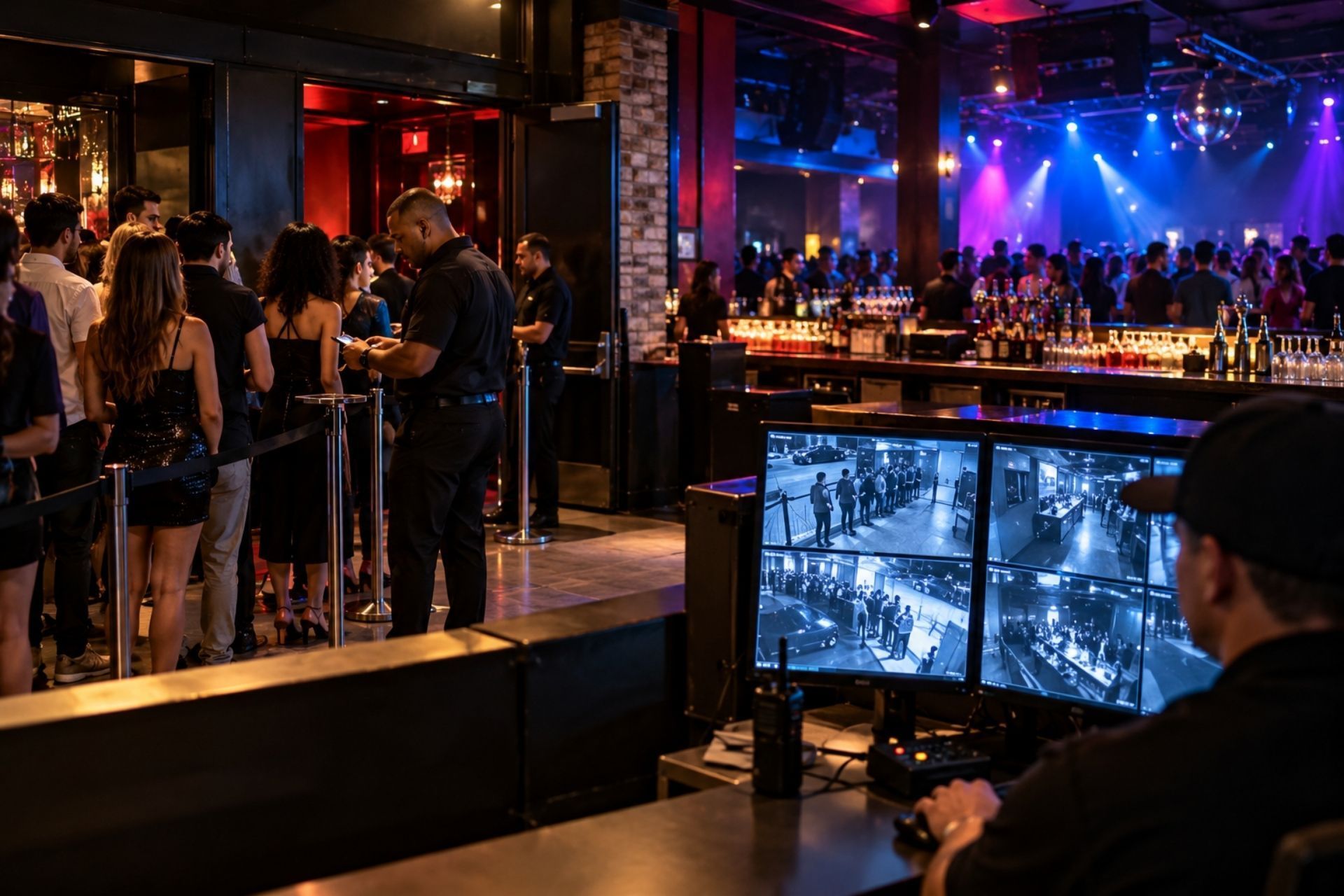
Carriers reward venues that invest in risk mitigation. Documented security protocols, trained and licensed door staff, functioning camera systems, and incident reporting procedures all contribute to lower premiums. Some carriers require a minimum security-to-patron ratio for late-night venues before they'll offer coverage.


Staff training in de-escalation techniques and responsible service practices creates measurable loss reduction. Venues that implement certified training programs and can document completion records often qualify for 5% to 15% premium credits. On the flip side, venues with prior assault claims or liquor violation histories face surcharges or outright declinations from standard carriers - which is exactly where specialty brokers with access to surplus lines markets become essential.

Factors Influencing Insurance Costs for Nightclubs

Almost never. Standard commercial policies contain broad drug-related exclusions. Even if your products are federally legal hemp-derived CBD, a standard insurer may deny a claim if THC is mentioned anywhere in the complaint. You need a policy specifically written for cannabis-adjacent businesses.

FAQ: Does standard business insurance cover THC-related claims?

Requirements vary by license type. CRA-regulated marijuana businesses must carry specific minimum coverage amounts as a condition of licensure. Hemp operators licensed through MDARD don't face the same mandated minimums, but landlords, lenders, and business partners often require proof of adequate coverage before they'll work with you.

FAQ: How much coverage does the state of Michigan require?

Common Questions About SC Contractor Insurance

FAQs for New Operators

Do I need insurance if I'm a sole proprietor with no employees? You're not legally required to carry workers' comp, but most clients and general contractors will require proof of general liability before hiring you. Operating without GL is a significant financial risk.


Can I use my personal auto insurance for work? No. Personal auto policies exclude business use. If you're hauling materials or driving to jobsites in a work vehicle, you need commercial auto coverage.


How quickly can I get a certificate of insurance? Most policies can be bound within 24 to 48 hours, and certificates of insurance are typically issued the same day the policy is active.


What happens if my subcontractor doesn't have insurance? Under SC law, you may be held liable for their injuries and any damage they cause. Always verify subcontractor insurance before they start work.


Does my license group affect my insurance requirements? Yes. Higher license groups (handling larger projects) typically require higher coverage limits and larger surety bonds.


Is builder's risk insurance required in South Carolina? It's not mandated by the state, but most lenders and project owners require it for new construction and major renovations.

Every policy has boundaries. Knowing them up front is how you avoid an uncovered claim. Common exclusions include:

Every policy has boundaries. Knowing them up front is how you avoid an uncovered claim. Common exclusions include:

Every policy has boundaries. Knowing them up front is how you avoid an uncovered claim. Common exclusions include:

General Liability responds to the core exposures most operations in this category face. A typical policy answers third-party claims and the defense costs that come with them, so a single incident doesn't put the business at risk.

Here's the uncomfortable truth: most commercial general liability (CGL) policies contain explicit assault and battery exclusions. Insurers added these exclusions because assault-related claims tend to be expensive and unpredictable. A single incident at a nightclub can generate $200,000 or more in legal defense and settlement costs.


CGL policies are built around the concept of "accidental" or "unintentional" harm. A fistfight is, by definition, intentional. Even if your business didn't cause the fight, the underlying act was deliberate, and that's enough for most standard carriers to deny the claim. This is exactly why a separate assault and battery policy or endorsement exists: to cover the gap your CGL policy was never designed to fill.

Why General Liability Often Excludes These Claims

Carriers reward venues that invest in risk mitigation. Documented security protocols, trained and licensed door staff, functioning camera systems, and incident reporting procedures all contribute to lower premiums. Some carriers require a minimum security-to-patron ratio for late-night venues before they'll offer coverage.


Staff training in de-escalation techniques and responsible service practices creates measurable loss reduction. Venues that implement certified training programs and can document completion records often qualify for 5% to 15% premium credits. On the flip side, venues with prior assault claims or liquor violation histories face surcharges or outright declinations from standard carriers - which is exactly where specialty brokers with access to surplus lines markets become essential.

LSecurity Personnel and Training Protocols

Physical damage is only half the financial hit. If a windstorm forces your restaurant, hotel, or manufacturing facility to close for repairs, lost revenue can exceed the property damage itself. Business interruption coverage replaces lost income during the restoration period, while extra expense coverage pays for temporary relocation costs or expedited repairs.


Not every commercial property policy includes business interruption for wind events automatically. Some policies apply a waiting period (often 72 hours) before business interruption kicks in. Others sublimit wind-related interruption claims. If your business can't afford to close for even a few days, verify these terms explicitly with your broker.

Business Interruption and Extra Expense Coverage

Before You Buy a Policy

Getting contractor insurance right in South Carolina isn't about finding the cheapest policy. It's about matching your coverage to your actual risk exposure, meeting state and contract requirements, and protecting the business you've worked hard to build. The penalties for non-compliance are real, and the financial fallout from an uninsured claim can be devastating.


Start by confirming your LLR licensing requirements and the specific insurance mandates for your trade classification. Get quotes from brokers who understand construction risks rather than generalist agents who treat every business the same. GrayStone Insurance Group specializes in placing coverage for contractors that other agencies struggle to insure, using data-driven risk modeling to find competitive rates even for higher-risk trades.


Review your coverage annually, especially as your revenue grows, you add employees, or you take on larger projects. The policy that worked when you were doing $200,000 in annual revenue won't protect you at $1 million. Treat your insurance program like any other business investment: get it right, keep it current, and it'll be there when you need it most.

ABOUT THE AUTHOR:

CHAD KRAMER

I started GrayStone Insurance Group in 2018 with a simple conviction: the businesses everyone else turns away deserve a broker who won't. What began as a one-person operation has grown into a specialty commercial brokerage with offices across the country — but the mission hasn't changed. We find solutions for high-risk and hard-to-place businesses when other agencies run the other way.


I built this agency on integrity, hard work, and the tenacity to do the hard things well. Through our access to Excess & Surplus and specialty markets, my team and I place coverage standard carriers can't — and I treat every client's business like my own.

If you've been declined, non-renewed, or told your business is too complicated to insure, let's talk.

 Coverages & policies

Plain-language coverage, expertly placed.

We lead with commercial lines and round out personal coverage where you need it. Every policy comes with an explanation — not jargon.

Contractors

Third-party bodily injury & property damage — the foundation for any operation.

Liquor Liability

Critical for bars, restaurants and venues serving alcohol — including A&B.

Commercial Property

Buildings, contents and equipment — including distressed and vacant risk.

Workers' Compensation

Statutory coverage for your crew — including high-mod and high-hazard classes.

Commercial Umbrella

Extra liability limits over your primary policies — essential for high-exposure risk.

Products Liability

Manufacturers, CBD and consumer-product exposure — including imports.

 What clients say

Brokers who actually place it.

 FAQ

Answers for the risks others won't cover

Getting declined, non-renewed, or told your business is "too high-risk" is frustrating — but it doesn't mean you're out of options. Here are answers to the questions we hear most from business owners who need coverage the standard market won't provide.

  • What kind of insurance does GrayStone specialize in?

    We're a specialty commercial brokerage built for high-risk and hard-to-place businesses — the risks standard carriers often turn away. Through our access to Excess & Surplus (E&S) and specialty markets, we place coverage that everyday agencies can't. Hospitality and construction are among our deepest areas of expertise.

  • My business was declined or non-renewed elsewhere. Can you still help?

    That's exactly what we do. A decline, a non-renewal, or a tough claims history doesn't mean you're out of options — it means your risk needs a broker with the right market access. Tell us your situation and we'll get to work finding a fit.

  • What is Excess & Surplus (E&S) insurance?

    E&S is specialty coverage for risks that standard "admitted" carriers won't write — often because a business is higher-risk, unusual, or has a complex history. As an independent broker, we tap into these specialty markets to place coverage where a typical agency hits a dead end.

  • What industries do you work with?

    We cover a wide range of commercial industries — from restaurants, bars, and hospitality to contractors, trucking, manufacturing, cannabis, and more. If your industry is considered high-risk or hard-to-place, there's a good chance we've handled it.


    Explore our industries →

  • Will you work with businesses that have prior claims or losses?

    Yes. Prior claims and losses are part of many of the risks we place every day. Every business is evaluated on its own merits — and a rocky history is often exactly why a specialty broker can help where others won't.

  • Are you an independent broker?

    Yes. We're not tied to a single carrier, so we shop your risk across multiple specialty and E&S markets to find coverage that actually fits — instead of forcing you into a one-size-fits-all policy.

 Insights & resources

Know your risk before you buy.

Switching Agents Mid-Term and the Broker of Record Letter
19 July 2026
Switch insurance agents mid-term with a Broker of Record letter. Learn the BOR process, timelines, benefits, and how to change brokers without losing coverage.
What to Do After a Large Commercial Claim
19 July 2026
Learn what to do after a large commercial insurance claim, from documenting damage and filing claims to maximizing recovery and rebuilding your business.
Umbrella Limits: How Much Excess Liability Is Enough
19 July 2026
Learn how much umbrella insurance you need to protect your assets. Compare coverage limits, costs, and excess liability options for businesses.

Coverage that fits

Let's place the risk others won't.