
General Liability responds to the core exposures most operations in this category face. A typical policy answers third-party claims and the defense costs that come with them, so a single incident doesn't put the business at risk.
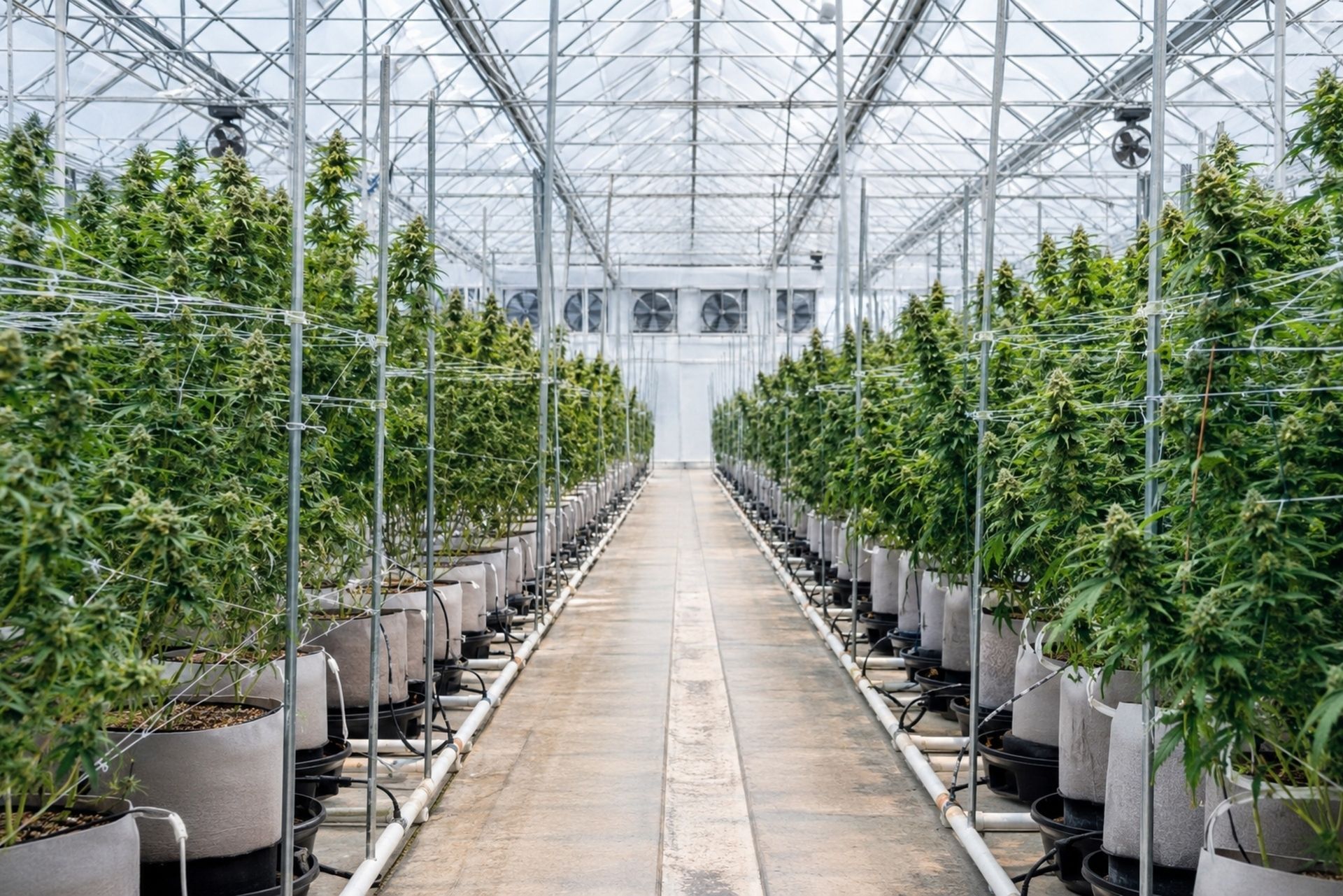
Maryland's CBD and hemp industry has grown rapidly since the state expanded its cannabis reform framework, but one area continues to trip up operators: insurance. Most new hemp business owners assume they can grab a standard commercial policy and call it a day. That assumption has cost some of them tens of thousands of dollars in uncovered claims. Whether you're growing industrial hemp on Maryland's Eastern Shore, processing CBD oil in Baltimore County, or running a retail storefront in Annapolis, the insurance requirements for your operation look nothing like a typical small business. The state has specific mandates, carriers are selective about who they'll cover, and the wrong policy can leave you exposed to product liability lawsuits, crop losses, or regulatory penalties. This guide breaks down what Maryland hemp operators actually need to know about coverage requirements, realistic costs, and staying compliant in 2026.
Navigating the Maryland CBD and Hemp Regulatory Landscape
Maryland sits at an interesting crosspoint for hemp businesses. The state legalized adult-use cannabis in 2023 and has been refining its regulatory framework ever since, which directly affects how hemp and CBD operations are classified and insured. Understanding where your business falls within this framework isn't just a legal exercise: it determines what insurance you need and which carriers will even talk to you.
The distinction between hemp (under 0.3% THC) and cannabis matters enormously for insurance purposes. Hemp businesses operating within federal guidelines under the 2018 Farm Bill have more carrier options than cannabis dispensaries, but Maryland's evolving regulations have blurred some of those lines. A federal court challenge to Maryland's Cannabis Reform Act highlighted ongoing tensions between state and federal hemp classification, making it critical for operators to stay current on how their business type is categorized.
Maryland Department of Agriculture Hemp Regulations
The Maryland Department of Agriculture oversees hemp cultivation licensing, and every grower needs an active license before planting. This includes submitting to pre-harvest THC testing, maintaining detailed lot records, and allowing inspections. What many growers miss is that their MDA license application often requires proof of insurance before approval.
The state has also tightened its registration and criminal history requirements in 2026, adding new layers to the compliance process. If you're applying for or renewing a hemp license, expect the MDA to scrutinize your insurance documentation more closely than in previous years. Crop insurance certificates, general liability declarations, and product liability endorsements may all be requested depending on your operation type.
Mandatory State Insurance Requirements for MD Operators
Maryland law requires hemp and CBD businesses to carry certain minimum coverages. The Maryland Cannabis Commission outlines insurance mandates that apply to licensed operators, including general liability minimums that typically start at $1 million per occurrence. Product liability coverage is effectively mandatory for any business selling ingestible or topical CBD products, even if the statute doesn't always spell it out in those exact terms.
Workers' compensation is required if you have employees: no exceptions. Maryland enforces this strictly, and operating without it can result in fines up to $10,000 per violation. The state's cannabis law framework also references bonding requirements for certain license types, which adds another insurance-adjacent cost to your startup budget.
INDEX
GrayStone Insurance Group is fully licensed and permitted to provide specialty commercial insurance solutions for high-risk and hard-to-place businesses across 17 states.
We proudly serve high-risk and hard-to-place businesses from coast to coast. As an independent specialty brokerage, our team works with leading Excess & Surplus and specialty carriers to make sure restaurants, bars, contractors, trucking companies, manufacturers, and other hard-to-place operations receive coverage that fits their real risks in California, Colorado, Florida, Georgia, Illinois, Iowa, Maryland, Michigan, Missouri, Nevada, New York, North Carolina, South Carolina, Tennessee, Texas, Utah, and Washington.
Every policy has boundaries. Knowing them up front is how you avoid an uncovered claim. Common exclusions include:
Every policy has boundaries. Knowing them up front is how you avoid an uncovered claim. Common exclusions include:
Every policy has boundaries. Knowing them up front is how you avoid an uncovered claim. Common exclusions include:
General Liability responds to the core exposures most operations in this category face. A typical policy answers third-party claims and the defense costs that come with them, so a single incident doesn't put the business at risk.
If your firm provides any design, engineering, or consulting services alongside construction, you need both. A GL policy won't cover a claim alleging your design specifications caused a building envelope failure. That's a professional liability exposure, and it's one of the fastest-growing claim categories in construction.
Essential Insurance Coverages for Hemp Businesses
Not every hemp operation needs the same coverage stack. A farmer growing fiber hemp has different risk exposure than a manufacturer producing CBD tinctures. That said, there's a core set of policies that nearly every Maryland hemp business should carry.
General Liability vs. Product Liability
General liability covers the basics: someone slips on your warehouse floor, your delivery driver backs into a customer's fence, or a visitor gets injured on your farm. It's your first line of defense against third-party bodily injury and property damage claims.
Product liability is a different animal entirely. If a customer has an allergic reaction to your CBD lotion, or a batch of your gummies contains a contaminant, product liability is what stands between you and a six-figure lawsuit. Many general liability policies explicitly exclude product-related claims for ingestible goods, which means you need a separate product liability endorsement or standalone policy. I've seen operators discover this gap only after a claim gets denied: don't be that person.
Crop and Inventory Insurance for MD Growers
Hemp is an agricultural product, and Maryland weather doesn't always cooperate. Late spring frosts, summer drought, and hurricane-season flooding can wipe out a crop. Traditional crop insurance through the USDA's Risk Management Agency now covers hemp, but the program has limitations. Coverage is based on county-level expected yields, and if your farm's production history is short, your indemnity payments may not reflect your actual losses.
Private crop insurance can fill those gaps, covering specific perils like hail, disease, or pest damage that federal programs might not address fully. Inventory insurance is equally important for processors and retailers who keep significant CBD product stock on hand. A warehouse fire or theft event without inventory coverage can shut down an operation permanently.
Property and Equipment Breakdown Protection
Hemp processing requires specialized equipment: extraction machines, drying systems, packaging lines, and climate-controlled storage. A single CO2 extraction unit can cost $100,000 or more to replace. Standard commercial property insurance may cover the building, but equipment breakdown coverage is a separate endorsement that covers mechanical and electrical failure.
This is especially relevant for Maryland operators running extraction labs. If your supercritical CO2 system fails mid-run, you're looking at equipment repair costs, lost product, and business interruption while you wait for parts. Equipment breakdown coverage handles the repair or replacement, and when paired with business interruption insurance, it can also cover lost revenue during downtime. Agencies like GrayStone Insurance Group, which specialize in hard-to-place commercial risks, can often bundle these coverages more efficiently than generalist brokers who aren't familiar with hemp processing operations.
Comparison of Coverage Tiers and Costs
Understanding what you're paying for matters as much as knowing what you need. The average annual cost for a standard hemp insurance package in Maryland
ranges from $1,200 to $2,000, but that baseline number can be misleading. What's included at each tier varies significantly.
Table: Basic vs. Comprehensive Policy Comparison
| Coverage Feature | Basic Tier ($1,200-$1,500/yr) | Comprehensive Tier ($2,000-$4,500/yr) |
|---|---|---|
| General Liability | $1M per occurrence / $2M aggregate | $2M per occurrence / $4M aggregate |
| Product Liability | Often excluded or sublimited | Included with $1M+ limits |
| Property Coverage | Building only, basic perils | Building + equipment + inventory |
| Equipment Breakdown | Not included | Included |
| Business Interruption | Not included | 6-12 months coverage |
| Workers' Comp | Separate policy required | Can be bundled |
| Crop Insurance | Not included | Available as endorsement |
| Cyber Liability | Not included | Optional add-on |
The basic tier works for a small retail CBD shop with no employees and limited inventory. Once you're growing, processing, or manufacturing, you need the comprehensive tier: the gap in coverage is simply too large to risk.
Every policy has boundaries. Knowing them up front is how you avoid an uncovered claim. Common exclusions include:
Every policy has boundaries. Knowing them up front is how you avoid an uncovered claim. Common exclusions include:
Every policy has boundaries. Knowing them up front is how you avoid an uncovered claim. Common exclusions include:
General Liability responds to the core exposures most operations in this category face. A typical policy answers third-party claims and the defense costs that come with them, so a single incident doesn't put the business at risk.
Factors Influencing Insurance Premiums in Maryland
Your premium isn't pulled from thin air. Underwriters evaluate specific risk factors unique to your operation, and understanding these factors gives you some control over what you pay.
Production Volume and Revenue Projections
Carriers price policies partly based on your gross revenue and production volume. A hemp farm generating $500,000 annually will pay more than one bringing in $100,000, because higher revenue generally means more product in the market and greater exposure to claims. Revenue projections matter too: if you're scaling up, your insurer needs to know so your coverage limits keep pace.
One common mistake is underreporting projected revenue to save on premiums. If a claim exceeds your stated revenue basis, the carrier can reduce your payout proportionally. Be honest about your numbers. It protects you when you actually need the policy to perform.
Lab Testing Protocols and Risk Mitigation
Here's where you can actually lower your premiums. Underwriters love seeing documented risk mitigation. If you're using ISO-certified labs for third-party testing, maintaining batch-level traceability, and following Good Manufacturing Practices, you're a lower-risk client. Some carriers offer 10-15% premium discounts for operators with strong quality control documentation.
GrayStone Insurance Group's brokers, who average 20 years of industry experience, often advise clients to invest in quality documentation before shopping for coverage. The upfront cost of better testing protocols typically pays for itself through lower premiums within the first policy year. Data-driven risk modeling, which GrayStone uses in its underwriting process, can identify exactly which mitigation steps will have the biggest impact on your specific premium.
What happens if a show gets canceled last minute?
Standard policies don't cover event cancellation. If a headliner cancels, severe weather shuts you down, or a power outage kills the show, you're absorbing the full financial loss unless you have a dedicated event cancellation policy. These policies typically cover lost ticket revenue, non-refundable deposits, and marketing expenses. For venues that rely on ticket sales as a primary revenue stream, this coverage pays for itself the first time you need it.
Common Questions About Hemp Business Insurance
FAQ: Coverage Limits, Pricing, and Maryland Law
Do I need insurance to get a Maryland hemp license? Yes. The MDA requires proof of insurance as part of the licensing process. At minimum, you'll need general liability coverage, and most applicants also need to show product liability and workers' comp documentation.
Can I use my existing business insurance for a hemp operation? Probably not. Most standard commercial policies contain cannabis or hemp exclusions. You need a policy specifically written for hemp or CBD businesses, or an endorsement that explicitly includes hemp-related activities.
How much does hemp business insurance cost in Maryland? A basic package runs $1,200 to $2,000 annually. Comprehensive coverage for growers or processors can range from $2,000 to $4,500 or more, depending on revenue, product type, and coverage limits.
Does product liability cover CBD edibles and topicals? It can, but only if your policy explicitly includes ingestible and topical products. Many policies exclude these categories or sublimit them heavily. Read your declarations page carefully.
What happens if my hemp tests above 0.3% THC? Your crop may need to be destroyed, and standard crop insurance may not cover that loss. Some specialty policies include "hot crop" coverage for this exact scenario: ask your broker about it specifically.
Is workers' comp required for seasonal farm workers? Yes. Maryland requires workers' compensation for all employees, including seasonal and part-time agricultural workers. There are very limited exemptions, and most hemp operations don't qualify for them.
Every policy has boundaries. Knowing them up front is how you avoid an uncovered claim. Common exclusions include:
Every policy has boundaries. Knowing them up front is how you avoid an uncovered claim. Common exclusions include:
Every policy has boundaries. Knowing them up front is how you avoid an uncovered claim. Common exclusions include:
General Liability responds to the core exposures most operations in this category face. A typical policy answers third-party claims and the defense costs that come with them, so a single incident doesn't put the business at risk.
Making the Right Choice for Your MD Operation
Getting insurance right for a Maryland hemp business isn't about finding the cheapest policy: it's about matching your specific risk profile to the right coverage structure. A retail CBD shop, a 50-acre hemp farm, and a processing lab all face fundamentally different exposures, and a one-size-fits-all policy will leave gaps somewhere.
Start by mapping your actual risks. What's your most expensive piece of equipment? What's the value of your current inventory? How many employees do you have? What products are you selling, and who's your customer base? These answers drive your coverage decisions more than any generic checklist.
If you're struggling to find a carrier willing to write your policy, that's normal in this industry. Hemp and CBD businesses are still considered high-risk by many insurers, which is exactly why working with a specialized agency matters. GrayStone Insurance Group maintains a 94% client retention rate specifically because they focus on hard-to-place risks that other agencies won't touch.
Get your coverage in place before your license renewal, not after. Review your policy annually as your operation grows. And keep every piece of compliance documentation organized: your future self will thank you when a claim or audit comes knocking.
ABOUT THE AUTHOR:
CHAD KRAMER
I started GrayStone Insurance Group in 2018 with a simple conviction: the businesses everyone else turns away deserve a broker who won't. What began as a one-person operation has grown into a specialty commercial brokerage with offices across the country — but the mission hasn't changed. We find solutions for high-risk and hard-to-place businesses when other agencies run the other way.
I built this agency on integrity, hard work, and the tenacity to do the hard things well. Through our access to Excess & Surplus and specialty markets, my team and I place coverage standard carriers can't — and I treat every client's business like my own.
If you've been declined, non-renewed, or told your business is too complicated to insure, let's talk.
Coverages & policies
Plain-language coverage, expertly placed.
We lead with commercial lines and round out personal coverage where you need it. Every policy comes with an explanation — not jargon.

Contractors
Third-party bodily injury & property damage — the foundation for any operation.

Liquor Liability
Critical for bars, restaurants and venues serving alcohol — including A&B.

Commercial Property
Buildings, contents and equipment — including distressed and vacant risk.

Workers' Compensation
Statutory coverage for your crew — including high-mod and high-hazard classes.

Commercial Umbrella
Extra liability limits over your primary policies — essential for high-exposure risk.
Products Liability
Manufacturers, CBD and consumer-product exposure — including imports.
What clients say
Brokers who actually place it.
FAQ
Answers for the risks others won't cover
Getting declined, non-renewed, or told your business is "too high-risk" is frustrating — but it doesn't mean you're out of options. Here are answers to the questions we hear most from business owners who need coverage the standard market won't provide.
What kind of insurance does GrayStone specialize in?
We're a specialty commercial brokerage built for high-risk and hard-to-place businesses — the risks standard carriers often turn away. Through our access to Excess & Surplus (E&S) and specialty markets, we place coverage that everyday agencies can't. Hospitality and construction are among our deepest areas of expertise.
My business was declined or non-renewed elsewhere. Can you still help?
That's exactly what we do. A decline, a non-renewal, or a tough claims history doesn't mean you're out of options — it means your risk needs a broker with the right market access. Tell us your situation and we'll get to work finding a fit.
What is Excess & Surplus (E&S) insurance?
E&S is specialty coverage for risks that standard "admitted" carriers won't write — often because a business is higher-risk, unusual, or has a complex history. As an independent broker, we tap into these specialty markets to place coverage where a typical agency hits a dead end.
What industries do you work with?
We cover a wide range of commercial industries — from restaurants, bars, and hospitality to contractors, trucking, manufacturing, cannabis, and more. If your industry is considered high-risk or hard-to-place, there's a good chance we've handled it.
Will you work with businesses that have prior claims or losses?
Yes. Prior claims and losses are part of many of the risks we place every day. Every business is evaluated on its own merits — and a rocky history is often exactly why a specialty broker can help where others won't.
Are you an independent broker?
Yes. We're not tied to a single carrier, so we shop your risk across multiple specialty and E&S markets to find coverage that actually fits — instead of forcing you into a one-size-fits-all policy.
Insights & resources
Know your risk before you buy.