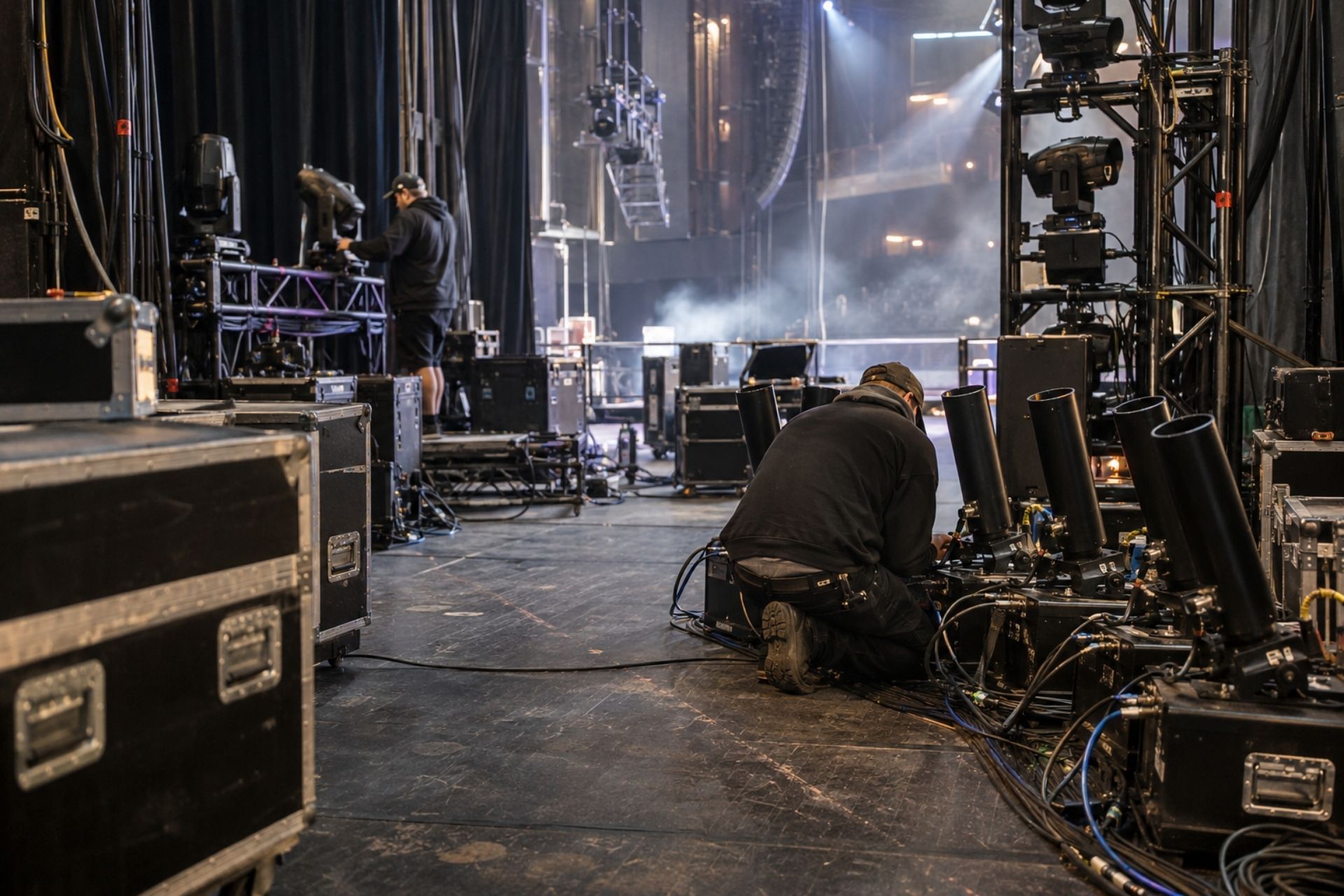

Most contractors don't realize their general liability policy excludes coverage for their own tools, equipment, and materials in transit or stored at job sites. That's where inland marine insurance fills the gap. It covers items like generators, scaffolding, laser levels, and specialty tools whether they're on a truck, at a staging area, or locked in a job-site trailer.
Theft from construction sites remains a persistent problem. A single theft event involving a skid steer or a set of commercial-grade power tools can easily exceed $50,000. Inland marine policies are relatively affordable compared to the replacement cost of losing uninsured equipment mid-project. If you're hauling anything of value between locations, this coverage is non-negotiable.
General Liability responds to the core exposures most operations in this category face. A typical policy answers third-party claims and the defense costs that come with them, so a single incident doesn't put the business at risk.
A single wrongful termination lawsuit can cost a business $200,000 or more before it even reaches a courtroom. And that's just one claim type. Discrimination allegations, harassment complaints, retaliation accusations: these are the kinds of employment-related disputes that can financially cripple a company, especially one operating in a high-risk industry where employee turnover runs high and workplace conditions are physically demanding.
The EEOC secured a record $660 million for victims of discrimination in FY 2025, with $528 million of that coming through litigation alone. That number should give every business owner pause, whether you employ five people or five hundred. The enforcement environment is only getting more aggressive, and the financial exposure for employers without proper coverage is staggering.
If you've been told your general liability policy covers employee lawsuits, you've been told wrong. Employment practices liability insurance fills a specific, critical gap that most standard business policies ignore entirely. Understanding what EPLI covers, where its exclusions lie, and whether your business genuinely needs it isn't just a good idea: it's a financial survival question. Here's what you actually need to know.
What is Employment Practices Liability Insurance (EPLI)?
EPLI is a specialized insurance product designed to protect businesses against claims made by employees, former employees, and even job applicants alleging wrongful employment practices. Think of it as the policy that responds when someone says you fired them unfairly, passed them over for a promotion based on their age, or created a hostile work environment.
The policy typically covers defense costs, settlements, and judgments. Even frivolous claims require legal defense, and attorneys specializing in employment law charge $300 to $500 per hour. A single claim can easily generate $75,000 to $150,000 in legal fees before any settlement discussion begins. EPLI exists specifically to absorb those costs so they don't come directly out of your operating budget
Common Claims Covered by EPLI
The range of claims EPLI addresses is broader than most business owners realize:
- Wrongful termination: The most common claim type, where a former employee alleges they were fired for illegal reasons
- Discrimination: Claims based on race, gender, age, religion, disability, sexual orientation, or national origin
- Sexual harassment: Both quid pro quo and hostile work environment allegations
- Retaliation: Claims that an employee was punished for filing a complaint, whistleblowing, or exercising legal rights
- Wage and hour disputes: Some policies now include coverage for wage-related claims, though this varies significantly
- Failure to promote: Allegations that advancement decisions were based on protected characteristics rather than merit
One emerging area involves AI-driven hiring tools and algorithmic decision-making, which have triggered a new wave of discrimination claims. If your business uses automated screening software, this is a risk worth discussing with your broker.
The Difference Between EPLI and Workers' Comp
This confusion comes up constantly. Workers' compensation covers physical injuries and occupational illnesses that happen on the job. EPLI covers allegations about how you treated someone in the employment relationship. A construction worker who breaks an arm on a jobsite files a workers' comp claim. That same worker alleging they were fired because of their ethnicity files an EPLI claim.
The two policies occupy completely different lanes. One deals with bodies, the other with behavior. You need both, and neither substitutes for the other.
INDEX
What is Employment Practices Liability Insurance (EPLI)?
Understanding Your Coverage: What's Included and What's Not
Comparing EPLI with Other Business Insurance
Which Businesses Are Most at Risk?
Common Questions About EPLI Coverage
Key Trends Shaping EPLI in 2026
Steps to Reduce Your EPLI Risk
GrayStone Insurance Group is fully licensed and permitted to provide specialty commercial insurance solutions for high-risk and hard-to-place businesses across 17 states.
We proudly serve high-risk and hard-to-place businesses from coast to coast. As an independent specialty brokerage, our team works with leading Excess & Surplus and specialty carriers to make sure restaurants, bars, contractors, trucking companies, manufacturers, and other hard-to-place operations receive coverage that fits their real risks in California, Colorado, Florida, Georgia, Illinois, Iowa, Maryland, Michigan, Missouri, Nevada, New York, North Carolina, South Carolina, Tennessee, Texas, Utah, and Washington.
Every policy has boundaries. Knowing them up front is how you avoid an uncovered claim. Common exclusions include:
Every policy has boundaries. Knowing them up front is how you avoid an uncovered claim. Common exclusions include:
Every policy has boundaries. Knowing them up front is how you avoid an uncovered claim. Common exclusions include:
General Liability responds to the core exposures most operations in this category face. A typical policy answers third-party claims and the defense costs that come with them, so a single incident doesn't put the business at risk.
Here's the uncomfortable truth: most commercial general liability (CGL) policies contain explicit assault and battery exclusions. Insurers added these exclusions because assault-related claims tend to be expensive and unpredictable. A single incident at a nightclub can generate $200,000 or more in legal defense and settlement costs.
CGL policies are built around the concept of "accidental" or "unintentional" harm. A fistfight is, by definition, intentional. Even if your business didn't cause the fight, the underlying act was deliberate, and that's enough for most standard carriers to deny the claim. This is exactly why a separate assault and battery policy or endorsement exists: to cover the gap your CGL policy was never designed to fill.
Why General Liability Often Excludes These Claims
Understanding Your Coverage: What's Included and What's Not
Getting an EPLI policy is step one. Understanding what it actually does for you is where the real value lies.
Standard Policy Inclusions
Most EPLI policies cover legal defense costs from the moment a claim is made, regardless of whether the claim has merit. They also cover settlements and judgments up to your policy limits. Many policies extend coverage to claims made by third parties: customers or vendors alleging harassment by your employees, for example.
Coverage typically applies to all employees, including part-time and seasonal workers. Directors and officers are usually included as well. Some policies offer pre-claim assistance, providing access to employment law hotlines or HR consultation services that can help you avoid claims before they materialize.
Common Exclusions and Policy Gaps
No EPLI policy covers everything. Criminal acts, fraud, and intentional violations of law are universally excluded. If you knowingly violated wage laws or deliberately discriminated, no insurance is going to bail you out.
Pay transparency and pay equity litigation has surged in 2026, and not all policies have caught up. Some older policy forms don't address pay equity claims at all. ERISA violations, WARN Act claims, and OSHA penalties are also commonly excluded. The gap between what employers assume is covered and what the policy actually says is where financial disasters happen.
Duty to Defend vs. Right to Defend
This distinction matters more than most policyholders realize. A "duty to defend" policy means the insurer is obligated to provide and pay for your legal defense. A "right to defend" policy means the insurer can choose to defend you but isn't required to: they might instead reimburse you for defense costs after the fact.
Duty to defend policies are generally better for the policyholder. They remove uncertainty about whether your insurer will actually show up when you need them. Always check which structure your policy uses before you sign.

Comparing EPLI with Other Business Insurance
| Feature | General Liability | EPLI | D&O Insurance |
|---|---|---|---|
| Employee lawsuits | Not covered | Covered | Partial overlap |
| Discrimination claims | Not covered | Covered | Sometimes covered |
| Bodily injury (third party) | Covered | Not covered | Not covered |
| Defense costs | For covered claims | For employment claims | For management claims |
| Typical annual premium | $500-$3,000 | $800-$5,000+ | $1,000-$10,000+ |
| Who's protected | The business | Business and employees | Directors and officers |
The key takeaway from this comparison is that these policies don't overlap much. General liability won't touch an employment claim, and EPLI won't help if a customer slips on your floor. Businesses operating in high-risk sectors often need all three.
Every policy has boundaries. Knowing them up front is how you avoid an uncovered claim. Common exclusions include:
Every policy has boundaries. Knowing them up front is how you avoid an uncovered claim. Common exclusions include:
Every policy has boundaries. Knowing them up front is how you avoid an uncovered claim. Common exclusions include:
General Liability responds to the core exposures most operations in this category face. A typical policy answers third-party claims and the defense costs that come with them, so a single incident doesn't put the business at risk.
How Much Does EPLI Cost?
EPLI premiums typically range from $800 to over $5,000 annually for small to mid-sized businesses. The actual cost depends on your number of employees, industry, claims history, and the HR practices you have in place. A restaurant with 50 employees and high turnover will pay more than a consulting firm with 10 long-tenured staff.
Deductibles usually range from $2,500 to $25,000. Higher deductibles lower your premium but increase your out-of-pocket exposure on each claim. For businesses in hospitality, nightlife, or construction: industries where employee disputes are more frequent: GrayStone Insurance Group's brokers often help clients find the right balance between premium cost and deductible structure, using risk modeling to identify where the sweet spot actually is.
Can I add this to my existing policy as a rider?
Often, yes. Many carriers offer assault and battery as an endorsement to an existing general liability policy. This is usually cheaper than buying a standalone policy. That said, standalone policies sometimes offer higher limits and broader coverage terms. GrayStone's brokers can help determine which structure makes more sense based on your specific risk profile and claims history.
Which Businesses Are Most at Risk?
Any business with employees has exposure. But some face significantly higher risk than others.
Why Small Businesses Need Protection
Small businesses account for a disproportionate share of EPLI claims, partly because they're less likely to have formal HR departments, documented policies, or consistent termination procedures. A manager at a 15-person company who fires someone without documentation creates immediate legal exposure.
The irony is that small businesses are also the least likely to carry EPLI coverage. Many assume their size protects them or that employees won't bother suing a small operation. That assumption is expensive. The EEOC's enforcement activity shows no preference for targeting only large employers: small businesses face the same legal standards as Fortune 500 companies.
Industry-Specific Risk Factors
Certain industries carry elevated EPLI risk profiles:
- Hospitality and nightlife: High turnover, tipped employees, late-night environments, and young workforces create frequent friction points
- Construction and trucking: Physical work environments, safety-related terminations, and immigration-related discrimination claims
- Cannabis and CBD: Rapidly evolving employment regulations, unclear federal/state legal boundaries, and workforce management challenges unique to emerging industries
- Healthcare and manufacturing: Shift work disputes, overtime violations, and accommodation requests under the ADA
If your business falls into any of these categories, EPLI isn't optional: it's essential infrastructure.
Every policy has boundaries. Knowing them up front is how you avoid an uncovered claim. Common exclusions include:
Every policy has boundaries. Knowing them up front is how you avoid an uncovered claim. Common exclusions include:
Every policy has boundaries. Knowing them up front is how you avoid an uncovered claim. Common exclusions include:
General Liability responds to the core exposures most operations in this category face. A typical policy answers third-party claims and the defense costs that come with them, so a single incident doesn't put the business at risk.
Security companies face a unique double exposure. Their employees are the ones most likely to be involved in physical confrontations, and they're often the ones accused of using excessive force. A security firm without assault and battery coverage is essentially operating without a net.
Contract security providers should pay close attention to policy language around "use of force" definitions. Some policies limit coverage to "reasonable force," which creates room for the insurer to deny claims if a court later determines the force used was excessive. Look for policies that cover the defense costs regardless of the outcome.
Security Firms and Bouncer Services
Behavioral health centers, psychiatric facilities, group homes, and emergency rooms all deal with patients or clients who may become physically aggressive. Staff injuries and patient-on-patient incidents are common in these settings.
The challenge here is that many healthcare liability policies treat assault-related injuries differently than standard patient care claims. A dedicated assault and battery endorsement fills this gap and protects the facility against lawsuits from both staff and patients. Social service agencies working with at-risk populations face similar exposure.
Healthcare Facilities and Social Services
Common Questions About EPLI Coverage
Does EPLI cover claims from former employees? Yes. Most claims are actually filed after someone leaves the company. Wrongful termination claims, by definition, come from former employees. Coverage extends to these situations.
Can I add EPLI to my existing business owner's policy? Sometimes. Some carriers offer EPLI as an endorsement to a BOP, though standalone policies typically provide broader coverage and higher limits.
Does EPLI cover wage and hour claims? It depends on the policy. Some include wage and hour coverage as an add-on, but many exclude it entirely. This is one of the most important questions to ask your broker.
What triggers EPLI coverage: a lawsuit or just a complaint? Most EPLI policies are "claims-made" policies, meaning coverage is triggered when a claim is reported to the insurer during the policy period. An internal complaint that escalates to a formal charge would typically qualify.
Are independent contractors covered? Generally no, unless they're later reclassified as employees. Misclassification itself can generate claims, though, so this is a gray area worth discussing with your insurer.
Why Small Businesses Need Protection
Small businesses account for a disproportionate share of EPLI claims, partly because they're less likely to have formal HR departments, documented policies, or consistent termination procedures. A manager at a 15-person company who fires someone without documentation creates immediate legal exposure.
The irony is that small businesses are also the least likely to carry EPLI coverage. Many assume their size protects them or that employees won't bother suing a small operation. That assumption is expensive. The EEOC's enforcement activity shows no preference for targeting only large employers: small businesses face the same legal standards as Fortune 500 companies.
Can I add this to my existing policy as a rider?
Often, yes. Many carriers offer assault and battery as an endorsement to an existing general liability policy. This is usually cheaper than buying a standalone policy. That said, standalone policies sometimes offer higher limits and broader coverage terms. GrayStone's brokers can help determine which structure makes more sense based on your specific risk profile and claims history.
Key Trends Shaping EPLI in 2026
The EPLI market is shifting in several important directions. Pay transparency laws now active in over a dozen states are generating a new category of claims as employees discover pay disparities. AI-related employment claims are growing as more companies adopt algorithmic tools for hiring, scheduling, and performance evaluation.
The overall EPL market has seen increased claim severity alongside rising nuclear verdicts in employment cases. Juries are awarding larger amounts, and plaintiffs' attorneys are becoming more sophisticated in how they build cases. For employers, this means both premiums and the stakes of going uninsured are climbing.
Every policy has boundaries. Knowing them up front is how you avoid an uncovered claim. Common exclusions include:
Every policy has boundaries. Knowing them up front is how you avoid an uncovered claim. Common exclusions include:
Every policy has boundaries. Knowing them up front is how you avoid an uncovered claim. Common exclusions include:
General Liability responds to the core exposures most operations in this category face. A typical policy answers third-party claims and the defense costs that come with them, so a single incident doesn't put the business at risk.
Security companies face a unique double exposure. Their employees are the ones most likely to be involved in physical confrontations, and they're often the ones accused of using excessive force. A security firm without assault and battery coverage is essentially operating without a net.
Contract security providers should pay close attention to policy language around "use of force" definitions. Some policies limit coverage to "reasonable force," which creates room for the insurer to deny claims if a court later determines the force used was excessive. Look for policies that cover the defense costs regardless of the outcome.
Security Firms and Bouncer Services
Behavioral health centers, psychiatric facilities, group homes, and emergency rooms all deal with patients or clients who may become physically aggressive. Staff injuries and patient-on-patient incidents are common in these settings.
The challenge here is that many healthcare liability policies treat assault-related injuries differently than standard patient care claims. A dedicated assault and battery endorsement fills this gap and protects the facility against lawsuits from both staff and patients. Social service agencies working with at-risk populations face similar exposure.
Healthcare Facilities and Social Services
Steps to Reduce Your EPLI Risk
Strong HR practices won't eliminate claims, but they dramatically reduce both frequency and severity:
- Document everything: performance reviews, disciplinary actions, termination reasons
- Maintain an updated employee handbook reviewed by employment counsel
- Train managers on anti-discrimination and anti-harassment policies annually
- Establish a clear, accessible complaint procedure that employees actually trust
- Conduct consistent, documented hiring and promotion processes
These steps also tend to lower your EPLI premiums. Insurers reward businesses that demonstrate proactive risk management.
Why Small Businesses Need Protection
Small businesses account for a disproportionate share of EPLI claims, partly because they're less likely to have formal HR departments, documented policies, or consistent termination procedures. A manager at a 15-person company who fires someone without documentation creates immediate legal exposure.
The irony is that small businesses are also the least likely to carry EPLI coverage. Many assume their size protects them or that employees won't bother suing a small operation. That assumption is expensive. The EEOC's enforcement activity shows no preference for targeting only large employers: small businesses face the same legal standards as Fortune 500 companies.
Can I add this to my existing policy as a rider?
Often, yes. Many carriers offer assault and battery as an endorsement to an existing general liability policy. This is usually cheaper than buying a standalone policy. That said, standalone policies sometimes offer higher limits and broader coverage terms. GrayStone's brokers can help determine which structure makes more sense based on your specific risk profile and claims history.
How to Choose the Right EPLI Policy
Not all EPLI policies are created equal. Look for a policy that includes third-party coverage, prior acts coverage, and a duty to defend provision. Pay close attention to the retroactive date: this determines how far back the policy will cover claims for events that occurred before the policy's inception.
Working with a broker who specializes in hard-to-place risks makes a real difference here. GrayStone Insurance Group's team, with brokers averaging 20 years of market experience, regularly places EPLI coverage for businesses that other agencies struggle to insure: nightclubs, cannabis operations, construction firms with complex workforce structures. The right broker doesn't just find you a policy; they find the right policy.
Every policy has boundaries. Knowing them up front is how you avoid an uncovered claim. Common exclusions include:
Every policy has boundaries. Knowing them up front is how you avoid an uncovered claim. Common exclusions include:
Every policy has boundaries. Knowing them up front is how you avoid an uncovered claim. Common exclusions include:
General Liability responds to the core exposures most operations in this category face. A typical policy answers third-party claims and the defense costs that come with them, so a single incident doesn't put the business at risk.
Security companies face a unique double exposure. Their employees are the ones most likely to be involved in physical confrontations, and they're often the ones accused of using excessive force. A security firm without assault and battery coverage is essentially operating without a net.
Contract security providers should pay close attention to policy language around "use of force" definitions. Some policies limit coverage to "reasonable force," which creates room for the insurer to deny claims if a court later determines the force used was excessive. Look for policies that cover the defense costs regardless of the outcome.
Security Firms and Bouncer Services
Behavioral health centers, psychiatric facilities, group homes, and emergency rooms all deal with patients or clients who may become physically aggressive. Staff injuries and patient-on-patient incidents are common in these settings.
The challenge here is that many healthcare liability policies treat assault-related injuries differently than standard patient care claims. A dedicated assault and battery endorsement fills this gap and protects the facility against lawsuits from both staff and patients. Social service agencies working with at-risk populations face similar exposure.
Healthcare Facilities and Social Services
Making the Right Choice for Your Team
Employment practices liability insurance isn't a luxury or a "nice to have." For any business with employees, it's a financial backstop against one of the most common and expensive categories of business litigation. The enforcement environment in 2026 is more aggressive than ever, claim severity is rising, and new risk categories around AI and pay equity are expanding the threat surface.
The smartest move is to get coverage before you need it, not after a process server shows up at your door. Review your current policies, identify gaps, and talk to a broker who understands your specific industry's risk profile. Your employees are your greatest asset, but the employment relationship also represents your greatest legal exposure. Protect both sides of that equation.
ABOUT THE AUTHOR:
CHAD KRAMER
I started GrayStone Insurance Group in 2018 with a simple conviction: the businesses everyone else turns away deserve a broker who won't. What began as a one-person operation has grown into a specialty commercial brokerage with offices across the country — but the mission hasn't changed. We find solutions for high-risk and hard-to-place businesses when other agencies run the other way.
I built this agency on integrity, hard work, and the tenacity to do the hard things well. Through our access to Excess & Surplus and specialty markets, my team and I place coverage standard carriers can't — and I treat every client's business like my own.
If you've been declined, non-renewed, or told your business is too complicated to insure, let's talk.
Coverages & policies
Plain-language coverage, expertly placed.
We lead with commercial lines and round out personal coverage where you need it. Every policy comes with an explanation — not jargon.

Contractors
Third-party bodily injury & property damage — the foundation for any operation.

Liquor Liability
Critical for bars, restaurants and venues serving alcohol — including A&B.

Commercial Property
Buildings, contents and equipment — including distressed and vacant risk.

Workers' Compensation
Statutory coverage for your crew — including high-mod and high-hazard classes.

Commercial Umbrella
Extra liability limits over your primary policies — essential for high-exposure risk.
Products Liability
Manufacturers, CBD and consumer-product exposure — including imports.
What clients say
Brokers who actually place it.
FAQ
Answers for the risks others won't cover
Getting declined, non-renewed, or told your business is "too high-risk" is frustrating — but it doesn't mean you're out of options. Here are answers to the questions we hear most from business owners who need coverage the standard market won't provide.
What kind of insurance does GrayStone specialize in?
We're a specialty commercial brokerage built for high-risk and hard-to-place businesses — the risks standard carriers often turn away. Through our access to Excess & Surplus (E&S) and specialty markets, we place coverage that everyday agencies can't. Hospitality and construction are among our deepest areas of expertise.
My business was declined or non-renewed elsewhere. Can you still help?
That's exactly what we do. A decline, a non-renewal, or a tough claims history doesn't mean you're out of options — it means your risk needs a broker with the right market access. Tell us your situation and we'll get to work finding a fit.
What is Excess & Surplus (E&S) insurance?
E&S is specialty coverage for risks that standard "admitted" carriers won't write — often because a business is higher-risk, unusual, or has a complex history. As an independent broker, we tap into these specialty markets to place coverage where a typical agency hits a dead end.
What industries do you work with?
We cover a wide range of commercial industries — from restaurants, bars, and hospitality to contractors, trucking, manufacturing, cannabis, and more. If your industry is considered high-risk or hard-to-place, there's a good chance we've handled it.
Will you work with businesses that have prior claims or losses?
Yes. Prior claims and losses are part of many of the risks we place every day. Every business is evaluated on its own merits — and a rocky history is often exactly why a specialty broker can help where others won't.
Are you an independent broker?
Yes. We're not tied to a single carrier, so we shop your risk across multiple specialty and E&S markets to find coverage that actually fits — instead of forcing you into a one-size-fits-all policy.
Insights & resources
Know your risk before you buy.