
PA single uninsured assault claim can easily reach $250,000 to $500,000 when you factor in medical expenses, legal defense, lost wages, and pain-and-suffering damages. Jury awards in nightclub assault cases have exceeded seven figures with increasing frequency. Without A&B coverage, those costs come directly out of your business assets, and for most bar owners, that means closing the doors permanently.
The Role of the Customer's Personal Auto Policy
Picture a landlord in Detroit who leased a 12,000-square-foot warehouse to a licensed grower in 2024. The tenant poured money into HVAC, three-phase power, and grow rooms, then stopped paying rent. When the landlord's attorney prepared to file in federal court, the answer came back fast: that door may now be closed. Cannabis real estate pays well, but it carries risks that a standard commercial lease never anticipated.
Most property owners walk into these deals thinking about rent premiums and long terms. They rarely think about who owns a $400,000 lighting array when the tenant walks away, or whether their building insurance quietly excludes losses tied to a federally illegal business. Those gaps don't show up until something goes wrong: a fire in a flower room, a lender calling a loan, a tenant abandoning the space mid-lease.
This guide covers cannabis landlord requirements from the ground up, with a focus on two issues that cause the most expensive surprises: tenant improvements and federal exclusions. You'll find a coverage comparison, the lease clauses worth fighting for, and answers to the questions owners ask us most. If you own property leased to a dispensary, cultivator, or processor, or you're considering it, read this before you sign anything.
Navigating the Complexities of Cannabis Real Estate
Cannabis sits in a strange legal position. Most states allow medical or adult-use sales in some form, yet marijuana remains federally illegal under the Controlled Substances Act. Every risk a cannabis landlord faces flows from that contradiction.
The courts are now making that tension concrete. On September 10, 2026, the Sixth Circuit ruled in Hello Farms Licensing MI, LLC v. GR Vending MI, LLC that federal courts cannot enforce contracts for federally illegal activities. That decision could stop landlords in Michigan, Ohio, Kentucky, and Tennessee from suing for lease damages in federal court. State court may still be available, but your leverage in a dispute just shrank.
Residential owners face their own version of this. Under the Quality Housing and Work Responsibility Act of 1998, public housing agencies must deny admission to medical marijuana users, and HUD has no discretion to treat it as a reasonable accommodation. HUD has also issued guidance on marijuana in multifamily assisted properties that owners of subsidized buildings should read closely.
The takeaway: state licensing doesn't make a tenant federally safe, and your contracts, financing, and insurance all need to account for that.
Understanding Tenant Improvements in Cannabis Leases
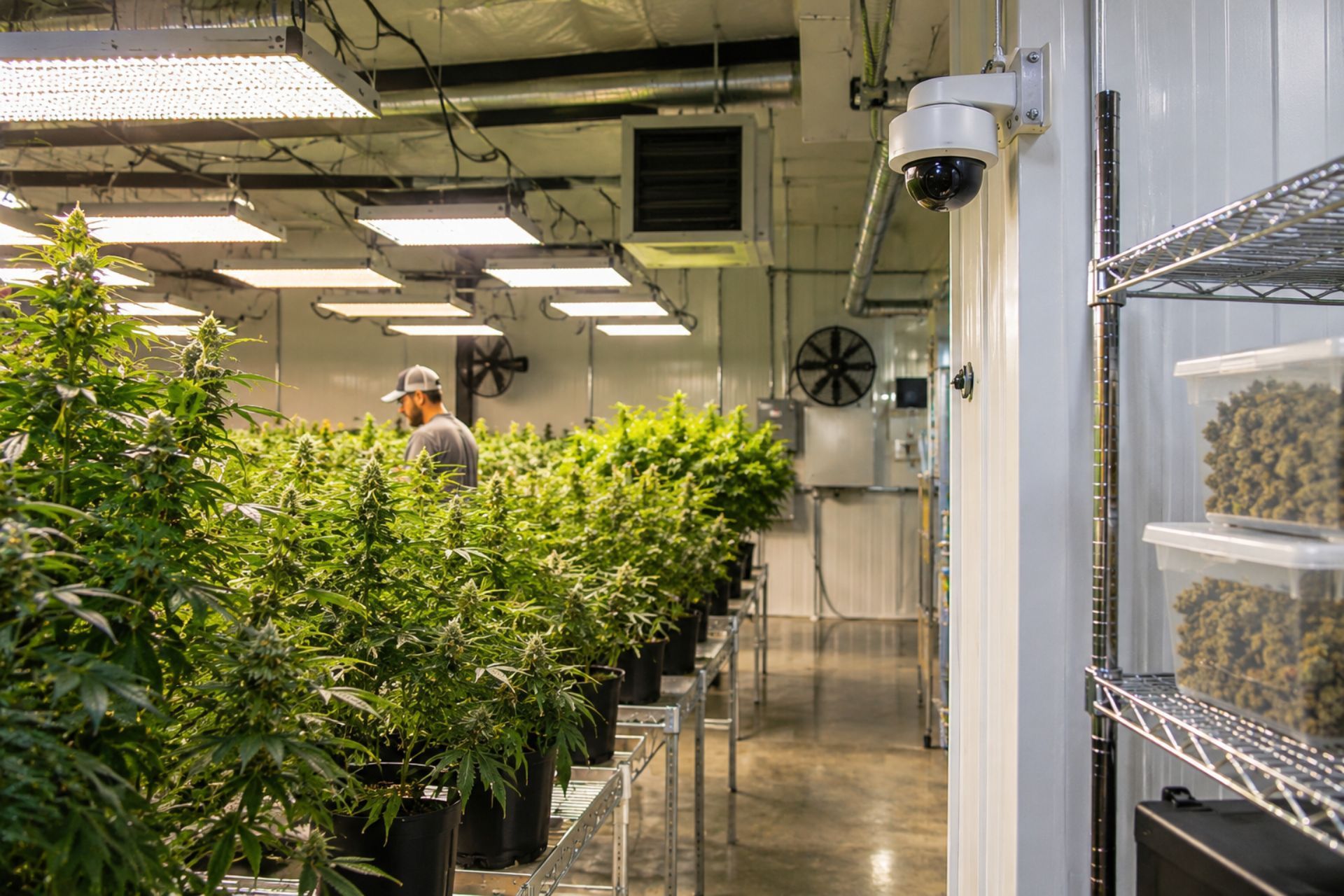
Tenant improvements (TIs) in cannabis are a different animal. A typical office build-out involves drywall, carpet, and lighting. A cultivation build-out involves industrial dehumidification, reinforced floors, upgraded electrical service, and security systems that satisfy state regulators.
The numbers reflect that. Specialized cannabis build-outs for retail dispensaries average between $150 and $300 per square foot, while cultivation facilities run $300 to $500 or more per square foot because of heavy HVAC and electrical demands. On a 10,000-square-foot grow, that can mean $3 million to $5 million in improvements sitting inside your building.
Standard vs. Specialized Build-Outs
Some improvements add value for any future tenant. Others become liabilities the day your cannabis tenant leaves.
- Generally reusable: upgraded electrical service, roof reinforcement, loading docks, fire suppression
- Partially reusable: commercial HVAC (often oversized for normal use), security cameras and access control
- Cannabis-specific: grow lighting, irrigation and fertigation lines, extraction booths, vault rooms
Extraction rooms deserve special attention. Volatile solvent extraction using butane or propane raises your fire exposure significantly, and many property carriers will ask detailed questions about C1D1 room certification before quoting.
Who Owns the Equipment After the Lease?
This is where disputes start. Under general property law, fixtures attached to the building often become the landlord's property, while trade fixtures remain the tenant's. A grow light hanging from a chain is arguably a trade fixture. A rooftop HVAC unit bolted to a curb is arguably a fixture.
Don't leave it to "arguably." Your lease should include an exhibit listing each major improvement and stating who owns it at lease end, who must remove it, and who pays to restore the space. This also matters for insurance: if you own the improvements, your property policy needs to cover them at replacement cost, not depreciated value.
The Impact of Federal Exclusions on Property Coverage
Here's the coverage gap that catches landlords most often. Many standard commercial property and general liability forms contain language excluding losses connected to illegal activity, controlled substances, or violations of law. Some carriers interpret that to include federally illegal cannabis operations, even when the tenant holds a valid state license.
The result can be ugly. A tenant's grow room catches fire, the blaze spreads through the roof, and your carrier denies the claim citing a controlled substance exclusion. You're left paying for the structural repair yourself, plus lost rent while the building sits empty.
A few things to check on your current policy right now:
- Any exclusion referencing "illegal," "unlawful," or "controlled substance" activity
- Whether your application disclosed the cannabis tenant (nondisclosure can void coverage outright)
- Whether loss of rents coverage applies when the tenant's operations caused the loss
- Whether tenant improvements you own are scheduled and valued correctly
Civil Asset Forfeiture and Mortgage Risks
Federal forfeiture law allows the government to seize property used to facilitate drug crimes. Active enforcement against state-compliant landlords has been rare, but the legal authority still exists, and no standard insurance policy covers government seizure.
The more immediate threat usually comes from your lender. Most commercial mortgages include covenants requiring compliance with all laws, federal included. Leasing to a cannabis operator without lender consent can trigger a technical default. Before signing a cannabis lease, review your loan documents or talk with your lender directly.
Comparing Insurance Needs for Cannabis Landlords
A landlord renting to a coffee shop and a landlord renting to a cultivator need very different protection. This table shows where the gaps typically appear.
| Coverage Area | Standard Commercial Landlord | Cannabis Landlord |
|---|---|---|
| Property | Standard form often fine | Needs carrier that explicitly accepts cannabis occupancy |
| Tenant improvements | Usually minor | Must be scheduled at replacement cost |
| General liability | Standard limits | Higher limits; check for controlled substance exclusions |
| Loss of rents | Commonly included | Confirm it applies to tenant-caused losses |
| Umbrella | Optional | Strongly recommended |
| Equipment breakdown | Rarely needed | Important for owned HVAC and electrical systems |
| Tenant's own coverage | Basic COI | Specialty cannabis GL and property, naming you as additional insured |
The right column requires a specialty market. Admitted carriers often decline cannabis occupancies, which pushes coverage into excess and surplus lines. GrayStone Insurance Group works in exactly these hard-to-place markets, matching landlords with carriers that write cannabis-exposed property on purpose rather than by accident.
Essential Lease Clauses for Risk Mitigation
A good cannabis lease does work that insurance can't. These are the provisions we see make the biggest difference when something goes wrong.
- Compliance and licensing covenant. The tenant must maintain all state and local licenses and notify you within a set number of days of any violation notice or suspension.
- Indemnification. Broad indemnification protecting you from claims arising from the tenant's operations, backed by required insurance so it isn't an empty promise.
- Insurance requirements. Specify coverage types, minimum limits, additional insured status, waiver of subrogation, and 30-day notice of cancellation.
- Improvement ownership and restoration. The fixture exhibit discussed above, plus a restoration deposit or bond.
- Security deposit or letter of credit. Given the Hello Farms ruling, larger deposits matter more because collecting damages through litigation may be harder.
- State court venue. Choose state court and state law for disputes to avoid federal enforceability problems.
- Termination rights. Allow early termination if federal enforcement, lender action, or insurance cancellation threatens the property.
One common mistake: landlords accept a certificate of insurance without reading the tenant's actual policy. A COI doesn't show exclusions. Ask for the declarations page and the endorsement list.
Common Questions About Cannabis Leasing
Can my insurance be canceled if I lease to a cannabis business? Yes, if your carrier doesn't accept cannabis occupancies and you didn't disclose the tenant. Always tell your broker before the lease starts.
Am I personally liable if my LLC owns the building? An LLC usually shields personal assets from ordinary business claims. It won't necessarily protect you from federal forfeiture actions against the property itself.
Does insurance cover damage from a tenant's criminal acts? Accidental damage from fire or water is generally covered on the right policy. Intentional criminal acts and government seizure typically aren't.
Can I sue a cannabis tenant for unpaid rent? In most cases, state court remains an option. The 2026 Sixth Circuit ruling makes federal court unreliable in Michigan, Ohio, Kentucky, and Tennessee.
Should I own the tenant improvements or let the tenant keep them? It depends on reusability. Owning electrical and structural upgrades often makes sense; owning grow lights and extraction equipment usually doesn't.
Can I allow medical marijuana in subsidized housing?
Not in public housing. Federal law requires agencies to deny admission to medical marijuana users.
Protecting Your Investment Long-Term
Cannabis tenants can be excellent: long leases, above-market rent, and operators who invest heavily in your building. The risk lives in the details. Know which improvements you own and insure them at replacement cost. Read your policy for controlled substance exclusions before a claim forces the issue. Get lender consent in writing. And write your lease assuming you may never see the inside of a federal courtroom.
Your requirements as a cannabis landlord will keep shifting as courts and regulators respond to the federal-state gap, so review your coverage at every renewal, not just at lease signing.
If you're unsure whether your current property policy would pay out on a cannabis-related loss, GrayStone Insurance Group can review it with you and find coverage built for this exposure. Our 94% client retention rate comes from telling clients the truth about their gaps before a loss does.
Search
INDEX


ABOUT THE AUTHOR:
CHAD KRAMER
I started GrayStone Insurance Group in 2018 with a simple conviction: the businesses everyone else turns away deserve a broker who won't. What began as a one-person operation has grown into a specialty commercial brokerage with offices across the country — but the mission hasn't changed. We find solutions for high-risk and hard-to-place businesses when other agencies run the other way.
I built this agency on integrity, hard work, and the tenacity to do the hard things well. Through our access to Excess & Surplus and specialty markets, my team and I place coverage standard carriers can't — and I treat every client's business like my own.
If you've been declined, non-renewed, or told your business is too complicated to insure, let's talk.