
PA single uninsured assault claim can easily reach $250,000 to $500,000 when you factor in medical expenses, legal defense, lost wages, and pain-and-suffering damages. Jury awards in nightclub assault cases have exceeded seven figures with increasing frequency. Without A&B coverage, those costs come directly out of your business assets, and for most bar owners, that means closing the doors permanently.
A single Friday night fistfight can cost a bar owner more than six months of revenue. Between legal fees, medical bills, and the inevitable lawsuit, one altercation can spiral into a six-figure liability claim before the bouncer even finishes writing an incident report. And here's the part that catches most nightclub and bar owners off guard: their general liability policy probably won't cover any of it.
Assault and battery coverage for bars and nightclubs is one of those insurance products that sounds niche until you actually need it. Then it becomes the only thing standing between your business and financial ruin. The hospitality industry, especially venues that serve alcohol late into the night, faces a unique risk profile that standard commercial policies were never designed to address. With general liability rates for bars already climbing 5% to 15% even for venues with clean loss histories, adding an uncovered assault claim to the mix can make future coverage nearly impossible to find.
This is the kind of policy that separates bar owners who survive a bad incident from those who don't. Understanding what it covers, what it excludes, and how to structure it properly is essential for anyone operating a venue where alcohol, crowds, and late hours intersect.
Understanding Assault and Battery Coverage in the Hospitality Industry
Assault and battery (A&B) insurance is a specialized liability product designed for businesses where physical altercations are a foreseeable risk. It covers legal defense costs, settlements, and judgments arising from violent incidents on your premises, whether the aggressor is a patron, an employee, or a member of your security team.
This coverage exists because the insurance industry recognizes that bars and nightclubs operate in a fundamentally different risk environment than, say, a retail store or an office building. You're mixing alcohol, strangers, loud music, and dark rooms. Conflict is statistically inevitable over a long enough timeline, and insurers price that reality into standalone A&B products rather than bundling it into general liability.
The Difference Between Assault and Battery
These two terms get lumped together constantly, but they're legally distinct. Assault is the threat of harm: someone raising a fist, making verbal threats, or creating a reasonable fear of imminent violence. Battery is the actual physical contact: a punch thrown, a shove, a glass broken over someone's head.
Why does this matter for your policy? Because some policies cover battery claims but exclude assault-only allegations, or vice versa. A patron who claims your bouncer threatened them aggressively but never touched them might file an assault claim that falls outside a narrowly written policy. Read the definitions section of any A&B policy carefully, and make sure both categories are explicitly included.
Why General Liability Policies Often Exclude These Acts
Standard commercial general liability (CGL) policies are built around the concept of "occurrences," meaning accidents. A customer slipping on a wet floor is an occurrence. A bouncer putting a patron in a chokehold is not. Most CGL policies contain explicit exclusions for expected or intended acts, and any physical confrontation involving your staff falls squarely into that bucket.
Even patron-on-patron violence often gets excluded under the argument that a bar owner should have anticipated and prevented it. This is why CRC Group launched its InsuRisk assault and battery liability product as a standalone offering: the standard market simply doesn't want this risk on its books.
Common Scenarios Covered by A&B Insurance
A&B policies aren't just for worst-case brawls. They cover a surprisingly wide range of incidents that happen regularly in nightlife venues.
Physical Altercations Between Patrons
Two customers get into it over a spilled drink. One throws a punch, the other hits the floor and cracks a tooth. Both parties sue the bar, claiming inadequate security, over-service of alcohol, or failure to intervene. Your A&B policy covers the legal defense and any resulting settlement, even though your staff didn't throw the punch.
Use of Force by Security and Bouncers
This is where claims get expensive fast. A bouncer restrains an unruly patron and dislocates their shoulder. Or security uses excessive force removing someone from the premises. These claims often involve allegations of civil rights violations, and nuclear verdicts in assault cases have been trending sharply upward across the country. A well-structured A&B policy covers your security team's actions within the scope of their employment.
Allegations of Negligent Security
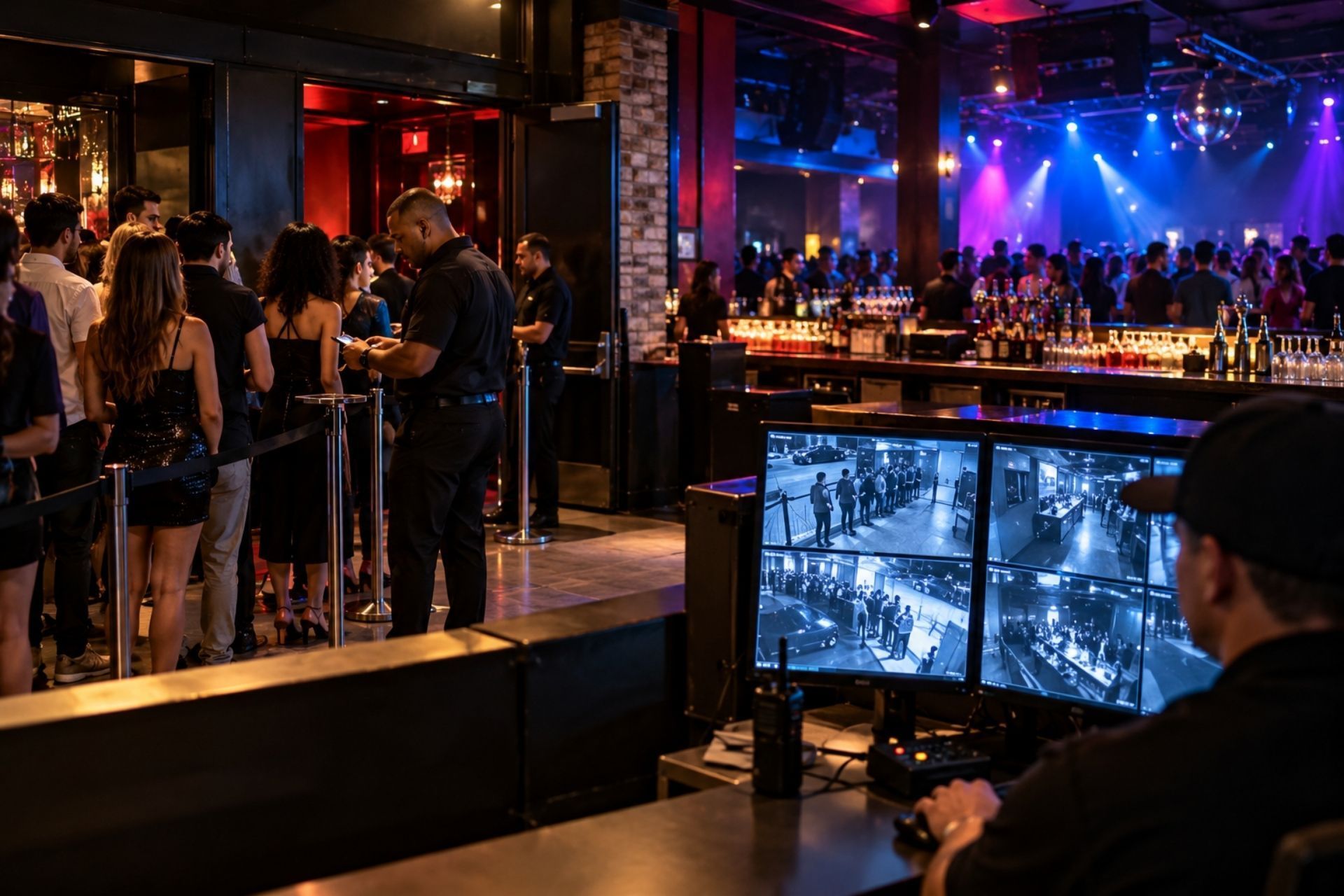
Sometimes nobody on your staff touches anyone, but you still get sued. A patron is attacked in your parking lot, and the plaintiff argues you failed to provide adequate lighting, cameras, or security presence. Negligent security claims are among the most common and most expensive allegations bars face, and they're a core component of comprehensive A&B coverage.
Comparing Coverage Levels: Basic vs. Comprehensive
Not all A&B policies are created equal. The difference between a basic and comprehensive plan can mean the difference between full protection and a coverage gap that leaves you exposed at the worst possible moment.
| Feature | Basic A&B Coverage | Comprehensive A&B Coverage |
|---|---|---|
| Patron-on-patron fights | Covered | Covered |
| Staff/bouncer use of force | Limited or excluded | Covered |
| Negligent security claims | Often excluded | Covered |
| Legal defense costs | Inside limits (reduces payout) | Outside limits (separate budget) |
| Off-premises incidents (parking lot) | Excluded | Typically covered |
| Sexual assault allegations | Excluded | May be included |
| Typical per-occurrence limit | $100K-$300K | $500K-$1M+ |
| Aggregate annual limit | $300K-$500K | $1M-$2M |
The biggest distinction is whether legal defense costs sit inside or outside your policy limits. With a basic plan carrying a $300K limit, a $150K legal defense bill cuts your available settlement money in half. Comprehensive plans keep defense costs separate, preserving your full limit for actual damages.
How State Laws Shape Your Coverage Needs
State-level legislation directly affects how much liability exposure your venue carries. South Carolina, for example, enacted significant changes to its liquor liability laws taking effect in 2026, altering how dram shop claims interact with assault-related lawsuits. These updated rules change the liability calculus for every bar and nightclub in the state.
Your A&B policy needs to account for the specific legal environment where you operate. A venue in a state with strict dram shop liability faces different exposure than one in a state with more limited third-party liability. This is one area where working with a broker who specializes in high-risk hospitality, like the team at GrayStone Insurance Group, makes a measurable difference. Their brokers average 20 years of experience and understand how local regulations intersect with policy language.
Factors That Influence Your Policy Premiums
Premiums for A&B coverage vary wildly. A small cocktail lounge might pay $2,000 annually while a high-volume nightclub could face $15,000 or more. Several factors drive that pricing.
Venue Type and Operating Hours
A wine bar closing at midnight presents a fundamentally different risk than a nightclub open until 4 AM. Insurers look at your liquor-to-food revenue ratio, capacity, and hours of operation. Venues that derive more than 75% of revenue from alcohol sales typically pay higher premiums. Late-night hours, especially past 2 AM, push rates up significantly.
Security Training and Certifications
Venues with documented security protocols, trained bouncers, and incident reporting systems get better rates. If your security team holds certifications in conflict de-escalation or responsible alcohol service, mention that to your broker. Some carriers offer 10% to 20% premium discounts for venues with formal training programs in place.
Claims History and Geographic Location
Your loss history is the single biggest factor. A venue with two prior A&B claims in the past three years might see premiums double or triple. Geographic location matters too: venues in cities with higher violent crime rates or plaintiff-friendly court systems face steeper pricing. GrayStone Insurance Group uses AI-powered risk modeling to help venues in tough markets find competitive pricing even with imperfect histories.
Frequently Asked Questions About A&B Coverage
Does my general liability policy cover bar fights? Almost certainly not. Most CGL policies exclude expected or intended acts, which includes virtually any physical altercation. You need a separate A&B policy or endorsement.
Can I add A&B coverage as an endorsement to my existing policy? Sometimes, but standalone policies generally offer broader protection and higher limits. Endorsements tend to come with more exclusions and lower sub-limits.
What happens if my bouncer is charged criminally after an incident? A&B insurance covers civil liability, not criminal defense. If your bouncer faces criminal charges, that's a separate legal matter. The civil lawsuit from the injured party, though, would fall under your A&B policy.
Are sexual assault claims covered? Some comprehensive policies include coverage for sexual assault allegations against staff. Basic policies almost never do. Ask your broker specifically about this exclusion.
How quickly can I get A&B coverage? Specialty carriers can often bind coverage within 48 to 72 hours. GrayStone's data-driven underwriting process helps speed placement even for hard-to-place venues.
Do I need A&B coverage if I only have a small bar with no bouncers?
Yes. Patron-on-patron altercations and negligent security claims don't require you to have security staff. Any venue serving alcohol should carry this coverage.
What A&B Coverage Typically Costs
Pricing for assault and battery insurance depends heavily on your venue's specific risk factors, but here are some general ranges for 2026. A small neighborhood bar with limited hours might pay between $1,500 and $3,500 annually. Mid-size bars and lounges with later hours typically fall in the $3,500 to $8,000 range. Large nightclubs with capacities over 500 and hours past 2 AM can expect $8,000 to $20,000 or more.
Bar insurance costs overall have been rising across the board, and A&B premiums follow the same trend.
The Real Cost of Going Without Coverage
A single uninsured assault claim can easily reach $250,000 to $500,000 when you factor in medical expenses, legal defense, lost wages, and pain-and-suffering damages. Jury awards in nightclub assault cases have
exceeded seven figures with increasing frequency. Without A&B coverage, those costs come directly out of your business assets, and for most bar owners, that means closing the doors permanently.
Common Mistakes Bar Owners Make With A&B Policies
The most frequent mistake is assuming general liability has them covered. The second most common is buying the cheapest A&B policy available without reading the exclusions. A policy that excludes bouncer actions or negligent security claims is barely worth the paper it's printed on for a nightclub. Other pitfalls include failing to update coverage when expanding hours or capacity, not documenting security protocols that could reduce premiums, and waiting until after an incident to shop for coverage.
How to File an A&B Claim Effectively
Report every incident immediately, even minor ones. Preserve security camera footage, collect witness statements, and document injuries with photos. Notify your insurance carrier within 24 hours, not after you receive a lawsuit. Late reporting is one of the most common reasons carriers deny otherwise valid claims. Keep a standardized incident report form behind the bar and train every manager on how to complete it.
Before You Buy a Policy
Assault and battery coverage isn't optional for bars and nightclubs: it's as fundamental as your liquor license. The right policy protects you from patron fights, bouncer liability, negligent security allegations, and the kind of six-figure lawsuits that shut venues down overnight.
Get specific about what your policy covers and what it excludes. Pay attention to whether defense costs sit inside or outside your limits. Make sure your coverage matches your actual risk profile, not just your budget. And work with a broker who genuinely understands nightlife risk, because a generalist agent selling you a basic endorsement is leaving you dangerously exposed.
If you're operating a bar or nightclub without dedicated A&B coverage, you're running one bad Saturday night away from a financial catastrophe. Talk to a specialist, get proper quotes, and protect the business you've built.
Search
INDEX
ABOUT THE AUTHOR:
CHAD KRAMER
I started GrayStone Insurance Group in 2018 with a simple conviction: the businesses everyone else turns away deserve a broker who won't. What began as a one-person operation has grown into a specialty commercial brokerage with offices across the country — but the mission hasn't changed. We find solutions for high-risk and hard-to-place businesses when other agencies run the other way.
I built this agency on integrity, hard work, and the tenacity to do the hard things well. Through our access to Excess & Surplus and specialty markets, my team and I place coverage standard carriers can't — and I treat every client's business like my own.
If you've been declined, non-renewed, or told your business is too complicated to insure, let's talk.