
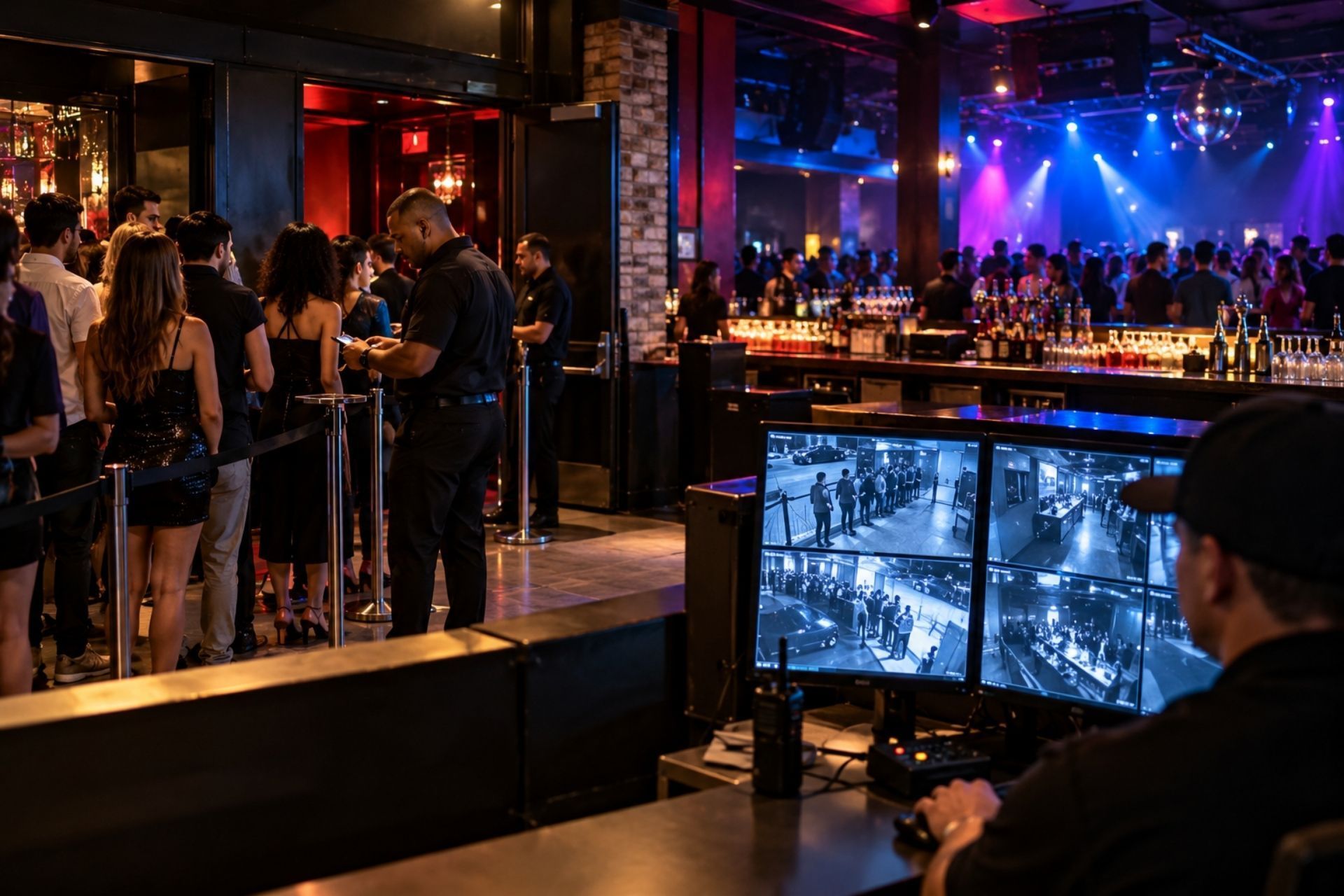
PA single uninsured assault claim can easily reach $250,000 to $500,000 when you factor in medical expenses, legal defense, lost wages, and pain-and-suffering damages. Jury awards in nightclub assault cases have exceeded seven figures with increasing frequency. Without A&B coverage, those costs come directly out of your business assets, and for most bar owners, that means closing the doors permanently.
A small electronics assembler in Ohio discovered last year that decades-old solvent residue had seeped into the groundwater beneath their facility. The cleanup bill? North of $400,000, and their general liability policy covered exactly zero of it. Stories like this are more common than most business owners realize, and they highlight why pollution liability coverage for light manufacturing operations isn't optional: it's essential.
Light manufacturers often assume their operations are too clean or too small to pose environmental risks. They picture oil refineries or chemical plants when they think about pollution events. But the truth is that even a modest metal fabrication shop, a plastics molder, or a food processing facility can generate contamination events that trigger six-figure liabilities. Solvents, lubricants, cleaning agents, refrigerants, even dust and particulate emissions can all create exposure. And the regulatory environment keeps tightening. The EPA has designated PFOA and PFOS as hazardous substances under CERCLA, which means manufacturers who use products containing these "forever chemicals" could face direct cost recovery from the federal government. If your facility handles any chemicals at all, you need to understand what's at stake and how to protect yourself.
Understanding Pollution Risks in Light Manufacturing
Most light manufacturers don't think of themselves as polluters. That's understandable: you're not dumping barrels of waste into a river. But pollution events in manufacturing settings are usually gradual, not dramatic. A slow leak from a storage tank, chemical fumes accumulating in a poorly ventilated space, or contaminated wastewater entering a municipal sewer system: these are the kinds of incidents that generate claims.
The risk profile varies significantly by industry segment. A woodworking shop faces different exposures than a circuit board assembler. But nearly every light manufacturing operation shares some common vulnerabilities: chemical storage, waste generation, and air emissions. Understanding where your specific risks live is the first step toward getting the right coverage.
Common Sources of Contamination
The most frequent contamination sources in light manufacturing facilities include:
- Solvents and degreasers used in cleaning parts or equipment
- Hydraulic fluids and lubricants from machinery
- Paint, coatings, and adhesives containing volatile organic compounds (VOCs)
- Wastewater discharge with elevated pH levels or dissolved metals
- Dust and particulate matter from grinding, cutting, or sanding operations
- Mold growth from moisture issues in climate-controlled production areas
Any of these can trigger a pollution event, whether it's a sudden spill or a gradual release that goes undetected for months. The EPA's enforcement actions in the manufacturing sector have increased steadily, and state environmental agencies are often even more aggressive about pursuing violations.
On-Site vs. Off-Site Liability
On-site liability covers contamination that stays within your property boundaries. Think of a chemical spill that seeps into the soil beneath your building. You're responsible for the cleanup, and depending on your lease terms, you might also owe your landlord for diminished property value.
Off-site liability is where things get really expensive. If contaminants migrate beyond your property: into neighboring land, groundwater, or a nearby waterway: you're potentially liable for cleanup costs, property damage claims from neighbors, and regulatory fines. A single off-site contamination event can generate claims from multiple parties simultaneously. I've seen cases where a manufacturer's wastewater discharge affected businesses three blocks away, and every one of them filed a claim.
General Liability vs. Pollution Legal Liability
Here's the misconception that burns more manufacturers than any other: "My general liability policy covers pollution." It almost certainly does not. And the gap between what business owners think they have and what their policy actually says is where financial disasters happen.
Standard commercial general liability (CGL) policies have contained pollution exclusions since the mid-1980s. Insurance carriers added these exclusions specifically because environmental claims were draining their reserves. The result is that your CGL policy, the one you're paying for every year, will deny virtually any claim related to a pollution event.
The Total Pollution Exclusion Clause
The total pollution exclusion is standard language in CGL policies that eliminates coverage for bodily injury or property damage arising from the discharge, dispersal, release, or escape of pollutants. The definition of "pollutant" in most policies is extraordinarily broad: it includes any solid, liquid, gaseous, or thermal irritant or contaminant, including smoke, vapor, soot, fumes, acids, alkalis, chemicals, and waste.
That definition is broad enough to cover almost anything your facility might release. Courts have applied it to everything from carbon monoxide in a building to dust from a construction site. If your only coverage is a CGL policy, you're essentially self-insuring against every environmental risk your operation faces.
Comparison of Coverage Scope
| Coverage Feature | General Liability (CGL) | Pollution Liability Policy |
|---|---|---|
| Sudden spills | Excluded (pollution exclusion) | Covered |
| Gradual contamination | Excluded | Covered |
| On-site cleanup costs | Not covered | Covered |
| Off-site third-party claims | Excluded for pollutants | Covered |
| Regulatory defense costs | Not covered | Typically covered |
| Transportation of materials | Limited | Available as endorsement |
| Emergency response | Not covered | Covered |
| Mold-related claims | Usually excluded | Often covered |
The gap is stark. A dedicated pollution liability policy fills the holes that your CGL policy deliberately leaves open. GrayStone Insurance Group works with manufacturers who've been surprised by these exclusions, and the conversation is always easier before a claim than after one.
What a Pollution Liability Policy Covers
A well-structured pollution liability policy is designed to respond to exactly the scenarios that CGL policies exclude. These policies are written on a claims-made basis (meaning the policy must be in force both when the event occurs and when the claim is reported), and they can be tailored to match your facility's specific risk profile.
Cleanup and Remediation Costs
This is often the largest expense in a pollution event. Remediation can involve soil excavation, groundwater treatment, vapor intrusion mitigation, and ongoing monitoring that stretches over years. A pollution liability policy covers these costs whether the contamination is discovered during your ownership or surfaces years later.
Cleanup costs for even modest contamination events routinely exceed $100,000. Groundwater contamination can push costs into the millions. Your policy should cover both voluntary cleanups (where you discover and address contamination proactively) and mandated cleanups ordered by regulatory agencies. The average cost of Superfund site cleanup runs into the tens of millions, and while your facility probably won't reach that scale, even a fraction of those costs can threaten a small manufacturer's survival.
Third-Party Bodily Injury and Property Damage
If your operations cause contamination that injures someone or damages their property, you're exposed to lawsuits. A pollution liability policy covers third-party claims for bodily injury (such as respiratory illness from chemical exposure) and property damage (such as contamination of a neighbor's land or water supply).
These claims can come from employees, neighbors, customers, or anyone else affected by a pollution event originating from your facility. The policy responds regardless of whether the release was sudden or gradual, which is a critical distinction since most contamination in manufacturing settings develops slowly over time.
Legal Defense and Emergency Response
Regulatory investigations and enforcement actions require legal representation, and environmental attorneys don't come cheap. Hourly rates of $400 to $700 are standard for experienced environmental counsel. A pollution liability policy covers defense costs for regulatory proceedings, citizen suits, and third-party lawsuits.
Emergency response coverage kicks in when you need immediate action: containing a spill, evacuating a building, or deploying hazmat teams. These costs can accumulate rapidly. A single hazmat response can run $10,000 to $50,000 depending on the materials involved and the duration of the response.
Evaluating Your Facility's Specific Needs
No two manufacturing facilities face identical pollution risks. Your coverage needs depend on what you produce, what chemicals you use, how you handle waste, and even the age and condition of your building. A thorough risk assessment should precede any insurance purchase.
GrayStone Insurance Group's brokers, who average 20 years of experience in commercial insurance, typically start by reviewing a facility's operations, chemical inventory, and waste handling procedures. This kind of assessment identifies exposures that generic policies might miss and helps structure coverage that actually matches your risk profile.
Common Questions About Pollution Insurance
Do I need pollution insurance if I only use small quantities of chemicals? Yes. Liability isn't determined by volume: even small quantities of certain substances can trigger expensive cleanup obligations and third-party claims. A single gallon of solvent reaching groundwater can create a six-figure problem.
Does my landlord's insurance cover pollution at my leased facility? Almost never. Your landlord's property policy typically excludes pollution caused by tenant operations. You need your own coverage, and your lease may actually require it.
How much does a pollution liability policy cost for a light manufacturer? Premiums vary widely based on your operations, location, and claims history, but most small to mid-sized light manufacturers can expect annual premiums between $2,500 and $15,000 for $1 million to $5 million in coverage.
What's the difference between claims-made and occurrence-based pollution policies? Most pollution policies are claims-made, meaning the policy must be active when the claim is reported. Occurrence-based policies cover events that happen during the policy period regardless of when the claim is filed. Claims-made policies require careful attention to retroactive dates and tail coverage.
Can I add pollution coverage as an endorsement to my existing policy? Some carriers offer limited pollution endorsements on CGL policies, but these typically only cover sudden and accidental releases. They won't respond to gradual contamination, which is where most manufacturing pollution claims originate.
What This Means for Your Business
Pollution liability for light manufacturing isn't a theoretical risk: it's a practical one that catches business owners off guard every year. The gap between what your general liability policy covers and what a pollution event actually costs is wide enough to sink a company.
The smartest move is getting a risk assessment done before you need one. Look at your chemical inventory, your waste disposal chain, your building's age and condition, and your proximity to sensitive receptors like residential areas or water sources. Then match your coverage to those specific exposures rather than buying a generic policy and hoping for the best.
GrayStone Insurance Group specializes in placing coverage for operations that other agencies struggle with, including manufacturers with complex chemical exposures or prior environmental issues. Their data-driven underwriting approach means faster quotes and pricing that reflects your actual risk, not just your industry code. If you're running a manufacturing operation without dedicated pollution coverage, that's a conversation worth having sooner rather than later.
Search
INDEX

ABOUT THE AUTHOR:
CHAD KRAMER
I started GrayStone Insurance Group in 2018 with a simple conviction: the businesses everyone else turns away deserve a broker who won't. What began as a one-person operation has grown into a specialty commercial brokerage with offices across the country — but the mission hasn't changed. We find solutions for high-risk and hard-to-place businesses when other agencies run the other way.
I built this agency on integrity, hard work, and the tenacity to do the hard things well. Through our access to Excess & Surplus and specialty markets, my team and I place coverage standard carriers can't — and I treat every client's business like my own.
If you've been declined, non-renewed, or told your business is too complicated to insure, let's talk.