

PA single uninsured assault claim can easily reach $250,000 to $500,000 when you factor in medical expenses, legal defense, lost wages, and pain-and-suffering damages. Jury awards in nightclub assault cases have exceeded seven figures with increasing frequency. Without A&B coverage, those costs come directly out of your business assets, and for most bar owners, that means closing the doors permanently.
The Role of the Customer's Personal Auto Policy
Every business owner has been there: you fill out an application, submit your financials, and then wait. Somewhere behind the scenes, a person you've never met is deciding whether your company is worth the risk. That person is an underwriter, and their job is to figure out whether insuring your business makes financial sense for the carrier. Understanding how underwriters evaluate whether your business is insurable can save you months of frustration, declined applications, and wasted premiums. This is especially true if you operate in a high-risk sector like nightlife, cannabis, trucking, or construction, where getting coverage at all can feel like an uphill battle. The process isn't arbitrary, though it can feel that way. Underwriters follow a structured method, weighing specific data points against established guidelines. Some of those factors are within your control, and some aren't. Knowing which is which gives you a real advantage. This piece breaks down exactly what underwriters look at, why certain businesses get flagged, and what you can do right now to improve your chances of getting placed with a good carrier at a fair price.
The Role of an Underwriter in Business Insurance
An underwriter's core job is to determine how much risk your business represents and whether a carrier should accept that risk. They're not trying to sell you a policy. They're trying to protect the insurance company's book of business from losses that outweigh the premiums collected. Think of them as financial gatekeepers: they analyze data, compare your business to similar operations, and assign a risk grade that determines your premium, your coverage terms, or whether you get offered coverage at all.
Risk Assessment vs. Sales
Your agent or broker wants to place your policy. The underwriter wants to make sure the math works. These are fundamentally different motivations, and understanding this distinction matters. An underwriter doesn't care about your brand story or your five-year growth plan. They care about measurable risk indicators: loss frequency, industry classification, safety protocols, financial stability. Their decision is driven by actuarial data and probability models, not relationships. That said, a skilled broker who understands underwriting can frame your application in ways that highlight your strengths. At GrayStone Insurance Group, brokers with an average of 20 years of experience know exactly what underwriters need to see, which makes a measurable difference for hard-to-place businesses.
The Underwriting Guidelines
Every insurance carrier publishes internal underwriting guidelines that spell out which risks they'll accept, which they'll decline, and which require additional review. These guidelines vary dramatically between carriers. One company might write general liability for bars without hesitation, while another won't touch anything with a liquor license. Guidelines are updated regularly based on loss trends, regulatory changes, and market conditions. A business that was easily insurable three years ago might face restrictions today if its industry has seen a spike in claims. This is why working with a broker who tracks multiple carriers' appetites matters: what one carrier declines, another might accept with modified terms.
Core Factors Underwriters Evaluate
The evaluation process covers several concrete data points. No single factor determines the outcome, but together they paint a picture of your business's risk profile that the underwriter uses to make a decision.
Industry Classification and Hazard Level
Your NAICS or SIC code tells the underwriter a lot before they even read your application. Certain industries carry inherently higher risk. A roofing contractor faces different exposure than an accounting firm, and the underwriter prices accordingly. Industries like cannabis, demolition, and nightlife are classified as high-hazard, meaning fewer carriers are willing to write them at all. If your business falls into one of these categories, expect more scrutiny, higher premiums, and potentially surplus lines placement rather than standard market coverage. The industry classification also determines which types of claims are most likely, and that shapes the coverage terms you'll be offered.
Business Financial Stability
Underwriters pull financial records to assess whether your business can sustain operations and pay premiums consistently. They look at revenue trends, debt-to-income ratios, and sometimes credit scores for smaller operations. A business showing declining revenue or heavy debt signals instability, which translates to higher risk. The logic is straightforward: financially stressed businesses are more likely to cut corners on safety, defer maintenance, or file inflated claims. Clean financials don't guarantee approval, but messy ones almost guarantee a harder path.
Claims History and Loss Runs
Your loss runs are the single most influential document in your application. These reports detail every claim filed against your business over the past three to five years, including amounts paid and reserves held. A pattern of frequent claims, even small ones, can be more damaging than a single large loss. Underwriters look at both frequency and severity. One $50,000 workers' comp claim from a freak accident tells a different story than five $10,000 slip-and-fall claims in two years. The latter suggests a systemic safety problem. Request your loss runs early and review them for errors before your broker submits your application.
Operational Risks and Safety Protocols
Beyond the numbers, underwriters want to understand how your business actually operates day to day. This is where you have real control over the outcome.
Physical Location and Property Safety
The physical characteristics of your business location matter more than most owners realize. Underwriters evaluate building age, construction type, fire suppression systems, security measures, and proximity to fire stations. A restaurant operating out of a 1940s building with no sprinkler system presents a very different risk than one in a modern commercial space with full fire suppression. Flood zone designation, local crime rates, and even the condition of your parking lot can influence the decision. If you're in a high-risk location, documenting every safety upgrade you've made gives the underwriter reasons to view your application more favorably.
Employee Training and Risk Mitigation
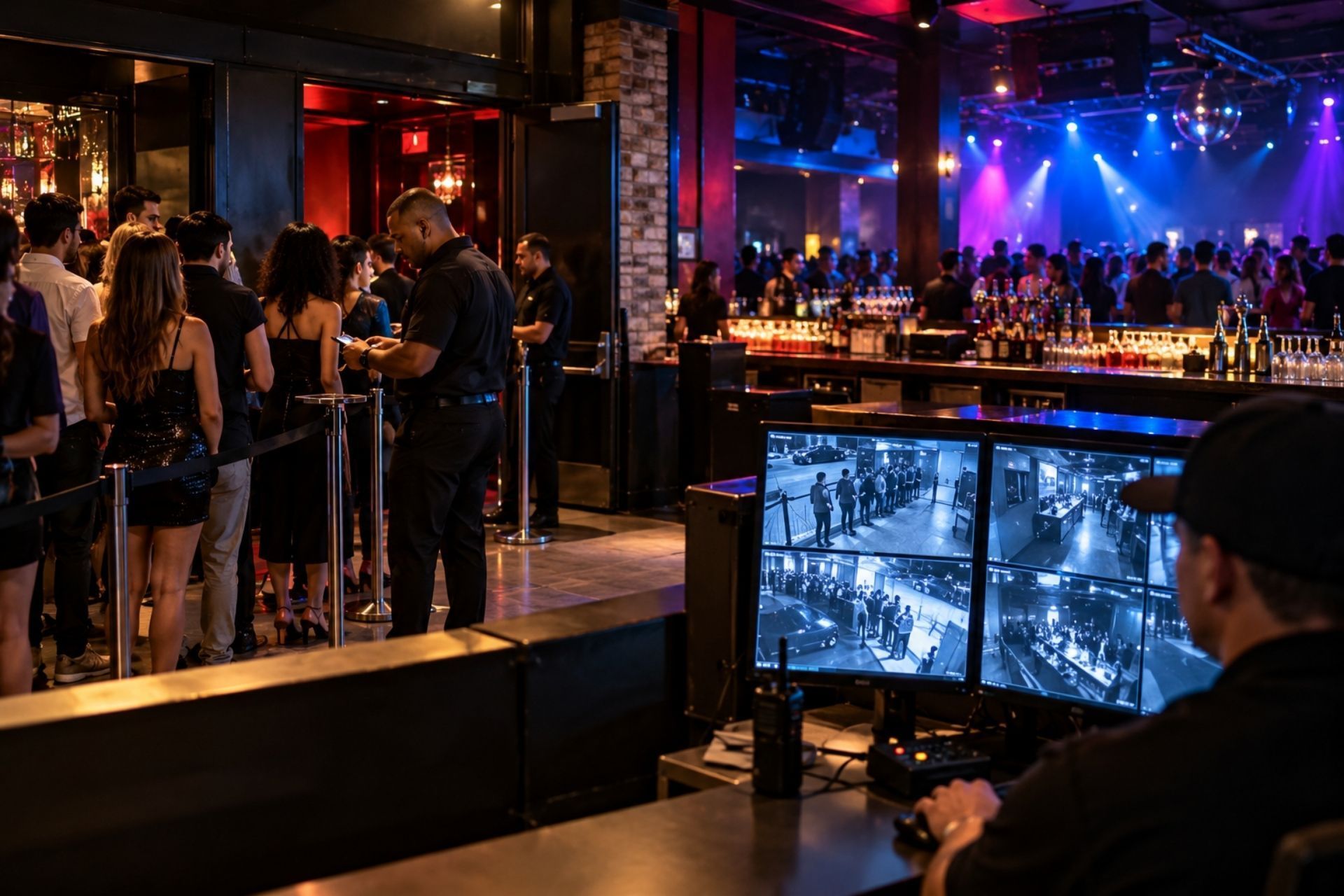
Documented safety programs and employee training records carry real weight. An underwriter reviewing a construction company wants to see OSHA compliance records, toolbox talk logs, and a written safety manual. For a bar or nightclub, they want evidence of responsible service training, bouncer protocols, and incident documentation procedures. The key word here is documented. Telling an underwriter you train your staff isn't enough. Showing certificates, training schedules, and signed acknowledgment forms demonstrates that safety is embedded in your operations, not just aspirational.
Comparison: Standard vs. Non-Standard Risk Profiles
| Factor | Standard Risk | Non-Standard / High-Risk |
|---|---|---|
| Industry | Office, retail, professional services | Cannabis, nightlife, demolition, trucking |
| Claims history | Clean or minimal losses over 3-5 years | Multiple claims or high-severity losses |
| Financial health | Stable revenue, low debt | Declining revenue, high debt ratios |
| Safety protocols | Documented programs, compliance records | Informal or undocumented safety measures |
| Market placement | Admitted/standard carriers | Surplus lines or specialty carriers |
| Premium impact | Competitive rates, broad coverage options | Higher premiums, coverage restrictions |
| Underwriting timeline | Days to weeks | Weeks to months, often requiring multiple submissions |
Businesses landing in the non-standard column aren't uninsurable. They just require brokers who specialize in hard-to-place risks and know which carriers have appetite for their specific profile. GrayStone Insurance Group, for instance, uses AI-powered risk modeling to match these businesses with the right carriers faster, which is one reason they maintain a 94% client retention rate.
How Your Data Influences the Final Decision
Underwriters in 2026 have access to far more data than they did even five years ago. Your digital footprint and the accuracy of your application both play significant roles.
Online Presence and Public Reputation
Yes, underwriters Google your business. They check review sites, social media, news articles, and regulatory databases. A nightclub with multiple one-star reviews mentioning fights or unsafe conditions raises immediate red flags. A construction company featured in a news story about a workplace injury faces tougher scrutiny. Your online presence functions as an informal risk indicator. Negative press, poor reviews, or visible code violations can influence an underwriter's perception even before they dig into your financials. Managing your reputation isn't just a marketing concern: it's an insurability concern.
The Importance of Accurate Application Data
Inaccurate applications are one of the fastest ways to get declined or, worse, have a claim denied after the fact. Underwriters verify the information you provide, and discrepancies raise serious trust issues. Common mistakes include underreporting payroll, misclassifying employee roles, or omitting prior claims. These aren't just honest errors in the underwriter's eyes: they suggest either negligence or intentional misrepresentation. Either way, it hurts your case. Take the time to verify every number on your application. If something is ambiguous, disclose it with context rather than leaving it blank.
One data point that catches many business owners off guard: 98% of cyber underwriters will automatically decline a business that hasn't implemented Multi-Factor Authentication across all remote access points. Something as simple as enabling MFA on your email and VPN can be the difference between getting cyber coverage and being shut out entirely.
Common Questions About the Underwriting Process
How long does underwriting typically take for a high-risk business? Standard risks can be underwritten in a few days. High-risk or specialty placements often take two to six weeks, especially if the underwriter requests additional documentation or loss control inspections.
Can I appeal if my business gets declined? You can't formally appeal, but you can resubmit with additional information, improved safety documentation, or through a different carrier. A broker experienced in hard-to-place risks knows which carriers to try next.
Does my personal credit score affect my business insurance? For small businesses and sole proprietors, yes. Underwriters sometimes use personal credit as a proxy for financial responsibility, particularly for policies like commercial auto or BOP coverage.
Will switching carriers frequently hurt my insurability? It can raise questions. Underwriters may wonder why you keep moving, whether it's due to non-renewal, claims issues, or rate-shopping. Stability with one carrier generally looks better on an application.
What's the difference between admitted and surplus lines carriers?
Admitted carriers are licensed and regulated by your state's insurance department. Surplus lines carriers handle risks that admitted carriers won't write. Surplus lines policies may have fewer consumer protections but are often the only option for high-risk businesses.
Your Next Steps to Improve Insurability
The underwriting process isn't a black box. It follows a predictable logic based on industry risk, financial health, claims history, safety practices, and data accuracy. Every one of those factors except your industry classification is something you can actively improve.
Start by pulling your loss runs and reviewing them for errors. Document every safety protocol and training program you currently run. Clean up your online presence. Make sure MFA is enabled across your systems. And most importantly, work with a broker who understands how underwriters think and what they need to see.
If your business has been declined or you're paying more than you should, the problem might not be your risk level: it might be how your risk is being presented. GrayStone Insurance Group specializes in placing businesses that other agencies struggle to insure, with brokers who know how to build applications that underwriters actually want to approve. Reach out for a consultation and find out where you stand.
Search
INDEX


ABOUT THE AUTHOR:
CHAD KRAMER
I started GrayStone Insurance Group in 2018 with a simple conviction: the businesses everyone else turns away deserve a broker who won't. What began as a one-person operation has grown into a specialty commercial brokerage with offices across the country — but the mission hasn't changed. We find solutions for high-risk and hard-to-place businesses when other agencies run the other way.
I built this agency on integrity, hard work, and the tenacity to do the hard things well. Through our access to Excess & Surplus and specialty markets, my team and I place coverage standard carriers can't — and I treat every client's business like my own.
If you've been declined, non-renewed, or told your business is too complicated to insure, let's talk.