
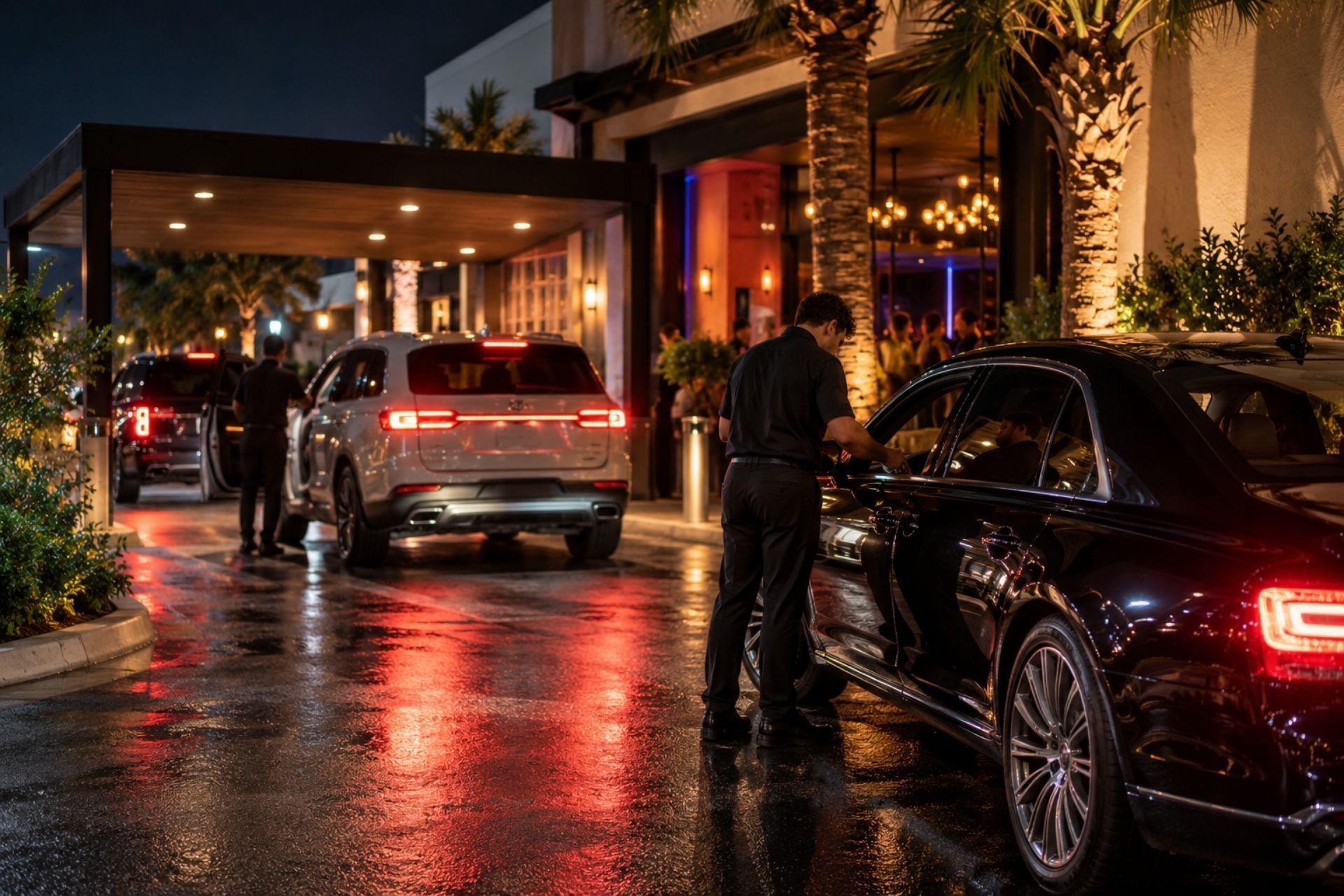
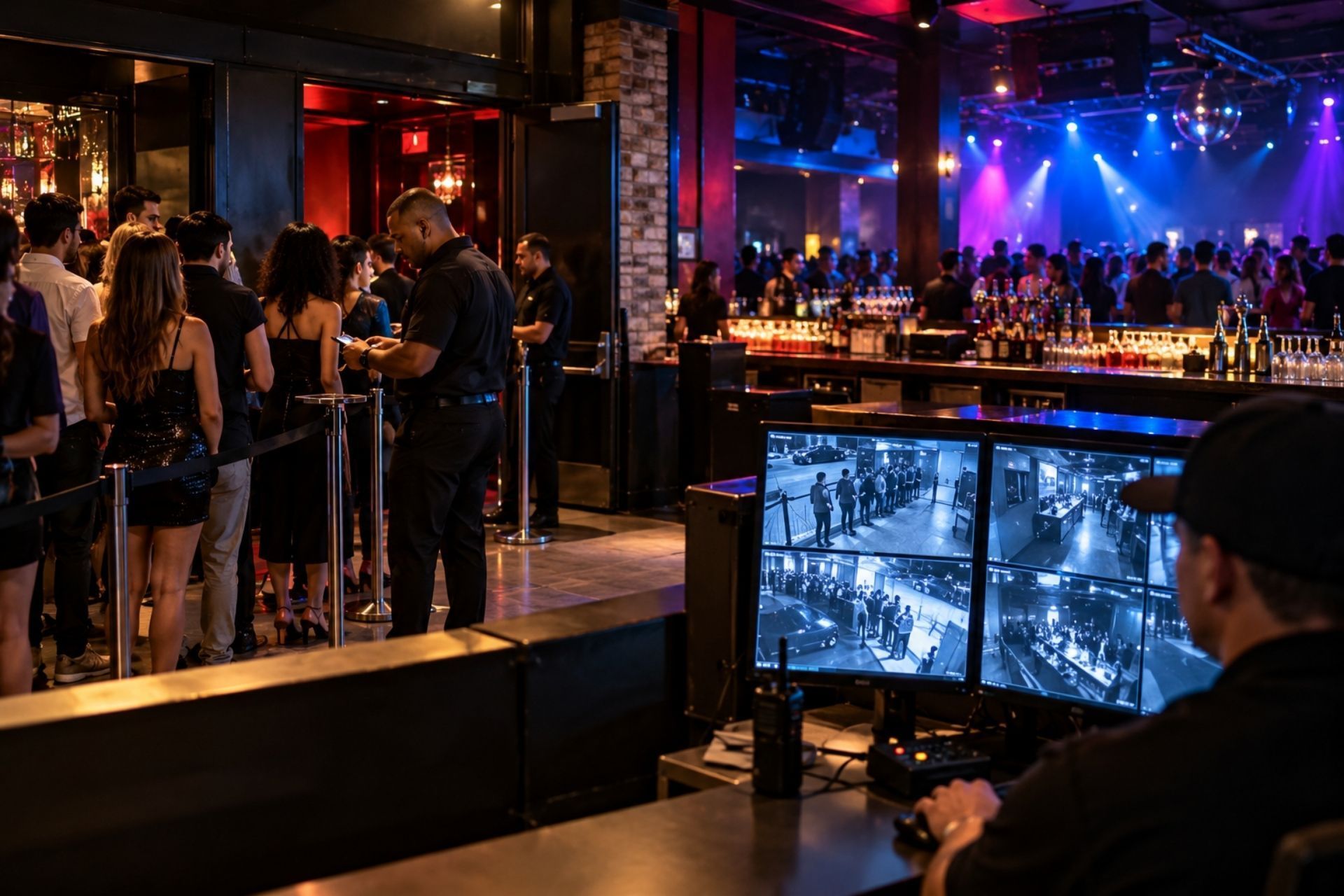
PA single uninsured assault claim can easily reach $250,000 to $500,000 when you factor in medical expenses, legal defense, lost wages, and pain-and-suffering damages. Jury awards in nightclub assault cases have exceeded seven figures with increasing frequency. Without A&B coverage, those costs come directly out of your business assets, and for most bar owners, that means closing the doors permanently.
A delivery driver rear-ends a minivan while picking up supplies for your restaurant. A sales rep totals a rental car on a business trip. A bartender clips a pedestrian while dropping off a catering order in their own Honda Civic. These aren't hypothetical situations: they're the kinds of claims that hit business owners every single week, and most of them discover too late that their existing insurance doesn't cover any of it.
The gap between what business owners think their policies cover and what they actually cover is enormous when vehicles are involved. Hired and non-owned auto coverage fills a specific, critical hole that general liability and personal auto policies both ignore. If any employee ever drives for work purposes, even occasionally, even in their own car, this is the coverage gap most businesses miss. And it can cost you everything.
Understanding Hired and Non-Owned Auto (HNOA) Insurance
HNOA insurance is a liability endorsement that covers your business when employees drive vehicles your company doesn't own. That includes two categories: vehicles you rent or hire for business use, and personal vehicles your employees drive while performing work duties. The policy kicks in when an accident happens and your business gets dragged into the lawsuit, which happens more often than most owners expect.
This isn't some niche product for trucking companies. Any business where employees occasionally drive, whether that's a construction crew picking up materials, a consultant heading to a client meeting, or a nightclub manager running to the supply store, faces this exposure. The coverage typically sits as an endorsement on your general liability or business auto policy, and it specifically addresses the liability your company carries when someone causes an accident while working for you.
What counts as a 'Hired' vehicle?
A hired vehicle is any car, truck, or van your business rents, leases, or borrows on a short-term basis. Think rental cars for business travel, a box truck rented for a weekend move, or a vehicle borrowed from another company for a specific job. If your business is paying to use a vehicle it doesn't own, that's a hired auto.
The key distinction: your company's owned fleet vehicles are covered under a commercial auto policy. But the moment you rent a cargo van from Enterprise for a trade show setup, your commercial auto policy likely won't cover it. That rental falls into the hired auto category, and without HNOA coverage, a serious accident in that vehicle could leave your business exposed to six or seven figures in liability.
The risk of 'Non-Owned' vehicles in daily operations
Non-owned vehicles are the ones your employees already own and drive to work every day. The risk shows up the moment those personal cars get used for anything work-related. Your server picks up extra napkins on the way to their shift. Your project manager drives to a job site. Your sales team visits clients across the state.
Every one of those trips creates liability for your business. Even a simple errand, like
grabbing office supplies on the clock, can result in a million-dollar claim against the employer. The employee's personal auto insurance pays first, but once those limits are exhausted, the injured party's attorney comes straight for the business. Without HNOA, there's no backstop.
Why General Liability Isn't Enough
Most business owners assume their general liability policy handles everything. It handles a lot, sure, but vehicles are a glaring exception. General liability was designed to cover slip-and-falls, property damage at your location, and similar premises-based risks. The moment a claim involves a motor vehicle, your GL policy steps aside.
This creates a dangerous blind spot, especially for high-risk industries like hospitality and construction where employees are constantly moving between locations. A bar owner with solid general liability and liquor liability might feel fully covered, but if a manager causes a three-car pileup while driving to the bank with the nightly deposit, that GL policy won't pay a dime toward the auto claim.
The standard auto exclusion in business policies
Nearly every commercial general liability policy includes an auto exclusion. It's standard language, and it's been there for decades. The exclusion removes coverage for bodily injury or property damage arising out of the ownership, maintenance, or use of any auto. That language is broad enough to exclude virtually any vehicle-related incident.
Insurance carriers include this exclusion because auto risk is priced and underwritten separately. They don't want general liability premiums subsidizing auto claims. The result is that your GL policy, no matter how comprehensive, has a vehicle-shaped hole in it. HNOA coverage is specifically designed to fill that gap.
Comparison: Personal Auto vs. HNOA Coverage
Here's how personal auto insurance and HNOA coverage stack up when an employee causes an accident during work:ghs over 10,000 pounds, and accidents involving that kind of load cause serious damage.
| Factor | Employee's Personal Auto | HNOA Coverage |
|---|---|---|
| Who it protects | The employee individually | The business entity |
| When it applies | All driving, including personal | Only work-related driving |
| Liability limits | Typically $100K-$300K | Often $1M or higher |
| Covers the business? | No, only the named insured | Yes, specifically |
| Defense costs | For the employee only | For the business |
| Excess coverage | None for employer | Sits above personal policy |
The personal auto policy protects the employee. HNOA protects the business. They work in layers, not as substitutes.
Common Scenarios That Create Liability Gaps
Real-world liability gaps don't usually come from dramatic situations. They come from the mundane, everyday activities that nobody thinks twice about. That's exactly what makes them dangerous: the risk is invisible until a claim lands on your desk.
Employees running errands in personal cars
Picture this: your sous chef swings by the farmers market on the way to work because you're short on produce. They T-bone another car at an intersection. The injured driver's attorney discovers your employee was on a work errand, and suddenly your restaurant is named in the lawsuit.
The employee's personal auto insurance might cover their own liability up to their policy limits, but those limits are often just $50,000 per person. Medical bills from a serious accident can blow past that in a day. The remaining balance, plus pain and suffering, gets aimed at your business. This exact scenario plays out
thousands of times a year and has cost businesses millions in judgments and settlements.
Renting vehicles for business travel
Rental car companies offer their own damage waivers, but those only cover physical damage to the rental vehicle itself. They don't cover liability for injuries you cause to other people. If your operations manager rents an SUV for a site visit and causes a serious accident, the rental company's coverage won't protect your business from the resulting lawsuit.
Some business owners assume their corporate credit card's rental car benefit handles this. Credit card coverage is almost always limited to physical damage to the rental, with strict exclusions for commercial use, trucks, and liability. It's a partial solution at best, and it leaves the most expensive part of a claim, the bodily injury liability, completely uncovered.
Comparing Coverage Needs by Business Type
Not every business carries the same level of hired and non-owned auto risk. A consulting firm with five employees who occasionally drive to client sites has different exposure than a construction company with 40 workers commuting between job sites daily.
| Business Type | Risk Level | Key Exposure |
|---|---|---|
| Restaurants/Bars | Medium-High | Delivery, errands, catering runs |
| Construction | High | Crews driving to multiple job sites |
| Consulting/Professional Services | Medium | Client visits, conferences |
| Cannabis/CBD Operations | High | Product delivery, compliance runs |
| Nightclubs/Entertainment | Medium | Promotional events, supply runs |
High-risk industries face particular scrutiny. In 2026, 87% of commercial fleets use telematics, and insurers are increasingly requiring this data even for HNOA quotes to assess driver behavior and risk profiles. For businesses in hard-to-place categories, working with a brokerage like GrayStone Insurance Group, where brokers average 20 years of market experience, can make the difference between getting properly covered and getting declined outright. The
pain points around HNOA placement have intensified in 2026 as carriers tighten underwriting standards across the board.
Common Questions About HNOA Coverage
Does my personal car insurance cover me for work?
Your personal auto policy covers you as the driver, but it does not cover your employer. If you cause an accident while working, your insurance pays up to your limits, and then the injured party sues the business for the rest. Some personal policies also exclude regular business use entirely, which could leave even the employee without coverage.
If my employee has their own insurance, why do I need this?
Because their insurance protects them, not your business. When a lawsuit names your company, which it almost always will, you need your own policy to respond. HNOA provides that defense and pays judgments against the business when the employee's personal coverage isn't enough.
Does HNOA cover damage to the rented car itself?
Generally, no. HNOA is a liability coverage, meaning it pays for injuries and damage you cause to others. Physical damage to a rented vehicle typically requires a separate hired auto physical damage endorsement or the rental company's collision damage waiver. Ask your broker about adding this if your team rents vehicles regularly.
How much does adding this to my policy usually cost?
For most small to mid-sized businesses, HNOA endorsements run between $150 and $500 annually. That's remarkably affordable for the protection it provides. Costs vary based on your industry, number of employees, and claims history. GrayStone Insurance Group uses
data-driven risk modeling to find precise pricing even for businesses that other agencies struggle to place, which is especially relevant for higher-risk operations in construction, cannabis, or hospitality.
The Bottom Line: Protecting Your Business Assets
The gap between what business owners assume their insurance covers and what it actually covers is widest around vehicle use. Every time an employee drives for work, whether in a rental, a borrowed truck, or their own car, your business carries liability that your general liability policy explicitly excludes.
HNOA coverage closes that gap for a fraction of what a single uninsured auto claim would cost. For businesses in high-risk industries where employees are constantly on the road, this isn't optional coverage: it's foundational. The cost of adding it is almost always under $500 a year. The cost of not having it can be a seven-figure judgment that threatens everything you've built.
If you're unsure whether your current policy addresses this exposure, pull it out and look for the auto exclusion in your GL policy. It's there. Then talk to a broker who understands your specific industry risks and can structure coverage that actually matches how your business operates day to day. That conversation could be the most valuable 30 minutes you spend this year.
Search
INDEX
ABOUT THE AUTHOR:
CHAD KRAMER
I started GrayStone Insurance Group in 2018 with a simple conviction: the businesses everyone else turns away deserve a broker who won't. What began as a one-person operation has grown into a specialty commercial brokerage with offices across the country — but the mission hasn't changed. We find solutions for high-risk and hard-to-place businesses when other agencies run the other way.
I built this agency on integrity, hard work, and the tenacity to do the hard things well. Through our access to Excess & Surplus and specialty markets, my team and I place coverage standard carriers can't — and I treat every client's business like my own.
If you've been declined, non-renewed, or told your business is too complicated to insure, let's talk.