
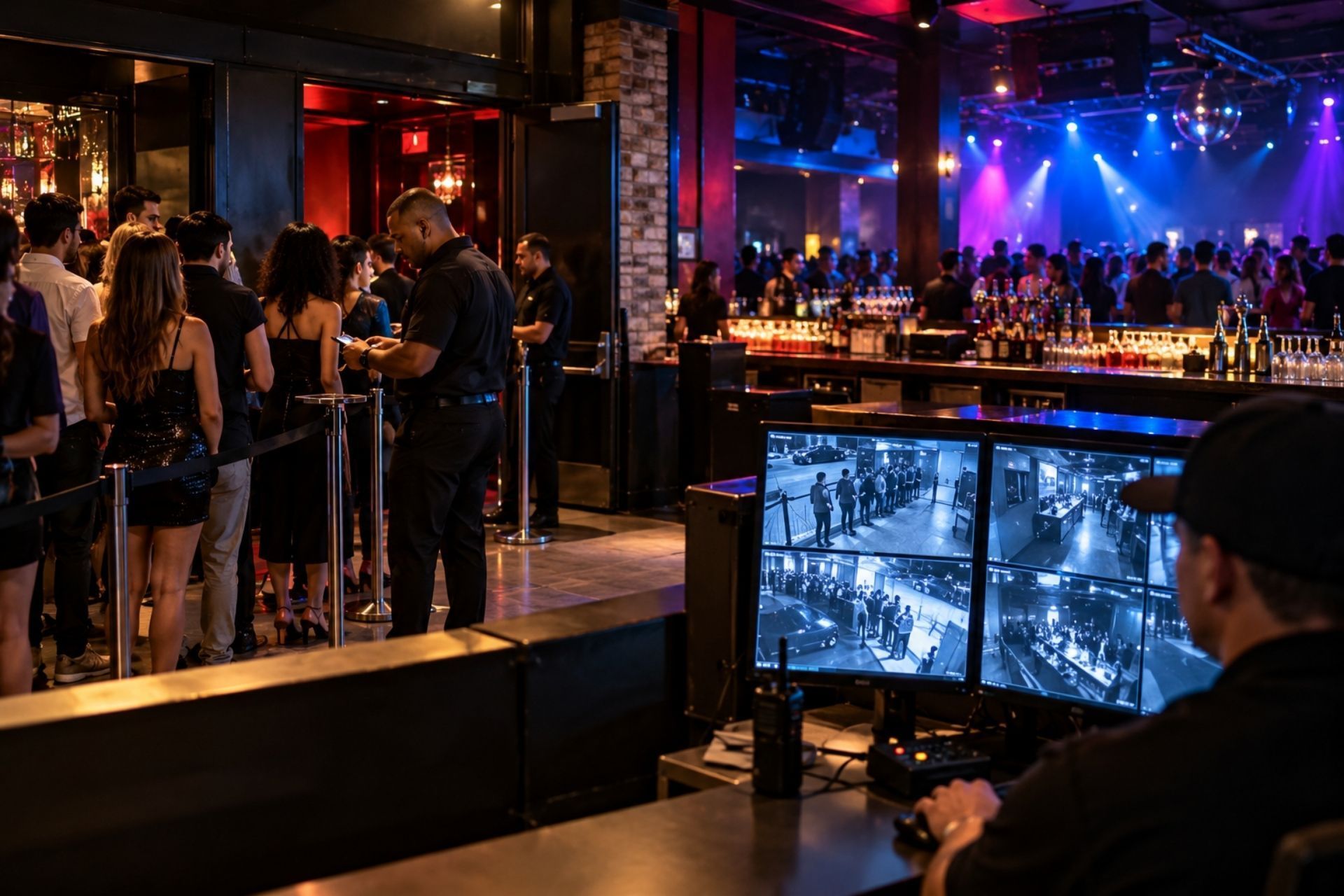
PA single uninsured assault claim can easily reach $250,000 to $500,000 when you factor in medical expenses, legal defense, lost wages, and pain-and-suffering damages. Jury awards in nightclub assault cases have exceeded seven figures with increasing frequency. Without A&B coverage, those costs come directly out of your business assets, and for most bar owners, that means closing the doors permanently.
A single named storm can shut down a restaurant for weeks, halt a construction project mid-build, or force a nightclub to cancel a month of bookings. The financial damage from lost revenue often exceeds the cost of physical repairs, and yet most business owners spend far more time thinking about property coverage than income protection. If you run a business in a hurricane-prone region, or really any coastal or Gulf state, understanding how your policy handles business interruption after a named storm is not optional. It's survival planning. The 2026 Atlantic hurricane season carries a 55% chance of being below-normal, with roughly 8 to 13 named storms expected. That sounds reassuring until you remember it only takes one storm making landfall near your business to create months of financial chaos. And "below-normal" still means billions in potential insured losses: natural catastrophe insured losses hit $107 billion in 2025 as wildfire and storm risks accelerated. Whether you own a bar in New Orleans, a trucking company in Houston, or a cannabis grow operation in Florida, this is the year to get serious about what your policy actually covers when the wind starts blowing.
Understanding Business Interruption and Named Storms
Business interruption insurance replaces lost income and covers ongoing expenses when a covered event forces your business to pause operations. Think of it as income protection for your company. It typically pays for lost net profits, continuing fixed costs like rent and payroll, and sometimes even the cost of operating from a temporary location.
The catch is that this coverage doesn't exist on its own. It's tied directly to your commercial property policy, which means it only kicks in when a covered physical loss triggers it. A named storm that damages your building, inventory, or equipment can activate business interruption coverage, but the details vary wildly depending on your policy language, endorsements, and carrier.
For high-risk businesses, the stakes are higher. A hospitality venue might lose an entire peak season. A construction firm could face contract penalties. Understanding these triggers before storm season hits is the difference between a recovery plan and a bankruptcy filing.
What Qualifies as a Named Storm?
A named storm is any tropical weather system that receives an official name from the National Hurricane Center. This includes tropical storms (sustained winds of 39-73 mph) and hurricanes (74 mph and above). The naming convention matters for insurance purposes because many policies treat named storms differently from unnamed weather events.
Some carriers apply separate, higher deductibles specifically for named storm damage. Others use percentage-based deductibles tied to your building's insured value. A 5% named storm deductible on a $2 million property means you're covering the first $100,000 out of pocket. That's a number worth knowing before you file a claim.
The Link Between Physical Damage and Lost Income
Here's where many business owners get tripped up: business interruption coverage requires direct physical damage to your insured property. If a storm floods your competitor and customers simply stop coming to your area, that alone won't trigger your policy. Your building needs to sustain covered damage that directly causes your income loss.
This requirement creates a gap for businesses that lose revenue due to power outages, supply chain disruptions, or reduced foot traffic without any physical damage to their own property. Understanding
how business interruption insurance triggers work in 2026 can help you identify whether your current policy leaves you exposed. Some endorsements can fill these gaps, which we'll cover next.
Key Coverages for Storm-Related Losses
Standard business interruption coverage is a starting point, not a complete solution. Several endorsements and add-ons exist specifically to address the unique challenges storms create. The right combination depends on your industry, location, and risk tolerance.
At GrayStone Insurance Group, our brokers frequently see high-risk businesses carrying property coverage without any of these endorsements, leaving massive gaps they don't discover until after the storm. A hospitality client in Galveston learned this the hard way when mandatory evacuation orders shut down their venue for three weeks, but their base policy didn't cover government-ordered closures. That single gap cost them over $180,000 in lost revenue.
Civil Authority Coverage for Mandatory Evacuations
Civil authority coverage protects your income when a government order prevents access to your business, even if your property wasn't directly damaged. After a named storm, local or state officials often issue mandatory evacuations or restrict access to certain zones for days or weeks.
This coverage typically has a waiting period of 48 to 72 hours before it starts paying, and it usually caps out at 2 to 4 weeks of coverage. For businesses in evacuation zones, this endorsement is essential. If your bar sits in a mandatory evacuation zone and the governor orders everyone out for 10 days, civil authority coverage bridges that income gap. Preparing for hurricane season means
reviewing whether your policy includes this protection well before June.
Utility Services Time Element Endorsements
Power outages are one of the most common storm consequences, and they can shut down your business even when your building is untouched. A utility services time element endorsement covers lost income when an off-premises utility failure (electricity, water, gas, or communications) disrupts your operations.
This matters enormously for restaurants, manufacturing facilities, and cannabis cultivation operations where temperature control and refrigeration are critical. Without power for 48 hours, a grow operation can lose an entire crop cycle. Standard policies don't cover this unless you've specifically added the endorsement.
Extra Expense Coverage for Temporary Relocation
Sometimes the smartest move after a storm is to keep operating from a different location. Extra expense coverage pays for the additional costs of maintaining operations from a temporary site: renting space, moving equipment, setting up temporary IT infrastructure, and similar expenses.
This coverage is separate from your standard business interruption payout. It covers costs above and beyond your normal operating expenses. For a trucking company, this might mean renting a temporary dispatch center. For a nightclub, it could mean hosting events at a partner venue while repairs happen. The goal is keeping revenue flowing rather than waiting months for your primary location to reopen.
Comparing Standard vs. Extended Business Interruption
Standard business interruption coverage ends when your property is repaired or when the policy's maximum restoration period expires, whichever comes first. Extended business interruption picks up where standard coverage stops, recognizing that customers don't magically return the day you reopen.
A restaurant that closes for two months of storm repairs might need another three to six months to rebuild its customer base. Extended coverage addresses this ramp-up period, typically offering an additional 30 to 365 days of partial income replacement. For businesses where reputation and foot traffic drive revenue, this extension can mean the difference between a full recovery and a slow decline.
Comparison Table: Coverage Scope and Duration
| Feature | Standard BI Coverage | Extended BI Coverage |
|---|---|---|
| Trigger | Direct physical damage to insured property | Same, plus post-repair revenue recovery |
| Coverage Period | Until repairs complete or max period reached | Additional 30-365 days after reopening |
| Income Replaced | Lost net income during closure | Reduced income during ramp-up period |
| Waiting Period | 24-72 hours typical | Begins immediately after standard BI ends |
| Best For | Short-term closures with quick customer return | Businesses reliant on foot traffic or reputation |
| Typical Cost | Included in property policy | Additional premium, varies by industry |
Business owners taking
more integrated approaches to risk are increasingly adding extended coverage, especially in hospitality and retail sectors where customer loyalty is fragile.
Navigating the Claims Process After the Storm
Filing a business interruption claim after a storm is nothing like filing a simple property claim. You're not just documenting broken windows and water damage. You're proving what your business would have earned if the storm hadn't happened, and that requires a different kind of evidence.
The process is inherently adversarial. Your carrier's adjuster is evaluating your claim with an eye toward minimizing payout, while you need to demonstrate maximum provable loss. Having your documentation ready before storm season starts dramatically improves your outcome.
Essential Documentation for Financial Losses
Start gathering these records now, not after the storm:
- Twelve to 24 months of profit and loss statements
- Tax returns for the previous two to three years
- Daily sales reports or POS system data showing seasonal patterns
- Payroll records for all employees, including part-time and seasonal staff
- Records of any fixed costs that continue during closure (rent, loan payments, insurance premiums)
- Contracts or purchase orders that demonstrate expected future revenue
The SBA also offers additional funds for disaster protection that can supplement your insurance recovery, particularly for small businesses with gaps in coverage.
One thing GrayStone's claims team emphasizes: photograph everything before the storm. A timestamped video walkthrough of your property, inventory, and equipment creates a baseline that makes post-storm damage assessment far simpler.
Understanding the Waiting Period (Deductible)
Most business interruption policies include a waiting period, functioning like a time-based deductible. You absorb the income loss for the first 24 to 72 hours before coverage begins. Some policies for named storms extend this to 7 days or longer.
This waiting period applies per occurrence, so a single storm counts as one event. The key detail many owners miss: the waiting period starts when the damage occurs, not when you file the claim. If your roof is damaged on a Tuesday but you don't discover it until Friday, the waiting period has already been running for three days. Document the date and time of damage as precisely as possible.
Common Questions About Storm Interruptions
FAQ: Real-World Scenarios and Coverage Limits
Does business interruption cover flooding from a named storm? Only if you carry a separate flood policy or a flood endorsement. Standard commercial property policies exclude flood damage, which means the business interruption tied to that policy also excludes flood-related losses. NFIP policies do not include business interruption coverage.
What if my business loses revenue because customers can't reach me, but my building is fine? Standard policies won't cover this. You'd need a contingent business interruption endorsement or civil authority coverage if access is blocked by government order. Pure loss of customer traffic without physical damage or government action is typically uninsured.
How long does a typical storm-related BI claim take to settle? Expect 3 to 12 months for complex claims. Carriers often dispute the length of the restoration period, projected revenue figures, or whether certain expenses qualify. Having a public adjuster or experienced broker advocate for you speeds the process.
Can I claim lost revenue for events I had booked during the closure? Yes, if you can prove the bookings existed and would have generated specific revenue. Contracts, deposits, and email confirmations all serve as evidence. This is especially relevant for event venues, hotels, and entertainment businesses.
Are there state-specific rules that affect my claim? Absolutely. Florida, Texas, and Louisiana each have distinct regulations around named storm deductibles, claims filing deadlines, and policyholder rights.
Commercial insurance trends for spring 2026 show increasing regulatory attention to storm-related claims handling.
The Bottom Line for Business Owners
A named storm doesn't just damage buildings. It disrupts revenue, strains cash flow, and tests whether your insurance program was built for reality or just for compliance. The businesses that recover fastest are the ones that understood their coverage gaps before the wind picked up.
Review your policy now. Check whether you carry civil authority coverage, utility services endorsements, and extended business interruption protection. Look at your named storm deductible and make sure you can absorb it. Gather your financial documentation and store it somewhere accessible even if your office is underwater.
If your business falls into a high-risk category, or if you've been declined by traditional carriers, GrayStone Insurance Group specializes in placing coverage for exactly these situations. Our brokers average 20 years of experience and understand how storm-related interruption claims actually play out. Reach out before hurricane season peaks, because the best time to fix coverage gaps is when the forecast is still just a forecast.
Search
INDEX

ABOUT THE AUTHOR:
CHAD KRAMER
I started GrayStone Insurance Group in 2018 with a simple conviction: the businesses everyone else turns away deserve a broker who won't. What began as a one-person operation has grown into a specialty commercial brokerage with offices across the country — but the mission hasn't changed. We find solutions for high-risk and hard-to-place businesses when other agencies run the other way.
I built this agency on integrity, hard work, and the tenacity to do the hard things well. Through our access to Excess & Surplus and specialty markets, my team and I place coverage standard carriers can't — and I treat every client's business like my own.
If you've been declined, non-renewed, or told your business is too complicated to insure, let's talk.