
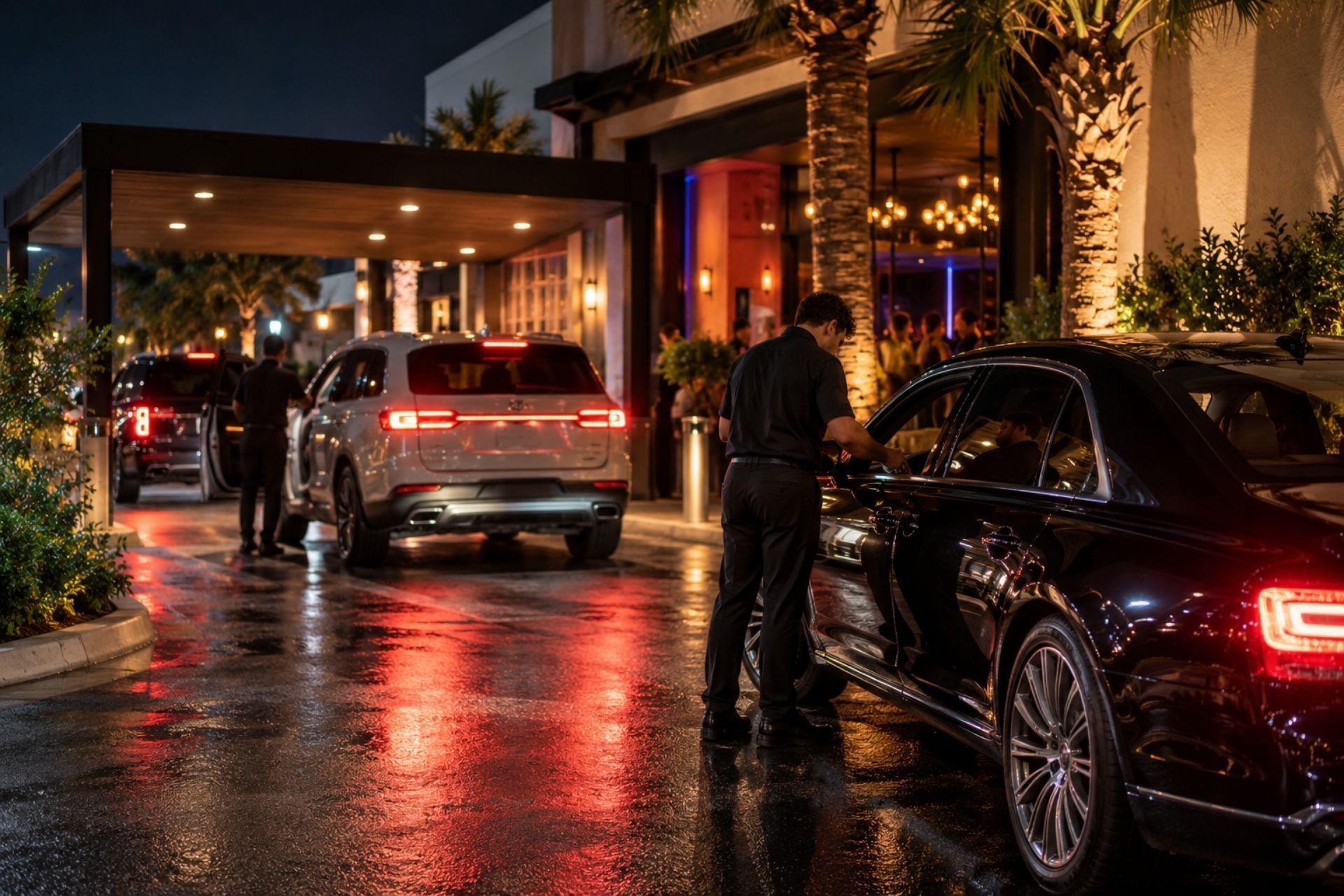
PA single uninsured assault claim can easily reach $250,000 to $500,000 when you factor in medical expenses, legal defense, lost wages, and pain-and-suffering damages. Jury awards in nightclub assault cases have exceeded seven figures with increasing frequency. Without A&B coverage, those costs come directly out of your business assets, and for most bar owners, that means closing the doors permanently.
A bouncer standing at the door isn't just there to check IDs. That single staffing decision - who you hire, how you hire them, and what training they carry - directly shapes the insurance policy sitting in your filing cabinet. Bar and nightclub owners often focus on liquor liability or property coverage while overlooking how their security setup influences premiums, exclusions, and whether a claim actually gets paid. The connection between hiring security and how it affects bar and nightclub coverage is one of the most misunderstood areas in hospitality insurance, and getting it wrong can leave you exposed to six-figure lawsuits with minimal protection. If you run a venue where alcohol flows and crowds gather, your security model isn't just an operational choice. It's an underwriting variable that carriers scrutinize closely. The decisions you make here ripple through every layer of your policy, from premium calculations to whether assault-related claims are covered at all. This piece breaks down exactly how those decisions play out, what underwriters actually want to see, and where most venue owners get tripped up.
The Relationship Between Security Personnel and Insurance Premiums
Insurance carriers price nightclub and bar policies based on risk. That's obvious. What's less obvious is how much weight they place on your security infrastructure when calculating that risk. A venue with documented, professional security protocols can see premium reductions of 10-20% compared to a similar venue without them. Carriers view trained security as a frontline risk mitigation tool: fewer incidents mean fewer claims, and fewer claims mean lower loss ratios.
The math is straightforward. If your venue averages two assault-related claims per year at $75,000 each, that $150,000 in losses gets baked into your renewal pricing. Professional security that prevents even one of those incidents pays for itself through premium savings alone, not counting the legal costs you avoid.
How Security Reduces Liability Risks
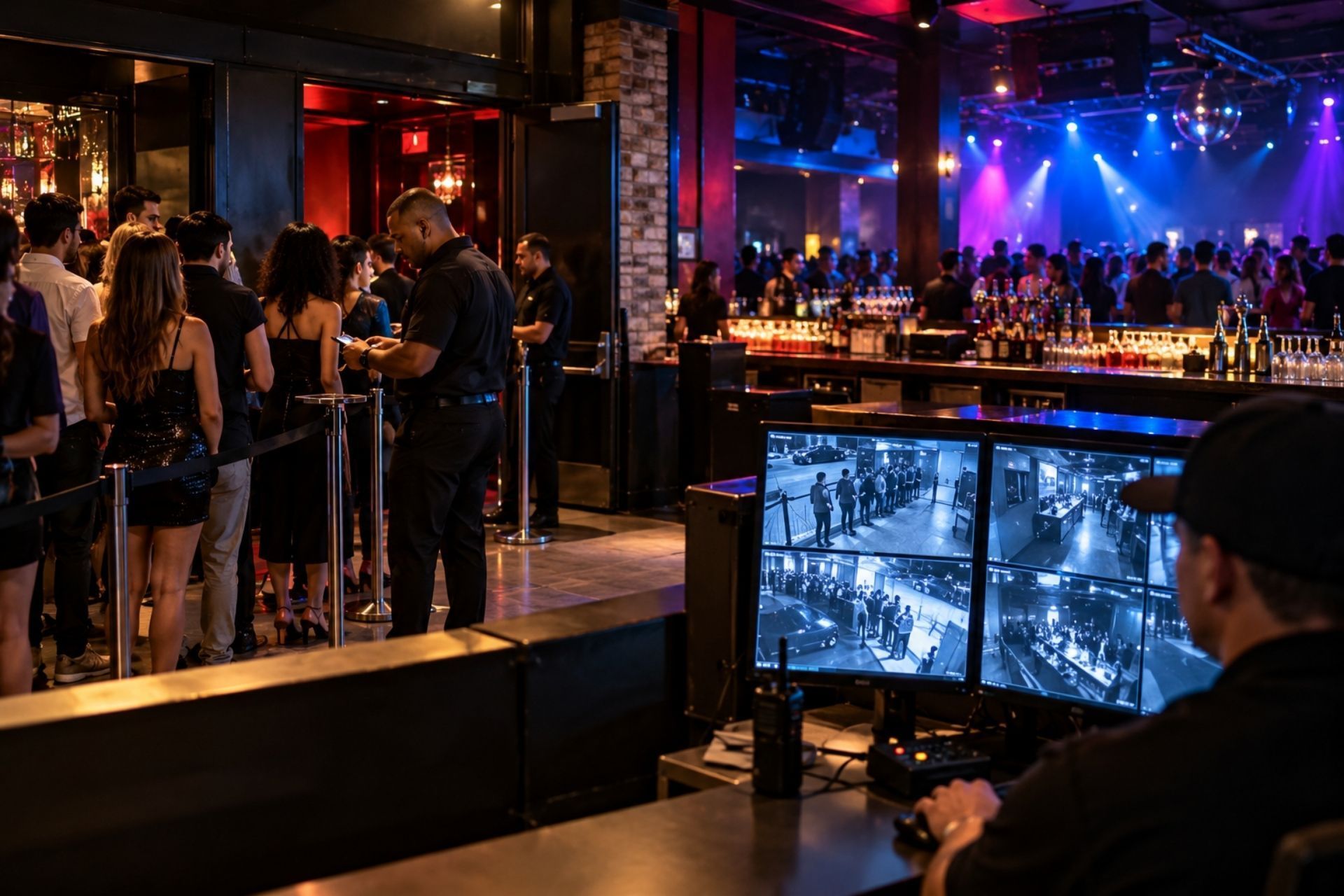
Trained security personnel reduce liability exposure in three concrete ways. First, they deter incidents before they start. A visible, professional presence discourages aggressive behavior from patrons who might otherwise escalate. Second, they intervene early. A bouncer trained in de-escalation can defuse a confrontation in 30 seconds that would otherwise become a lawsuit. Third, they document everything. Incident reports, camera footage reviews, and witness statements created by security staff become critical evidence if a claim does arise.
Carriers know this. That's why underwriters specifically ask about security staffing levels, training certifications, and whether your team uses body cameras or incident reporting software. These aren't casual questions on an application: they directly affect your policy terms.
Impact on General Liability vs. Liquor Liability
Your general liability policy and your liquor liability policy respond differently to security-related incidents. General liability covers slip-and-falls, property damage, and bodily injury from non-alcohol causes. Liquor liability covers claims arising from serving intoxicated patrons. Security affects both, but in different ways.
On the general liability side, security reduces premises liability claims by maintaining safe conditions and controlling crowd density. On the liquor liability side, security personnel who are trained to identify visibly intoxicated patrons and cut off service act as an additional safeguard. Some carriers will actually reduce liquor liability premiums when security staff hold
responsible beverage service certifications, because those certifications demonstrate a venue-wide commitment to safe alcohol service.
In-House vs. Contracted Security Teams
This is where things get complicated, and where most venue owners make costly mistakes. The choice between hiring your own security staff and contracting with a third-party security firm has massive implications for your insurance coverage.
In-house security means your bouncers are W-2 employees. You control their training, their schedules, and their conduct. You also absorb 100% of the liability for their actions. If your bouncer throws a punch, your policy responds - assuming assault and battery coverage exists on your policy at all.
Contracted security shifts some of that liability to the security company. Their employees operate under their own workers' compensation policy and their own general liability coverage. This creates a buffer, but only if the contract is structured correctly.
Vicarious Liability and Indemnification Clauses
Even with contracted security, venue owners aren't automatically off the hook. Courts in most states recognize vicarious liability, meaning you can be held responsible for the actions of contractors working on your premises if you exercised control over their work. If you told a contracted bouncer to "handle" a rowdy patron and that bouncer used excessive force, you could share liability.
Indemnification clauses in your security contract are your primary defense here. A well-drafted indemnification clause requires the security company to hold you harmless for claims arising from their employees' conduct. Brokers at firms like GrayStone Insurance Group, who handle high-risk hospitality placements regularly, often review these contracts alongside the insurance policy to make sure the two documents actually align. A gap between your contract language and your policy language is where lawsuits live.
Certificates of Insurance (COI) Requirements
Every contracted security firm should provide a Certificate of Insurance before their staff sets foot in your venue. The COI should confirm active general liability coverage with limits of at least $1 million per occurrence, workers' compensation coverage meeting your state's requirements, and your venue listed as an additional insured on their policy.
That last point is critical. Being named as an additional insured on the security company's policy means their carrier has a duty to defend you if a claim arises from the security team's actions. Without it, you're relying entirely on your own policy. Request updated COIs annually and verify them directly with the security firm's carrier, not just the firm itself.
Comparing Security Models for Insurance Approval
Underwriters evaluate your security setup as part of the overall risk profile. The model you choose affects not just premiums but whether certain carriers will write your policy at all.
Security Configuration Comparison Table
| Factor | In-House Security | Contracted Security | No Dedicated Security |
|---|---|---|---|
| Liability Exposure | High: all on venue | Shared with contractor | Highest: no mitigation |
| Premium Impact | Moderate reduction | Largest reduction potential | Highest premiums |
| A&B Coverage Availability | Available with documentation | Most favorable terms | Often excluded or sub-limited |
| Workers' Comp Responsibility | Venue carries policy | Security firm carries policy | N/A |
| Underwriter Preference | Acceptable with training proof | Preferred by most carriers | Often declined |
| Control Over Training | Full control | Limited to contract terms | None |
The takeaway here is clear. Contracted security with proper documentation and insurance requirements tends to get the best underwriting treatment, while venues operating without dedicated security face the harshest terms or outright declinations from standard carriers.
Assault and Battery Exclusions
Here's the part that catches most bar owners off guard. Assault and battery coverage is not automatically included in a standard general liability policy for nightlife venues. In fact, many carriers specifically exclude it.
Why Standard Policies Might Not Cover Altercations
Standard commercial general liability policies were designed for businesses where physical altercations are rare. A retail store, an accounting firm - these businesses don't anticipate fistfights. Bars and nightclubs do. Carriers recognized this decades ago and began adding assault and battery exclusions to policies written for nightlife venues.
The exclusion means that if a patron punches another patron, or if your bouncer injures someone during an ejection, your policy won't pay the claim. You're on your own for legal defense and any settlement or judgment. Venues without professional, third-party security contracts are seeing A&B sub-limits capped at as low as $50,000, which barely covers legal fees in a serious injury case, let alone a settlement.
Securing Buy-Back Endorsements
The solution is an assault and battery buy-back endorsement. This is an add-on to your policy that restores coverage for A&B claims, typically with its own sub-limit and additional premium. Buy-back endorsements commonly offer sub-limits of $100,000 to $500,000, though some specialty carriers offer higher limits for venues with strong security protocols.
Getting approved for a buy-back endorsement requires demonstrating to the underwriter that your venue actively mitigates A&B risk. That means documented security staffing, training records, incident logs, and camera systems. GrayStone Insurance Group specializes in placing these types of endorsements for high-risk hospitality clients, often securing terms that standard agencies can't access because they lack relationships with the specialty carriers who write this coverage.
Training Standards That Underwriters Look For
Not all security training is created equal in the eyes of an underwriter. Having bouncers who "know how to handle themselves" isn't a training standard. Carriers want documented, verifiable training programs.
The baseline most underwriters expect includes state-mandated security guard licensing, which varies by state. California requires a Bureau of Security and Investigative Services (BSIS) guard card, while Texas requires a Level II or Level III license through the Department of Public Safety. Beyond state requirements, carriers look for supplemental training in conflict resolution, crowd management, and legal use of force.
De-escalation and Use-of-Force Documentation
De-escalation training is the single most important credential underwriters evaluate. A security team trained to talk down confrontations rather than physically engage reduces claims frequency dramatically. Carriers want to see certificates from recognized programs, refresher training schedules (annual at minimum), and written use-of-force policies that define when physical intervention is appropriate.
Documentation matters as much as the training itself. If your security team completes a 40-hour de-escalation course but you can't produce the certificates during an audit, it's as if the training never happened. Keep digital copies of all training records, update them with each new hire, and include them in your insurance application package. Underwriters who see thorough documentation view your venue as a lower-risk placement, and that translates directly to better terms.
Common Questions About Nightclub Security Coverage
FAQ: Cost, Legal Requirements, and Claims
How much does an assault and battery endorsement cost? Premiums vary widely based on venue size, location, claims history, and security protocols. Expect to pay between $2,000 and $15,000 annually for sub-limits ranging from $100,000 to $500,000.
Is hiring security legally required for bars? Most states don't mandate security for bars specifically, but local ordinances often require security staffing for venues above certain occupancy thresholds or those open past midnight. Check your city's entertainment license requirements.
Will my claim be denied if my bouncer caused the injury? If your policy has an A&B exclusion and no buy-back endorsement, yes. Even with coverage, claims involving excessive force by your staff face heavy scrutiny. Documented training and use-of-force policies are your best defense against denial.
Does having cameras reduce my premiums? Camera systems alone won't dramatically lower premiums, but they're a factor underwriters consider positively. A comprehensive security program combining cameras, trained personnel, and incident reporting will have the biggest impact.
Can I be sued if a patron is assaulted by another patron?
Absolutely. Under premises liability, you have a duty to provide
reasonable security measures for your patrons. If a court finds your security was inadequate, you're liable for injuries even if your staff wasn't directly involved.
Making the Right Choice for Your Venue
Your security model isn't just an operational line item. It's the foundation of your insurance program. Every decision, from whether you hire in-house or contract out, to what training you require, to how you document incidents, feeds directly into what coverage you can access and what it costs.
The venues that get this right treat security and insurance as a single conversation, not two separate ones. They bring their insurance broker into security planning discussions. They structure contracts with indemnification language that aligns with their policy terms. They maintain training records that satisfy underwriter audits.
If your current policy has an A&B exclusion you didn't know about, or if your security contract doesn't include the indemnification and COI requirements outlined above, those gaps need attention before your next incident, not after. GrayStone Insurance Group works with bar and nightclub owners to align security operations with insurance requirements, ensuring that the coverage you're paying for actually responds when you need it. Reach out for a policy review before your renewal, because the worst time to discover a coverage gap is during a claim.
Search
INDEX
ABOUT THE AUTHOR:
CHAD KRAMER
I started GrayStone Insurance Group in 2018 with a simple conviction: the businesses everyone else turns away deserve a broker who won't. What began as a one-person operation has grown into a specialty commercial brokerage with offices across the country — but the mission hasn't changed. We find solutions for high-risk and hard-to-place businesses when other agencies run the other way.
I built this agency on integrity, hard work, and the tenacity to do the hard things well. Through our access to Excess & Surplus and specialty markets, my team and I place coverage standard carriers can't — and I treat every client's business like my own.
If you've been declined, non-renewed, or told your business is too complicated to insure, let's talk.