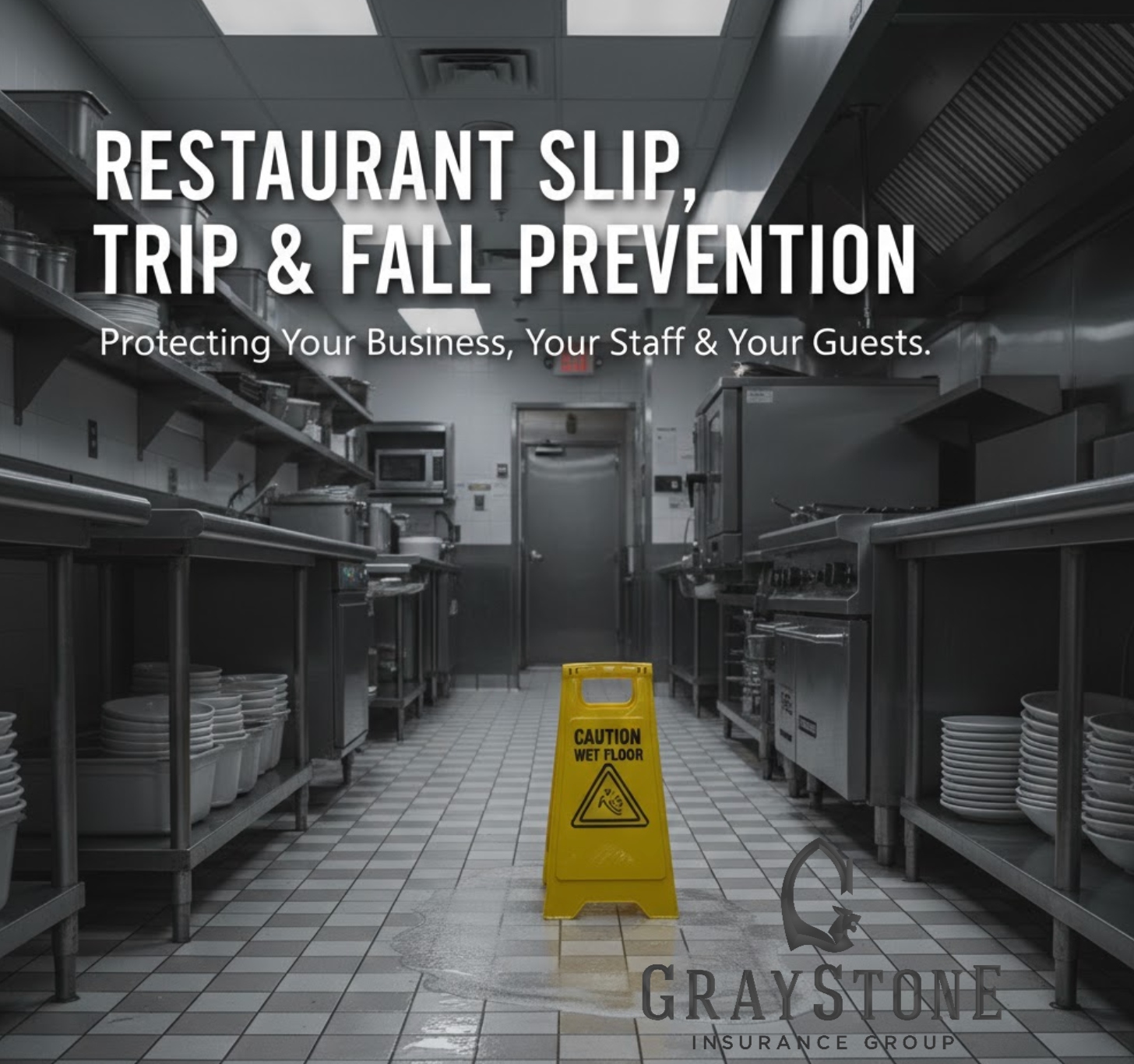
With premises liability for restaurants, slip and fall accidents are a major risk because they are the most common reason people sue food businesses. For a restaurant owner, restaurant safety and liability risks should always be top of mind because one wet spot on the floor can lead to a court case that costs more than the business makes in a year. Without a good insurance plan, the cost to pay for lawyers can be very high. In a world where people sue often, having the right insurance is the best way to protect your money.
It is also good to know that these accidents do not just happen in the dining room. Kitchens, front doors, and bathrooms are all danger zones. Most fall claims cost more than $20,000. If a person needs surgery, that cost can go up fast. Because of this, insurance is your most important tool for staying in business.
The most common claims come from drink spills, grease on kitchen floors, and rain brought in from outside. Groups that study safety say that falls lead to over 1 million hospital visits every year. In restaurants, these accidents often happen when guests wear slick shoes or when workers are in a big hurry.
Many times, a court will say you should have known about a danger even if you did not see it. For example, if a sink in the bathroom leaks for an hour and you do not fix it, you are responsible if someone falls. Looking at the facts shows that keeping floors clean and dry is the best way to stop these accidents.
Yellow “wet floor” signs are helpful and they can help reduce restaurant liability exposure, but they do not stop you from being sued. A sign shows you knew there was a problem, but it does not fix the danger. If a spill stays on the floor for a long time with only a sign next to it, a lawyer can say you did not do enough to make the floor safe.
The best way to win a court case is to show that you cleaned up the mess as fast as you could. Also, remember that signs can be something people trip over if they are left in the middle of a hallway. A safe restaurant cleans the mess first and uses the sign only as a temporary warning.
Owners often miss small dangers like the curled corners of floor mats, loose rug threads, and power cords for signs or holiday lights. People stop seeing these things because they look at them every day. However, these small things are what cause many people to get hurt and sue.
Think about this: A guest walks into your lobby and trips on a rug that is not flat. They fall and break their arm. Because the rug was there for a long time, the court will say you had plenty of time to fix it. This is why checking your building every day is so important for keeping guests safe.
Common Trip Hazard |
How to Fix It |
Curled Floor Mats |
Replace old mats or use heavy-duty ones that stay flat. |
Loose Cords |
Tape cords down or move them away from where people walk. |
Uneven Floors |
Use bright tape or signs to show where the floor changes height. |
Dim Lights |
Change light bulbs fast so people can see where they are walking. |
To stop accidents, use soap that makes floors less slick, tell workers to wear special non-slip shoes, and put heavy mats at every door. Using these tools helps make your shop safer for everyone. You should also teach your team to act fast. No spill should stay on the floor for more than a minute.
Making your shop safer does not have to be hard. Start by checking how slippery your floors are when they get wet. Using the right cleaning tools can change your safety record and make people trust your restaurant more.
You need a checklist to keep a record of your hard work. When people sue, a written log is your best proof. It changes the question from “did you clean?” to “what time did you clean?”
A list helps your manager stay on track. If a worker walks the floor every hour and signs a paper, you have proof that you were being careful. This record is often the only way to show the truth in court and prove that you were not being lazy about safety.
