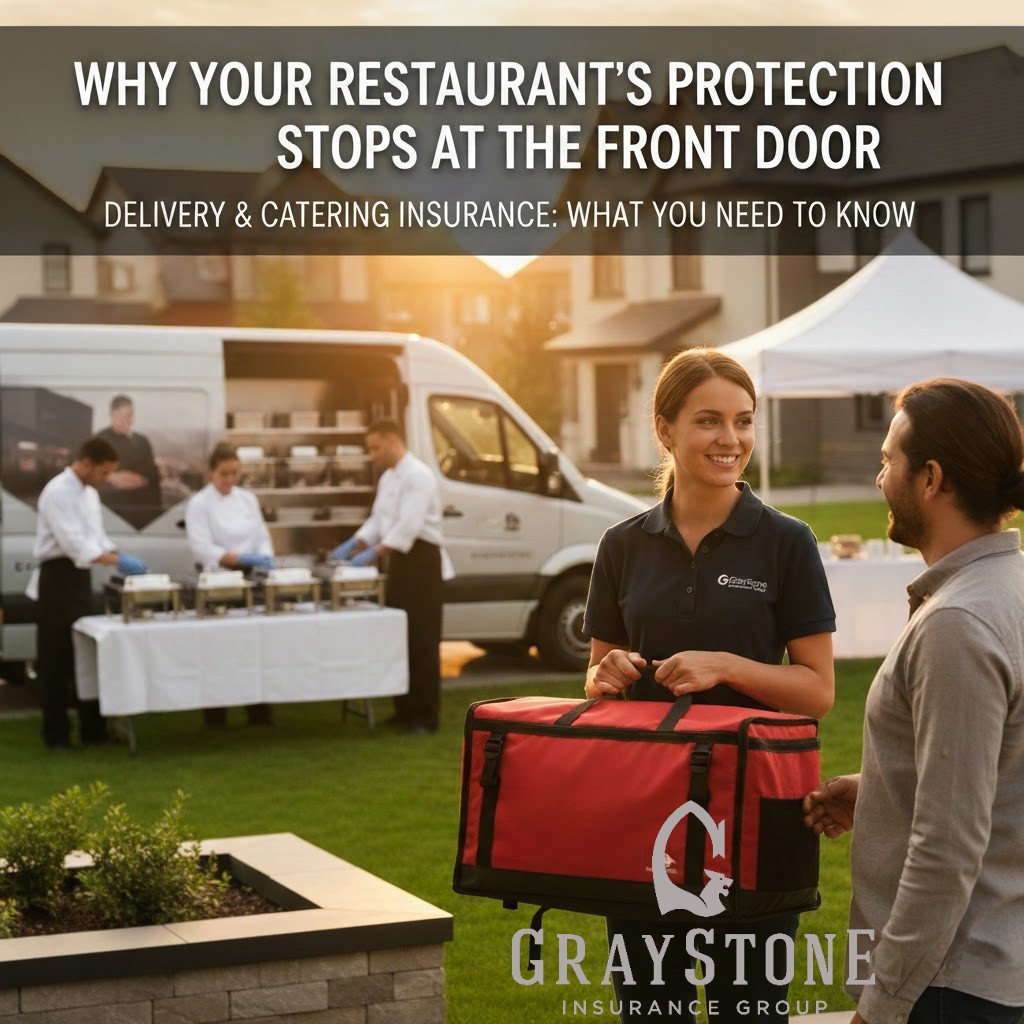
If you own a restaurant or a small food business, you probably feel like your kitchen is your home. You know where every spatula is kept. You know exactly how long the oven takes to heat up. You have spent a lot of time making sure your building is safe for your customers. But lately, the food world has changed. Most people do not want to sit in a booth every time they eat; they want their food brought to them at their home or office.
Because of this, many restaurant owners are now starting to offer delivery. They are also loading up vans to cater for big parties like weddings or office lunches. This is a great way to grow your business, but it changes the rules. When you walk out of your front door with a bag of hot food, you are leaving your “safe zone.” Most insurance policies for restaurants are built to cover what happens inside your four walls. Once you hit the road, there are new risks that your old insurance might not cover.
If you are expanding your restaurant’s footprint through delivery or catering, keep these five critical points in mind to ensure your business remains protected:
Let’s look at one of the most common things that happens in a local restaurant. It is a busy Friday night. The phone is ringing off the hook with delivery orders. Your usual delivery driver is stuck in traffic. You look at one of your servers—maybe a young man named Sam—and ask him if he can take a few bags of food to a house three miles away in his own car. Sam says “sure” and hops into his vehicle to help you out.
This seems like a simple solution, but it is actually a significant risk for your business. Most people have car insurance for “personal use.” This means they are covered when they drive to the store, to school, or on vacation. However, almost every personal car insurance company states they will not pay for an accident if the car was being used for work.
If Sam gets into a car crash while he is delivering your food, his insurance company will ask what he was doing. When they find out he was working, they will likely refuse to pay. The person who was hit in the crash will then look for someone else to pay the bill. Usually, that person is you. Since Sam was working for you when the crash happened, your restaurant could be held responsible for medical bills and car repairs. To stay safe, you need a specific type of insurance called Hired and Non-Owned Auto insurance. Without it, you might have to pay for those costs yourself.
Catering is another way to grow your business, but it is very different from delivery. When you cater, you are not just dropping off a bag; you are setting up a kitchen in a brand-new place. You might be at a park, a church, or a large office building.
When you are at your own restaurant, you know that the rug in the front is flat and the floors are dry. At a new place, you do not know the layout. Maybe there is a loose wire on the floor or a slippery spot near the buffet table that you didn’t see. If a guest at the party trips over your equipment or slips on some sauce your team accidentally spilled, they might sue your business.
A lot of business owners think their main restaurant insurance policy covers them everywhere. But many times, that policy only covers the address listed on the paperwork. If you are working at a park and someone gets hurt, your insurance might say, “We only cover you at 123 Main Street.” To stay safe, you need to make sure your liability insurance follows you wherever you go to serve food.
One of the hardest parts of delivery and catering is keeping the food at the right temperature. In your restaurant, you have refrigerators and stoves that stay at the perfect temperature all day long. But once that food goes into a van or a truck, you are relying on portable bags and coolers.
Traffic is a major enemy for food businesses. If your delivery driver gets stuck behind an accident for an hour, that food might get cold. If you are catering an outdoor party on a hot summer day, the food could get too warm. This leads to two big problems that every owner should think about.
The first problem is that the food could go bad. If you have $1,000 worth of steak in a van and the cooling system breaks, you just lost $1,000. Many insurance policies do not pay for spoiled food unless you specifically asked for that coverage. The second problem is much worse: someone could get sick. If a customer eats food that was not kept at the right temperature and they have to go to the hospital, they will blame your business. This is called “product liability.” You need to be sure that your insurance covers people getting sick from your food even if they did not eat it inside your restaurant.
Think about all the tools you use when you go to a catering job. You might bring portable burners, expensive metal trays, warming cabinets, and even tables and chairs. All of this gear costs a lot of money to buy and maintain.
If you are driving to a job and someone hits your van, or if you hit a big bump and your equipment falls over and breaks, you will want to fix it quickly. However, the insurance that covers your building usually only covers things that stay inside the building. Once that gear is in a truck, it is often no longer covered by your property insurance.
There is a special type of insurance for things that move from place to place. It covers your equipment while it is in the truck, while you are unloading it, and while it is sitting at the event. Having this means you will not have to pay out of your own pocket if a $500 warming tray gets smashed during a move.
Your employees are the heart of your business. When they are in the kitchen, you can see them and make sure they are being safe. But once they leave to go on a delivery or a catering job, you cannot help them stay safe.
If an employee burns themselves while setting up a buffet at a wedding, or if they hurt their back lifting a heavy box of supplies out of the van, they will need medical help. They might also need to stay home from work for a few weeks while they recover.
Workers’ compensation is the insurance that pays for these injuries. It is very important to make sure your policy reflects that your workers are doing more than just standing behind a counter. If the insurance company thinks your workers only stay in the kitchen, but they get hurt while driving a truck, there could be a problem with your claim. You should always be honest with your agent about exactly what your workers do every day.
Most standard “brick-and-mortar” business insurance policies are designed to cover your physical location (the “four walls” of your restaurant). Once an employee leaves your property to deliver food, they enter a gap in coverage. To be protected, you generally need a specific endorsement or a separate policy called Hired and Non-Owned Auto (HNOA) insurance.
Personal auto policies almost always have an “omission for business use” clause. If an insurance company discovers that a driver was using their vehicle for commercial delivery at the time of an accident, they will likely deny the claim. This leaves the driver—and your business—personally liable for all damages and medical costs.
3. Does my general liability insurance cover me at a catering venue?
Not necessarily. Many policies are “location-specific,” meaning they only apply to the address listed on your policy. If a slip-and-fall occurs at a park, wedding hall, or office building, your standard policy might not apply. You should check with your agent to ensure your liability coverage is “off-premises” or “floats” with your service.
Standard property insurance often doesn’t cover “perishable goods” once they leave the restaurant. Spoilage Coverage is a specific add-on that protects your financial investment in the food if it becomes unsafe or unsellable due to power outages, mechanical breakdowns of cooling systems, or unforeseen transit delays.
Product liability covers your business if a customer gets sick from the food you served. This is especially critical for catering and delivery because you have less control over the environment where the food is consumed. Even if the food was perfect when it left your kitchen, you could be held liable for illnesses that occur after delivery.
Usually, no. Standard business property insurance covers items located at your business. To protect equipment that travels with you, you need Inland Marine Insurance (sometimes called a “Commercial Property Floater”). This covers your tools and gear while they are in transit or at a job site.
Yes. Workers’ Compensation rates are often based on the risk levels of the jobs being performed. Kitchen work has different risks than driving or setting up heavy equipment at events. It is vital to update your job descriptions with your insurance provider to ensure that any injuries occurring “on the road” are fully covered and that your claims aren’t denied due to inaccurate job classifications.
Building a successful food business takes a lot of hard work and many long hours. You spend years perfecting your recipes and finding the best customers. It would be a shame to lose all of that because of one mistake on a delivery run or a catering job.
The world of food is moving faster than ever. To keep up, you have to be ready to serve people wherever they are. But as your business grows, your insurance needs to grow with it. You need to make sure you are covered for car accidents, for people getting sick, for broken equipment, and for injuries that happen away from your shop.
At GrayStone Insurance Group, we know how much your business means to you. We do not want you to have to worry about “what if” every time a delivery driver leaves the parking lot. We can look at your current plan and help you find the holes that might be hiding there. Our goal is to make sure that even if something goes wrong on the road, your business will stay strong and keep cooking.
Contact GrayStone Insurance Group today. We can help you check your coverage and make sure your business is safe from the kitchen to the customer’s front door
