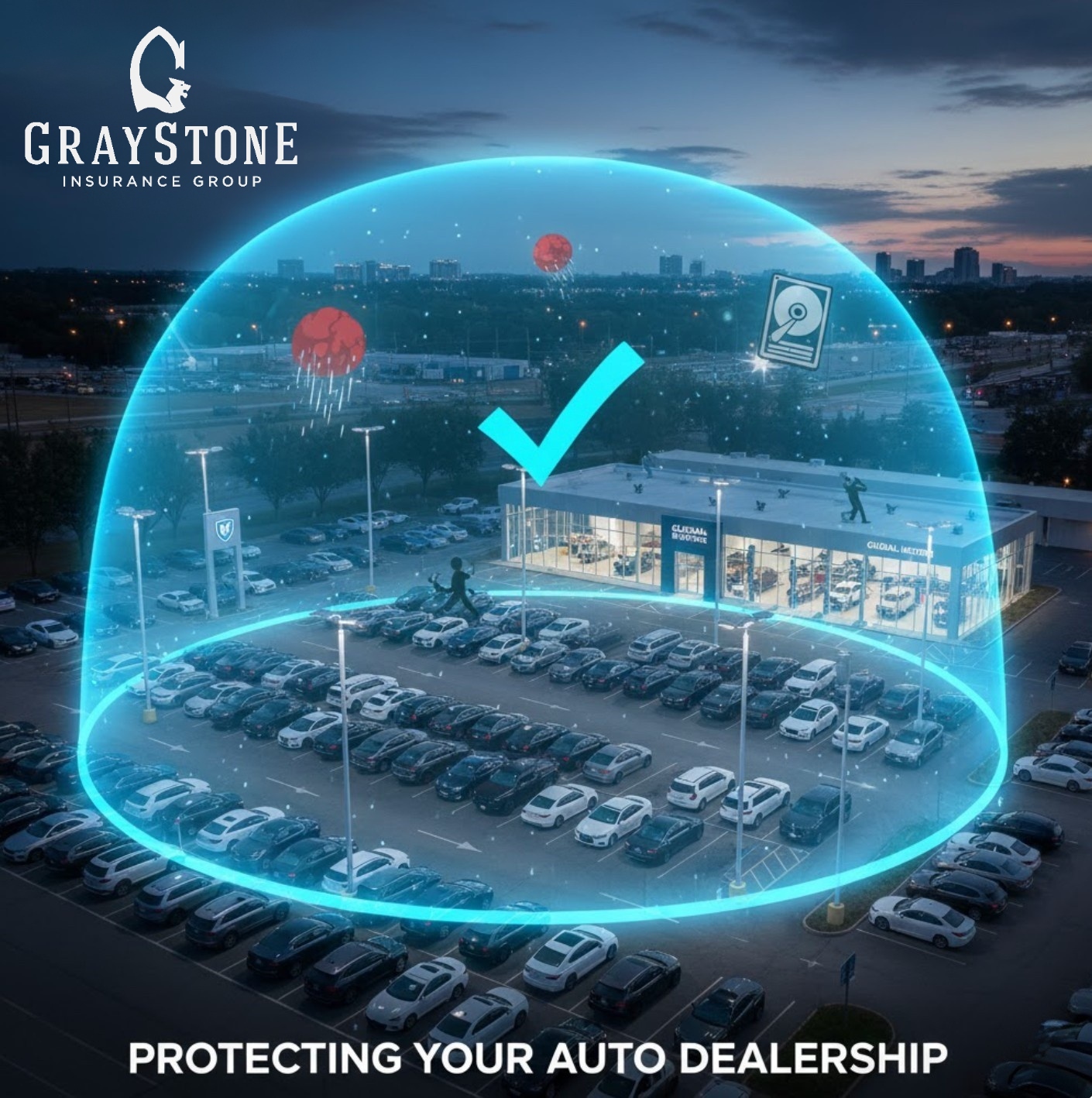
Running a car dealership is an exciting business, but it is also a big responsibility. It is about much more than just putting a “For Sale” sign in a window. Every day, a dealer manages millions of dollars in inventory, oversees a team of workers, and interacts with dozens of people. Because there are so many moving parts, there are also many things that can go wrong. A single bad day—like a massive hail storm or a serious accident—could cause enough financial damage to close a business forever. This is why insurance is the most important tool a dealer owns.
Navigating the complexities of car dealership insurance is essential for long-term profitability and risk management. Here are the core insights from the guide:
1. Distinguish Between Liability Types
Do not confuse Garage Liability with Garagekeepers coverage. One protects you from lawsuits regarding third-party injuries, while the other protects the customer’s vehicle while it’s in your shop. Having one without the other leaves a massive gap in your protection.
2. Protect Your “Mobile” Assets
Standard property insurance is insufficient for vehicles. Dealers Open Lot (DOL) insurance is the industry standard for protecting inventory against specific threats like hail, wind, and theft. Ensure your limits reflect your peak inventory periods, not just your average.
3. Guard Against “False Pretense”
Traditional theft coverage often fails when a vehicle is stolen through trickery or fraud. False Pretense coverage is a non-negotiable add-on for dealerships to protect against scams during test drives or fraudulent trade-in titles.
4. Data is a Major Liability
Dealerships are essentially financial hubs. Because you handle Social Security numbers and credit applications, Cyber Liability is just as important as physical security. A data breach can be more financially devastating than a lot fire.
5. Professionalism Requires E&O
Clerical mistakes in odometer readings, Truth-in-Lending disclosures, or title work can lead to expensive lawsuits. Errors and Omissions (E&O) coverage provides a safety net for the high volume of sensitive paperwork generated in every sale.
6. Regular Risk Assessments
Insurance is only half the battle. Complement your coverage with proactive risk management, such as:
In this guide, we will look at how insurance works for car dealers. We will break down the different types of protection you need and explain why each one is vital to keeping your business running smoothly.
The biggest asset of any dealership is the cars sitting on the lot. Whether you have ten cars or five hundred, those vehicles represent your hard work and your money. Most standard business insurance policies do not provide the right kind of coverage for a large group of vehicles parked outside. For this, dealers need a specific policy called Dealers Open Lot insurance.
Think of your lot as a giant, open-air warehouse. Because the cars are outside, they are at the mercy of the weather. In many parts of the country, weather can change in an instant. Imagine a sudden storm that drops hail the size of golf balls. In just ten minutes, every car on your lot could be covered in dents and have broken windshields. If you have 100 cars and each one needs $2,500 in repairs, you are looking at a $250,000 bill. Without Dealers Open Lot insurance, you would have to pay that entire amount yourself.
This insurance does more than just protect against bad weather. It also covers theft and vandalism. Even with good security cameras and fences, thieves sometimes find a way to steal a vehicle or break into several cars to take parts. This policy ensures that if a car is stolen or damaged by a criminal, you can get the money back to replace it and keep your inventory full.
A car dealership is a place of movement. The most important movement happens during a test drive. Before a customer spends thousands of dollars, they want to know how the car handles on the road. They want to hear the engine, feel the brakes, and see how it fits their lifestyle. However, the moment a customer drives off your lot and into traffic, the risk level goes up significantly.
Even the most cautious driver can get into an accident. If a customer crashes one of your cars, or if they hit another person’s vehicle, who is responsible? This is where Garage Liability insurance comes into play. This is a special type of liability insurance made specifically for the automotive industry. It covers the costs if someone is injured or if property is damaged during the course of business operations.
Garage Liability is not just for the road, either. It protects your physical location as well. If a customer is walking through your showroom and slips on a wet floor or trips over a display, they might get hurt. If they decide to sue the dealership for their medical bills, this insurance helps pay for your legal defense and any money you might owe the person who was hurt. It acts as a shield for your business assets.
Many dealerships have a service department where they fix and maintain cars for their customers. When a customer leaves their car with you for a repair, they are trusting you to keep it safe. During the time that car is in your care, you are legally responsible for it. This creates a different kind of risk than the cars you own yourself.
If a mechanic is moving a customer’s car and accidentally scrapes it against a wall, or if a fire breaks out in the repair shop overnight and destroys several customer vehicles, you need Garagekeepers insurance. People often confuse this with Garage Liability, but there is a big difference. Garage Liability covers the damage you cause to others, while Garagekeepers specifically covers the physical damage to the customer’s car while it is in your “care, custody, or control.”
Having this coverage is essential for keeping your customers’ trust. If something happens to their car while you are fixing it, they expect you to make it right. Garagekeepers insurance ensures that you have the money to fix or replace their vehicle without having to take that money out of your business savings.
Unfortunately, not everyone who walks onto a car lot is an honest buyer. Some people use clever tricks to steal cars. One of the most difficult crimes for a dealer to deal with is called “false pretense.” This happens when someone tricks you into giving them a car or the keys to a car through a lie.
For example, a scammer might use a fake ID and a stolen credit score to apply for a loan. They sign all the paperwork, you hand them the keys, and they drive away. A few days later, you find out the person wasn’t who they said they were, and the car is gone. Most standard theft insurance will not cover this because you “voluntarily” gave the person the keys. The insurance company sees it as a bad business decision rather than a theft.
To protect yourself, you need False Pretense coverage. This is a specific addition to your policy that says the insurance company will help you if you are tricked by a scammer. In a world where identity theft is becoming more common, this protection is more important than ever. It ensures that a clever criminal cannot bankrupt your business with one well-planned lie.
Running a dealership involves a massive amount of paperwork. Every sale requires titles, tax forms, registration documents, and loan applications. These forms must be filled out perfectly to follow the law. However, humans make mistakes. Even the most organized office manager can accidentally check the wrong box or write down an incorrect number.
If a customer finds a mistake in their paperwork later on, they might feel cheated. They could sue the dealership for “errors and omissions.” For example, if the mileage on the title is wrong, the customer might claim the car is worth much less than they paid. Errors and Omissions (E&O) insurance is designed to protect you from these professional mistakes. It pays for your legal fees and helps settle the disagreement so that a simple typo doesn’t turn into a million-dollar lawsuit.
In the modern world, car dealerships run on computers. You store a lot of private information about your customers, including their Social Security numbers, bank details, and home addresses. This makes dealerships a target for hackers. If a hacker gets into your system and steals this data, you are responsible for the fallout.
Cyber insurance is a vital part of a modern insurance plan. If your data is stolen, this insurance helps pay for the experts who fix your computer system. It also covers the cost of notifying your customers about the hack and providing them with credit monitoring services. Without this, the cost of a data breach could easily reach hundreds of thousands of dollars.
Your employees are the heartbeat of your dealership. From the salespeople on the floor to the mechanics in the back, you rely on them to keep things moving. However, managing people can sometimes lead to legal trouble. If an employee feels they were treated unfairly, passed over for a promotion, or fired for the wrong reason, they might sue the business.
Employment Practices Liability Insurance (EPLI) protects you in these situations. It covers claims related to how you treat your staff. Even if you did nothing wrong, defending yourself in court is very expensive. EPLI makes sure that a disagreement with an employee doesn’t drain your company’s bank account.
1. What is the difference between Garage Liability and Garagekeepers insurance?
While they sound similar, they cover different things. Garage Liability covers bodily injury or property damage you cause to others (like a customer slipping in your showroom). Garagekeepers insurance covers physical damage to a customer’s vehicle while it is in your care for servicing or storage. You generally need both to be fully protected.
2. Does standard theft insurance cover me if a customer steals a car during a test drive?
Not necessarily. If a customer uses a fake identity or a trick to get the keys and then disappears, many insurers consider that a “voluntary parting” rather than a traditional theft. To be protected against scams and professional “tricksters,” you need specific False Pretense coverage.
3. Why isn’t my inventory covered under a standard Business Owners Policy (BOP)?
Standard business policies are designed for static inventory like clothes or electronics in a building. Because vehicles are high-value, mobile, and stored outdoors, they require Dealers Open Lot insurance. This specialized coverage accounts for the unique risks of weather (like hail), transport, and outdoor theft.
4. Do I really need Cyber Insurance for a local car lot?
Yes. Dealerships collect highly sensitive information, including Social Security numbers and financial data for credit checks. This makes you a prime target for hackers. Cyber insurance covers the immense costs of data recovery, legal notifications, and credit monitoring for affected customers after a breach.
5. What does Errors and Omissions (E&O) cover in a dealership context?
E&O covers professional mistakes made during the paperwork process. This includes errors in truth-in-lending disclosures, title transfers, or odometer readings. If a customer sues because of a clerical error that affected the value or legality of their purchase, E&O helps cover your legal defense.
6. Is my staff covered if they get into an accident while driving a dealership vehicle?
Yes, typically under your Garage Liability policy, provided the employee was acting within the scope of their employment. For protection against internal disputes like wrongful termination or harassment claims, you should also carry Employment Practices Liability Insurance (EPLI).
7. How are insurance premiums calculated for a dealership?
Premiums are usually based on several factors, including:
Building a successful car dealership takes years of dedication, long hours, and a lot of heart. You have built something valuable, and you deserve to see it grow. But as we have seen, there are many risks that can threaten everything you have built. Whether it is a hailstorm, a dishonest customer, or a computer hacker, the dangers are real and constant.
The good news is that you don’t have to face these risks alone. Insurance is not just a monthly bill; it is a foundation for your business. It allows you to focus on what you do best—selling cars and serving your community—knowing that if the worst happens, you have a safety net to catch you.
At GrayStone Insurance Group, we specialize in helping auto dealers find the perfect balance of protection. We don’t believe in “one size fits all” plans. We take the time to look at your specific lot, your service department, and your office to find the gaps in your current coverage. Our goal is to make sure you are fully protected without paying for things you don’t need.
Are you sure your dealership is ready for a “bad day”? Don’t wait for a storm to hit before you check your policy. Contact GrayStone Insurance Group today for a full review of your insurance. Let us help you protect your investment so you can drive your business toward a successful future.
