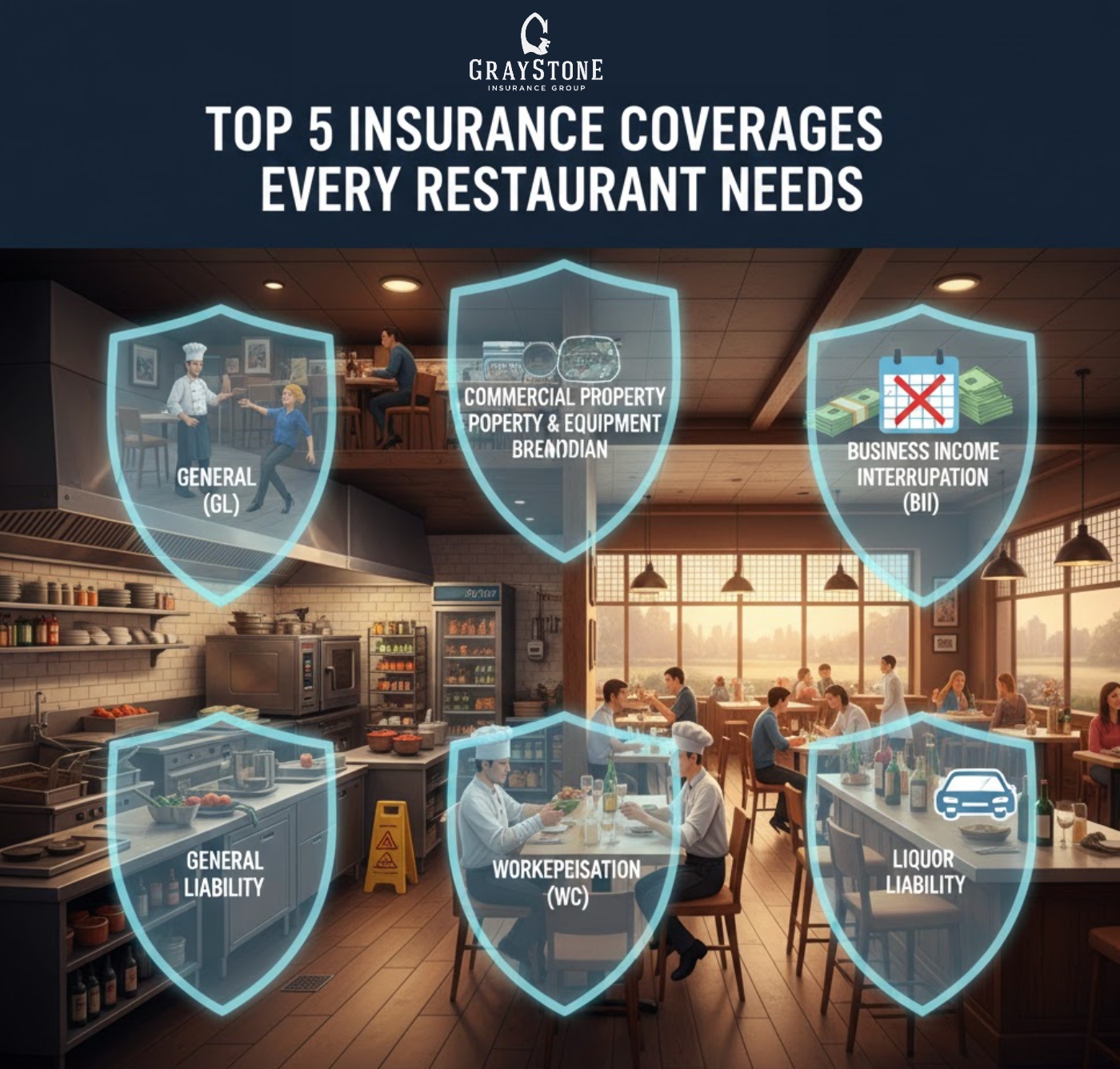
Running a restaurant is exciting, but it’s also very risky. Think about everything that happens: a restaurant has busy customer areas, super-hot stoves, messy grease, and lots of expensive food inventory. All these moving parts make the restaurant business one of the riskiest places to own.
These are the most critical points a restaurant owner must understand about the five foundational restaurant insurance coverages:
Every single day brings a chance for a new problem: someone could slip and fall, a grease fire could start, or a big, expensive refrigerator could break down. Because of these dangers, having the right insurance is not just a nice extra thing to have. It is the most important cost to run the business, and it is the only thing that can protect the restaurant from shutting down completely after a big accident.
At GrayStone Insurance Group, we are specialists. We check how restaurants run their businesses to build full insurance plans that manage the dangers specific to this kind of work. We make sure our clients are covered completely, from paying for a customer injury in the dining room to helping a business rebuild after a huge kitchen fire that might take many months to fix.
General Liability (GL) insurance is protection against customer lawsuits. It pays if a customer gets hurt or their property is damaged because of an accident on your property. This policy covers common problems like someone slipping, claims that your food made someone sick, or damage caused by one of your delivery drivers. Most importantly, it pays for the restaurant’s legal bills and any money that has to be paid to end a lawsuit (called a settlement).
A. Slip-and-Fall Claims are the Most Common Risk
A slip-and-fall is the single most common problem that causes lawsuits in the restaurant business. These accidents can happen if someone spills soda in the dining room, if the floor near the bathroom is wet, or if a walkway outside is uneven. GL insurance handles the injured person’s hospital bills, claims for pain and suffering, and covers the restaurant’s legal costs. It is important to know that legal fees add up fast, even if the lawsuit is dropped. This policy is the basic shield for when someone gets hurt in your restaurant.
B. Understanding Product Liability
Product Liability is a necessary part of the GL policy for a restaurant because you sell products—the food and drinks. It covers claims of sickness or injury caused by what you sell. This includes severe allergic reactions that send a diner to the emergency room or if health officials confirm a food poisoning problem. This part of the policy protects the business from the serious financial mess that follows these health-related events and any resulting lawsuits. Without this, a single bad batch of food could ruin the business forever.
Why is Commercial Property insurance so important for the valuable things in a restaurant?
Commercial Property insurance protects the valuable physical things the restaurant owns. This includes the restaurant building itself (if you own it) and all the contents inside. Contents include high-value things like giant cooking equipment, chairs and tables, light fixtures, and all the food inventory you keep in storage. This insurance makes sure the business can recover quickly and replace all the damaged items after covered problems like fire, major pipe leaks, or vandalism.
A. Equipment Breakdown Coverage (The Refrigeration Savior)
Most normal property policies will not pay for damage caused by something simply breaking down. This is why Equipment Breakdown Coverage is a must-have for every restaurant. It covers the huge cost of repairing or replacing important machines like walk-in refrigerators, expensive commercial ovens, deep fryers, and air conditioning systems if they suffer mechanical or electrical failure. Losing a walk-in freezer full of expensive inventory due to a breakdown can be a huge problem without this specialized protection. This coverage is the peace of mind you need for all your costly kitchen machines.
B. Protecting Tenant Improvements and Betterments (TIBs)
If your restaurant rents its space (leases), Tenant Improvements and Betterments (TIBs) coverage is necessary. TIBs pays for the value of permanent changes and upgrades you paid for and put into the building, such as custom-built bars, special lighting systems, fancy counters, or the entire custom kitchen. When a fire happens, TIBs makes sure those expensive updates, which belong to the tenant, are protected and can be replaced. This means you don’t lose the money you spent making the rented space your own.
Why is Workers’ Compensation a mandatory and foundational coverage for any restaurant?
Workers’ Compensation (WC) is required by law in nearly every state. This insurance pays for the medical care and lost wages for employees who get hurt while doing their job. It protects the boss from employees suing them directly over workplace injuries, helping the business stay compliant with the law and stay financially stable.
A. High-Risk Kitchen Environment
Kitchens are high-risk places. Cooks and servers constantly face dangers like severe burns from hot oil, deep cuts from knives, and injuries from moving quickly or lifting heavy things. Workers’ Compensation ensures that if an employee is injured—for instance, suffering a bad burn that needs surgery—they get the medical care they need right away. This policy keeps the business owner protected from the financial stress of a potential court case filed by an injured employee. It is protection for both the employee and the business.
When is Liquor Liability required, and what specific risks does it address?
Liquor Liability is absolutely necessary if your restaurant sells any kind of alcohol, including beer and wine. This insurance protects the business from claims that happen because of a customer who drank too much. It specifically covers damage or injuries the intoxicated customer causes after they leave your property, such as car accidents or harm to other people. The business is covered if they are found legally responsible for serving too much alcohol.
A. Dram Shop Laws and Financial Responsibility
Many states have special laws called “Dram Shop” laws. These laws hold the restaurant (the “Dram Shop”) financially responsible if staff continue to serve alcohol to a customer who is clearly drunk and that person later causes harm to someone else. This policy is the only thing that protects the restaurant’s money and assets from the severe liability claims that come up under these specific state laws. If you serve even one glass of wine, this coverage is critical.
How does Business Income Interruption (BII) save a restaurant after a major incident?
Business Income Interruption (BII) replaces the money the restaurant loses and covers bills that keep coming (like rent, utilities, and payroll) if the restaurant must close temporarily because of covered property damage. This policy is absolutely crucial for surviving the months of repair or rebuilding after a major fire or hurricane. If you can’t make money, this policy gives you funds to pay your bills until you reopen.
A. Extra Expense Coverage
Extra Expense Coverage often works with BII and is important for keeping customers happy. It covers the extra money needed to keep the business going after a covered problem. This might include paying to rent a temporary kitchen space, paying for faster, more expensive food deliveries, or renting a small office for the manager while the main building is fixed. These extra costs help the business survive and reopen faster.
B. Extended Period of Indemnity (EPOI)
Even after the restaurant officially reopens, it often takes time for all the regular customers to come back. The Extended Period of Indemnity (EPOI) extension pays for lost income even after the restaurant opens its doors again, covering the slow return to normal customer levels as the business rebuilds its reputation.
Q: What is General Liability (GL) insurance? A: GL insurance is the basic protection against customer lawsuits. It pays if a customer is injured or their property is damaged because of an accident that happens on your restaurant property, such as a slip-and-fall incident.
Q: What is “Product Liability” for a restaurant? A: Product Liability, which is part of your GL policy, covers claims of sickness or injury caused by the food and drinks you sell. This includes covering the costs and legal defense for claims related to severe allergic reactions or food poisoning.
Q: If my walk-in freezer breaks down, does my basic Commercial Property insurance cover the repair costs? A: No, most normal property policies do not pay for damage caused by something simply breaking down. You need Equipment Breakdown Coverage to pay for the huge cost of repairing or replacing important machines like walk-in freezers, commercial ovens, and air conditioning units.
Q: What does “Tenant Improvements and Betterments (TIBs)” coverage protect? A: TIBs coverage is necessary if you rent your space. It pays for the value of permanent changes and upgrades you paid for and put into the building, such as custom-built bars or a specialized kitchen.
Q: Is Workers’ Compensation mandatory? A: Yes, in nearly every state, Workers’ Compensation (WC) is required by law. It pays for the medical care and lost wages for any employee who gets hurt while doing their job.
Q: How does Workers’ Compensation help the business owner? A: It protects the boss from employees suing them directly over workplace injuries, helping the business stay financially stable and compliant with state laws.
Q: When is Liquor Liability required? A: Liquor Liability is absolutely necessary if your restaurant sells any kind of alcohol, including beer and wine. It protects the business from claims that arise because a customer who drank too much later causes damage or injury (like a car accident).
Q: What are “Dram Shop” laws? A: Dram Shop laws are state laws that hold a restaurant financially responsible if staff serve alcohol to a customer who is clearly drunk and that person later causes harm to others. Liquor Liability protects your business from the severe financial claims that result from these laws.
Q: What is the main purpose of Business Income Interruption (BII) insurance? A: BII replaces the money the restaurant loses and covers bills that keep coming (like rent and payroll) if your restaurant must close temporarily because of covered property damage (e.g., a major fire). It gives you funds to pay bills until you reopen.
Q: What does “Extra Expense Coverage” do? A: This coverage pays for the extra money needed to keep the business operating after a covered problem. This might include paying to rent a temporary kitchen space or a small office for managers so the business can survive and reopen faster.
The restaurant business is built on good food and friendly service, but its survival is built on careful planning. The five main insurance coverages we talked about—General Liability, Commercial Property, Workers’ Compensation, Liquor Liability, and Business Income Interruption—form a strong wall around your business.
If you skip even one of these five main types of insurance, you create a huge financial danger that can easily shut down the business forever. For example, a single major fire that closes the doors for six months (Property and BII) or one severe lawsuit because you over-served a customer (Liquor Liability) can quickly wipe out years of hard work and money.
Don’t leave your hard work unprotected. Contact GrayStone Insurance Group today for a full risk review that is planned specifically for your restaurant’s business needs. We will help you find any gaps in your coverage and build a complete protection plan so you can focus on cooking great food and serving your community.
