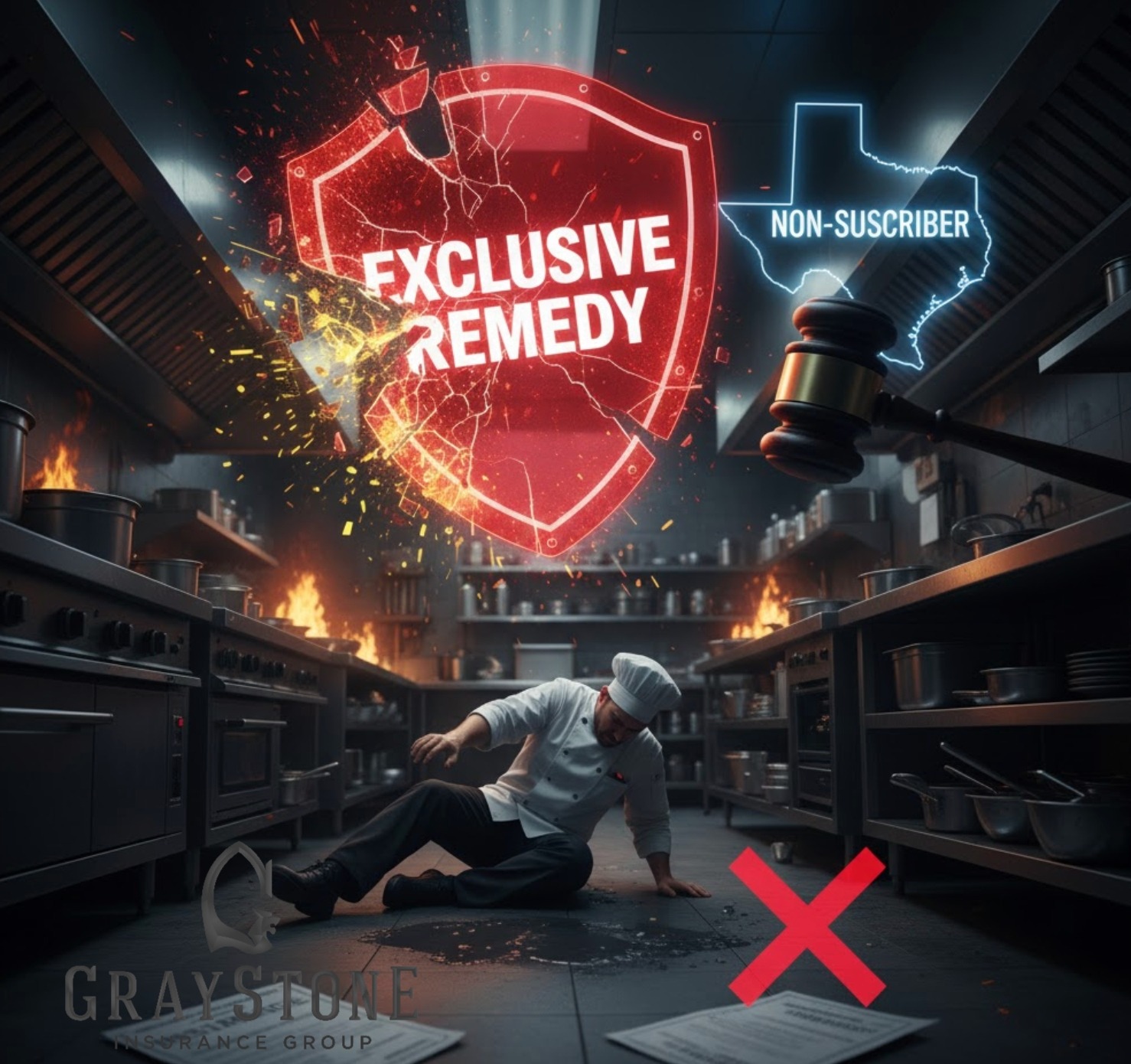
When it comes to Texas restaurant workers comp, local restaurant owners have a special choice. Most states force businesses to buy workers’ comp insurance. But here, you can choose to go without it. If you decide not to buy a state plan, you are called a “non-subscriber.” While this can save you money on your monthly bills, it is not a free pass.
Even if you don’t buy the insurance, you still have to follow state rules. You must send a special paper (Form-005) to the state every year to let them know you don’t have it. If you forget to send this paper, the state can fine you. You also have to tell your employees that they aren’t covered by the state plan.
Being a non-subscriber means you are taking a big risk. In the regular system, if a cook gets a cut on their hand, the insurance pays for the doctor. The cook gets their help, and you don’t get sued. This is a “no-fault” deal. It doesn’t matter if the cook was being clumsy or if the knife was dull.
When you opt out, that deal is gone. If a worker gets hurt, they can take you to court. Here is the scary part: the law takes away your best ways to defend yourself. You can’t blame the worker for being careless. If a judge thinks you were even a little bit responsible for the injury, you might have to pay for everything.
Many owners think about opting out to save money. Insurance for kitchen workers can be pricey because they work with fire, knives, and slippery floors. By opting out, you keep that money in your pocket. You can use it to pay for your own private safety plans.
But the “cons” can be much worse than the “pros.” A regular insurance plan has limits on how much a worker gets for being hurt. But in a lawsuit, there are no limits. A jury could decide you owe a worker millions of dollars for their “pain and suffering.” You are trading a small, steady cost for a giant, scary risk.
Feature | Subscriber (With Insurance) | Non-Subscriber (No Insurance) |
Can you be sued? | No (Usually) | Yes |
Defenses in court | Very Strong | Very Weak |
Payout Limits | Set by the State | No Limits (Jury Decides) |
Monthly Cost | Insurance Premiums | Lower (But higher risk) |
The “exclusive remedy” rule is like a legal suit of armor. If you have state insurance, that insurance is the only way a worker can get money for a workplace injury. This stops people from suing you over accidents.
For example, imagine a server trips on a rug in the dining room. If you have insurance, the plan pays for their doctor and some of their missed pay. They cannot sue you for having a “bad rug.” This keeps your business safe from big court cases. It lets you focus on serving great food instead of talking to lawyers.
If you are a non-subscriber and a worker gets hurt, the legal fight is very hard to win. Usually, in a court case, you can say, “It’s not my fault! The worker wasn’t being careful.” But in Texas, non-subscribers aren’t allowed to say that.
If a worker slips on some spilled grease, you can’t say they should have seen the spill. You are responsible for making sure the floor is clean at all times. You might have to pay for their hospital stay, their therapy, and their lawyer. If the jury thinks you were really reckless, they can even add extra “punishment” fines on top of that.
If you choose to be a non-subscriber, you must be very careful. First, you need a very clear safety plan. You should write down every time you train your staff on how to be safe. If you have proof that you taught them the right way, it helps you in the long run.
Second, most owners buy a “private accident” policy. This isn’t the same as the state plan, but it helps pay for doctor bills so workers don’t feel like they have to sue you. You also need a special legal plan called an ERISA plan. This sets the rules for how you help hurt workers. Without these things, one bad accident could shut down your restaurant forever.
In the short term, yes. You don’t have to pay for state insurance premiums. But if one person gets badly hurt, the legal fees and court awards can cost much more than you ever saved.
No, it is your choice as the owner. However, you must tell them in writing that you do not carry state workers’ comp insurance. You should also post a sign in a place where everyone can see it.
Yes. You can buy a workers’ comp policy at any time to become a subscriber. Once you buy the policy, you are protected by the “exclusive remedy” rule again.
It is a federal rule that lets businesses set up their own benefit plans for workers. For non-subscribers, it provides a legal structure for paying medical bills without going through the state’s workers’ comp system.
